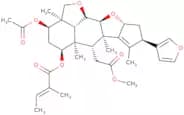
Limonoïdes
18 produits trouvés pour "Limonoïdes"
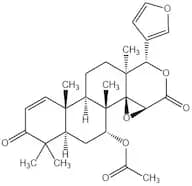
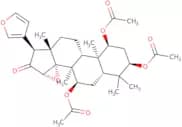
Gedunin
CAS :Oxygen-heterocyclic compoundFormule :C28H34O7Degré de pureté :≥ 90.0 % (HPLC)Masse moléculaire :482.57Nomilin
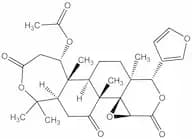
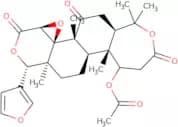
CAS :LactoneFormule :C28H34O9Degré de pureté :≥ 95.0 % (HPLC)Couleur et forme :PowderMasse moléculaire :514.57Obacunone
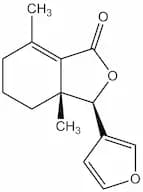
CAS :LactoneFormule :C26H30O7Degré de pureté :≥ 95.0 % (HPLC)Couleur et forme :PowderMasse moléculaire :454.52Fraxinellone
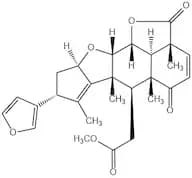
CAS :LactoneFormule :C14H16O3Degré de pureté :≥ 95.0 % (HPLC)Couleur et forme :PowderMasse moléculaire :232.28Nimbolide
CAS :Oxygen-heterocyclic compoundFormule :C27H30O7Degré de pureté :≥ 90.0 % (HPLC)Masse moléculaire :466.52Limonin
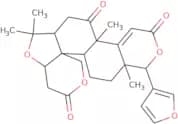
CAS :LactoneFormule :C26H30O8Degré de pureté :≥ 95.0 % (HPLC)Couleur et forme :PowderMasse moléculaire :470.52Azadirachtin
CAS :Oxygen-heterocyclic compoundFormule :C35H44O16Degré de pureté :≥ 90.0 % (HPLC)Couleur et forme :PowderMasse moléculaire :720.73Obacunone
CAS :Obacunone is a naturally occurring limonoid, which is a type of triterpenoid compound. It is derived from the peels of citrus plants, particularly bitter and sweet oranges. Obacunone operates through several mechanisms, including inducing apoptosis, inhibiting cell proliferation, and modulating various signaling pathways. Its biological activity has garnered attention for its potential therapeutic benefits.Formule :C26H30O7Degré de pureté :Min. 95%Couleur et forme :PowderMasse moléculaire :454.51 g/molAnthothecol
CAS :Anthothecol is a limonoid compound, which is a type of triterpenoid. It is derived from various plant sources, specifically the Meliaceae family, known for their rich secondary metabolite content. Anthothecol’s mode of action involves inhibiting the growth and proliferation of malaria parasites, making it a promising candidate in antimalarial drug research.Formule :C28H32O7Degré de pureté :Min. 95%Masse moléculaire :480.55 g/molLimonin
CAS :Limonin is a triterpenoid limonoid, which is a naturally occurring compound primarily sourced from citrus fruits such as lemons, oranges, and other members of the Rutaceae family. As a bioactive compound, limonin is widely recognized for its bitter taste, commonly found in the seeds and pulp of these fruits.
Formule :C26H30O8Degré de pureté :Min. 98.5 Area-%Couleur et forme :PowderMasse moléculaire :470.51 g/molKhayanthone
CAS :Khayanthone is a biopesticide derived from the seeds of the neem tree, Azadirachta indica. This natural product is an invaluable tool in integrated pest management due to its origins from a botanical source renowned for unique insect-repellent properties. The mode of action of Khayanthone involves disrupting the hormonal systems of insects, particularly affecting their growth, development, and reproductive capacities. It acts as an insect growth regulator by inhibiting enzyme synthesis necessary for molting and metamorphosis, thus effectively reducing pest populations over time.Formule :C32H42O9Degré de pureté :Min. 95%Masse moléculaire :570.67 g/mol3-Desacetylsalannin
CAS :3-Desacetylsalannin is a naturally occurring limonoid, which is a type of triterpenoid, derived from the seeds and leaves of the neem tree, Azadirachta indica. This compound is known for its complex molecular structure and is closely related to other bioactive neem constituents.Formule :C32H42O8Degré de pureté :Min. 95%Couleur et forme :PowderMasse moléculaire :554.67 g/molDeoxylimonin
CAS :Deoxylimonin is a limonoid compound, which is a type of organic molecule naturally derived from citrus fruits. It is extracted primarily from species such as lemons and oranges, where it exists as part of the secondary metabolite arsenal of the plant. This substance is structurally characterized by a furanolactone ring, which is a hallmark of limonoids.
Formule :C26H30O7Degré de pureté :Min. 95%Masse moléculaire :454.51 g/molLimonin diosphenol
CAS :Limonin diosphenol is a bioactive compound, which is a naturally occurring organic molecule derived from citrus fruits. It is primarily sourced from the seeds and peels of citrus species, such as lemons and oranges, where it is a secondary metabolite often associated with the plant's defense mechanisms.
Formule :C26H28O9Degré de pureté :Min. 95%Masse moléculaire :484.5 g/molNomilin
CAS :Nomilin is a limonoid, which is a type of triterpenoid compound. This chemical is derived from the seeds and peels of citrus fruits, especially those belonging to the Rutaceae family, such as oranges and grapefruits. In plants, limonoids serve various roles, including defense against pathogens.
Formule :C28H34O9Degré de pureté :Min. 95 Area-%Couleur et forme :PowderMasse moléculaire :514.56 g/molAzadirachtin A
CAS :Azadirachtin A is a bioinsecticide, which is derived from the seeds of the neem tree, Azadirachta indica. It functions as a potent antifeedant, disrupting the hormonal balance in insects and inhibiting their growth and reproductive cycles. Azadirachtin A interferes with hormone pathways, specifically ecdysone and juvenile hormones, leading to disrupted molting and developmental processes in target insect populations.
Formule :C35H44O16Degré de pureté :Min. 95%Couleur et forme :PowderMasse moléculaire :720.71 g/molLimonol
CAS :Limonin is a natural limonoid found in the peels of citrus fruits. Limonin has been shown to be potent inducers of cytochrome P450 enzymes and this may account for the interactive effects that are observed when it is administered with other compounds. The chemical diversity of limonin and its metabolites has been demonstrated by nmr spectra, which showed differences in chemical shifts that were consistent with differences in functional groups. Limonin has also been shown to be an inhibitor of bacterial growth, as well as a potent inhibitor of Staphylococcus aureus, Bacillus subtilis, Pseudomonas aeruginosa, and Escherichia coli. Limonol is a mixture of limonin and ethanol. It exhibits potent inhibitory activity against bacteria such as Staphylococcus aureus, Bacillus subtilis, Pseudomonas aeruginosa, and Escherichia coli.
Formule :C26H32O8Degré de pureté :Min. 95%Masse moléculaire :472.53 g/molSalannin
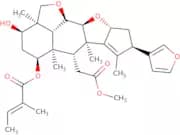
CAS :Salannin is a bioactive compound, which is a tetranortriterpenoid derived from the seeds of the neem tree, Azadirachta indica. It functions primarily as an insecticidal agent with an anti-feedant mode of action. Salannin interferes with the feeding mechanisms of insects, discouraging them from consuming plant tissues without necessarily causing immediate death. This attribute makes it a valuable tool for integrated pest management strategies.
Formule :C34H44O9Degré de pureté :Min. 95%Masse moléculaire :596.71 g/molRef: 3D-FS138000
Produit arrêté