Composés deutérés
Les composés deutérés sont des molécules organiques dans lesquelles un ou plusieurs atomes d'hydrogène sont remplacés par du deutérium, un isotope stable de l'hydrogène. Ces composés sont essentiels dans divers domaines scientifiques, notamment la spectroscopie RMN, la spectrométrie de masse et les études cinétiques d'isotopes. Les composés deutérés améliorent la clarté et la précision des signaux dans les analyses en réduisant le bruit de fond et en offrant des perspectives uniques sur les mécanismes réactionnels et les structures moléculaires. Chez CymitQuimica, vous trouverez une large gamme de composés deutérés spécialement conçus pour soutenir vos recherches en chimie analytique et en études moléculaires.
4233 produits trouvés pour "Composés deutérés"
Trier par
Degré de pureté (%)
0
100
|
0
|
50
|
90
|
95
|
100
α-1,2,3,4,5,6-Hexachloro-cyclohexane-d6
CAS :Formule :C6Cl6D6Degré de pureté :99 atom % DCouleur et forme :White-Pale Yellow SolidMasse moléculaire :293.89773L-Valine-13C
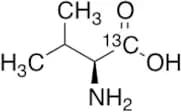
CAS :<p>Applications L-Valine (1-13c, 99%) (cas# 81201-85-6) is a useful research chemical.<br></p>Formule :C413CH11NO2Couleur et forme :NeatMasse moléculaire :118.14Sodium Formate (13C, 99%; D, 98%)
CAS :Produit contrôlé<p>Applications Sodium Formate (13c, 99%; D, 98%) (cas# 1215684-17-5) is a useful research chemical.<br></p>Formule :CDNaO2Degré de pureté :98%Couleur et forme :NeatMasse moléculaire :70.006Betaine-d3 Hydrochloride
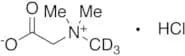
CAS :Produit contrôlé<p>Applications Betaine-d3 Hydrochloride is a useful gastric acidifier.<br>References Wilcken, D.E., et al.: N. Engl. J. Med., 309, 448 (1983),<br></p>Formule :C52H3H9NO2·ClCouleur et forme :White To Off-WhiteMasse moléculaire :156.632-Butanol-d3
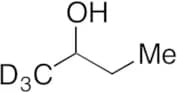
CAS :Produit contrôlé<p>Applications 2-Butanol-d3 has been used to examine the loss of water form metastable 2-butanol/Mn+ cations using mass spectrometry.<br> Not a dangerous good if item is equal to or less than 1g/ml and there is less than 100g/ml in the package<br>References Schroder, D., Schwarz, H.: Int. J. Mass Spec., 231, 139 (2004)<br></p>Formule :C4D3H7OCouleur et forme :NeatMasse moléculaire :77.142,5-Dimethylfuran-d3
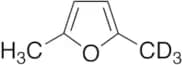
CAS :Produit contrôlé<p>Stability Volatile<br>Applications Labelled 2,5-Dimethylfuran (D473050). It is an ideal marker for detecting cigarette smoke.<br> Not a dangerous good if item is equal to or less than 1g/ml and there is less than 100g/ml in the package<br>References Spitzer, W., et al.: Clin. Invest. Med., 13, 17 (1990), Alonso, M., et al.: Anal. Bioanal. Chem., 396, 2989 (2010),<br></p>Formule :C6H5D3OCouleur et forme :ColourlessMasse moléculaire :99.15Pirimicarb-d6
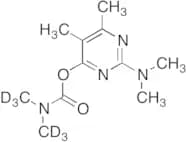
CAS :Produit contrôlé<p>Applications A labelled form of Pirimicarb (P508768) which is a pesticide which is useful in cannabis testing kits as a component of pesticide mixes (P698240).<br> Not a dangerous good if item is equal to or less than 1g/ml and there is less than 100g/ml in the package<br>References Tsuchiyama, T.; et al.: Journal of Chromatography A, 1524, 233 (2017).<br></p>Formule :C112H6H12N4O2Couleur et forme :ColourlessMasse moléculaire :244.32Homarine-d3
CAS :Produit contrôlé<p>Stability Hygroscopic<br>Applications Labelled Homarine (H458500). Quaternary ammonium base occurring in tissues of marine animals.<br>References Stein, W., et al.: J. Biol. Chem., 211, 915 (1954), Bystedt, J., et al.: J. Sci. Food Agric., 10, 301 (1959),<br></p>Formule :C7H4D3NO2Couleur et forme :NeatMasse moléculaire :140.15Phenol-13C6
CAS :Produit contrôlé<p>Stability Hygroscopic, Light Sensitive<br>Applications 13C-labelled Phenol (P318000).<br> Not a dangerous good if item is equal to or less than 1g/ml and there is less than 100g/ml in the package<br></p>Formule :C6H6OCouleur et forme :White To Light YellowMasse moléculaire :100.07Glutaric Acid-1,5-13C2
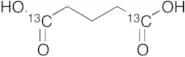
CAS :<p>Applications Glutaric Acid-1,5-13C2 (cas# 1185108-16-0) is a compound useful in organic synthesis.<br></p>Formule :C313C2H8O4Couleur et forme :NeatMasse moléculaire :134.1Naphthalene-d8
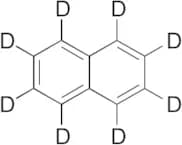
CAS :Produit contrôlé<p>Applications Naphthalene-d8, is the labeled analogue of Naphthalene, a polycyclic aromatic hydrocarbons as micropollutants.<br> Not a dangerous good if item is equal to or less than 1g/ml and there is less than 100g/ml in the package<br>References Di Toro, D., et al.: Environ. Toxicol. Chem., 19, 1971 (2000), Vines, C., et al.: Aquat. Toxicol., 51, 225 (2000), Incardona, J., et al.: Toxicol. Appl. Pharmacol., 196, 191 (2004), Junghans, M., et al.: Aquat. Toxicol., 76, 93 (2006),<br></p>Formule :C10D8Couleur et forme :WhiteMasse moléculaire :136.22Picolinafen-d4
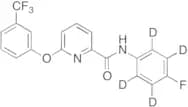
CAS :Produit contrôlé<p>Applications Picolinafen-d4 is deuterium labelled Picolinafen (P436800), a pesticide. It is a molecule for selective post emergence weed control in wheat and barley.<br>References Wang, J., et al.: Anal. Bioanal. Chem., 396, 1513 (2010); Sinclair, C., et al.: Environ. Sci. Technol., 40, 7283 (2006); Magnani, D., et al.: Atti, Giornate fitopatologiche, Perugia, 2, 405 (2000)<br></p>Formule :C19D4H8F4N2O2Couleur et forme :NeatMasse moléculaire :380.332,4,7,9-Tetramethyl-5-decyne-4,7-diol-d10
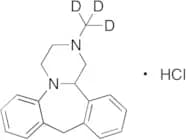
CAS :Produit contrôlé<p>Applications A labelled acetylene glycol derivative. It is used in water-based coatings and has both antifoaming and surfactant properties. It is highly toxic and have been found in acrylic adhesives used for food packaging multilayers manufacturing.<br>References Schwartz, J. et al.: J. Coat. Tecnhol., 67, 21 (1995); Chinoy, N.F. et al.: Polym. Paint Colour J., 175, 438 (1985);<br></p>Formule :C14D10H16O2Couleur et forme :NeatMasse moléculaire :236.417(±)-Mianserin-d3 Hydrochloride (methyl-d3)
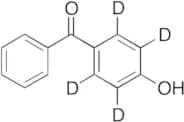
CAS :Produit contrôlé<p>Applications (±)-Mianserin-d3 HCl (methyl-d3) (CAS# 1219804-97-3) is a useful isotopically labeled research compound.<br></p>Formule :C18D3H17N2·ClHCouleur et forme :NeatMasse moléculaire :303.84424-Hydroxybenzophenone-d4
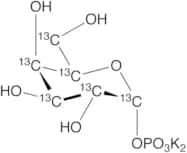
CAS :Produit contrôlé<p>Applications 4-Hydroxybenzophenone-d4 is an isotopic analog of 4-Hydroxybenzophenone (H829305), a metabolite of benzophenone (B204980).<br>References Stocklinski, A. et al. Life Sciences 26, 365(1980)<br></p>Formule :C13H6D4O2Couleur et forme :NeatMasse moléculaire :202.24α-D-Galactose-13C6 1-Phosphate Dipotassium Salt
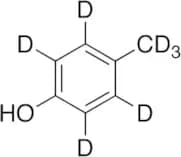
CAS :<p>Applications Isotope labelled analog of α-D-Galactose 1-Phosphate, the phosphate conjugate of α-D-Galactose (G155260), a natural aldohexose which is ubiquitous in bacteria, plants, and animals, including human brains.<br>References Sang, J.L., et al.: J. Bacteriol., 190, 7932 (2008);<br></p>Formule :C6H11O9PKCouleur et forme :NeatMasse moléculaire :342.272p-Cresol-d7
CAS :Produit contrôlé<p>Applications This compound is the labelled analog of a cresol metabolite.<br> Not a dangerous good if item is equal to or less than 1g/ml and there is less than 100g/ml in the package<br>References Dills, R.L. et al: J. Chrom. B. Biomed. Sci. App., 703, 105 (1997);<br></p>Formule :C72H7HOCouleur et forme :NeatMasse moléculaire :115.18(+/-)-1,2-Propylene-d6 Oxide (Stabilized with hydroquinone)
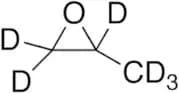
CAS :Produit contrôlé<p>Applications Isotope labelled (±)-Propylene Oxide (P835241), which is a carcinogenic substance to rats and potentially humans (1). (±)-Propylene oxide also has the ability to self-polymerize at room temperature in the presence of powdered potassium hydroxide (2). (±)-Propylene oxide is used in industry for fumigation in the food industry, inducing the formation of persistent toxic chlorohydrins. Drinking water contaminant candidate list 3 (CCL 3) compound as per United States Environmental Protection Agency (EPA), environmental, and food contaminants.<br> E3<br>References 1. Narang, S. et al.: Ind. Eng. Chem. Res. 2013 Feb:52(11);3967-39732. Timofeeva, M. et al.: Microporous Mesoporous Mater. 2013 Jan:165(1);84-91<br></p>Formule :C32H6OCouleur et forme :NeatMasse moléculaire :64.12Acetoin-13C4
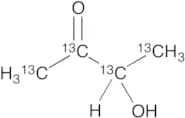
CAS :<p>Applications Acetoin-13C4 is the labeled analogue of the unlabeled (A163775), which is used in food flavoring and fragrances and is also found in some fruits and vegetables.<br> Not a dangerous good if item is equal to or less than 1g/ml and there is less than 100g/ml in the package<br>References Dutta, S.M. et al.: Ind. J. Dairy Sci., 24, 107 (1971);<br></p>Formule :C4H8O2Couleur et forme :NeatMasse moléculaire :92.08