Halogénures organiques
Dans cette catégorie, vous trouverez des molécules organiques contenant un ou plusieurs atomes d'halogène dans leur structure. Ces halogénures organiques incluent des composés bromés, iodés, chlorés et des halogénures cycliques. Les halogénures organiques sont largement utilisés en synthèse organique, en pharmaceutique, en agrochimie et en science des matériaux en raison de leur réactivité et de leur capacité à subir une variété de transformations chimiques. Chez CymitQuimica, nous offrons une sélection complète d'halogénures organiques de haute qualité pour soutenir vos applications de recherche et industrielles, garantissant une performance fiable et efficace dans vos projets synthétiques et analytiques.
Sous-catégories appartenant à la catégorie "Halogénures organiques"
20440 produits trouvés pour "Halogénures organiques"
Trier par
Degré de pureté (%)
0
100
|
0
|
50
|
90
|
95
|
100
tert-Butyl 2-((4S,6R)-6-(chloromethyl)-2,2-dimethyl-1,3-dioxan-4-yl)acetate
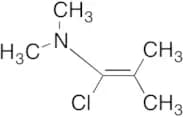
CAS :Produit contrôléFormule :C13H23ClO4Couleur et forme :NeatMasse moléculaire :278.771-Chloro-N,N-2-trimethylpropenylamine (>90%)
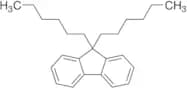
CAS :Produit contrôlé<p>Stability Unstable in solution. Small amounts of precipitate should have no effect on use.<br>Applications 1-Chloro-N,N-2-trimethylpropenylamine acts as a reagent in the synthesis and antitumor activity of (-)-bassianolide in human cancer cells through cell cycle arrest. Enantioselective total synthesis of nannocystins A and A0 as elongation factor 1 inhibitors. Total synthesis of (-)-caprazamycin A with antibacterial activity against Mycobacterium tuberculosis (TB) via diastereoselective aldol reaction.<br>References Mun, B., et al.: Bioorg. Chem., 69, 64 (2016); Huang, J., et al.: Org. Lett., 18, 4702 (2016); Nakamura, H., et al.: Angew. Chem., Int. Ed., 54, 3136 (2015)<br></p>Formule :C6H12ClNDegré de pureté :>90%Couleur et forme :NeatMasse moléculaire :133.629,9-Dihexylfluorene
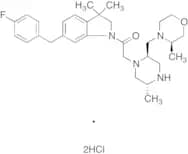
CAS :Produit contrôlé<p>Applications 9,9-Dihexylfluorene (cas# 123863-97-8) is a useful research chemical.<br></p>Formule :C25H34Couleur et forme :NeatMasse moléculaire :334.54ASTX-660 Dihydrochloride
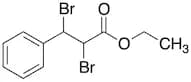
CAS :Produit contrôléFormule :C30H41FN4O2•2(HCl)Couleur et forme :NeatMasse moléculaire :544.29803Ethyl 2,3-dibromo-3-phenylpropionate
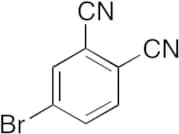
CAS :Produit contrôlé<p>Stability Light Sensitive<br>Applications Ethyl 2,3-dibromo-3-phenylpropionate<br></p>Formule :C11H12Br2O2Couleur et forme :NeatMasse moléculaire :336.024-Bromophthalonitrile
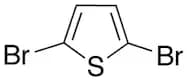
CAS :Produit contrôlé<p>Applications 4-Bromophthalonitrile is formed from the oxidative ammonolysis of 4-bromo-o-xylene.<br>References Bagirzade, G. A., Russ. J. Gen. Chem., 84, 1085-1090 (2014)<br></p>Formule :C8H3BrN2Couleur et forme :NeatMasse moléculaire :207.032,5-Dibromothiophene
CAS :Produit contrôlé<p>Applications 2,5-Dibromothiophene (cas# 3141-27-3) is a compound useful in organic synthesis.<br></p>Formule :C4H2Br2SCouleur et forme :NeatMasse moléculaire :241.934-Chloro-1-butanol (Technical Grade)
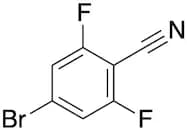
CAS :<p>Applications 4-Chloro-1-butanol is a reagent used in the preparation of pharmaceutical compounds such as canthine analogues for their activity against HeLa cervical cells. Also used in the preparation of novel and highly potent Bryostatin, another anti-cancer agent.<br> Not a dangerous good if item is equal to or less than 1g/ml and there is less than 100g/ml in the package<br>References Naik, P. et al.: Tetrahedron, 69, 6545 (2013); Wender, P. et al.: J. Am. Chem. Soc., 124,13648 (2002);<br></p>Formule :C4H9ClOCouleur et forme :NeatMasse moléculaire :108.56674-Bromo-2,6-difluorobenzonitrile
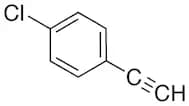
CAS :Produit contrôlé<p>Applications 4-Bromo-2,6-difluorobenzonitrile<br></p>Formule :C7H2BrF2NCouleur et forme :NeatMasse moléculaire :218.04-Chlorophenylacetylene
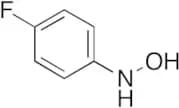
CAS :Produit contrôlé<p>Stability Light Sensitive<br>Applications 4-Chlorophenylacetylene (cas# 873-73-4) is a compound useful in organic synthesis.<br> Not a dangerous good if item is equal to or less than 1g/ml and there is less than 100g/ml in the package<br></p>Formule :C8H5ClCouleur et forme :NeatMasse moléculaire :136.58N-(p-Fluorophenyl)-hydroxylamine
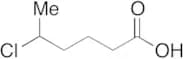
CAS :Produit contrôlé<p>Applications N-(p-Fluorophenyl)-hydroxylamine, is a reactant used in various chemical synthesis, such as in preparation of spiro-isoxazoline and spiro-isoxazolidine derivatives of tomentosin.<br>References Zaki, M., et al.: RSC Advances, Vol. 7, Iss 11, P: 6523-6529 (2017);<br></p>Formule :C6H6FNOCouleur et forme :NeatMasse moléculaire :127.1165-Chlorohexanoic Acid
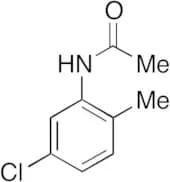
CAS :Produit contrôlé<p>Applications 5-Chlorohexanoic acid CAS#: 112176-22-4 is a building block used in organic synthesis.<br>References Liang, S., et al., Green Chemistry., 20, 680 (2018)<br></p>Formule :C6H11ClO2Couleur et forme :NeatMasse moléculaire :150.6035-Chloro-o-acetotoluidide
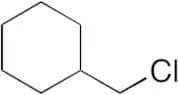
CAS :Produit contrôléFormule :C9H10ClNOCouleur et forme :NeatMasse moléculaire :183.635(Chloromethyl)cyclohexane
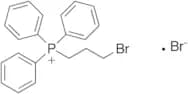
CAS :Produit contrôlé<p>Applications (Chloromethyl)cyclohexane is a common chemical reagent used in the synthesis of imidazole inhibitors of cytokine release which suppresses the response to tumor necrosis factor.<br> Not a dangerous good if item is equal to or less than 1g/ml and there is less than 100g/ml in the package<br>References Laufer, S. et al., J. Med. Chem., 45, 1695 (2002); Rabinowitz, M. et al.: J. Med. Chem., 44, 4252 (2001);<br></p>Formule :C7H13ClCouleur et forme :NeatMasse moléculaire :132.63(3-Bromopropyl)triphenylphosphonium Bromide
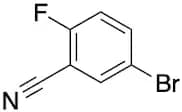
CAS :Produit contrôlé<p>Applications (3-Bromopropyl)triphenylphosphonium Bromide is used in rearrangement reactions of cyclic organic molecules and in organic synthesis.<br>References Kippo, T. et al.: J. Am. Chem. Soc., 135, 632 (2013); Shi, M. et al.: J. Am. Chem. Soc., 128, 7430 (2006);<br></p>Formule :C21H21Br2PCouleur et forme :NeatMasse moléculaire :464.175-Bromo-2-fluorobenzonitrile
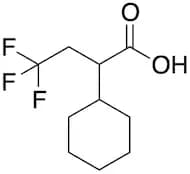
CAS :Produit contrôlé<p>Applications 5-Bromo-2-fluorobenzonitrile<br></p>Formule :C7H3BrFNCouleur et forme :NeatMasse moléculaire :200.012-Cyclohexyl-4,4,4-trifluorobutanoic Acid
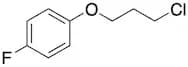
CAS :Produit contrôléFormule :C10H15F3O2Couleur et forme :NeatMasse moléculaire :224.221-(3-Chloropropoxy)-4-fluorobenzene
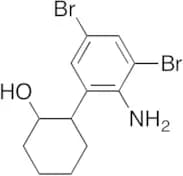
CAS :Produit contrôlé<p>Applications 1-(3-Chloropropoxy)-4-fluorobenzene was used as a reagent in the preparation of a library of hydantoin compds which has used to study Aurora kinase A inhibitory activity. It was also used as an alkylation agent in the preparation of tetracyclic quinoxaline butyrophenones as 5-HT2A and postsynaptic D2 antagonists and inhibitors of serotonin transporter for treatment of neuropsychiatric and neurological disorders.<br>References Li, Peng, et al.: J Med. Chem., 57(6), 2670-2682, 2014Bogolubsky, Andrey V., et al.: ACS Comb. Sci., 20(1), 35-43, 2018<br></p>Formule :C9H10ClFOCouleur et forme :NeatMasse moléculaire :188.632-(2-Amino-3,5-dibromophenyl)cyclohexanol
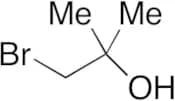
Produit contrôléFormule :C12H15Br2NOCouleur et forme :NeatMasse moléculaire :349.062Bromo-tert-butyl Alcohol
CAS :Produit contrôlé<p>Applications Bromo-tert-butyl Alcohol, is an organic building block that can be used in the variety of chemical synthesis. It is used in the synthesis of Monohalogeno-t-butyloxycarbonylamino Acids.<br> Not a dangerous good if item is equal to or less than 1g/ml and there is less than 100g/ml in the package<br>References Takanobu, O. et al.: Bull. Chem.Sco. Jap., 45, 2603 (1972);<br></p>Formule :C4H9BrOCouleur et forme :NeatMasse moléculaire :153.02