Halogénures organiques
Sous-catégories appartenant à la catégorie "Halogénures organiques"
20442 produits trouvés pour "Halogénures organiques"
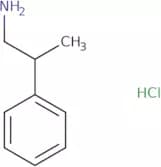
2-Phenylpropan-1-amine hydrochloride
CAS :Produit contrôléPlease enquire for more information about 2-Phenylpropan-1-amine hydrochloride including the price, delivery time and more detailed product information at the technical inquiry form on this pageFormule :C9H14ClNDegré de pureté :Min. 95%Masse moléculaire :171.67 g/molZipeprol dihydrochloride
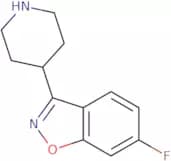
CAS :Produit contrôléZipeproldihydrochloride is a drug that belongs to the class of quinolones. It has been shown to have a high bioavailability in vivo, and it is rapidly absorbed through the gastrointestinal tract. Zipeproldihydrochloride has been shown to have antiviral and antibacterial properties in vitro. In vivo studies have shown that Zipeproldihydrochloride can be used for the treatment of autoimmune diseases and infectious diseases. The drug inhibits the activity of fatty acid synthase, which is an enzyme involved in synthesizing fatty acids from acetyl-CoA.Formule :C23H34Cl2N2O3Degré de pureté :Min. 95%Masse moléculaire :457.43 g/mol6-Fluoro-3-(4-piperidinyl)-1,2-benzisoxazole
CAS :6-Fluoro-3-(4-piperidinyl)-1,2-benzisoxazole is a drug candidate that belongs to a new class of atypical antipsychotics. It has been synthesized using an efficient method and was found to bind to the m1 receptor with high affinity. 6-Fluoro-3-(4-piperidinyl)-1,2-benzisoxazole has shown efficacy in vitro studies against 5HT1a receptors and in vivo studies against fibroblast cells. This drug is also effective against serotonin levels, which may be due to its ability to inhibit the reuptake of serotonin by blocking the serotonin transporter.Formule :C12H13FN2ODegré de pureté :Min. 95%Couleur et forme :PowderMasse moléculaire :220.24 g/molMethyl 4-amino-2-fluorobenzoate
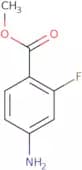
CAS :Please enquire for more information about Methyl 4-amino-2-fluorobenzoate including the price, delivery time and more detailed product information at the technical inquiry form on this page
Formule :C8H8FNO2Degré de pureté :Min. 95%Masse moléculaire :169.15 g/mol[1-(4-Chlorobenzyl)-1H-benzimidazol-2-yl]methanol
CAS :Produit contrôléPlease enquire for more information about [1-(4-Chlorobenzyl)-1H-benzimidazol-2-yl]methanol including the price, delivery time and more detailed product information at the technical inquiry form on this page
Formule :C15H13ClN2ODegré de pureté :Min. 95%Masse moléculaire :272.73 g/mol2-(4-Fluorophenyl)-5-[(5-iodo-2-methylphenyl)methyl]thiophene
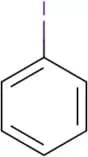
CAS :Intermediate in the synthesis of canagliflozinFormule :C18H14FISDegré de pureté :Min. 95%Masse moléculaire :408.27 g/molIodobenzene
CAS :Iodobenzene is a reactive chemical that can be used as a starting material for the synthesis of other chemicals. Iodobenzene reacts with sodium carbonate to produce trifluoroacetic acid and sodium iodide. Iodobenzene can also react with hydroxyl groups in the presence of palladium-catalyzed coupling reactions to form a reactive intermediate, which is then oxidized by hydrogen peroxide to form iodine. This reaction mechanism is important in the production of pharmaceuticals, dyes, and pesticides. Iodobenzene also has antiinflammatory activity that may be due to its ability to inhibit leukocyte migration into inflamed tissue by altering the expression of inflammatory cytokines and chemokines.Formule :C6H5IDegré de pureté :Min. 95%Masse moléculaire :204.01 g/molTribromofluoromethane - stablized with Copper
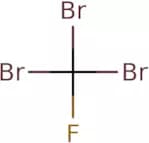
CAS :The tribromofluoromethane (CF3Br) is a reactive chemical that reacts with hydrochloric acid to form hydrogen fluoride and chloride. It is used in the production of chlorofluorocarbons and other chemicals. The CF3Br can also react with copper chloride to form CF3Cl2, which has been shown to have cytostatic effects on cells.
Formule :CBr3FDegré de pureté :Min. 95%Couleur et forme :Colourless To Dark Yellow LiquidMasse moléculaire :270.72 g/mol4-Chloro-6-Fluoro-Pyrimidine
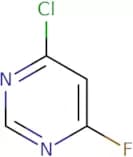
CAS :Please enquire for more information about 4-Chloro-6-Fluoro-Pyrimidine including the price, delivery time and more detailed product information at the technical inquiry form on this page
Formule :C4H2ClFN2Degré de pureté :Min. 95%Masse moléculaire :132.52 g/mol(R)-3,3'-Dibromo-1,1'-bi-2-naphthol
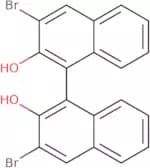
CAS :(R)-3,3'-Dibromo-1,1'-bi-2-naphthol is an aromatic hydrocarbon that is chiral. It has been used as a reagent in organic synthesis and as a fluorescent labeling agent for HPLC analysis. (R)-3,3'-Dibromo-1,1'-bi-2-naphthol has also been used to synthesize biphenyls. (R)-3,3'-Dibromo-1,1'-bi-2-naphthol can be found in natural products such as flavanones and styrene. It can act as a solvating or additive agent in organic reactions and reactions involving aromatics.
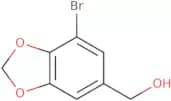
Formule :C20H12Br2O2Degré de pureté :Min. 95%Couleur et forme :PowderMasse moléculaire :444.12 g/mol(7-bromo-2H-1,3-benzodioxol-5-yl)methanol
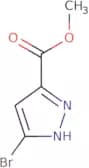
CAS :Produit contrôléPlease enquire for more information about (7-bromo-2H-1,3-benzodioxol-5-yl)methanol including the price, delivery time and more detailed product information at the technical inquiry form on this pageDegré de pureté :Min. 95%Masse moléculaire :231.045Methyl 5-bromo-1H-pyrazole-3-carboxylate
CAS :Please enquire for more information about Methyl 5-bromo-1H-pyrazole-3-carboxylate including the price, delivery time and more detailed product information at the technical inquiry form on this page
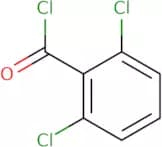
Formule :C5H5BrN2O2Degré de pureté :Min. 95%Masse moléculaire :205.01 g/mol2,6-Dichlorobenzoyl chloride
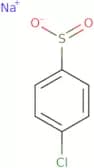
CAS :2,6-Dichlorobenzoyl chloride is an inhibitor of the hepatitis virus. It is a nucleophilic compound that undergoes a phase transition from liquid to solid at around -8°C. This chemical has been shown to inhibit the infectious disease caused by hepatitis virus in cell culture and to be effective against other virus such as influenza A2 and herpes simplex type 1. 2,6-Dichlorobenzoyl chloride has also been shown to have an inhibitory effect on fatty acid synthesis by acting as a competitive inhibitor of acyl coenzyme A synthetase. This inhibition causes an accumulation of acetyl-CoA and malonyl-CoA in the cell, which leads to decreased production of lipids. 2,6-Dichlorobenzoyl chloride also possesses irritancy properties, which may be due to its ability to activate sensory nerves in human skin cells.Formule :C7H3Cl3ODegré de pureté :Min. 99.0%Couleur et forme :Clear LiquidMasse moléculaire :209.46 g/mol4-Chloro-benzene-sulfinic acid sodium salt
CAS :The 4-chloro-benzenesulfinic acid sodium salt is a type of sulfinic acid. It can be used to control experiments involving methides, halides, and human macrophages. Sodium salts of this compound have been shown to inhibit the growth of Candida glabrata and Galleria mellonella in vitro. The 4-chloro-benzenesulfinic acid sodium salt reacts with chloride ion to form a nucleophilic trifluoroacetate anion, which reacts with thiosulfonates to produce type strain. Trifluoroacetic acid is used as a solvent in the reaction.Formule :C6H4ClNaO2SDegré de pureté :Min. 95%Masse moléculaire :198.6 g/mol4-Chlorobenzyl cyanide
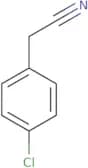
CAS :4-Chlorobenzyl cyanide is a synthetic compound that has been shown to have potent antibacterial activity. This compound reacts with hydrogen chloride in the presence of isopropyl group and chloride to form 4-chlorobenzaldehyde. The reaction selectivity of this reactive chemical is due to its fluorescence properties, which can be used as a marker for detection. The introduction of hydrogen chloride into the reaction mixture produces an acidic environment, which promotes the production of chloroform. The chloroform is then removed by evaporating the water from the reaction mixture, leaving 4-chlorobenzaldehyde as a solid product.
Formule :C8H6ClNDegré de pureté :Min. 95%Couleur et forme :Clear LiquidMasse moléculaire :151.59 g/molPotassium chlorate
CAS :Produit contrôléPotassium chlorate is a strong oxidizing agent and a salt of potassium and chlorate. Potassium chlorate is used as an oxidizer in fireworks, propellants, and for the treatment of wastewater. It can also be used to generate chlorine dioxide, which is used as a disinfectant. Potassium chlorate has been shown to have genotoxic effects on rat liver cells, which may be due to its ability to induce transcriptional regulation by altering DNA methylation status. Chronic exposure to high concentrations of potassium chlorate can cause apical necrosis in rats. This type of necrosis is caused by the accumulation of potassium ions that lead to a disruption in membrane integrity. Chlorates are also known to cause chronic renal toxicity via oxidative stress mechanisms.Formule :ClKO3Degré de pureté :Min. 95%Couleur et forme :White SolidMasse moléculaire :122.55 g/mol2-chloro-5-formyl-4-picoline
CAS :Please enquire for more information about 2-chloro-5-formyl-4-picoline including the price, delivery time and more detailed product information at the technical inquiry form on this pageFormule :C7H6ClNODegré de pureté :Min. 95%Masse moléculaire :155.58 g/mol4-Amino-3,5-difluorobenzonitrile
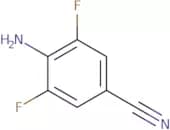
CAS :4-Amino-3,5-difluorobenzonitrile is a fine chemical used as a building block in research chemicals, reagent, and speciality chemical. It is versatile and can be used as a reaction component in the synthesis of complex compounds with various applications. CAS No. 110301-23-0 is an important intermediate for the synthesis of organic compounds and pharmaceuticals. 4-Amino-3,5-difluorobenzonitrile is also used as a scaffold for the synthesis of organic compounds.Formule :C7H4F2N2Degré de pureté :Min. 95%Couleur et forme :PowderMasse moléculaire :154.12 g/molCobalt chloride hexahydrate
CAS :Cobalt chloride is the inorganic compound with the chemical formula CoCl2.6H2O. It is a salt of cobalt in the form of a hexahydrate, which means that it contains six water molecules per molecule of cobalt. Cobalt chloride can be used as a chelate ligand to bind metal ions and prevent them from reacting with other substances. In this way, it can be used in wastewater treatment to remove heavy metals such as copper and zinc, or to remove nitrogen from waste water. The cobalt ion binds reversibly to two oxygen atoms on each molecule of hydrogen peroxide, forming HCoO3HO. This process converts one mole of hydrogen peroxide into one mole of water vapor and one mole of oxygen gas. It also catalyzes reactions involving organic compounds containing ammonia, such as ammonium salts or urea-ammonia solutions - reactions that are used for industrial purposes or for agricultural fertilizers. Cobalt chloride hexahydrate hasFormule :Cl2Co•(H2O)6Degré de pureté :Min. 95%Masse moléculaire :237.93 g/mol2-Chloro-4-(tributylstannyl)thiazole
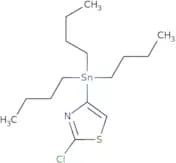
CAS :Produit contrôléPlease enquire for more information about 2-Chloro-4-(tributylstannyl)thiazole including the price, delivery time and more detailed product information at the technical inquiry form on this pageDegré de pureté :Min. 95%


![[1-(4-Chlorobenzyl)-1H-benzimidazol-2-yl]methanol](/_next/image/?url=https%3A%2Fstatic.cymitquimica.com%2Fproducts%2F3D%2Fthumb-webp%2FFC135813.webp&w=3840&q=75)
![2-(4-Fluorophenyl)-5-[(5-iodo-2-methylphenyl)methyl]thiophene](/_next/image/?url=https%3A%2Fstatic.cymitquimica.com%2Fproducts%2F3D%2Fthumb-webp%2FFF34928.webp&w=3840&q=75)