Halogénures organiques
Sous-catégories appartenant à la catégorie "Halogénures organiques"
20442 produits trouvés pour "Halogénures organiques"
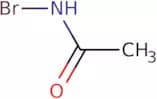
N-Bromoacetamide
CAS :N-Bromoacetamide is a reactive chemical that can react with the sodium channel to produce a postulated effect. It has been shown to inhibit the kinetics of the sodium channel in whole-cell voltage clamp experiments. This inhibition is reversible and does not depend on the pH of the solution. Bromoacetamide has been shown to have an irreversible inhibition on potassium channels, which may be due to its ability to form covalent bonds with sulfhydryl groups. Bromoacetamide also inhibits voltage-gated calcium channels, but at a slower rate than it does for sodium channels. N-Bromoacetamide has been shown to be effective in pharmacological treatments for epilepsy, myasthenia gravis, and multiple sclerosis.
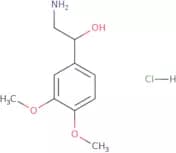
Formule :C2H4BrNODegré de pureté :Min. 95%Couleur et forme :PowderMasse moléculaire :137.96 g/mol2-Hydroxy-2-(3,4-dimethoxyphenyl)ethylamine hydrochloride
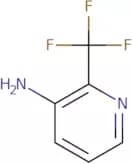
CAS :Produit contrôléPlease enquire for more information about 2-Hydroxy-2-(3,4-dimethoxyphenyl)ethylamine hydrochloride including the price, delivery time and more detailed product information at the technical inquiry form on this pageFormule :C10H15NO3·HClDegré de pureté :Min. 95%Masse moléculaire :233.69 g/mol2-(Trifluoromethyl)pyridin-3-amine
CAS :2-(trifluoromethyl)pyridin-3-amine is an industrial chemical that is used as a reagent in the synthesis of other chemicals. It is synthesized from benzene and an acid ethyl ester in a complex reaction. 2-(trifluoromethyl)pyridin-3-amine is toxic, with industrial uses such as the synthesis of dyes and pesticides.Formule :C6H5F3N2Degré de pureté :Min. 95%Couleur et forme :PowderMasse moléculaire :162.11 g/molIron bis(tetrafluoroborate) hexahydrate
CAS :Iron bis(tetrafluoroborate) hexahydrate is a ferrimagnetic, thermally stable coordination compound that has been shown to interact with bidentate ligands. Iron bis(tetrafluoroborate) hexahydrate can be used as a mononuclear section in analogy to the octahedral section of nickel bis(tetrafluoroborate) hexahydrate. The ligands are methyl groups, which are diffracted at 2θ values of 12.8° and 18.3°. The compound is stable in solvents such as dimethylsulfoxide and tetrahydrofuran. It also has chelate ligand transfer properties, which are due to the presence of two hydroxyl groups on each iron atom.Formule :Fe(BF4)2•(H2O)6Degré de pureté :Min. 95%Couleur et forme :SolidMasse moléculaire :337.55 g/mol2-(Bromomethyl)acrylic acid
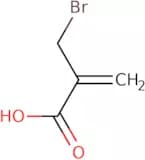
CAS :2-(Bromomethyl)acrylic acid is a monomer that has been synthesized from bromoacetic acid and acrylic acid. It is an efficient method for the synthesis of 2-bromoethyl acrylate, which can be used as a precursor for polyurethanes and other polymers. The 2-bromoethyl acrylate can be obtained through allylation with ethylene glycol, followed by hydrolysis to produce acrylic acid. This monomer reacts with free hydroxyl groups to form esters and ethers. It also reacts with nitrogen atoms to form amides or nitriles. Cell culture studies have shown that this compound has no toxic effects on human erythrocytes or hepatocytes.Formule :C4H5BrO2Degré de pureté :Min. 95%Couleur et forme :PowderMasse moléculaire :164.99 g/molDiethyl chlorophosphite
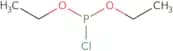
CAS :Produit contrôléBuilding block; reagent for conversion of alcohols to diethylphosphate estersFormule :C4H10ClO2PDegré de pureté :Min. 95.0 Area-%Couleur et forme :Colorless Clear LiquidMasse moléculaire :156.55 g/mol5-Chloro-1H-imidazo[4,5-b]pyridin-2(3H)-one
CAS :5-Chloro-1H-imidazo[4,5-b]pyridin-2(3H)-one is a chemical compound that is used in analytical chemistry as an insecticide. It has been shown to cause genotoxic activity in weevils exposed to light. The compound has also been shown to have long term efficacy in plants and toxicity studies on animals. 5-Chloro-1H-imidazo[4,5-b]pyridin-2(3H)-one is metabolized by detoxification enzymes and excreted through the urine.Degré de pureté :Min. 95%2-Chloro-4,6-dimethoxypyrimidine
CAS :2-Chloro-4,6-dimethoxypyrimidine is a synthetic compound that is a triazolopyrimidine derivative. It has been shown to have significant antifungal activity against cryptococcus neoformans in toxicity studies. 2-Chloro-4,6-dimethoxypyrimidine is an amine that can be used as a fungicide or pesticide due to its toxicity and effectiveness against fungi. 2-Chloro-4,6-dimethoxypyrimidine has a molecular weight of 196 and contains three functional groups: chlorine, hydrogen chloride, and pyridinium. This compound also has the ability to form covalent bonds with organic molecules such as chloromethyl groups on proteins.
Formule :C6H7ClN2O2Degré de pureté :Min. 95%Couleur et forme :Off-White To Yellow SolidMasse moléculaire :174.58 g/molPerfluorooctanesulphonyl Chloride
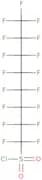
CAS :Produit contrôléPerfluorooctanesulphonyl Chloride (PFOS) is a chemical that belongs to the class of perfluoroalkyl substances. It is used in the synthesis of tetraethylammonium, peroxide, yields, telomeric, phosphine, cyclic ketone, phosphonium salt, chlorides and olefinic compounds. PFOS also has a number of commercial applications such as in fire-fighting foams and in the manufacture of fluoropolymers. PFOS is harmful to human health when it enters the body because it accumulates in the blood and remains there for years. It may cause low birth weight in newborns and thyroid hormone disruption. It can also cause liver damage in laboratory animals.
Formule :C8ClF17O2SDegré de pureté :Min. 95%Masse moléculaire :518.58 g/mol1-(4-Bromobenzyl)piperazine
CAS :Produit contrôlé1-(4-Bromobenzyl)piperazine is a chemical compound that is an amine and an aromatic heterocycle. It has been shown to inhibit the growth of murine melanoma cells in culture, with a preferential effect on malignant cells. 1-(4-Bromobenzyl)piperazine binds to melanin, which may be due to its ability to cross the blood-brain barrier and accumulate in the brain. This compound also has diffraction properties and can be used as a high-energy radiation source for electron microscopy. 1-(4-Bromobenzyl)piperazine is used in the synthesis of benzylpiperazine, an aromatic amine that is used as a chemical intermediate in organic chemistry.Formule :C11H15BrN2Degré de pureté :Min. 95%Masse moléculaire :255.15 g/mol8-Chlorotheophylline
CAS :Produit contrôlé8-Chlorotheophylline is a chemical compound used in pharmaceutical preparations as an antispasmodic and bronchodilator. It is a derivative of theophylline and has been shown to bind to receptors in the brain, lungs, heart, and smooth muscles. 8-Chlorotheophylline has been shown to have broad-spectrum antimicrobial activity against both Gram-positive and Gram-negative bacteria. The compound is water soluble at physiological pH levels and does not require a buffer for stability. This agent can be prepared by using a sample preparation procedure that includes adding sodium carbonate followed by caffeine to extract the sample from a biological matrix such as tissue or blood. 8-Chlorotheophylline can be analyzed by chromatography with UV detection (254 nm) or fluorescence detection (365 nm).Formule :C7H7ClN4O2Degré de pureté :Min. 95%Couleur et forme :White PowderMasse moléculaire :214.61 g/mol(R)-De(carboxymethoxy) cetirizine acetic acid hydrochloride
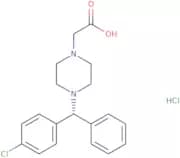
CAS :Please enquire for more information about (R)-De(carboxymethoxy) cetirizine acetic acid hydrochloride including the price, delivery time and more detailed product information at the technical inquiry form on this pageFormule :C19H22Cl2N2O2Degré de pureté :Min. 95%Masse moléculaire :381.3 g/mol1-Fluoro-5a-androst-2-en-17b-ol acetate
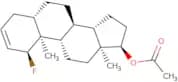
CAS :Produit contrôléPlease enquire for more information about 1-Fluoro-5a-androst-2-en-17b-ol acetate including the price, delivery time and more detailed product information at the technical inquiry form on this pageFormule :C20H28FO2Degré de pureté :Min. 95%Masse moléculaire :319.43 g/mol2-Chloro-1-(1,2,5-trimethyl-1H-indol-3-yl)ethanone
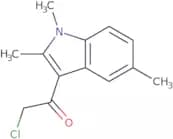
CAS :Produit contrôléPlease enquire for more information about 2-Chloro-1-(1,2,5-trimethyl-1H-indol-3-yl)ethanone including the price, delivery time and more detailed product information at the technical inquiry form on this pageFormule :C13H14ClNODegré de pureté :Min. 95%Masse moléculaire :235.71 g/molBromodimethylsulfonium bromide
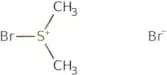
CAS :Bromodimethylsulfonium bromide is a chemical that has been used as a diagnostic agent in the diagnosis of leukemia. It is also used for the treatment of cancer, although it has shown to be ineffective against some resistant mutants. Bromodimethylsulfonium bromide is an unsymmetrical ion with one proton and one bromine atom. It reacts with amines to form an alkylammonium cation, which in turn reacts with nucleophiles such as water or alcohols to form a glycosidic bond. This reaction is responsible for the tissue culture growth inhibition seen in cells treated with this compound. Bromodimethylsulfonium bromide also inhibits fatty acid synthesis by preventing the enzyme acyl-CoA synthase from functioning properly, which leads to decreased levels of cellular energy production. Bromodimethylsulfonium bromide's fluorescence properties can be observed in tissue culture
Formule :C2H6Br2SDegré de pureté :Min. 95%Masse moléculaire :221.94 g/molBromoferrocene
CAS :Bromoferrocene is a ligand that binds to the ferrocenecarboxylic acid skeleton. It is an aromatic hydrocarbon that has been shown to be a potent inhibitor of cervical cancer proliferation. Bromoferrocene was synthesized by a Friedel-Crafts reaction between styrene and hydrobromic acid. The bromine atom in this compound is electron-withdrawing and therefore has radical character, which makes it a reactive molecule with potential for biological activity. Bromoferrocene is chiral and thus can exist as two enantiomers - one with R configuration, the other L.Formule :C10H9BrFeDegré de pureté :90%NmrMasse moléculaire :264.93 g/mol3-Iodobenzoic acid methyl ester
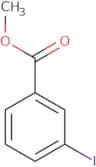
CAS :3-Iodobenzoic acid methyl ester is a synthetic selenium compound that is used in the synthesis of fatty acids. It is also used as a radionuclide in the diagnosis of cancer and other diseases. 3-Iodobenzoic acid methyl ester can be taken orally or injected, but it should not be taken by pregnant women or those who are allergic to iodine. This product has been shown to have anti-cancer properties when given orally, although there are some potential side effects associated with usage. These side effects include nausea, vomiting, diarrhea, and an increase in urine production. 3-Iodobenzoic acid methyl ester is metabolized into toxic products such as biphenyl, which may cause an escalation of symptoms. The structural formula for this product is C8H7INOS2O2.Formule :C8H7IO2Degré de pureté :Min. 95%Couleur et forme :PowderMasse moléculaire :262.04 g/molHafnocene Dichloride
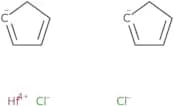
CAS :Produit contrôléHafnocene dichloride is a homogeneous catalyst for metathesis reactions. It has been shown to have significant cytotoxicity and kinetic energy, which are required for the transfer of alkenes during metathesis reactions. The zirconium-hafnium bond in hafnocene dichloride is cleaved by hydrogen chloride and hydrochloric acid, which are used as catalysts in the reaction. The optical properties of hafnocene dichloride can be changed by changing the metal complexes present during the reaction, which may be due to charge-transfer interactions between metal complexes and ligands. Hafnocene dichloride can also be used to synthesize polylactic acid (PLA) from lactic acid, which is a renewable resource that is biodegradable.Formule :C10H10Cl2HfDegré de pureté :Min. 95%Masse moléculaire :379.58 g/mol(6-Chloro-1-isopropyl-1H-benzimidazol-2-yl)methanol
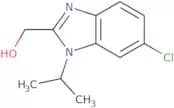
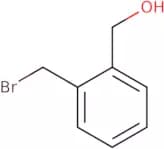
CAS :Produit contrôléPlease enquire for more information about (6-Chloro-1-isopropyl-1H-benzimidazol-2-yl)methanol including the price, delivery time and more detailed product information at the technical inquiry form on this pageFormule :C11H13ClN2ODegré de pureté :Min. 95%Masse moléculaire :224.69 g/mol(2-(Bromomethyl)phenyl)methanol
CAS :(2-(Bromomethyl)phenyl)methanol is an acceptor of a palladium complex. It is used in the synthesis of amides and other functional groups, as well as in catalysis. 2-(Bromomethyl)phenyl)methanol can be quaternized with methyl iodide to form a bromoalkylamine. The reaction proceeds via an amide group on the bromoalkylamine and a hydrogen atom from the alkyl halide. This process is known as "supramolecular" or "intermolecular" hydrogen bonding. It has been found that 2-(Bromomethyl)phenyl)methanol forms complexes with palladium through intermolecular hydrogen bonding, which are more stable than those formed by other ligands such as phosphines and cyanides.Formule :C8H9BrODegré de pureté :95%NmrMasse moléculaire :201.06 g/mol


![5-Chloro-1H-imidazo[4,5-b]pyridin-2(3H)-one](/_next/image/?url=https%3A%2Fstatic.cymitquimica.com%2Fproducts%2F3D%2Fthumb-webp%2FFC142316.webp&w=3840&q=75)