Halogénures organiques
Sous-catégories appartenant à la catégorie "Halogénures organiques"
20442 produits trouvés pour "Halogénures organiques"
4-Iodobenzotrifluoride
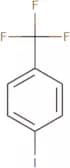
CAS :4-Iodobenzotrifluoride is a ligand that reacts with aluminium to form a cross-coupling reaction. 4-Iodobenzotrifluoride is used as a reagent in the synthesis of functional groups. The reaction mechanism for this process includes nucleophilic attack of the electrophilic aluminum, followed by protonation and reductive elimination. This process also occurs in nature when dimethyl fumarate is oxidized by molecular oxygen to produce 4-iodobenzotrifluoride.Formule :C7H4F3IDegré de pureté :Min. 95%Masse moléculaire :272.01 g/molO-tert-Butyl-D-serine methyl ester hydrochloride
CAS :Please enquire for more information about O-tert-Butyl-D-serine methyl ester hydrochloride including the price, delivery time and more detailed product information at the technical inquiry form on this pageFormule :C8H17NO3·HClDegré de pureté :Min. 95%Masse moléculaire :211.69 g/mol3',5'-Dibromo-2'-hydroxyacetophenone
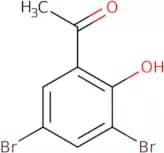
CAS :Please enquire for more information about 3',5'-Dibromo-2'-hydroxyacetophenone including the price, delivery time and more detailed product information at the technical inquiry form on this pageFormule :C8H6Br2O2Degré de pureté :Min. 95%Masse moléculaire :293.94 g/mol[2-(1-Ethyl-1H-indol-3-yl)-1-methylethyl]amine hydrochloride
CAS :Produit contrôléPlease enquire for more information about [2-(1-Ethyl-1H-indol-3-yl)-1-methylethyl]amine hydrochloride including the price, delivery time and more detailed product information at the technical inquiry form on this pageFormule :C13H18N2Degré de pureté :Min. 95%Masse moléculaire :202.3 g/mol2,2'-Dichlorodiethyl ether
CAS :Produit contrôlé2,2'-Dichlorodiethyl ether (2,2-DDE) is a cationic surfactant that is used in the production of fluorocarbons and other chemicals. It is also used in wastewater treatment as an oxidizing agent. 2,2'-DDE is toxic to humans, with a blood group toxicity profile similar to that of ethylene glycol and diethylene glycol. 2,2'-DDE can be found in the environment due to its use as a component in products and its presence in wastewaters. 2,2'-DDE has been shown to be reactive with hydrogen fluoride and oxidation catalyst, which may cause interactive effects when it is present at high concentrations. This chemical has been shown to induce cell death through histological analysis on cell cultures. Reaction mechanism for this chemical is not known.Formule :C4H8Cl2ODegré de pureté :Min. 95%Couleur et forme :Clear LiquidMasse moléculaire :143.01 g/mol[chloro(difluoro)methyl]benzene
CAS :Hexamethylphosphoramide is a liquid crystal composition that can be used to produce polymerizable materials. It is a colorless, odorless and toxic liquid at room temperature. Hexamethylphosphoramide contains six nitrogen atoms, which are nucleophilic and can react with hydrogen chloride or chlorine atom in the reaction solution to form an elimination product. This process is accompanied by the release of heat and radiation. Hexamethylphosphoramide forms polymers with aluminium and hydrogen fluoride as the initiator. The elimination rate is high for this compound under radiation, which allows it to be used as a polymerization initiator. Hexamethylphosphoramide also reacts with aromatic hydrocarbons to form chloro(difluoro)methylbenzeneFormule :C7H5ClF2Degré de pureté :Min. 95%Masse moléculaire :162.56 g/mol3,4-Diaminobenzotrifluoride
CAS :3,4-Diaminobenzotrifluoride is a photophysical agent that emits light of a specific wavelength when irradiated with ultraviolet light. It has been shown to inhibit the growth of human cervical carcinoma cells in vitro and to cause apoptosis in these cells. 3,4-Diaminobenzotrifluoride also inhibits the proliferation of human liver and lung cancer cells in vitro. The mechanism by which this agent causes cell death is unknown. 3,4-Diaminobenzotrifluoride is an acid catalyst and stabilizes the chloride ion. This agent may inhibit DNA synthesis or affect proteins that are involved in signal transduction pathways for cell proliferation.Formule :C7H7F3N2Degré de pureté :Min. 95%Couleur et forme :PowderMasse moléculaire :176.14 g/mol3-Picolyl chloride hydrochloride
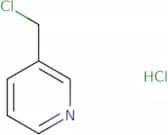
CAS :3-Picolyl chloride hydrochloride is a white crystalline solid that can be obtained by the reaction of thionyl chloride and 3-picolyl chloride. It has a melting point of 146°C, a boiling point of 317°C, and a density of 1.33g/cm3. The compound exhibits luminescence properties when exposed to ultraviolet light or x-rays. 3-Picolyl chloride hydrochloride is a synthetic compound that may be used as an intermediate in the preparation of other compounds with anti-inflammatory, antihistamine, or antimalarial activities.
Formule :C6H6NCl·HClDegré de pureté :Min. 95%Masse moléculaire :164.03 g/mol3-Nitro-4-chloro-benzotrifluoride
CAS :3-Nitro-4-chloro-benzotrifluoride is a nucleophilic reagent that reacts with aryl chlorides, such as phenoxazine and chloride, to give the corresponding nitro compounds. The reaction yield is dependent on the solvent, with higher yields obtained in n-dimethyl formamide than in dichloromethane. 3-Nitro-4-chloro-benzotrifluoride has been investigated for its potential use in cancer therapy. It inhibits the proliferation of a number of cancer cells, including resistant mutants. The deuterium isotope effect has also been used to determine the mechanism of action of 3-nitro-4-chloro benzo trifluoride.Formule :C7H3ClF3NO2Degré de pureté :Min. 98.0%Couleur et forme :Clear LiquidMasse moléculaire :225.55 g/molB-Chlorocatecholborane
CAS :B-chlorocatecholborane is a nonpolar solvent that is used in the synthesis of drugs and other organic compounds. It reacts with trifluoromethanesulfonic acid to form a coordination complex, which can be used to synthesize pharmaceuticals. B-chlorocatecholborane can also be used for solid-phase synthesis, which offers an efficient method for chemical reactions. This reagent has been shown to react with 5-hydroxytryptamine 4 (5-ht4) receptor, which is involved in the regulation of appetite and sleep. It also reacts with 2-arachidonoylglycerol (2AG), a lipid molecule that mediates the effects of cannabis on appetite, pain and memory. The structure of this compound was determined using nuclear magnetic resonance spectroscopy and mass spectrometry. The biological properties of B-chlorocatecholborane have not yet been studied.Formule :C6H4BClO2Degré de pureté :Min. 95%Couleur et forme :PowderMasse moléculaire :154.36 g/mol4-(Trifluoromethyl)phenylacetylene
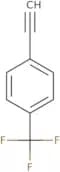
CAS :4-(Trifluoromethyl)phenylacetylene is a functional group that has been synthesized by reacting an azide with a terminal alkynes. 4-(Trifluoromethyl)phenylacetylene can be used as a ligand in biomolecular syntheses and has shown fluorescence properties. It has been used to study the reactivity of metal complexes, such as copper and mercury, with other ligands. The crystal x-ray diffraction of 4-(trifluoromethyl)phenylacetylene shows that it is an unsymmetrical molecule. This functional group is not commercially available but can be recycled.Formule :C9H5F3Degré de pureté :Min. 95%Couleur et forme :Clear LiquidMasse moléculaire :170.13 g/mol2-Amino-6-chloropyrazine
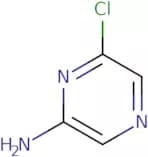
CAS :2-Amino-6-chloropyrazine (2ACP) is an inhibitor that binds to the active site on human protein kinase C (PKC). It has been shown to inhibit PKC by hydrogen bonding with the hydroxide ion, which blocks its catalytic activity. 2ACP has been studied for its potential use in treating cancer and for inhibiting amine oxidases, which are enzymes associated with inflammation and chronic obstructive pulmonary disease. The inhibition of these enzymes may help to reduce stenosis in the lungs or other organs. 2ACP also has been shown to have antimycobacterial activity against Mycobacterium tuberculosis, M. avium complex, and M. leprae by inhibiting DNA synthesis and RNA synthesis. 2ACP inhibits the kinase receptor on the cell membrane that phosphorylates a water molecule into a chlorine atom, which then reacts with hydrogen peroxide to form free radicals that can kill bacteria
Formule :C4H4ClN3Degré de pureté :Min. 95%Masse moléculaire :129.55 g/mol(2-Chloro-4-nitrophenyl)methanol
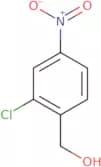
CAS :Please enquire for more information about (2-Chloro-4-nitrophenyl)methanol including the price, delivery time and more detailed product information at the technical inquiry form on this pageFormule :C7H6ClNO3Degré de pureté :Min. 95%Couleur et forme :PowderMasse moléculaire :187.58 g/mol4,4-difluorocyclohexane-1-carbaldehyde
CAS :Please enquire for more information about 4,4-difluorocyclohexane-1-carbaldehyde including the price, delivery time and more detailed product information at the technical inquiry form on this page
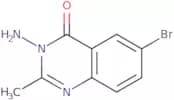
Formule :C7H10F2ODegré de pureté :Min. 95%Couleur et forme :Colorless PowderMasse moléculaire :148.15 g/mol3-Amino-6-bromo-2-methylquinazolin-4(3H)-one
CAS :Produit contrôléPlease enquire for more information about 3-Amino-6-bromo-2-methylquinazolin-4(3H)-one including the price, delivery time and more detailed product information at the technical inquiry form on this page
Formule :C9H8BrN3ODegré de pureté :Min. 95%Masse moléculaire :254.08 g/molDichloro(1,1-bis(diphenylphosphino)ferrocene)palladium(II)acetoneadduct
CAS :Produit contrôléPlease enquire for more information about Dichloro(1,1-bis(diphenylphosphino)ferrocene)palladium(II)acetoneadduct including the price, delivery time and more detailed product information at the technical inquiry form on this page
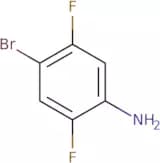
Formule :C37H34Cl2FeOP2PdDegré de pureté :Min. 95%Masse moléculaire :789.78 g/mol4-Bromo-2,5-difluoroaniline
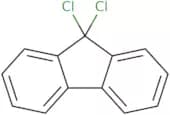
CAS :A useful building block for organic synthesis.Formule :C6H4BrF2NDegré de pureté :Min. 95%Masse moléculaire :208 g/mol9,9-Dichlorofluorene
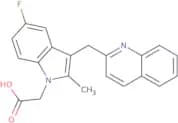
CAS :9,9-Dichlorofluorene is a bifluorenylidene that reacts with hydrochloric acid to form the trifluoroacetate anion. It is nucleophilic and can be used in organic synthesis to form carbon-fluorine bonds or chloroformates. 9,9-Dichlorofluorene also reacts with chloride ions to form the chloride anion. This reaction yields a high yield and has been used to synthesize other chemicals, including thioacetals and dimethylformamide. 9,9-Dichlorofluorene reacts with protonated nucleophiles in DMF and forms thioacetals following deprotection by hydrochloric acid. The reaction yield of this process is high and it has been extensively studied by NMR spectroscopy.Formule :C13H8Cl2Degré de pureté :Min. 95%Couleur et forme :PowderMasse moléculaire :235.11 g/molTimapiprant
CAS :Produit contrôléTimapiprant is an amide that acts as a selective inhibitor of the prostanoid receptor CRTH2, which is involved in regulating the inflammatory response. Timapiprant inhibits skin eosinophilia, which is associated with inflammatory skin diseases such as atopic dermatitis and psoriasis. It has been shown to be safe in clinical trials and has a good safety profile. The drug's mechanism of action may be due to its ability to inhibit the production of IL-4 and IL-13 by Th2 cells and its ability to inhibit lung function. Timapiprant has shown efficacy in treating allergic rhinitis, asthma, chronic obstructive pulmonary disease, erythema multiforme, pyoderma gangrenosum, and other types of inflammatory skin diseases.Formule :C21H17FN2O2Degré de pureté :Min. 95%Masse moléculaire :348.37 g/mol4-Chlorophenylacetylene
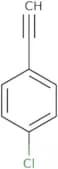
CAS :4-Chlorophenylacetylene is a compound that is created by the reaction of chloroform and acetylene. The reaction yield can be increased by using a catalytic amount of silicon, which increases the rate of hydration. Terminal alkynes react with 4-chlorophenylacetylene to form polymers, which are insoluble in most solvents. 4-Chlorophenylacetylene has been shown to have inhibitory activity against the growth of bacteria and fungi when tested in model species such as Escherichia coli and Saccharomyces cerevisiae.Formule :C8H5ClDegré de pureté :Min. 95%Couleur et forme :PowderMasse moléculaire :136.58 g/mol


![[2-(1-Ethyl-1H-indol-3-yl)-1-methylethyl]amine hydrochloride](/_next/image/?url=https%3A%2Fstatic.cymitquimica.com%2Fproducts%2F3D%2Fthumb-webp%2FFE123632.webp&w=3840&q=75)

![[chloro(difluoro)methyl]benzene](/_next/image/?url=https%3A%2Fstatic.cymitquimica.com%2Fproducts%2F3D%2Fthumb-webp%2FFC104724.webp&w=3840&q=75)