Halogénures organiques
Dans cette catégorie, vous trouverez des molécules organiques contenant un ou plusieurs atomes d'halogène dans leur structure. Ces halogénures organiques incluent des composés bromés, iodés, chlorés et des halogénures cycliques. Les halogénures organiques sont largement utilisés en synthèse organique, en pharmaceutique, en agrochimie et en science des matériaux en raison de leur réactivité et de leur capacité à subir une variété de transformations chimiques. Chez CymitQuimica, nous offrons une sélection complète d'halogénures organiques de haute qualité pour soutenir vos applications de recherche et industrielles, garantissant une performance fiable et efficace dans vos projets synthétiques et analytiques.
Sous-catégories appartenant à la catégorie "Halogénures organiques"
20437 produits trouvés pour "Halogénures organiques"
Trier par
Degré de pureté (%)
0
100
|
0
|
50
|
90
|
95
|
100
(2-Bromoethyl)trimethylammonium Bromide
CAS :Produit contrôlé<p>Applications (2-Bromoethyl)trimethylammonium Bromide (cas# 2758-06-7) is a compound useful in organic synthesis.<br> Not a dangerous good if item is equal to or less than 1g/ml and there is less than 100g/ml in the package<br>References Paetzel, M., et al.: J. Biol. Chem., 272, 9994 (1997), Francavilla, C., et al.: Bioorg. Med. Chem. Lett., 19, 2731 (2009),<br></p>Formule :C5H13BrN·BrCouleur et forme :NeatMasse moléculaire :246.971,3-Difluoro-2-propanol (Stabilized with NaF)
CAS :Produit contrôlé<p>Applications 1,3-Difluoro-2-propanol is the major ingredient of Gliftor (G410000), a rodenticide. 1,3-Difluoro-2-propanol was also used in the synthesis of 1,3-difluoroacetone.<br> Not a dangerous good if item is equal to or less than 1g/ml and there is less than 100g/ml in the package<br>References Menon, K., et al.: J. Biochem. Mol. Toxicol., 15, 47 (2001); Xie, W., et al.: J. Hygiene Res. 31, 316 (2002); Menon, K., et al.: J. Biochem. Mol. Toxicol., 15, 47 (2001)<br></p>Formule :C3H6F2OCouleur et forme :NeatMasse moléculaire :96.08(Chloromethyl)cyclopropane (Technical Grade)
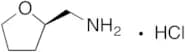
CAS :Produit contrôlé<p>Applications (Chloromethyl)cyclopropane is a used as a reagent to synthesize 6-alkylamino-9-alkylpurines, compounds that have potential to be antipsychotic agents. (Chloromethyl)cyclopropane is also used as a reagent to prepare acylmorphinans, a class of compounds that have analgesic effects in rats.<br> Not a dangerous good if item is equal to or less than 1g/ml and there is less than 100g/ml in the package<br>References Kelley, J., et al.: J. Med. Chem., 40, 3207 (1997); Mohacsi, E., et al.: J. Med. Chem., 28, 1177 (1985)<br></p>Formule :C4H7ClCouleur et forme :NeatMasse moléculaire :90.55(2R)-Tetrahydro-2-furanmethanamine Hydrochloride
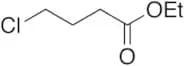
CAS :Produit contrôlé<p>Stability Hygroscopic<br>Applications (2R)-Tetrahydro-2-furanmethanamine is a stereoisomer of Tetrahydro-2-furanmethanamine (T293545) which is used in the synthesis of novel topoisomerase I targeting anti-cancer agents with mild to potent cytotoxic activity. Tetrahydro-2-furanmethanamine (T293545) is also used in the discovery and synthesis of orally bioavailable stearoyl-CoA desaturase 1 inhibitors.<br>References Lopez-Rodriguez, M. et al.: 44, 4504 (2001); Liu, G. et al.: J. Med. Chem., 50, 3086 (2007);<br></p>Formule :C5H11NO·HClCouleur et forme :NeatMasse moléculaire :101.15 + 36.46Ethyl 4-Chlorobutyrate
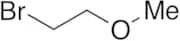
CAS :Produit contrôlé<p>Applications Reagent used in the preparation of cyclopropane derivatives.<br>References Antipenko, L., et al.: Chem. Pharm. Bull., 57, 580 (2009), Kumar, A., et al.: Bioorg. Med. Chem., 17, 5285 (2009),<br></p>Formule :C6H11ClO2Couleur et forme :NeatMasse moléculaire :150.62-Bromoethyl Methyl Ether
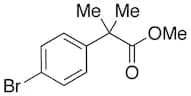
CAS :Produit contrôlé<p>Applications 2-Bromoethyl Methyl Ether was used as a reactant for the preparation of alkyl ethers of β-alkylcholine salts.<br> Not a dangerous good if item is equal to or less than 1g/ml and there is less than 100g/ml in the package<br>References Major, R.T., Cline, J.K.: J. Am. Chem. Soc., 55, 2504 (1933)<br></p>Formule :C3H7BrOCouleur et forme :NeatMasse moléculaire :138.99Methyl 2-(4-Bromophenyl)-2,2-dimethylacetate
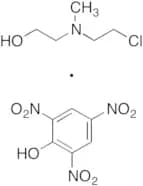
CAS :Produit contrôlé<p>Applications Methyl 2-(4-Bromophenyl)-2,2-dimethylacetate (cas# 154825-97-5) is a compound useful in organic synthesis.<br></p>Formule :C11H13BrO2Couleur et forme :NeatMasse moléculaire :257.12N-(2-Chloroethyl)-N-(2-hydroxyethyl) Methylamine Picrate
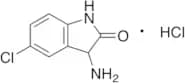
CAS :Produit contrôléFormule :C5H12ClNO•C6H3N3O7Couleur et forme :NeatMasse moléculaire :137.61+(229.10)3-Amino-5-chloro-1,3-dihydro-2H-indol-2-one Hydrochloride
CAS :Produit contrôlé<p>Applications 3-amino-5-chloro-1,3-dihydro-2H-indol-2-one hydrochloride (cas# 1104895-64-8) is a useful research chemical.<br></p>Formule :C8H7ClN2O·HClCouleur et forme :NeatMasse moléculaire :219.0684-Fluororesorcinol
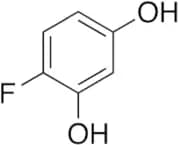
CAS :Produit contrôlé<p>Applications Reagent used in the preparation of fluorescent dyes and indicators.<br>References Link, J., et al.: J. Med. Chem., 48, 5295 (2005), Martin, V., et al.: Bioorg. Med. Chem. Lett., 15, 1851 (2005),<br></p>Formule :C6H5FO2Couleur et forme :NeatMasse moléculaire :128.1Nickel(II) chloride hexahydrate
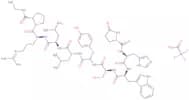
CAS :<p>Nickel chloride hexahydrate is a compound that belongs to the group of inorganic compounds. It has a linear range and is used as an electrode material for electrochemical measurements. Nickel chloride hexahydrate forms a helical structure with a supramolecular assembly of the metal ions in its crystal lattice, which is stabilized by hydrogen bonding. This compound can be used in FTIR spectroscopy and deionized water as well as other electrolytes to measure the concentration of chloride, magnesium, and other ions.</p>Formule :NiCl2•(H2O)6Degré de pureté :Min. 95%Couleur et forme :PowderMasse moléculaire :237.69 g/mol(Des-Gly10,D-Leu6,D-Leu7,Pro-NHEt 9)-LHRH trifluoroacetate salt
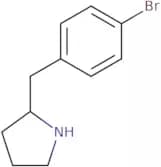
CAS :<p>Please enquire for more information about (Des-Gly10,D-Leu6,D-Leu7,Pro-NHEt 9)-LHRH trifluoroacetate salt including the price, delivery time and more detailed product information at the technical inquiry form on this page</p>Formule :C59H84N16O12Degré de pureté :Min. 95%Masse moléculaire :1,209.4 g/mol2-(4-Bromo-benzyl)-pyrrolidine
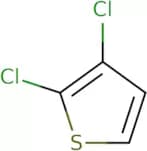
CAS :Produit contrôlé<p>Please enquire for more information about 2-(4-Bromo-benzyl)-pyrrolidine including the price, delivery time and more detailed product information at the technical inquiry form on this page</p>Formule :C11H14BrNDegré de pureté :Min. 95%Masse moléculaire :240.14 g/mol2,3-Dichlorothiophene
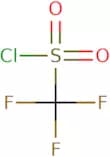
CAS :<p>2,3-Dichlorothiophene is a heterocyclic compound that can be used as an intermediate in organic synthesis. The compound has two isomers, 2,2-dichlorothiophene and 2,3-dichlorothiophene. The first isomer reacts with water to form a protonated species and the second isomer reacts with chlorine to form a protonated species. The thermodynamic parameters for the reaction of 2,3-dichlorothiophene with chlorine are more favorable than those for the reaction of 2,2-dichlorothiophene with chlorine. This means that the equilibrium lies to the right when 2,3-chlorothiophene is reacted with chlorine (to form 2,3-dichloroethane), but not when 2,2-chlorothiophene is reacted with chlorine (to form chloroform).</p>Formule :C4H2Cl2SDegré de pureté :Min. 95%Couleur et forme :Clear LiquidMasse moléculaire :153.03 g/molTrifluoromethanesulfonyl chloride
CAS :<p>Trifluoromethanesulfonyl chloride is a reactive chemical that reacts with nucleophilic groups in biological molecules. It is used for the treatment of infectious diseases and metabolic disorders. Trifluoromethanesulfonyl chloride has been shown to have receptor activity against various microorganisms, including resistant strains. Structural analysis has shown that the active form of trifluoromethanesulfonyl chloride binds to malonic acid and other coumarin derivatives. This binding prevents the formation of hydrogen bonds, which would otherwise stabilize the molecule, leading to its degradation. Trifluoromethanesulfonyl chloride also reacts with magnesium salt to produce trifluoroacetic acid, which is an organic solvent that can be used as a reaction medium or a reagent in organic synthesis.</p>Formule :CClF3O2SDegré de pureté :Min. 95%Masse moléculaire :168.52 g/molLithium difluoro(oxalato)borate
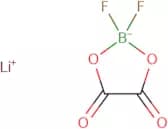
CAS :<p>Lithium difluoro(oxalato)borate is an electron-microscopic corrosion inhibitor that belongs to the class of ester compounds. It is a solid compound that has been shown to be efficacious against oxidation products. The efficiency of this compound is dependent on the concentration and purity of lithium difluoro(oxalato)borate and the type of metal, such as steel or aluminum. Lithium difluoro(oxalato)borate can be used in rechargeable batteries, due to its transport properties, high salt tolerance, and low self-discharge rate. This compound has been shown to have functional groups that are capable of interacting with hydrogen fluoride in an organic solution.</p>Formule :C2BF2O4•LiDegré de pureté :Min. 95%Masse moléculaire :143.77 g/mol2-Methyl-4-chlorophenoxyacetic acid
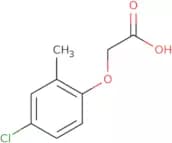
CAS :<p>2-Methyl-4-chlorophenoxyacetic acid is a sodium salt of 2-methyl-4-chlorophenoxyacetic acid. It is a herbicide that inhibits photosynthesis by disrupting the electron transport chain in chloroplasts. The hydroxyl group on the phenoxy ring is responsible for its herbicidal activity. 2-Methyl-4-chlorophenoxyacetic acid has been shown to cause significant cell death in tissue culture, which may be due to its ability to inhibit enzymes such as acetylcholinesterase, phosphodiesterase, and carboxypeptidase A2. This chemical also has carcinogenic potential, but no toxicological studies have been conducted in humans or animals.</p>Formule :C9H9ClO3Degré de pureté :Min. 95%Masse moléculaire :200.62 g/mol(1S,3S)-Methyl 3-aminocyclobutane carboxylate hydrochloride
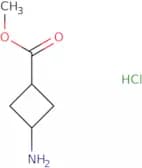
CAS :<p>Please enquire for more information about (1S,3S)-Methyl 3-aminocyclobutane carboxylate hydrochloride including the price, delivery time and more detailed product information at the technical inquiry form on this page</p>Formule :C6H12ClNO2Degré de pureté :Min. 95%Masse moléculaire :165.62 g/mol3,5-Dibromopyrazin-2-amine
CAS :<p>3,5-Dibromopyrazin-2-amine is a triethyl orthoformate derivative that reacts with formamide to form 3,5-dibromopyrazine. The reaction time is typically less than 10 minutes and the yield is high. The product can be stored in a dry, inert atmosphere for up to 3 months without degradation. The compound has been shown to inhibit cyclic nucleotide phosphodiesterase (PDE) enzymes and cancer cells in vitro.</p>Formule :C4H3Br2N3Degré de pureté :Min. 95%Couleur et forme :White To Yellow To Orange SolidMasse moléculaire :252.89 g/molH-Pro-AMC hydrobromide salt
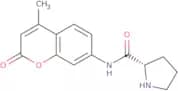
CAS :<p>H-Pro-AMC hydrobromide salt is an enzyme that belongs to the family of proteases. H-Pro-AMC hydrobromide salt has been shown to have carboxypeptidase activity, which cleaves peptides at the C terminus of a single amino acid. It has also been shown to interact with other enzymes and proteins, such as recombinant proteins and enzymes from the ubiquitin-proteasome system. This enzyme's ability to cleave peptides at the C terminus of a single amino acid makes it useful for protein sequencing. H-Pro-AMC hydrobromide salt has also been sequenced and found to share homology with other proteases, such as subtilisin E.</p>Formule :C15H16N2O3Degré de pureté :Min. 95%Masse moléculaire :272.3 g/mol