Halogénures organiques
Dans cette catégorie, vous trouverez des molécules organiques contenant un ou plusieurs atomes d'halogène dans leur structure. Ces halogénures organiques incluent des composés bromés, iodés, chlorés et des halogénures cycliques. Les halogénures organiques sont largement utilisés en synthèse organique, en pharmaceutique, en agrochimie et en science des matériaux en raison de leur réactivité et de leur capacité à subir une variété de transformations chimiques. Chez CymitQuimica, nous offrons une sélection complète d'halogénures organiques de haute qualité pour soutenir vos applications de recherche et industrielles, garantissant une performance fiable et efficace dans vos projets synthétiques et analytiques.
Sous-catégories appartenant à la catégorie "Halogénures organiques"
20437 produits trouvés pour "Halogénures organiques"
Trier par
Degré de pureté (%)
0
100
|
0
|
50
|
90
|
95
|
100
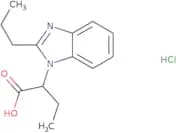
2-(2-Propyl-1H-benzimidazol-1-yl)butanoic acid hydrochloride
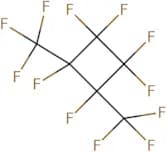
CAS :Produit contrôlé<p>Please enquire for more information about 2-(2-Propyl-1H-benzimidazol-1-yl)butanoic acid hydrochloride including the price, delivery time and more detailed product information at the technical inquiry form on this page</p>Formule :C14H18N2O2Degré de pureté :Min. 95%Masse moléculaire :246.31 g/molPerfluorodimethylcyclobutane
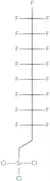
CAS :Produit contrôlé<p>Perfluorodimethylcyclobutane is an organic compound that belongs to the class of perfluorinated compounds. It is a polymer film-forming agent with a chemical formula of C5H8F2. The chemical structure of this drug consists of a chlorine atom, two fluorine atoms, and two hydrogen atoms. The molecular weight is 126.7 g/mol. Perfluorodimethylcyclobutane has been used in microcapsules as an analytical chemistry tool and in the development of pharmaceutical drugs for cardiac conditions. This molecule has been used as a chromatographic science analytical method to identify fatty acids in petroleum products and chlorinated solvents.</p>Formule :C6F12Degré de pureté :Min. 95%Masse moléculaire :300.05 g/molTrichloro(1H,1H,2H,2H-heptadecafluorodecyl)silane
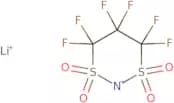
CAS :Produit contrôlé<p>Trichloro(1H,1H,2H,2H-heptadecafluorodecyl)silane is a chemical substance that belongs to the group of synthetic substances. It has been shown to have antiviral properties in clinical studies. Trichloro(1H,1H,2H,2H-heptadecafluorodecyl)silane is used to synthesize thymidylate by a two-step process. The first step involves the hydrolysis of sodium hydroxide solution in the presence of hydroxide solution and chemical substances. The second step involves the reaction of synthase enzyme with waveform and water vapor to produce monolayer. This product also has antiviral activity against human pathogens such as HIV and herpes simplex virus type 1 (HSV-1).</p>Formule :C10H4Cl3F17SiDegré de pureté :Min. 95%Couleur et forme :Clear LiquidMasse moléculaire :581.56 g/molLithium 1,1,2,2,3,3-Hexafluoropropane-1,3-disulfonimide
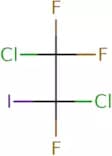
CAS :<p>Lithium 1,1,2,2,3,3-hexafluoropropane-1,3-disulfonimide is a compound of lithium and fluorine. It is an additive that can be used in the manufacture of polymers and other materials. Lithium 1,1,2,2,3,3-hexafluoropropane-1,3-disulfonimide has been shown to act as a transition metal ion catalyst for the oxidation of fluoride to form hydrogen gas. This compound has also been shown to promote the formation of layered films made up of transition metals such as nickel oxide. Lithium 1,1,2,2,3,3-hexafluoropropane-1</p>Formule :C3F6LiNO4S2Degré de pureté :Min. 95%Masse moléculaire :299.1 g/mol1,2-Dichloro-2-Iodo-1,1,2-Trifluoroethane
CAS :<p>Tetrafluoroethane, also known as Freon-12, is a chlorofluorocarbon that has been identified as a potent greenhouse gas. Tetrafluoroethane is a byproduct of the industrial production of fluorochemicals, and its disposal in landfill sites has led to soil contamination. 1,2-Dichloro-2-iodo-1,1,2-trifluoroethane (CIF) is a halogenated hydrocarbon that can be synthesized from tetrafluoroethane using an electrochemical process. CIF is used as a catalyst for telomerization reactions such as the synthesis of polyethylene terephthalate (PET). The efficiency of this reaction increases with higher temperatures and lower potentials. This is due to the increased ionization energy which leads to more efficient electron transfer. The reaction mechanism for the telomerization of furan with ethylene glycol with CIF as catalyst at high</p>Formule :C2Cl2F3IDegré de pureté :Min. 95%Masse moléculaire :278.83 g/molB-Chlorocatecholborane
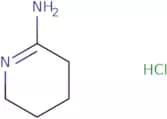
CAS :<p>B-chlorocatecholborane is a nonpolar solvent that is used in the synthesis of drugs and other organic compounds. It reacts with trifluoromethanesulfonic acid to form a coordination complex, which can be used to synthesize pharmaceuticals. B-chlorocatecholborane can also be used for solid-phase synthesis, which offers an efficient method for chemical reactions. This reagent has been shown to react with 5-hydroxytryptamine 4 (5-ht4) receptor, which is involved in the regulation of appetite and sleep. It also reacts with 2-arachidonoylglycerol (2AG), a lipid molecule that mediates the effects of cannabis on appetite, pain and memory. The structure of this compound was determined using nuclear magnetic resonance spectroscopy and mass spectrometry. The biological properties of B-chlorocatecholborane have not yet been studied.</p>Formule :C6H4BClO2Degré de pureté :Min. 95%Couleur et forme :PowderMasse moléculaire :154.36 g/mol2-Iminopiperidine hydrochloride
CAS :<p>2-Iminopiperidine hydrochloride is an acetylcholine receptor agonist. It is used as a biochemical tool to study the function of acetylcholine receptors, which are important for the transmission of nerve impulses from the brain and spinal cord to other parts of the body. 2-Iminopiperidine hydrochloride has been shown to be effective in treating Alzheimer's disease, and may be a factor receptor for this disease. The compound has also been shown to have efficient methods of introducing into cells, such as hydrochloric acid and dimethyl formamide. 2-Iminopiperidine hydrochloride binds with phosphoinositides, which are important in intracellular signal transduction pathways. This compound is expressed at M1 receptors in various tissues, including the heart and gastrointestinal tract.</p>Formule :C5H11ClN2Degré de pureté :Min. 95%Masse moléculaire :134.61 g/molrac 2-palmitoyl-3-chloropropanediol
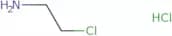
CAS :<p>Please enquire for more information about rac 2-palmitoyl-3-chloropropanediol including the price, delivery time and more detailed product information at the technical inquiry form on this page</p>Formule :C19H37ClO3Degré de pureté :Min. 95%Masse moléculaire :348.95 g/mol2-Chloroethylamine hydrochloride
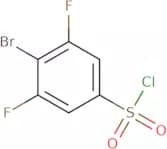
CAS :<p>2-Chloroethylamine hydrochloride is a chemical compound that has a hydroxyl group, which is an epoxide. It reacts with itself to form aziridine and amines, which are genotoxic compounds. 2-Chloroethylamine hydrochloride is used as an analytical method for the determination of the concentration of epoxides in air samples and can be produced by reacting chlorine with ethylamine. The reaction mechanism for this process is not well understood but it may involve coordination geometry and particle formation. This chemical compound can also be found in pharmaceutical drugs designed to treat cancer or heart disease.</p>Formule :C2H6ClN•HClDegré de pureté :Min. 95%Couleur et forme :PowderMasse moléculaire :115.99 g/mol4-Bromo-3,5-difluorobenzenesulfonyl chloride
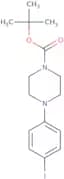
CAS :<p>Please enquire for more information about 4-Bromo-3,5-difluorobenzenesulfonyl chloride including the price, delivery time and more detailed product information at the technical inquiry form on this page</p>Formule :C6H2BrF2O2ClSDegré de pureté :Min. 95%Couleur et forme :PowderMasse moléculaire :291.5 g/moltert-Butyl 4-(4-iodophenyl)tetrahydro-1(2H)-pyrazinecarboxylate
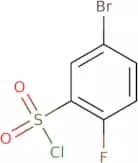
CAS :Produit contrôlé<p>Please enquire for more information about tert-Butyl 4-(4-iodophenyl)tetrahydro-1(2H)-pyrazinecarboxylate including the price, delivery time and more detailed product information at the technical inquiry form on this page</p>Formule :C15H21IN2O2Degré de pureté :Min. 95%Masse moléculaire :388.24 g/mol5-Bromo-2-fluoro-benzenesulfonyl chloride
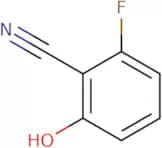
CAS :<p>5-Bromo-2-fluoro-benzenesulfonyl chloride (5BFCl) is a chemical reagent used in organic synthesis. It is a chlorinating agent that gives a high yield of 5-bromo-2-fluoroaniline and chloride. 5BFCl reacts with electron rich aromatic compounds, such as anilines, to form sulfones. The reaction is highly selective for electron rich aromatic compounds and can be used to produce target products from the desired reactant.</p>Formule :C6H3BrClFO2SDegré de pureté :Min. 95%Couleur et forme :PowderMasse moléculaire :273.51 g/mol2-Fluoro-6-hydroxybenzonitrile
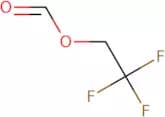
CAS :<p>2-Fluoro-6-hydroxybenzonitrile is a white crystalline solid that is soluble in water and ethanol. It hydrolyzes in aqueous solutions to form phenols, carboxylic acids and methoxybenzenes. 2-Fluoro-6-hydroxybenzonitrile may be used as an intermediate in the synthesis of other organic compounds.</p>Formule :C7H4FNODegré de pureté :Min. 95%Couleur et forme :PowderMasse moléculaire :137.11 g/mol2,2,2-Trifluoroethyl Formate
CAS :<p>2,2,2-Trifluoroethyl Formate is an organic compound that can be used as a fuel in diesel engines. It is a colorless liquid with a boiling point of -14.5°C and a molecular weight of 60.06 g/mol. 2,2,2-Trifluoroethyl Formate is not soluble in water and has very low solubility in other organic solvents. This compound has been shown to have antiviral and antibacterial properties against hepatitis C virus and infectious diseases such as tuberculosis and malaria. 2,2,2-Trifluoroethyl Formate also has the ability to inhibit the activity of enzymes such as ns3 protease and amines oxidases. The vibrational spectra show that the molecule’s structure includes at least one β-unsaturated ketone moiety with an acyclic bond on the second carbon from the end of the chain (C2). This structure also contains</p>Formule :C3H3F3O2Degré de pureté :Min. 95%Masse moléculaire :128.05 g/molEthenesulfonyl chloride
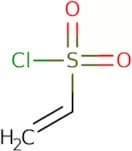
CAS :<p>Ethenesulfonyl chloride is a chemical that is used as an inhibitor of amine oxidases in the treatment of inflammatory and autoimmune diseases. It also inhibits the formation of reactive oxygen species by inhibiting intracellular amines, which are required for the generation of reactive oxygen species. Ethenesulfonyl chloride is a nucleophile that reacts with protons from water to form a hydroxyl group, which can then react with chlorine atoms to form hydrogen chloride. This reaction results in the release of heat, which may be useful for killing bacteria or other microbes.</p>Formule :C2H3ClO2SDegré de pureté :Min. 95%Masse moléculaire :126.56 g/mol2-Chloro-5-methoxyaniline
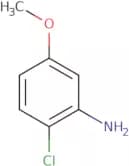
CAS :<p>2-Chloro-5-methoxyaniline is a primary amine that has structural isomers. It is also a lactam with an aromatic ring. 2-Chloro-5-methoxyaniline can be used as a cytotoxic compound. It can inhibit the uptake of unlabeled chemical ionization by cells and has been shown to have potent inhibition of brain uptake in rats. 2-Chloro-5-methoxyaniline has been shown to be effective against Alzheimer's disease in clinical studies. Chemical ionization mass spectrometry has demonstrated that this compound binds to the molecule acetylcholine, which is involved in the neurotransmitter system.</p>Formule :C7H8ClNODegré de pureté :Min. 95%Couleur et forme :Colourless To Yellow To Brown Solid Or Liquid (May Vary)Masse moléculaire :157.6 g/mol2-(Trifluoromethyl)phenothiazine
CAS :<p>2-(Trifluoromethyl)phenothiazine is a reactive molecule that can form free radicals and covalent bonds with other molecules. The electron-attracting chlorine atom makes it a good model system for studying the effects of chlorine on other substances. 2-(Trifluoromethyl)phenothiazine has been shown to have anticancer activity, inhibiting tumor growth in mice. It also prevents the development of colorectal adenocarcinoma in rats and the formation of colonic polyps in mice by inducing apoptosis. This compound also inhibits DNA synthesis and protein synthesis, which may be due to its ability to react with hydroxyl groups on proteins or nucleic acids as well as its ability to form hydrogen bonds.</p>Formule :C13H8F3NSDegré de pureté :Min. 95%Masse moléculaire :267.27 g/mol5-chloro-1-phenyl-1h-1,2,3,4-tetraazole
CAS :<p>5-Chloro-1-phenyl-1H-1,2,3,4-tetrazole (5CAT) is a dihedral molecule that contains phenyl groups and p-hydroxybenzoic acid. The argon (Ar) functionalities are activated by reaction with hydroxyl group to form the cross-coupling reaction between 5CAT and chloride (Cl). 5CAT has been shown to be a good substrate for 2D Nuclear Magnetic Resonance (NMR), as it has a protonated hydroxyl group. This functional group is also present on the chloro group of the 5CAT molecule. The vibrational analysis from the protonated hydroxyl group can be observed in the spectrum of 5CAT.</p>Formule :C7H5N4ClDegré de pureté :Min. 95%Masse moléculaire :180.59 g/mol4-Iodo-benzeneethanamine HCl (1:1)
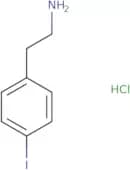
CAS :Produit contrôlé<p>Please enquire for more information about 4-Iodo-benzeneethanamine HCl (1:1) including the price, delivery time and more detailed product information at the technical inquiry form on this page</p>Formule :C8H11ClINDegré de pureté :Min. 95%Masse moléculaire :283.54 g/mol5-Fluoropyridine-2-boronic acid
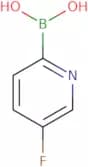
CAS :<p>Please enquire for more information about 5-Fluoropyridine-2-boronic acid including the price, delivery time and more detailed product information at the technical inquiry form on this page</p>Formule :C5H5BFNO2Degré de pureté :Min. 95%Masse moléculaire :140.91 g/mol