Halogénures organiques
Dans cette catégorie, vous trouverez des molécules organiques contenant un ou plusieurs atomes d'halogène dans leur structure. Ces halogénures organiques incluent des composés bromés, iodés, chlorés et des halogénures cycliques. Les halogénures organiques sont largement utilisés en synthèse organique, en pharmaceutique, en agrochimie et en science des matériaux en raison de leur réactivité et de leur capacité à subir une variété de transformations chimiques. Chez CymitQuimica, nous offrons une sélection complète d'halogénures organiques de haute qualité pour soutenir vos applications de recherche et industrielles, garantissant une performance fiable et efficace dans vos projets synthétiques et analytiques.
Sous-catégories appartenant à la catégorie "Halogénures organiques"
20437 produits trouvés pour "Halogénures organiques"
Trier par
Degré de pureté (%)
0
100
|
0
|
50
|
90
|
95
|
100
7-(2-Carbomethoxyethyl)-5-(2-chlorophenyl)-thieno-1,4-diazepin-2-one
CAS :Produit contrôlé<p>Please enquire for more information about 7-(2-Carbomethoxyethyl)-5-(2-chlorophenyl)-thieno-1,4-diazepin-2-one including the price, delivery time and more detailed product information at the technical inquiry form on this page</p>Formule :C17H15ClN2O3SDegré de pureté :Min. 95%Masse moléculaire :362.83 g/molN-Demethyltramadol hydrochloride
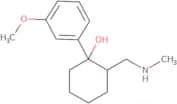
CAS :<p>N-Demethyltramadol hydrochloride is a drug that belongs to the group of opioids. It is a metabolite of tramadol, which is an analgesic and antitussive. N-Demethyltramadol hydrochloride binds to opioid receptors in the brain and spinal cord, inhibiting the perception of pain and cough reflex. Tramadol was first synthesized in Germany in 1934 as an antidepressant, but its use was limited because it caused too many side effects. N-Demethyltramadol hydrochloride has been shown to be effective for treating long-term pain relief, but can cause addiction and dependency when used for long periods of time. The transformation of tramadol to n-demethyltramadol hydrochloride occurs in fruit, which may explain why this drug is found in wastewater samples from fruit processing plants.</p>Formule :C15H23NO2·HClDegré de pureté :Min. 95%Masse moléculaire :285.81 g/mol2-Cyclopentyl-4-chlorophenol
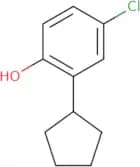
CAS :<p>2-Cyclopentyl-4-chlorophenol is a synthetic fatty acid that is used as an antiviral agent. It inhibits the synthesis of fatty acids by inhibiting the conversion of 2,4-dienoyl CoA to 3-hydroxyacyl CoA. 2-Cyclopentyl-4-chlorophenol has been shown to be effective against a number of test organisms, including bacteria such as staphylococcus and virus such as herpes simplex virus. 2-Cyclopentyl-4-chlorophenol inhibits viral protein synthesis by blocking the action of host enzymes required for this process. The target cell for this drug is the host cell infected with a virus. This drug also has antihelminthic properties and can be used to treat parasitic infections caused by schistosoma haematobium and clonorchis sinensis worms. 2CPCP's structural formula is shown below:</p>Formule :C11H13ClODegré de pureté :Min. 95%Masse moléculaire :196.67 g/molN-Methyl-5H-dibenzo[a,d]cycloheptene-5-propylamine hydrochloride
CAS :Produit contrôlé<p>N-Methyl-5H-dibenzo[a,d]cycloheptene-5-propylamine hydrochloride (NMBPD) is a drug with anti-inflammatory properties that belongs to the class of tricyclic antidepressants. It has been shown to have synergistic effects with synthetic matrix in vitro. This drug also has receptor activity and can be used to treat infectious diseases such as HIV and tuberculosis. NMBPD is excreted in the urine, which can lead to kidney fibrosis. The drug is metabolized by α1-acid glycoprotein, which may be related to its potential adverse effects on the liver and kidneys. The analytical method for quantification of NMBPD includes gas chromatography with mass spectrometry detection (GC/MS).</p>Formule :C19H22ClNDegré de pureté :Min. 95%Couleur et forme :PowderMasse moléculaire :299.84 g/molFluorobenzene
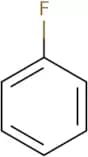
CAS :<p>Fluorobenzene is a chemical compound that has the chemical formula CHF. It is a colorless liquid with a sweet odor. Fluorobenzene is an organic compound that is used in the synthesis of epidermal growth factor and other drugs. It also has shown anti-inflammatory activity and can be used to synthesize other organic compounds, such as amides, which are used in the production of pharmaceuticals. The reaction mechanism for this process has not been identified, but it may involve hydrogen bonding between the hydroxyl group of fluorobenzene and an electron-pair acceptor, such as oxygen or nitrogen.</p>Formule :C6H5FDegré de pureté :Min. 95%Masse moléculaire :96.1 g/mol2,6-Dibromo-3-nitropyridine
CAS :<p>2,6-Dibromo-3-nitropyridine is a chemical compound that has been shown to inhibit serine protease activity. The compound was shown to be an inhibitor of the enzyme trypsin, and showed some activity against a number of other proteases. 2,6-Dibromo-3-nitropyridine has also been shown to inhibit nucleophilic alkylation of DNA bases by 2,6-dichloroquinoxaline. 2,6-Dibromo-3-nitropyridine is a targeted inhibitor that binds to the active site of the enzyme and prevents the formation of an enzyme-substrate complex. This inhibition leads to a decrease in the production of proteins essential for cell division.</p>Formule :C5H2Br2N2O2Degré de pureté :Min. 95%Masse moléculaire :281.89 g/mol2-Chloropyridine-3,5-dicarbonitrile
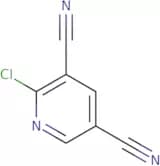
CAS :<p>2-Chloropyridine-3,5-dicarbonitrile is a potential drug that can be used as an anionic linker in the synthesis of donepezil. Donepezil is a pharmacological agent that inhibits the enzyme acetylcholinesterase and may be effective in treating Alzheimer's disease. 2-Chloropyridine-3,5-dicarbonitrile has been shown to have good profile against cholinesterase inhibitors. It binds to the active site of acetylcholinesterase and inhibits its activity. This inhibition prevents the breakdown of acetylcholine, which is required for memory and cognitive function. 2-Chloropyridine-3,5-dicarbonitrile also has molecular modeling properties and has been studied at the μm range.</p>Formule :C7H2ClN3Degré de pureté :Min. 95%Masse moléculaire :163.56 g/mol5-Bromo-3-methyl-1H-indazole
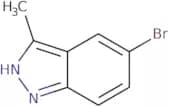
CAS :<p>5-Bromo-3-methyl-1H-indazole is an organic compound that is synthesized from lithium diisopropylamide and lithium. 5-Bromo-3-methyl-1H-indazole is a white solid with a melting point of 151°C. It reacts with anhydrous hydrogen bromide to form 5,5'-dibromoindazole. The molecular weight of this compound is 202.2 g/mol.</p>Formule :C8H7BrN2Degré de pureté :Min. 95%Masse moléculaire :211.06 g/molBarium chloride anhydrous
CAS :<p>Barium chloride anhydrous is a chemical compound with the formula BaCl2. It is soluble in water and has been used for wastewater treatment. The solubility of this compound increases as temperature decreases. Barium chloride anhydrous can also be used to measure the levels of calcium ions in cells and tissues, by measuring the fluorescence intensity produced when the compound reacts with Ca2+. This property has been utilized to study neuronal death and Ca2+ overload. Barium chloride anhydrous also exhibits biological properties, such as enzyme activity or the ability to bind coumarin derivatives. X-ray diffraction data have shown that BaCl2 consists of a cubic crystalline structure, with each barium ion coordinated by six chloride ions. In solution, BaCl2 dissociates into Ba2+ and Cl-. Water vapor may cause the formation of anhydrous sodium carbonate on surfaces of objects exposed to it. The structural analysis of this compound has been modeled using particle methods.</p>Formule :BaCl2Degré de pureté :Min. 95%Masse moléculaire :208.23 g/molN'-Cyanobenzenecarboximidamide hydrochloride
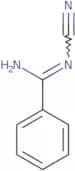
CAS :N-Cyanobenzenecarboximidamide hydrochloride (NCBCH) is an intermediate for the synthesis of azomethine dyes. It can be used to produce azo dyes with a methoxy group at the 3 position and a hydrogen atom at the 4 position. NCBCH is also an excellent substrate for chemical reactions involving fragmentation, extraction, or elimination. NCBCH can be synthesized from methyl ether and benzonitrile in the presence of benzamidine. The product is then treated with methanol to give a tautomeric mixture of benzyl and methyl ether.Formule :C8H7N3Degré de pureté :Min. 95%Masse moléculaire :145.16 g/molMethyl dichlorophosphite
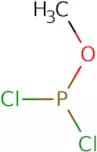
CAS :<p>Methyl dichlorophosphite is a chemical compound that is used as an antimicrobial agent. It reacts with hydroxyl groups on the surface of bacteria, forming a polymerase chain reaction (PCR) product that inhibits the growth and reproduction of bacteria. Methyl dichlorophosphite also reacts with β-amino acids to form amides, which are then hydrolyzed to produce fatty acids and phosphites. This chemical can be used as a solid catalyst for reactions involving alkylthio groups or amides.</p>Formule :CH3Cl2OPDegré de pureté :Min. 95%Couleur et forme :Clear LiquidMasse moléculaire :132.91 g/molPentafluoropropionic anhydride
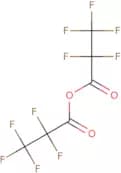
CAS :<p>Pentafluoropropionic anhydride is a chemical compound that reacts with fatty acids to form trifluoroacetic acid. In analytical chemistry, it is used to determine the amount of fatty acids in biological samples. Pentafluoropropionic anhydride has been shown to react with human serum and rat striatal tissue to form carbon disulphide and hydrochloric acid. It reacts with amines in the sample preparation phase, forming receptor molecules that can be analyzed by gas chromatography-mass spectrometry.</p>Formule :C6F10O3Degré de pureté :Min. 95%Masse moléculaire :310.05 g/molDechlorane 604 component A
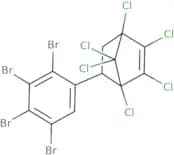
CAS :<p>Dechlorane 604 is a chemical that is used as an additive in some plastics. It has been detected in the environment and human populations, but the low detection limits make it difficult to determine if Dechlorane 604 is endocrine disruptor. Animal experiments have shown that Dechlorane 604 can bind to hormone receptors, but there are no studies on its effects on humans. There are database records for Dechlorane 604 and its metabolites, but these do not provide information on their toxicity. The analytical method for detecting Dechlorane 604 has been developed and validated by GC/MS-ECD analysis of ethane extracts from soil samples. This method is based on dispersive microextraction (SPME) with gas chromatography/mass spectrometry (GC/MS). In vitro studies have examined the effects of Dechlorane 604 on the elongatus nematode and dry weight measurements show that this chemical alters metabolism by altering fatty acid composition.</p>Formule :C13H4Br4Cl6Degré de pureté :Min. 95%Couleur et forme :PowderMasse moléculaire :692.5 g/mol3b-Acetoxy-6a-chloroergosta-7,22-dien-5a-ol
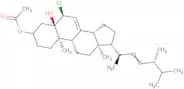
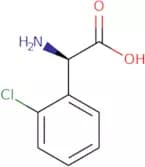
CAS :Produit contrôlé<p>Please enquire for more information about 3b-Acetoxy-6a-chloroergosta-7,22-dien-5a-ol including the price, delivery time and more detailed product information at the technical inquiry form on this page</p>Formule :C30H47ClO3Degré de pureté :Min. 95%Masse moléculaire :491.15 g/molD-(+)-2-ChlorophenylglycIne
CAS :<p>D-(+)-2-Chlorophenylglycine is a synthetic, chiral aldehyde that serves as an industrial solvent. It is used to produce other organic compounds and has been shown to cause environmental pollution. D-(+)-2-Chlorophenylglycine is also used in the synthesis of thiourea and organocatalysts. This compound is synthesized from quinidine and enantiomeric (D or L) thionyl chloride, which are both manufactured on an industrial scale. The stereoselective process for D-(+)-2-chlorophenylglycine involves the use of a chiral catalyst.</p>Degré de pureté :Min. 95%1-(Chloroacetyl)-4-(4-chlorophenyl)piperazine
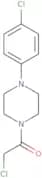
CAS :Produit contrôlé<p>Please enquire for more information about 1-(Chloroacetyl)-4-(4-chlorophenyl)piperazine including the price, delivery time and more detailed product information at the technical inquiry form on this page</p>Formule :C12H14Cl2N2ODegré de pureté :Min. 95%Masse moléculaire :273.16 g/molCaramiphen hydrochloride
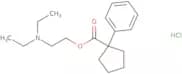
CAS :Produit contrôlé<p>Caramiphen hydrochloride is a cholinergic drug that binds to acetylcholine receptors. It is used as an anti-inflammatory agent and for the treatment of ulcerative colitis, Crohn's disease, and postoperative ileus. Caramiphen hydrochloride can be administered orally or intravenously, with a maximum dose of 2 g per day. The most common side effect is diarrhea. Caramiphen hydrochloride has an inhibitory effect on voltage-gated sodium channels and stabilizes neuronal membranes by inhibiting the depolarization process. This drug also has a chloride channel blocking effect.</p>Formule :C18H27NO2·HClDegré de pureté :Min. 95%2-Chloro-4-fluoropyridine-5-boronic acid, pinacol ester
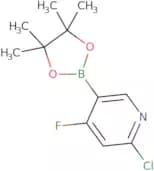
CAS :<p>Please enquire for more information about 2-Chloro-4-fluoropyridine-5-boronic acid, pinacol ester including the price, delivery time and more detailed product information at the technical inquiry form on this page</p>Formule :C11H14BClFNO2Degré de pureté :Min. 95%Masse moléculaire :257.5 g/molEthyl 4-chloroacetoacetate
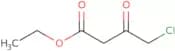
CAS :<p>Ethyl 4-chloroacetoacetate is a chiral organic compound that is synthesized by the asymmetric synthesis of ethyl chloroacetate. This reaction is performed in an organic solution, using sodium salts as the solvent. The expression plasmid and logarithmic growth phase are needed for the enzyme catalysis and stereoselective reactions. The reaction solution is recombined with hydrochloric acid and chiral compound to produce high yields of ethyl 4-chloroacetoacetate.</p>Formule :C6H9ClO3Degré de pureté :Min. 95%Couleur et forme :Colorless Clear LiquidMasse moléculaire :164.59 g/mol5-Bromo-2-chloro-3-fluoropyridine
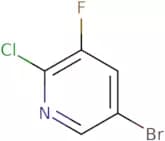
CAS :<p>5-Bromo-2-chloro-3-fluoropyridine is a catalytic reagent for the amination of anilines. It is extracted from coal tar, and is used in the manufacture of pesticides and pharmaceuticals. 5-Bromo-2-chloro-3-fluoropyridine has been shown to be an effective catalyst for the synthesis of functionalized adducts. This compound can also be used as a chemoselective agent in palladium catalysis, where it selectively adds hydrogen bromide to form aryl halides.</p>Formule :C5H2BrCIFNDegré de pureté :Min. 95%Masse moléculaire :210.43 g/mol


![N-Methyl-5H-dibenzo[a,d]cycloheptene-5-propylamine hydrochloride](/_next/image/?url=https%3A%2Fstatic.cymitquimica.com%2Fproducts%2F3D%2Fthumb-webp%2FFN76683.webp&w=3840&q=75)