


Halogénures organiques
Dans cette catégorie, vous trouverez des molécules organiques contenant un ou plusieurs atomes d'halogène dans leur structure. Ces halogénures organiques incluent des composés bromés, iodés, chlorés et des halogénures cycliques. Les halogénures organiques sont largement utilisés en synthèse organique, en pharmaceutique, en agrochimie et en science des matériaux en raison de leur réactivité et de leur capacité à subir une variété de transformations chimiques. Chez CymitQuimica, nous offrons une sélection complète d'halogénures organiques de haute qualité pour soutenir vos applications de recherche et industrielles, garantissant une performance fiable et efficace dans vos projets synthétiques et analytiques.
Sous-catégories appartenant à la catégorie "Halogénures organiques"
20437 produits trouvés pour "Halogénures organiques"
Trier par
Degré de pureté (%)
0
100
|
0
|
50
|
90
|
95
|
100
α-(1,1,2,2,2-Pentafluoroethyl)-ω-[Tetrafluoro(Trifluoromethyl)Ethoxy]-Poly[Oxy[Trifluoro(Trifluoromethyl)-1,2-Ethanediyl]] - Average MW 2000
CAS :Produit contrôlé<p>Alpha-(1,1,2,2,2-Pentafluoroethyl)-omega-[Tetrafluoro(Trifluoromethyl)Ethoxy]-Poly[Oxy[Trifluoro(Trifluoromethyl)-1,2-Ethanediyl]] - Average MW 2000 (FTFEPA) is a fluorinated compound that is a monofluorophosphate. It is used as an electrolyte in nonaqueous systems. FTFEPA has been shown to be effective in reducing the corrosion of metals such as magnesium and aluminum.</p>Formule :(C3F6O)n•C5F12ODegré de pureté :Min. 95%1,1,1-Trichloro-3-(1-methyl-1H-benzimidazol-2-yl)propan-2-ol
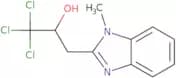
CAS :Produit contrôlé<p>Please enquire for more information about 1,1,1-Trichloro-3-(1-methyl-1H-benzimidazol-2-yl)propan-2-ol including the price, delivery time and more detailed product information at the technical inquiry form on this page</p>Formule :C11H11Cl3N2ODegré de pureté :Min. 95%Masse moléculaire :293.58 g/mol2-Methyl-4-(trifluoromethoxy)bromobenzene
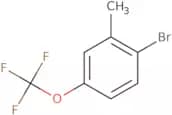
CAS :<p>Please enquire for more information about 2-Methyl-4-(trifluoromethoxy)bromobenzene including the price, delivery time and more detailed product information at the technical inquiry form on this page</p>Formule :C8H6BrF3ODegré de pureté :Min. 95%Couleur et forme :Clear LiquidMasse moléculaire :255.03 g/molBupropion hydrochloride related compound B
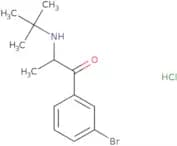
CAS :Produit contrôlé<p>Please enquire for more information about Bupropion hydrochloride related compound B including the price, delivery time and more detailed product information at the technical inquiry form on this page</p>Formule :C13H18BrNOHClDegré de pureté :Min. 95%Couleur et forme :White/Off-White SolidMasse moléculaire :320.65 g/molDiethyl fluoromalonate
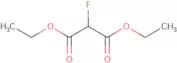
CAS :<p>Diethyl fluoromalonate is a chemical that can be used to generate fluoroacetic acid. It has been shown to be an effective inhibitor of the growth of resistant mutants in vitro with magnetic resonance spectroscopy. The mechanism of action is not known, but it may involve the formation of a carbonyl group due to elimination of hydrogen fluoride. Diethyl fluoromalonate also reacts with malonic acid to form an aryl halide, which can then react with nitrogen atoms in cells and produce reactive oxygen species. This chemical has been shown to have anti-inflammatory effects in rats.</p>Formule :C7H11FO4Degré de pureté :Min. 95%Masse moléculaire :178.16 g/mol3-Bromoacetylpyridine, hydrobromide
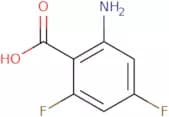
CAS :<p>3-Bromoacetylpyridine, hydrobromide is a derivatizing agent that has been shown to react with nucleophiles. It can be used as an electron donor or electron acceptor in radical scavenging and other reactions. 3-Bromoacetylpyridine, hydrobromide is also a ligand for metal ions, and has been shown to bind to copper(II) ions. This product ionizes easily under electrospray ionization and reacts with thiourea to form 3-acetylpyridine.</p>Formule :C7H7Br2NODegré de pureté :Min. 95%Masse moléculaire :280.94 g/mol2-Amino-4,6-difluorobenzoic acid
CAS :<p>Please enquire for more information about 2-Amino-4,6-difluorobenzoic acid including the price, delivery time and more detailed product information at the technical inquiry form on this page</p>Formule :C7H5F2NO2Degré de pureté :Min. 95%Masse moléculaire :173.12 g/mol[2-(4-Chlorophenyl)-1,3-thiazol-4-yl]acetic acid
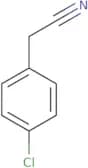
CAS :<p>[2-(4-Chlorophenyl)-1,3-thiazol-4-yl]acetic acid is a potent antimicrobial agent that inhibits the growth of bacteria by binding to the 50S ribosomal subunit. It has shown antiinflammatory properties in animal models of bowel disease, skin cancer, and autoimmune diseases. This drug has also been shown to have no observable toxicity in humans at doses up to 5000 mg/day for 28 days. The drug binds to a number of enzymes including reactive oxygen species (ROS) scavengers and metabolic enzymes. There are no known drug interactions with this drug and it can be used safely with other nonsteroidal antiinflammatory drugs (NSAIDs).</p>Formule :C11H8ClNO2SDegré de pureté :Min. 95%Masse moléculaire :253.71 g/mol4-Chlorobenzyl cyanide
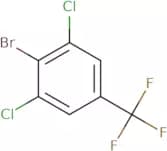
CAS :<p>4-Chlorobenzyl cyanide is a synthetic compound that has been shown to have potent antibacterial activity. This compound reacts with hydrogen chloride in the presence of isopropyl group and chloride to form 4-chlorobenzaldehyde. The reaction selectivity of this reactive chemical is due to its fluorescence properties, which can be used as a marker for detection. The introduction of hydrogen chloride into the reaction mixture produces an acidic environment, which promotes the production of chloroform. The chloroform is then removed by evaporating the water from the reaction mixture, leaving 4-chlorobenzaldehyde as a solid product.</p>Formule :C8H6ClNDegré de pureté :Min. 95%Couleur et forme :Clear LiquidMasse moléculaire :151.59 g/mol4-Bromo-3,5-dichlorobenzotrifluoride
CAS :4-Bromo-3,5-dichlorobenzotrifluoride is a molecule that has been used in wastewater treatment. It is also known as BDCTF, which stands for 4-bromo-3,5-dichlorobenzotrifluoride. The molecule can be synthesized by reacting benzonitrile and an azide. BDCTF reacts with the amine group of proteins to form an amide bond, so it can be used to modify protein or peptides for various purposes. This reaction is catalyzed by a nucleophilic agent such as hydroxide ion or cyanide ion. The crystal structure of BDCTF has been determined using X-ray crystallography methods.Formule :C7H2BrCl2F3Degré de pureté :Min. 95%Masse moléculaire :293.9 g/mol1-(4-Bromo-2,5-dimethoxybenzyl)piperazine
CAS :Produit contrôlé<p>Please enquire for more information about 1-(4-Bromo-2,5-dimethoxybenzyl)piperazine including the price, delivery time and more detailed product information at the technical inquiry form on this page</p>Formule :C13H19BrN2O2Degré de pureté :Min. 95%Masse moléculaire :315.21 g/mol5-Amino-8-hydroxyquinoline dihydrochloride
CAS :<p>5-Amino-8-hydroxyquinoline dihydrochloride (5-AQDH) is an anticancer drug that inhibits the activity of survivin, a protein that is overexpressed in cancer cells. It has been shown to be effective in vivo against melanoma tumor growth. 5-AQDH binds to the unpaired cysteine residues of the survivin molecule and inhibits its function by binding to the active site, blocking access to ATP and preventing DNA synthesis. The efficacy of 5-AQDH has been confirmed in vitro by studying the effect on cell viability and DNA synthesis, as well as by measuring plasma mass spectrometry data from melanoma patients. This drug is currently being investigated for its potential use as an anticancer agent.</p>Formule :C9H8N2O•(HCl)2Degré de pureté :Min. 95%Masse moléculaire :212.63 g/mol3-Methoxybenzyl bromide
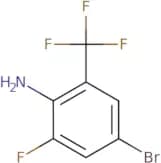
CAS :<p>3-Methoxybenzyl bromide is a synthetic molecule that belongs to the group of amides. It is used as an intermediate in organic synthesis for the introduction of ether linkages and can be used to produce other molecules with inhibitory activities. 3-Methoxybenzyl bromide has been shown to be effective against Sarpogrelate hydrochloride, which is a drug used for the treatment of hypertension. This chemical inhibits the enzyme that produces superoxide radicals and has been shown to have therapeutic effects in patients with arterial hypertension. 3-Methoxybenzyl bromide also has a nucleophilic function and can react with halides such as chlorine or bromine to form 2,5-dimethoxybenzoic acid.</p>Formule :C8H9BrODegré de pureté :Min. 95%Couleur et forme :LiquidMasse moléculaire :201.06 g/mol4-Bromo-2-fluoro-6-(trifluoromethyl)aniline
CAS :<p>Please enquire for more information about 4-Bromo-2-fluoro-6-(trifluoromethyl)aniline including the price, delivery time and more detailed product information at the technical inquiry form on this page</p>Formule :C7H4BrF4NDegré de pureté :Min. 95%Couleur et forme :Clear LiquidMasse moléculaire :258.01 g/mol1-Acetyl-5-bromoindol-3-ol
CAS :<p>Please enquire for more information about 1-Acetyl-5-bromoindol-3-ol including the price, delivery time and more detailed product information at the technical inquiry form on this page</p>Formule :C10H8BrNO2Degré de pureté :Min. 95%Couleur et forme :PowderMasse moléculaire :254.08 g/molEthyl 7-aminoheptanoate hydrochloride
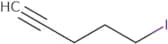
CAS :<p>Ethyl 7-aminoheptanoate hydrochloride is an antibiotic that belongs to the class of esters. It has been shown to inhibit the growth of bacteria in vitro, which is attributed to its ability to inhibit protein synthesis. This drug has been used as a chemical manipulator in animal experiments. Ethyl 7-aminoheptanoate hydrochloride binds to the ribosomal RNA of bacteria and prevents amino acid incorporation into proteins, which leads to cell death. The endpoint of this experiment was determined by counting the number of rotations on a rotator after treatment with ethyl 7-aminoheptanoate hydrochloride or saline solution. Treatment with ethyl 7-aminoheptanoate hydrochloride resulted in an increase in the number of rotations, which is indicative of bacterial death.</p>Formule :C9H20ClNO2Degré de pureté :Min. 95%Masse moléculaire :209.71 g/mol5-Iodo-1-pentyne
CAS :<p>5-Iodo-1-pentyne is an organic compound with the chemical formula C6H5I. It is a colorless liquid that is soluble in most organic solvents. 5-Iodo-1-pentyne reacts with alcohols to form diketones and with primary amines to form azides. The reaction with alkyl halides, including chloroformates, leads to the formation of alkylated products. 5-Iodo-1-pentyne has been used as a photoinitiator for ultraviolet (UV) irradiation reactions, such as allylic oxidation, homologous carbon chain extension, and uv irradiation of dienes. 5-Iodo-1-pentyne can also be used to synthesize secondary amines by reacting with aldehydes or ketones in the presence of sodium azide. 5-Iodo-1-pentyne has properties that are similar</p>Formule :C5H7IDegré de pureté :Min. 95%Masse moléculaire :194.01 g/mol3-{[(3,4-Dichlorophenyl)amino]carbonyl}bicyclo[2.2.1]hept-5-ene-2-carboxylic acid
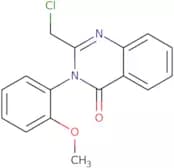
CAS :<p>Please enquire for more information about 3-{[(3,4-Dichlorophenyl)amino]carbonyl}bicyclo[2.2.1]hept-5-ene-2-carboxylic acid including the price, delivery time and more detailed product information at the technical inquiry form on this page</p>Formule :C15H13Cl2NO3Degré de pureté :Min. 95%Masse moléculaire :326.17 g/mol2-(Chloromethyl)-3-(2-methoxyphenyl)quinazolin-4(3H)-one
CAS :Produit contrôlé<p>Please enquire for more information about 2-(Chloromethyl)-3-(2-methoxyphenyl)quinazolin-4(3H)-one including the price, delivery time and more detailed product information at the technical inquiry form on this page</p>Formule :C16H13ClN2O2Degré de pureté :Min. 95%Masse moléculaire :300.74 g/mol10-[2-(1-Methyl-2-piperidinyl)ethyl]-2-(methylthio)-10H-phenothiazine hydrochloride
CAS :Produit contrôlé<p>The drug, 10-[2-(1-methyl-2-piperidinyl)ethyl]-2-(methylthio)-10H-phenothiazine hydrochloride (CGP 46660), is a competitive antagonist at the human histamine H3 receptor. It has been shown to bind to the histamine H3 receptor in the range of 0.001 to 1 μM and is selective for this receptor over other receptors. CGP 46660 is an optical sensor that can be used in titration calorimetry experiments to measure changes in heat production when it binds to histamine H3 receptors. The drug also has been shown to inhibit guanine nucleotide-binding protein (G protein) signaling pathways and brain functions such as memory formation, learning, and attention span. These effects were demonstrated in humans by measuring EEG activity. The optimum concentration of CGP 46660 for these effects was found to be between 0.01 and 10 μM.</p>Formule :C21H27ClN2S2Degré de pureté :Min. 95%Couleur et forme :PowderMasse moléculaire :407.04 g/mol
![α-(1,1,2,2,2-Pentafluoroethyl)-ω-[Tetrafluoro(Trifluoromethyl)Ethoxy]-Poly[Oxy[Trifluoro(Trifluoro…](/_next/image/?url=https%3A%2Fstatic.cymitquimica.com%2Fproducts%2F3D%2Fthumb-webp%2FFP103632.webp&w=3840&q=75)


![[2-(4-Chlorophenyl)-1,3-thiazol-4-yl]acetic acid](/_next/image/?url=https%3A%2Fstatic.cymitquimica.com%2Fproducts%2F3D%2Fthumb-webp%2FFC124498.webp&w=3840&q=75)




![3-{[(3,4-Dichlorophenyl)amino]carbonyl}bicyclo[2.2.1]hept-5-ene-2-carboxylic acid](/_next/image/?url=https%3A%2Fstatic.cymitquimica.com%2Fproducts%2F3D%2Fthumb-webp%2FFD136060.webp&w=3840&q=75)
![10-[2-(1-Methyl-2-piperidinyl)ethyl]-2-(methylthio)-10H-phenothiazine hydrochloride](/_next/image/?url=https%3A%2Fstatic.cymitquimica.com%2Fproducts%2F3D%2Fthumb-webp%2FFT28238.webp&w=3840&q=75)