


Halogénures organiques
Sous-catégories appartenant à la catégorie "Halogénures organiques"
20442 produits trouvés pour "Halogénures organiques"
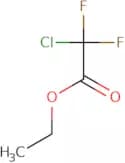
Ethyl 2-chloro-2,2-difluoroacetate
CAS :Ethyl 2-chloro-2,2-difluoroacetate is an organic compound that is used in the synthesis of benzofuran derivatives. It reacts with chlorine to generate a reactive intermediate and then undergoes a nucleophilic substitution reaction to produce the desired compound. The kinetic studies of this reaction have been conducted using isolated yields of the reactants. The active methylene group can undergo a variety of reactions because it has a reactive chlorine atom attached to it. This active substance inhibits the NS5B polymerase, which is responsible for converting RNA into DNA. Ethyl 2-chloro-2,2-difluoroacetate may be used as a potential treatment for inflammatory diseases such as asthma and arthritis because it prevents acetylcholine from binding to its receptor α.
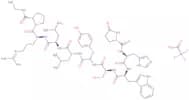
Formule :C4H5ClF2O2Degré de pureté :Min. 95%Couleur et forme :Clear LiquidMasse moléculaire :158.53 g/mol(Des-Gly10,D-Leu6,D-Leu7,Pro-NHEt 9)-LHRH trifluoroacetate salt
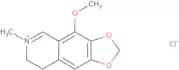
CAS :Please enquire for more information about (Des-Gly10,D-Leu6,D-Leu7,Pro-NHEt 9)-LHRH trifluoroacetate salt including the price, delivery time and more detailed product information at the technical inquiry form on this pageFormule :C59H84N16O12Degré de pureté :Min. 95%Masse moléculaire :1,209.4 g/molCotarnine chloride
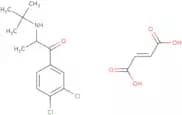
CAS :Cotarnine chloride is an isoquinoline alkaloid, which is a derivative of the opium alkaloid narcotine. It is synthesized through the oxidation and chlorination of narcotine extracted from opium. The mode of action of cotarnine chloride primarily involves its vasoconstrictive properties, which help in reducing blood flow by contracting smooth muscle fibers in blood vessels. This action aids in achieving hemostasis, thereby preventing or controlling hemorrhage.Formule :C12H14ClNO3Degré de pureté :Min. 95%Couleur et forme :Off-White To Yellow SolidMasse moléculaire :255.7 g/mol4-Chloro bupropion fumarate
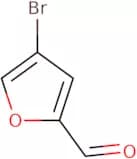
CAS :Produit contrôléPlease enquire for more information about 4-Chloro bupropion fumarate including the price, delivery time and more detailed product information at the technical inquiry form on this pageFormule :C17H21Cl2NO5Degré de pureté :Min. 95%Masse moléculaire :390.26 g/mol4-Bromofuran-2-carbaldehyde
CAS :4-Bromofuran-2-carbaldehyde is a synthetic compound that has been shown to have antioxidant properties. It contains an electron-donating carbonyl group and an electron-withdrawing bromine atom. 4-Bromofuran-2-carbaldehyde is useful in the treatment of endophytic fungi infections, as it inhibits the synthesis of ergosterol, which is an important component of the fungal cell membrane. The molecule's conformational properties are also important for its biological activity, as they enable it to act as a chiral ligand by binding to proteins in a way that will inhibit their function. In addition, 4-bromofuran-2-carbaldehyde has been shown to be effective against cancer cells in vitro, particularly against MMCF7 cells. This may be due to its ability to bind to DNA and prevent transcription or replication of DNA strands.
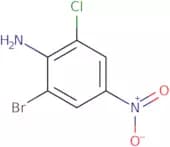
Formule :C5H3BrO2Degré de pureté :Min. 95%Masse moléculaire :174.98 g/mol2-Chloro-4-nitro-6-bromoaniline
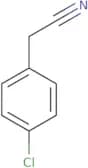
CAS :2-Chloro-4-nitro-6-bromoaniline is a dispersive, linear range, ammonolysis and chloride free oxidant for wastewater treatment. This compound is effective at removing organic pollutants from wastewater and has been shown to be both environmentally safe and cost effective. 2-Chloro-4-nitro-6-bromoaniline is also used as a polymerization initiator in the production of polyester resins. It can be manufactured by recycling anilines by reacting them with bromine in the presence of an acid catalyst. 2CNBBA is used as a hydrogen bond acceptor in microextraction of chlorinated compounds from water samples.Formule :C6H4BrClN2O2Degré de pureté :Min. 95%Masse moléculaire :251.46 g/mol4-Chlorobenzyl cyanide
CAS :4-Chlorobenzyl cyanide is a synthetic compound that has been shown to have potent antibacterial activity. This compound reacts with hydrogen chloride in the presence of isopropyl group and chloride to form 4-chlorobenzaldehyde. The reaction selectivity of this reactive chemical is due to its fluorescence properties, which can be used as a marker for detection. The introduction of hydrogen chloride into the reaction mixture produces an acidic environment, which promotes the production of chloroform. The chloroform is then removed by evaporating the water from the reaction mixture, leaving 4-chlorobenzaldehyde as a solid product.
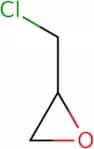
Formule :C8H6ClNDegré de pureté :Min. 95%Couleur et forme :Clear LiquidMasse moléculaire :151.59 g/molEpichlorohydrine
CAS :Epichlorohydrine is a chemical compound that binds to calcium and sodium ions. It is used in wastewater treatment, where it reacts with fatty acids to form epoxides. Epichlorohydrine has been shown to have carcinogenic effects in animals and humans, which are due to its genotoxic properties. The carcinogenic properties of epichlorohydrine can be attributed to the formation of reactive oxygen species, such as hydroxyl radicals and hydrogen peroxide, which cause DNA damage. Epichlorohydrine also has photosynthetic activity when exposed to sunlight or ultraviolet light.Formule :C3H5ClODegré de pureté :Min. 95%Couleur et forme :Clear LiquidMasse moléculaire :92.52 g/molBis(2,2,2-Trifluoroethyl)amine
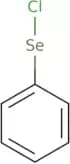
CAS :Bis(2,2,2-trifluoroethyl)amine is a colorless liquid that is soluble in water. It has a molecular weight of 122.11 and a boiling point of 217°C. Bis(2,2,2-trifluoroethyl)amine reacts with tetramethylammonium to form a dimer. The reaction is reversible and the bis(2,2,2-trifluoroethyl)amine can be regenerated by the addition of fluoride or an acid such as hydrochloric acid or sulfuric acid. Bis(2,2,2-trifluoroethyl)amine has an anion that can accept a proton from another molecule. This anion is also known as the bisulfite ion which reacts with hydrogen peroxide to form bisulfate and water.Formule :C4H5F6NDegré de pureté :Min. 95%Couleur et forme :PowderMasse moléculaire :181.08 g/molPhenylselenenyl chloride
CAS :Phenylselenenyl chloride is an organoselenium compound with the chemical formula CHSeCl. It has been shown to have a low redox potential, which makes it a good candidate for use in organic synthesis. Phenylselenenyl chloride is used as a catalyst in palladium-catalyzed coupling reactions and has been shown to be effective in the synthesis of epoxy hydroxy compounds. The x-ray crystal structures of phenylselenenyl chloride have been determined, revealing that the molecule contains steric interactions between the chloride and hydroxyl groups. This discovery explains why phenylselenenyl chloride is so selective for these two groups and may lead to improved synthetic methods for this molecule.
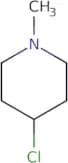
Formule :C6H5ClSeDegré de pureté :Min. 95%Couleur et forme :PowderMasse moléculaire :191.52 g/mol4-Chloro-N-methylpiperidine
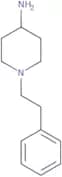
CAS :4-Chloro-N-methylpiperidine is an inorganic acid that can be used as a reagent for the synthesis of organic compounds. It is also an anticholinergic drug and a halogenating agent. 4-Chloro-N-methylpiperidine can be used to treat bronchial asthma, chronic obstructive pulmonary disease, and other respiratory disorders by inhibiting the production of histamine in the body. It also has antihistaminic effects that may be due to its ability to inhibit histamine release from mast cells or block H1 receptors. This drug also has antiallergic effects, which may be due to its ability to inhibit IgE synthesis or function. 4-Chloro-N-methylpiperidine is found in loratadine (Claritin), which is used for allergies, hives, and other allergic reactions.Formule :C6H12ClNDegré de pureté :Min. 95%Couleur et forme :Clear LiquidMasse moléculaire :133.62 g/mol1-(2-Phenylethyl)piperidin-4-amine dihydrochloride
CAS :Produit contrôléPlease enquire for more information about 1-(2-Phenylethyl)piperidin-4-amine dihydrochloride including the price, delivery time and more detailed product information at the technical inquiry form on this pageFormule :C13H20N2Degré de pureté :Min. 95%Masse moléculaire :204.31 g/mol1-(4-Amino-6,7-dimethoxy-2-quinazolinyl)-4-[(tetrahydro-2-furanyl)carbonxyl]piperazine hydrochloride
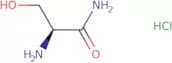
CAS :Terazosin HCL dehydrate is an inhibitor of alpha-1 adrenergic receptors. This results in vasodilation followed by a reduction in urethral resistance, venous return to the heart and peripheral vascular resistance. In particular Terazosin HCL hydrate’s ability to recover urine flow and alleviate symptoms in patients with benign prostatic hyperplasia is of benefit to the therapeutic and clinical industries.Formule :C19H26ClN5O4Degré de pureté :Min. 95%Masse moléculaire :423.89 g/molL-Serine amide hydrochloride
CAS :L-Serine amide hydrochloride is a synthetic, anti-HIV drug that is used as an antiviral agent. It inhibits the viral life cycle by inhibiting the activity of acyclic nucleoside phosphonates, which are vital to viral DNA synthesis. L-Serine amide hydrochloride binds to the cyclopentane ring of guanosine and prevents its interaction with the enzyme ribonucleotide reductase. This binding prevents the conversion of guanosine into GTP, thereby preventing HIV from using this molecule in their life cycle. L-Serine amide hydrochloride is not active against cellular proteins or prostaglandins.
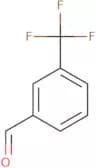
Formule :C3H8N2O2·HClDegré de pureté :Min. 95%Masse moléculaire :140.57 g/mol3-(Trifluoromethyl)benzaldehyde
CAS :3-(Trifluoromethyl)benzaldehyde is an organic compound that has the chemical formula C8H7FO. It is a trifunctional molecule with three phenolic hydroxyl groups, which makes it a good candidate for drug design. 3-(Trifluoromethyl)benzaldehyde can be synthesized by reacting an imine with a chiral acid chloride in the presence of a base and a catalytic amount of DMAP. The reaction yield is low, but this synthetic method is efficient. 3-(Trifluoromethyl)benzaldehyde has been shown to inhibit the growth of Mycobacterium avium, but not Mycobacterium tuberculosis or other bacteria such as Listeria monocytogenes and Escherichia coli. This might be due to its ability to inhibit protein synthesis by binding to ribosomes. This compound also possesses anti-inflammatory properties and inhibits leukemia Hl-
Formule :C8H5F3ODegré de pureté :Min. 95%Couleur et forme :Clear LiquidMasse moléculaire :174.12 g/mol4-Ethylbenzyl chloride
CAS :4-Ethylbenzyl chloride is a fluorophore that absorbs light at 378 nm and emits light at 460 nm. When excited, 4-ethylbenzyl chloride has a half-life of about 2 hours. It can be used for the calibration of pressor or measuring water vapor in the atmosphere. It is also used as an activator for viologen or hydrogen chloride, which are reactive substances. 4-Ethylbenzyl chloride is insoluble in water and reacts with primary alcohols to form esters. The reaction time depends on the type of alcohol and ranges from 24 hours to 3 days. 4-Ethylbenzyl chloride is active in the cytoplasm of cells and can be attached to bioactive molecules to produce new compounds with a variety of properties.Formule :C9H11ClDegré de pureté :Min. 95%Masse moléculaire :154.64 g/mol3-(Difluoromethoxy)benzaldehyde
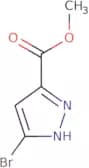
CAS :Please enquire for more information about 3-(Difluoromethoxy)benzaldehyde including the price, delivery time and more detailed product information at the technical inquiry form on this pageFormule :C8H6F2O2Degré de pureté :Min. 95%Masse moléculaire :172.13 g/molMethyl 5-bromo-1H-pyrazole-3-carboxylate
CAS :Please enquire for more information about Methyl 5-bromo-1H-pyrazole-3-carboxylate including the price, delivery time and more detailed product information at the technical inquiry form on this page
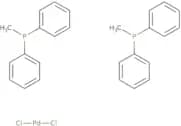
Formule :C5H5BrN2O2Degré de pureté :Min. 95%Masse moléculaire :205.01 g/molBis(methyldiphenylphosphine)palladium(II) Dichloride
CAS :Produit contrôléBis(methyldiphenylphosphine)palladium(II) chloride is an aryl halide catalyst that is used in the preparation of aryl chlorides. It can be used for the synthesis of pharmaceuticals, agrochemicals, perfumes and other chemical compounds. This catalyst has been shown to be effective in the presence of chloride as well as aryl halides. The reaction can be performed in either the presence or absence of solvent. Methyldiphenylphosphine is soluble in organic solvents such as ether, benzene, and toluene.Formule :C26H26Cl2P2PdDegré de pureté :Min. 95%Masse moléculaire :577.76 g/mol7-Chlorothieno[3,2-B]Pyridine
CAS :7-Chlorothieno[3,2-B]pyridine is a nucleophilic compound that is used as an inhibitor of the tyrosine kinase enzyme. It binds to the ATP binding site and blocks the enzymatic activity of the enzyme, preventing cell proliferation. 7-Chlorothieno[3,2-B]pyridine has been shown to inhibit growth in tumour cell lines and has been shown to be effective against tyrosine kinase receptor positive cancer cells. This drug also shows a cytotoxic activity against tumour cells in vivo, which may be due to its ability to inhibit factor receptor and receptor tyrosine.
Formule :C7H4ClNSDegré de pureté :Min. 95%Masse moléculaire :169.63 g/mol


![1-(4-Amino-6,7-dimethoxy-2-quinazolinyl)-4-[(tetrahydro-2-furanyl)carbonxyl]piperazine hydrochlori…](/_next/image/?url=https%3A%2Fstatic.cymitquimica.com%2Fproducts%2F3D%2Fthumb-webp%2FFA28036.webp&w=3840&q=75)


![7-Chlorothieno[3,2-B]Pyridine](/_next/image/?url=https%3A%2Fstatic.cymitquimica.com%2Fproducts%2F3D%2Fthumb-webp%2FFC53344.webp&w=3840&q=75)