Halogénures organiques
Dans cette catégorie, vous trouverez des molécules organiques contenant un ou plusieurs atomes d'halogène dans leur structure. Ces halogénures organiques incluent des composés bromés, iodés, chlorés et des halogénures cycliques. Les halogénures organiques sont largement utilisés en synthèse organique, en pharmaceutique, en agrochimie et en science des matériaux en raison de leur réactivité et de leur capacité à subir une variété de transformations chimiques. Chez CymitQuimica, nous offrons une sélection complète d'halogénures organiques de haute qualité pour soutenir vos applications de recherche et industrielles, garantissant une performance fiable et efficace dans vos projets synthétiques et analytiques.
Sous-catégories appartenant à la catégorie "Halogénures organiques"
20440 produits trouvés pour "Halogénures organiques"
Trier par
Degré de pureté (%)
0
100
|
0
|
50
|
90
|
95
|
100
Cesium bromide
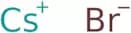
CAS :Cesium bromide is a chemical compound that has a high melting point. It is used as an ionic liquid and as a salt in analytical chemistry. Cesium bromide can be used to measure the thermal expansion of materials or to measure the hydrogen bond strength between two molecules. Cesium bromide is also used in membrane systems for water purification, and it can be used for radiation treatment of cancer cells. Cesium bromide can be found in wastewater treatment plants where it helps to remove halides and other contaminants from water vapor, providing kinetic energy to do so. Cesium bromide is also used as an analytical method for measuring hydrochloric acid, uv absorption, or chelate rings.Formule :CsBrDegré de pureté :Min. 95%Masse moléculaire :212.81 g/mol4,5-Dichloro-2-nitroaniline
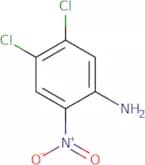
CAS :<p>4,5-Dichloro-2-nitroaniline is a chemical compound that has been shown to be an uncoupler of oxidative phosphorylation in ciliates. It is experimentally shown that the reaction yield for 4,5-Dichloro-2-nitroaniline is much higher than that of the corresponding methylbenzene. The two isomers are not detected in the gaseous phase, but only as products of thermal decomposition at high temperatures. Linear regression analysis and predictive models were used to evaluate the transfer and population growth rates at different temperatures. Narcosis was observed in rats exposed to 4,5-Dichloro-2-nitroaniline at concentrations greater than 0.1 ppm (0.1 mg/L).</p>Formule :C6H4Cl2N2O2Degré de pureté :Min. 95%Masse moléculaire :207.01 g/molN-Allyl-1-phenylcyclohexanamine hydrochloride
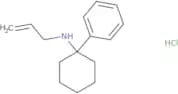
CAS :Produit contrôléPlease enquire for more information about N-Allyl-1-phenylcyclohexanamine hydrochloride including the price, delivery time and more detailed product information at the technical inquiry form on this pageFormule :C15H21NDegré de pureté :Min. 95%Masse moléculaire :215.33 g/molN-Chlorosuccinimide
CAS :Chlorinating agents are used in the production of pharmaceutical preparations and other chemical products. They react with amines to form diazonium salts, which can then be reduced to azo compounds. N-Chlorosuccinimide is a chlorinating agent that reacts with amines to form diazonium salts. It is used primarily as an injection solution for the treatment of trichomoniasis and other sexually transmitted diseases, but it also has been used in the preparation of pharmaceutical preparations. The reaction mechanism for N-chlorosuccinimide is not well understood, but it may involve a free radical intermediate or electron transfer from the chlorine atom to the carbon atom. Diazonium salts are formed by the reaction between an amine and an acid chloride. The addition of sodium hydroxide produces the corresponding azo compound. The reaction mechanism for N-chlorosuccinimide is not well understood, but it may involve a free radical intermediate orFormule :C4H4ClNO2Degré de pureté :Min. 95%Couleur et forme :White PowderMasse moléculaire :133.53 g/mol6-Chloro-5-methylpyridin-2-amine
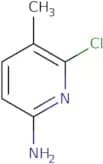
CAS :6-Amino-2-chloro-3-methylpyridine is a heteroaromatic compound that belongs to the class of imidazopyridine. It is a monomer used in research, and can be transformed into the cross-coupling reaction with electron irradiation, which provides an efficient method for synthesizing other heteroaromatic compounds. 6-Amino-2-chloro-3-methylpyridine has low ionization potential and can be used as a drug discovery agent.Formule :C6H7ClN2Degré de pureté :Min. 95%Masse moléculaire :142.59 g/molCyclohexyl chloroformate
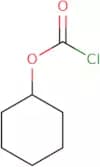
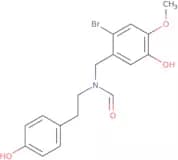
CAS :<p>Cyclohexyl chloroformate is a hydroxyl group that is used as a catalyst for organic reactions. It can also be used to prepare 5-ht2a receptor agonists, which are drugs that stimulate the activity of serotonin in the brain. Cyclohexyl chloroformate has been shown to induce chemiluminescence and has an inhibition constant of 2.6x10 M.</p>Formule :C7H11ClO2Degré de pureté :Min. 95%Masse moléculaire :162.61 g/molN-(p-Hydroxyphenethyl)-N-(2-bromo-5-hydroxy-4-methoxybenzyl)formamide
CAS :Produit contrôléN-(p-Hydroxyphenethyl)-N-(2-bromo-5-hydroxy-4-methoxybenzyl)formamide is an anticancer drug that belongs to the class of phenethyl derivatives. It is a radiosensitizer that inhibits DNA and RNA synthesis, leading to cancer cell death. The drug has been shown to have a chiral center and two enantiomers, with the (S)-enantiomer being more active than the (R)-enantiomer. N-(p-Hydroxyphenethyl)-N-(2-bromo-5-hydroxy-4-methoxybenzyl)formamide has been shown to be effective in animal models for brain tumors and breast cancer cells. It has also been shown to be effective against leukemia cells, which are resistant to other treatments. N-(p-Hydroxyphenethyl)-N-(2-bromo-5-hydroxy-4Formule :C17H18BrNO4Degré de pureté :Min. 95%Masse moléculaire :380.23 g/mol2-Fluoroaniline
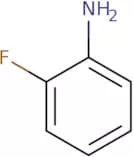
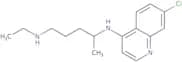
CAS :<p>2-Fluoroaniline is an organic compound that is used as a substrate in enzyme studies. It is used to study the activity of enzymes such as diazonium salt hydrolase, methyl ketone oxidase, and flow system. 2-Fluoroaniline has been shown to be metabolized by rat liver microsomes. This compound also reacts with hydrochloric acid to produce ionization techniques and langmuir adsorption isotherm. 2-Fluoroaniline can be used as an alternative to trifluoroacetic acid for the removal of water vapor from a gas stream.</p>Formule :C6H6FNDegré de pureté :Min. 95%Masse moléculaire :111.12 g/molDesethyl chloroquine
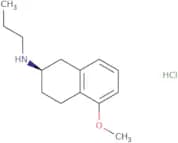
CAS :Desethyl chloroquine is a drug that is used to treat malaria and other infectious diseases. It is an antimalarial drug that has been shown to be effective in the treatment of malaria and related diseases such as toxoplasmosis, amebiasis, trypanosomiasis, and leishmaniasis. Methods for the preparation of desethyl chloroquine are described in the analytical section. To measure the concentration of desethyl chloroquine in blood, it is recommended to collect a sample of blood by venipuncture or fingerstick. The concentration-time curve in blood can be analyzed using a fluorescence detector and LC-MS/MS method. When analyzing pharmacokinetic properties, it is important to take into account the matrix effect due to human serum proteins. Desethyl chloroquine has potent inducers that affect its pharmacokinetics and metabolism, including CYP3A4 enzymes and glutathione reductase.Formule :C16H22ClN3Degré de pureté :Min. 95%Couleur et forme :Slightly Yellow PowderMasse moléculaire :291.82 g/mol(R)-1,2,3,4-Tetrahydro-5-methoxy-N-propyl-2-naphthalenamine hydrochloride
CAS :Produit contrôléPlease enquire for more information about (R)-1,2,3,4-Tetrahydro-5-methoxy-N-propyl-2-naphthalenamine hydrochloride including the price, delivery time and more detailed product information at the technical inquiry form on this pageFormule :C14H22ClNODegré de pureté :Min. 95%Masse moléculaire :255.78 g/mol3,6-Dichlorobenzo[b]thiophene-2-carboxylic acid
CAS :3,6-Dichlorobenzo[b]thiophene-2-carboxylic acid is an extracellular metabolite that is involved in the metabolism of muscle. It is produced as a byproduct of the reaction catalyzed by dehydrogenase, which converts 3,6-dichlorobenzo[b]thiophene to 2-carboxybenzothiophene. This compound has been shown to inhibit the enzyme histidine carboxylate synthetase, which is involved in branched-chain amino acid synthesis. The enzyme can be inhibited by either a wild type or an analog of 3,6-dichlorobenzo[b]thiophene-2-carboxylic acid.Formule :C9H4Cl2O2SDegré de pureté :Min. 95%Masse moléculaire :247.1 g/mol4-Chloro-3-iodopyridin-2-amine
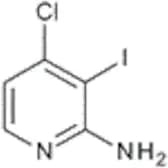
CAS :Please enquire for more information about 4-Chloro-3-iodopyridin-2-amine including the price, delivery time and more detailed product information at the technical inquiry form on this pageFormule :C5H4ClIN2Degré de pureté :Min. 95%Masse moléculaire :254.46 g/mol4-(4-Fluorophenyl)cyclohexanone
CAS :Please enquire for more information about 4-(4-Fluorophenyl)cyclohexanone including the price, delivery time and more detailed product information at the technical inquiry form on this pageFormule :C12H13FODegré de pureté :Min. 95%Masse moléculaire :192.23 g/molMethyl thiazolidine-2-carboxylate hydrochloride
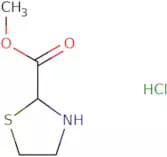
CAS :Please enquire for more information about Methyl thiazolidine-2-carboxylate hydrochloride including the price, delivery time and more detailed product information at the technical inquiry form on this pageFormule :C5H9NO2S•HClDegré de pureté :Min. 95%Couleur et forme :PowderMasse moléculaire :183.66 g/mol2-Fluoro-5-methoxyaniline
CAS :<p>2-Fluoro-5-methoxyaniline is a high quality reagent that is used as an intermediate in the synthesis of various complex compounds. The CAS number for this chemical is 62257-15-2 and it has been shown to be useful as a building block for the synthesis of fine chemicals, speciality chemicals, and research chemicals with many different uses. It is also a versatile building block that can be used in reactions involving amines, alcohols, thiols, and nitriles. 2-Fluoro-5-methoxyaniline may also be used as a reaction component in organic syntheses.</p>Formule :C7H8FNODegré de pureté :Min. 95%Couleur et forme :PowderMasse moléculaire :141.14 g/mol1-[4-(4-bromophenyl)piperazin-1-yl]ethanone
CAS :Produit contrôléPlease enquire for more information about 1-[4-(4-bromophenyl)piperazin-1-yl]ethanone including the price, delivery time and more detailed product information at the technical inquiry form on this pageFormule :C12H15BrN2ODegré de pureté :Min. 95%Masse moléculaire :283.16 g/molHexachlorodimethyl sulfone
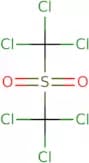
CAS :<p>Hexachlorodimethyl sulfone (HCDS) is an industrial chemical that is used in the production of polymers, resins, and dyes. It is also used for the decontamination of radiation-contaminated water, soil, and air. HCDS has been shown to be a potent inhibitor of cationic polymerization reactions such as those used to make paints and varnishes. This property makes it useful in the development of paint strippers. Hexachlorodimethyl sulfone has a high resistance to acidity and is stable at high temperatures. This chemical can cause necrosis factor-mediated chronic arthritis in animals following intraperitoneal administration.</p>Formule :C2Cl6O2SDegré de pureté :Min. 95%Masse moléculaire :300.8 g/molN-Methyl-1-(3,4,5-trimethoxyphenyl)methanamine hydrochloride
CAS :Produit contrôléPlease enquire for more information about N-Methyl-1-(3,4,5-trimethoxyphenyl)methanamine hydrochloride including the price, delivery time and more detailed product information at the technical inquiry form on this pageFormule :C11H17NO3Degré de pureté :Min. 95%Masse moléculaire :211.26 g/mol3-Amino-5-bromopyridine
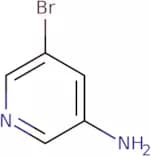
CAS :<p>3-Amino-5-bromopyridine (3ABP) is a linker for the synthesis of cisplatin. It has been shown to have strong bactericidal activity against Escherichia coli and Staphylococcus aureus. 3ABP is cytotoxic to both renal proximal tubule cells and ring-opening cells, which are found in the kidney. It is also an inhibitor of nicotinic acetylcholine receptors (nAChRs), which are proteins that control nerve cell communication. 3ABP's pharmacokinetic properties make it suitable as a linker for cisplatin, as it has good oral bioavailability, low systemic toxicity, and high tissue selectivity.</p>Formule :C5H5BrN2Degré de pureté :Min. 98 Area-%Masse moléculaire :173.01 g/mol4-Dimethylaminopyridinium Bromide Perbromide
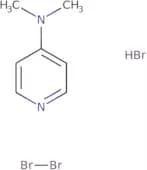
CAS :Produit contrôlé4-Dimethylaminopyridinium Bromide Perbromide is a synthetic compound that contains a phenolic hydroxyl group. It reacts with chloride to form the perbromide salt, which is anhydrous and insoluble in water. The compound has been shown to inhibit the growth of cancer cells by interfering with DNA replication and transcription.Formule :C7H11Br3N2Degré de pureté :Min. 95%Masse moléculaire :362.89 g/mol


![3,6-Dichlorobenzo[b]thiophene-2-carboxylic acid](/_next/image/?url=https%3A%2Fstatic.cymitquimica.com%2Fproducts%2F3D%2Fthumb-webp%2FFD57151.webp&w=3840&q=75)


![1-[4-(4-bromophenyl)piperazin-1-yl]ethanone](/_next/image/?url=https%3A%2Fstatic.cymitquimica.com%2Fproducts%2F3D%2Fthumb-webp%2FFB137350.webp&w=3840&q=75)