Halogénures organiques
Dans cette catégorie, vous trouverez des molécules organiques contenant un ou plusieurs atomes d'halogène dans leur structure. Ces halogénures organiques incluent des composés bromés, iodés, chlorés et des halogénures cycliques. Les halogénures organiques sont largement utilisés en synthèse organique, en pharmaceutique, en agrochimie et en science des matériaux en raison de leur réactivité et de leur capacité à subir une variété de transformations chimiques. Chez CymitQuimica, nous offrons une sélection complète d'halogénures organiques de haute qualité pour soutenir vos applications de recherche et industrielles, garantissant une performance fiable et efficace dans vos projets synthétiques et analytiques.
Sous-catégories appartenant à la catégorie "Halogénures organiques"
20440 produits trouvés pour "Halogénures organiques"
Trier par
Degré de pureté (%)
0
100
|
0
|
50
|
90
|
95
|
100
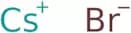
Cesium bromide
CAS :Cesium bromide is a chemical compound that has a high melting point. It is used as an ionic liquid and as a salt in analytical chemistry. Cesium bromide can be used to measure the thermal expansion of materials or to measure the hydrogen bond strength between two molecules. Cesium bromide is also used in membrane systems for water purification, and it can be used for radiation treatment of cancer cells. Cesium bromide can be found in wastewater treatment plants where it helps to remove halides and other contaminants from water vapor, providing kinetic energy to do so. Cesium bromide is also used as an analytical method for measuring hydrochloric acid, uv absorption, or chelate rings.Formule :CsBrDegré de pureté :Min. 95%Masse moléculaire :212.81 g/mol5-chloro-1-phenyl-1h-1,2,3,4-tetraazole
CAS :<p>5-Chloro-1-phenyl-1H-1,2,3,4-tetrazole (5CAT) is a dihedral molecule that contains phenyl groups and p-hydroxybenzoic acid. The argon (Ar) functionalities are activated by reaction with hydroxyl group to form the cross-coupling reaction between 5CAT and chloride (Cl). 5CAT has been shown to be a good substrate for 2D Nuclear Magnetic Resonance (NMR), as it has a protonated hydroxyl group. This functional group is also present on the chloro group of the 5CAT molecule. The vibrational analysis from the protonated hydroxyl group can be observed in the spectrum of 5CAT.</p>Formule :C7H5N4ClDegré de pureté :Min. 95%Masse moléculaire :180.59 g/mol2-Chloro-5-chloromethylthiazole
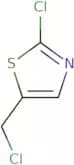
CAS :2-Chloro-5-chloromethylthiazole is an aliphatic hydrocarbon that has been used to chlorinate a variety of organic compounds. It reacts with hydrochloric acid and chlorine at low energy, producing chloride in the process. This chemical can be synthesized by reacting n-dimethyl formamide with hydrogen chloride. 2-Chloro-5-chloromethylthiazole can also be used as a crosslinking agent to react with the amine groups on proteins.Degré de pureté :Min. 95%Perfluorodimethylcyclobutane
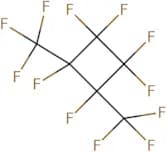
CAS :Produit contrôléPerfluorodimethylcyclobutane is an organic compound that belongs to the class of perfluorinated compounds. It is a polymer film-forming agent with a chemical formula of C5H8F2. The chemical structure of this drug consists of a chlorine atom, two fluorine atoms, and two hydrogen atoms. The molecular weight is 126.7 g/mol. Perfluorodimethylcyclobutane has been used in microcapsules as an analytical chemistry tool and in the development of pharmaceutical drugs for cardiac conditions. This molecule has been used as a chromatographic science analytical method to identify fatty acids in petroleum products and chlorinated solvents.Formule :C6F12Degré de pureté :Min. 95%Masse moléculaire :300.05 g/mol2-Chloro-pyrazolo[1,5-a]pyridine
CAS :Please enquire for more information about 2-Chloro-pyrazolo[1,5-a]pyridine including the price, delivery time and more detailed product information at the technical inquiry form on this pageFormule :C7H5ClN2Degré de pureté :Min. 95%Masse moléculaire :152.58 g/molTetrafluoroterephthalonitrile
CAS :<p>Tetrafluoroterephthalonitrile is a hydroxyl group-containing organic chemical compound with the molecular formula (CF)CO. It has been used in analytical chemistry as a reagent for the determination of peptide binding constants and disulfide bonds. Tetrafluoroterephthalonitrile binds to nucleophilic sites on proteins, such as the pim-1 protein, and can be used to transport other molecules across cell membranes. In addition, it has been used to produce polymers for use in analytical chemistry. This chemical is also able to bind with magnetic particles under constant pressure conditions, which makes it useful for optical sensor applications. Tetrafluoroterephthalonitrile is a hydroxyl group-containing organic chemical compound with the molecular formula (CF)CO. It has been used in analytical chemistry as a reagent for the determination of peptide binding constants and disulfide bonds. Tetrafluoroterephthal</p>Formule :C8F4N2Degré de pureté :Min. 95%Masse moléculaire :200.09 g/mol14-O-Acetyl noroxycodone hydrochloride
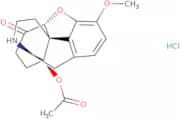
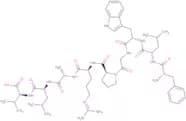
CAS :Produit contrôléPlease enquire for more information about 14-O-Acetyl noroxycodone hydrochloride including the price, delivery time and more detailed product information at the technical inquiry form on this pageFormule :C19H22ClNO5Degré de pureté :Min. 95%Masse moléculaire :379.83 g/molMAGE-3 Antigen (271-279) (human) trifluoroacetate salt
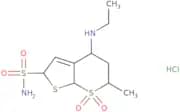
CAS :ALPHA FACTOR SIGNALING PEPTIDEFormule :C53H79N13O10Degré de pureté :Min. 95%Masse moléculaire :1,058.28 g/molDorzolamide hydrochloride related compound A
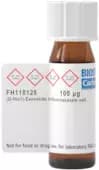
CAS :<p>Please enquire for more information about Dorzolamide hydrochloride related compound A including the price, delivery time and more detailed product information at the technical inquiry form on this page</p>Formule :C10H16N2O4S3·HClDegré de pureté :Min. 95%Masse moléculaire :360.9 g/mol(D-His1)-Exenatide trifluoroacetate salt
CAS :<p>Please enquire for more information about (D-His1)-Exenatide trifluoroacetate salt including the price, delivery time and more detailed product information at the technical inquiry form on this page</p>Formule :C184H282N50O60SDegré de pureté :Min. 95%Masse moléculaire :4,186.57 g/mol[1,1'-Bis(diphenylphosphino)ferrocene]-dichloropalladium (II) dichloromethane complex
CAS :Produit contrôlé1,1'-Bis(diphenylphosphino)ferrocene]-dichloropalladium (II) dichloromethane complex is a fine chemical that is used as a scaffold for the synthesis of other compounds. It can be used as a building block to make other chemicals or as an intermediate in chemical reactions. It is also a versatile research chemical and is used to make speciality chemicals. 1,1'-Bis(diphenylphosphino)ferrocene]-dichloropalladium (II) dichloromethane complex has high quality and is a useful building block for making other compounds.Formule :C35H30Cl4P2PdFeDegré de pureté :Min. 95%Couleur et forme :Red PowderMasse moléculaire :816.64 g/mol6-(2-Bromoethyl)-1,3-dimethyl-1H-pyrrolo[3,4-d]pyrimidine-2,4(3H,6H)-dione
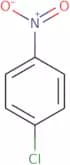
CAS :Produit contrôléPlease enquire for more information about 6-(2-Bromoethyl)-1,3-dimethyl-1H-pyrrolo[3,4-d]pyrimidine-2,4(3H,6H)-dione including the price, delivery time and more detailed product information at the technical inquiry form on this pageFormule :C10H12BrN3O2Degré de pureté :Min. 95%Masse moléculaire :286.13 g/mol4-Chloronitrobenzene
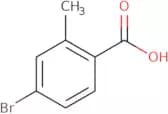
CAS :<p>4-Chloronitrobenzene is a type strain of the bacterium Nitrosomonas europaea. It has been shown to be toxic to cells in both aerobic and anaerobic culture. 4-Chloronitrobenzene inhibits the activity of hydrogenase enzymes, which are required for the reduction of molecular oxygen to water. The toxicity of 4-chloronitrobenzene is due to its ability to inhibit enzyme activity, leading to cell death. This bacterium also has the ability to use chlorinated hydrocarbons as a carbon source and cause chlorination of other biological molecules. In addition, it can reduce metal hydroxides and form metal complexes with palladium and platinum metals. 4-Chloronitrobenzene is found in soil samples that have high concentrations of chloride ions or neutral pH values. Its phase equilibrium diagram shows that this compound exists mainly in liquid form when it is at low temperature, but becomes more</p>Formule :C6H4ClNO2Degré de pureté :Min. 95%Couleur et forme :SolidMasse moléculaire :157.55 g/mol4-Bromo-2-methylbenzoic acid
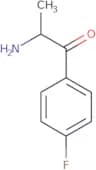
CAS :4-Bromo-2-methylbenzoic acid is a nucleophilic compound that can be used for the synthesis of esters, amides and peptides. It is also an intermediate in the synthesis of 4-bromo-2-methylbenzoic acid methyl ester, which can be used as a cardiac marker. The hydroxylamine group on this molecule reacts with electrophiles such as benzoate to form bromoacetic acid derivatives. This reaction is catalyzed by palladium and other metals. The multidimensional nature of this reaction means it can be used for cross-coupling reactions.Formule :C8H7BrO2Degré de pureté :Min. 95%Masse moléculaire :215.04 g/mol2-Amino-1-(4-fluorophenyl)-1-propanone
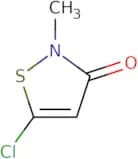
CAS :Produit contrôlé<p>2-Amino-1-(4-fluorophenyl)-1-propanone (Fluoroamphetamine) is a chemical that binds to the serotonin transporter, which is responsible for the reuptake of serotonin into the presynaptic neuron. Fluoroamphetamine has been shown to lower empathy and increase feelings of reward in animals. This drug has no significant effect on dopamine and noradrenaline levels but does cause an increase in metabolic acidosis. Fluoroamphetamine is most often used by analytical laboratories as a synthetic intermediate, but it can also be used as a strategy to develop specific antidotes against serotonin blockers. Fluoroamphetamine's health effects are similar to those of amphetamine with regards to cardiovascular risks and addictive potential.</p>Formule :C9H10FNODegré de pureté :Min. 95%Masse moléculaire :167.18 g/mol5-Chloro-2-methyl-3-isothiazolone - Active Ingredient >14%, CMI/MI 2.5 - 4.0
CAS :<p>5-Chloro-2-methyl-3-isothiazolone (CMIT) is a highly water-soluble apoptotic agent and preservative with numerous applications. It is used in anti-microbial coatings, latex formulations, hydraulic fracturing fluids, pesticides and cosmetics. CMIT in conjunction with 2-methyl-4-isothiazolin-3-one (MIT) is marketed as Kathon. CMIT is also an allergen. CMIT is active against gram-positive and gram-negative bacteria, yeasts and fungi. CMIT is believed to form mixed disulfides with protein thiol groups which then undergo thiol-disulfide exchange reactions to give mixed protein thiol disulfides leading to cell apoptosis and necrosis.</p>Formule :C4H4ClNOSCouleur et forme :Yellow Clear LiquidMasse moléculaire :149.6 g/molChlorogenic acid hemihydrate
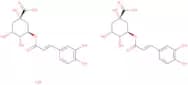
CAS :<p>Chlorogenic acid hemihydrate is a natural phenolic compound that belongs to the family of flavonol glycosides. The molecule has two caffeoylquinic acids and one chlorogenic acid functional groups, which are responsible for its antioxidant properties. Chlorogenic acid hemihydrate is soluble in water and can be used as a solid dispersion. This compound has been shown to have significant interactions with other drugs, including polymeric matrix, protocatechuic acid, and α-amyrin acetate. It also has been shown to have cell culture and in vivo model evidence of efficacy against cancer cells.</p>Degré de pureté :Min. 95%H-Pro-AMC hydrobromide salt
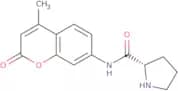
CAS :<p>H-Pro-AMC hydrobromide salt is an enzyme that belongs to the family of proteases. H-Pro-AMC hydrobromide salt has been shown to have carboxypeptidase activity, which cleaves peptides at the C terminus of a single amino acid. It has also been shown to interact with other enzymes and proteins, such as recombinant proteins and enzymes from the ubiquitin-proteasome system. This enzyme's ability to cleave peptides at the C terminus of a single amino acid makes it useful for protein sequencing. H-Pro-AMC hydrobromide salt has also been sequenced and found to share homology with other proteases, such as subtilisin E.</p>Formule :C15H16N2O3Degré de pureté :Min. 95%Masse moléculaire :272.3 g/mol4-Chlorobutanal dimethyl acetal
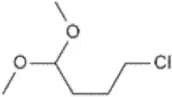
CAS :4-Chlorobutanal dimethyl acetal is a compound that can be used as a reagent for the synthesis of enantiopure, functionalized pyridinium salts. The compound can be synthesized in a one-step process by the ring-opening of 4-chlorobutyraldehyde with dimethoxyethane in the presence of an acidic catalyst, such as hydrochloric acid. The reaction proceeds via an intramolecular hydrogen bond between the carbonyl group and the hydroxyl group on the ether oxygen atom. This process provides an isolated yield of 75%. The conjugates are obtained by reacting 4-chlorobutanal dimethyl acetal with different chlorides or other functional groups.Formule :C6H13ClO2Degré de pureté :Min. 95%Masse moléculaire :152.62 g/mol1-(3-Chloro-2-methylphenyl)-5-oxopyrrolidine-3-carboxylic acid
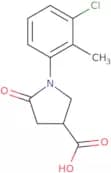
CAS :<p>Please enquire for more information about 1-(3-Chloro-2-methylphenyl)-5-oxopyrrolidine-3-carboxylic acid including the price, delivery time and more detailed product information at the technical inquiry form on this page</p>Formule :C12H12ClNO3Degré de pureté :Min. 95%Masse moléculaire :253.68 g/mol


![2-Chloro-pyrazolo[1,5-a]pyridine](/_next/image/?url=https%3A%2Fstatic.cymitquimica.com%2Fproducts%2F3D%2Fthumb-webp%2FFC51462.webp&w=3840&q=75)

![[1,1'-Bis(diphenylphosphino)ferrocene]-dichloropalladium (II) dichloromethane complex](/_next/image/?url=https%3A%2Fstatic.cymitquimica.com%2Fproducts%2F3D%2Fthumb-webp%2FFB31909.webp&w=3840&q=75)
![6-(2-Bromoethyl)-1,3-dimethyl-1H-pyrrolo[3,4-d]pyrimidine-2,4(3H,6H)-dione](/_next/image/?url=https%3A%2Fstatic.cymitquimica.com%2Fproducts%2F3D%2Fthumb-webp%2FFB117220.webp&w=3840&q=75)