


Halogénures organiques
Dans cette catégorie, vous trouverez des molécules organiques contenant un ou plusieurs atomes d'halogène dans leur structure. Ces halogénures organiques incluent des composés bromés, iodés, chlorés et des halogénures cycliques. Les halogénures organiques sont largement utilisés en synthèse organique, en pharmaceutique, en agrochimie et en science des matériaux en raison de leur réactivité et de leur capacité à subir une variété de transformations chimiques. Chez CymitQuimica, nous offrons une sélection complète d'halogénures organiques de haute qualité pour soutenir vos applications de recherche et industrielles, garantissant une performance fiable et efficace dans vos projets synthétiques et analytiques.
Sous-catégories appartenant à la catégorie "Halogénures organiques"
20440 produits trouvés pour "Halogénures organiques"
Trier par
Degré de pureté (%)
0
100
|
0
|
50
|
90
|
95
|
100
1-(4-(Aminomethyl)phenyl)pyridin-1-ium chloride
CAS :1-(4-(Aminomethyl)phenyl)pyridin-1-ium chloride is a chemical compound that belongs to the class of pyridines and has pinpoint as its molecular weight. It is an ionic liquid that can be used in analytical methods, such as liquid chromatography and ionization techniques, for the identification of unsaturated fatty acids. This compound can be analyzed by gas chromatography with either electron capture detection or chemical ionization. The GC separation column used for this analysis would have to be a phase column with an unsaturated fatty acid stationary phase. GC-EID and GC-CI are two common ionization techniques that could be used in conjunction with this analytical method. The lower limit of detection for this technique is about 0.1 ppm, which makes it a sensitive analytical tool for use in food production and quality control laboratories. The yield of 1-(4-(Aminomethyl)phenyl)pyridin-1-Degré de pureté :Min. 95%1-(4-Fluorophenyl)-5-methyl-1H-pyrazole-4-carboxylic acid
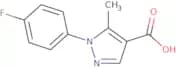
CAS :Please enquire for more information about 1-(4-Fluorophenyl)-5-methyl-1H-pyrazole-4-carboxylic acid including the price, delivery time and more detailed product information at the technical inquiry form on this pageFormule :C11H9FN2O2Degré de pureté :Min. 95%Masse moléculaire :220.2 g/mol4-(2-Chloroethyl)-1-(triphenylmethyl)-1H-imidazole
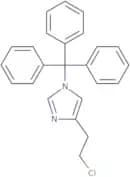
CAS :Produit contrôléPlease enquire for more information about 4-(2-Chloroethyl)-1-(triphenylmethyl)-1H-imidazole including the price, delivery time and more detailed product information at the technical inquiry form on this pageFormule :C24H21ClN2Degré de pureté :Min. 95%Masse moléculaire :372.89 g/molDimethylammonium dichlorotri(mu-chloro)bis[(R)-(+)-5,5'-bis(diphenylphosphino)-4,4'-bi-1,3-benzodioxole]diruthenate(II)
CAS :Produit contrôléPlease enquire for more information about Dimethylammonium dichlorotri(mu-chloro)bis[(R)-(+)-5,5'-bis(diphenylphosphino)-4,4'-bi-1,3-benzodioxole]diruthenate(II) including the price, delivery time and more detailed product information at the technical inquiry form on this pageFormule :C78H64Cl5O8P4Ru2NDegré de pureté :Min. 95%Masse moléculaire :1,646.64 g/mol2’-Nor thiamine hydrochloride
CAS :Please enquire for more information about 2’-Nor thiamine hydrochloride including the price, delivery time and more detailed product information at the technical inquiry form on this pageFormule :C11H16Cl2N4OSDegré de pureté :Min. 95%Masse moléculaire :323.24 g/mol9-Chloro-11beta,17,21-trihydroxy-16beta-methylpregna-1,4-diene-3,20-dione 17-valerate
CAS :Produit contrôlé<p>Prednisolone is a synthetic corticosteroid that is used in the treatment of a number of lung diseases, including asthma. Prednisolone is used to decrease the inflammation and swelling around the airways and lungs. Prednisolone is used to treat certain skin conditions, such as eczema and dermatitis. This drug also decreases the activity of the immune system by inhibiting production of substances that cause inflammation. The onset of action for prednisolone is typically one day with a duration of up to two weeks. It has been shown to be more effective when taken orally than when applied topically. It may be taken with or without food and can be given as an oral or an intravenous dose. Prednisolone tablets must be dissolved in water before they are placed under the tongue (sublingual). The tablets will dissolve quickly under the tongue, releasing prednisolone into your bloodstream. Enteric-coated tablets should not be crushed or chewed</p>Formule :C27H37ClO6Degré de pureté :Min. 95%Masse moléculaire :493.03 g/mol3-(3-Chlorophenyl)quinazoline-2,4(1H,3H)-dione
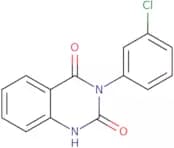
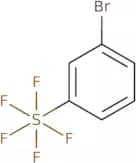
CAS :Produit contrôléPlease enquire for more information about 3-(3-Chlorophenyl)quinazoline-2,4(1H,3H)-dione including the price, delivery time and more detailed product information at the technical inquiry form on this pageFormule :C14H9ClN2O2Degré de pureté :Min. 95%Masse moléculaire :272.69 g/mol1-Bromo-3-(Pentafluorosulfanyl)Benzene
CAS :1-Bromo-3-(pentafluorosulfanyl)benzene is a molecule that can be used in the synthesis of biologically active compounds. It has been shown to have anti-inflammatory properties, which may be due to its ability to modulate the activity of 5-hydroxytryptamine (5-HT). The functionalities of 1-bromo-3-(pentafluorosulfanyl)benzene include cross-coupling (i.e., chemical reactions that join two or more substances together), protonation, and ligand binding. This molecule has been synthesized from 2,4,6-trifluorobenzonitrile and bromine. The isomers for this molecule are cis and trans, with the cis isomer being more active than the trans isomer. Techniques such as molecular modeling have also been used to study 1-bromo-3-(pentafluorosulfanyl)benFormule :C6H4BrF5SDegré de pureté :Min. 95%Masse moléculaire :283.06 g/molTriphenylvinylphosphonium Bromide
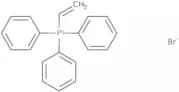
CAS :Triphenylvinylphosphonium bromide is a model system that is used to study the reaction mechanism of hydroxyl group and hydrogen fluoride. It can be used to synthesize heterocycles such as quinolines. Triphenylvinylphosphonium bromide is also used in the synthesis of sodium salts, which are commonly used in the laboratory. This compound has been shown to have an effect on protein synthesis and crystalline cellulose, which is a carbohydrate polymer that can be hydrolyzed by enzymes. Triphenylvinylphosphonium bromide reacts with carbonyl groups and metal hydroxides, leading to biochemical properties such as carboxy groups and dimethyl fumarate. Triphenylvinylphosphonium bromide also inhibits non-nucleoside inhibitors, specifically 2',3'-dideoxyinosine (ddI).Formule :C20H18BrPDegré de pureté :Min. 95%Masse moléculaire :369.23 g/mol1-(Azidomethyl)-3-fluorobenzene
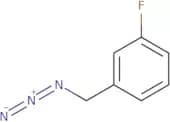
CAS :<p>1-(Azidomethyl)-3-fluorobenzene is a cycloaddition product that, when optimized, has a high efficiency for the synthesis of phosphine containing target compounds. The cycloaddition reaction is carried out in an organic solvent at room temperature with or without the addition of an external base. The reaction time can be varied from 10 minutes to 2 hours. The substituent on the azide and alkyne can be varied to produce different products. 1-(Azidomethyl)-3-fluorobenzene is catalyzed by copper(II) acetate and zinc chloride or copper(II) oxide and zinc chloride to form the desired phosphines.</p>Formule :C7H6FN3Degré de pureté :Min. 95%Masse moléculaire :151.14 g/molS-[2-(Dimethylamino)ethyl]isothiourea Dihydrochloride
CAS :Produit contrôléS-[2-(Dimethylamino)ethyl]isothiourea Dihydrochloride is an inhibitor of tyrosinase, an enzyme that catalyzes the oxidation of tyrosine to dopa and dopaquinone. It binds to the active site of the enzyme and blocks its activity. S-[2-(Dimethylamino)ethyl]isothiourea Dihydrochloride has been shown to inhibit tyrosinase in animal experiments and in vitro studies, with a concentration-response curve that can be described by a Michaelis-Menten kinetic model. The inhibition of tyrosinase activity may be due to steric hindrance by the thiourea group or a covalent binding to amino acid residues on the protein surface. S-[2-(Dimethylamino)ethyl]isothiourea Dihydrochloride is also known as monomethyl auristatin E (MMAEFormule :C5H13N3S·2HClDegré de pureté :Min. 95%Masse moléculaire :220.16 g/mol(1S,2R)-2-Aminocyclohexanol hydrochloride
CAS :<p>Please enquire for more information about (1S,2R)-2-Aminocyclohexanol hydrochloride including the price, delivery time and more detailed product information at the technical inquiry form on this page</p>Formule :C6H14ClNODegré de pureté :Min. 95%Masse moléculaire :151.63 g/molImidazo[1,2-a]pyridin-8-ylamine dihydrochloride
CAS :<p>Imidazo[1,2-a]pyridin-8-ylamine dihydrochloride is an arylation agent that reacts with nucleophiles to form an amide linkage. Imidazo[1,2-a]pyridin-8-ylamine dihydrochloride is used in the synthesis of carboxylic acid derivatives and other biomolecules. It can be used for selective functionalization of unsymmetrical carboxylic acids.</p>Formule :C7H7N3·2HClDegré de pureté :Min. 95%Masse moléculaire :206.07 g/molQuinine hydrochloride dihydrate
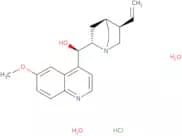
CAS :<p>Quinine hydrochloride dihydrate is a natural compound that has been used for centuries as a treatment for malaria. It is an effective anti-malarial agent and is also used to treat nocturnal leg cramps, although it has a low potency. Quinine hydrochloride dihydrate is active against the parasite Plasmodium falciparum in vitro. It binds to hemozoin, which is the pigment that the malaria parasites produce during digestion of hemoglobin from red blood cells. This binding inhibits the growth of the parasite and causes cell death by inhibiting protein synthesis. Quinine hydrochloride dihydrate has been shown to be genotoxic in vivo, but not in vitro. The genotoxic effects may be due to its ability to create reactive oxygen species (ROS) through photochemical reactions with light exposure and other chemical reactions, such as thermal expansion or matrix effects.</p>Formule :C20H24N2O2·HCl·2H2OCouleur et forme :PowderMasse moléculaire :396.91 g/molMethyl trichloroacetate
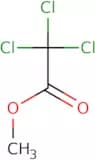
CAS :<p>Methyl trichloroacetate (MTCA) is a reactive chemical that is used as an intermediate in the synthesis of various organic compounds. It has been shown to react with nucleophiles, such as hydroxyl groups, to form a copper complex. MTCA has also been found to produce light emission when exposed to air and aryl halides. The synthesis of MTCA involves treating 1-chloro-2-propanol with hydrogen fluoride in the presence of an acid catalyst. The chemical can be detected by gas chromatography or liquid chromatography, but it is not readily available on the market.</p>Formule :C3H3Cl3O2Degré de pureté :Min. 95%Masse moléculaire :177.41 g/molChlorodiphenylphosphine
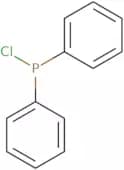
CAS :<p>Chlorodiphenylphosphine is an organophosphorus compound that can form stable complexes with fatty acids. It reacts with hydroxyl groups to form stable complexes, which are soluble in organic solvents and can be used as ligands for metal ions. Chlorodiphenylphosphine has been shown to react with copper chloride in aqueous solution at room temperature to form copper chlorodiphenylphosphine, which is soluble in water or ethanol. Several chelate ligands were synthesized using this method, including dimethyl fumarate and halides. The structures of these compounds were analyzed by x-ray diffraction data.</p>Formule :C12H10PClDegré de pureté :Min. 95%Couleur et forme :Colorless Clear LiquidMasse moléculaire :220.63 g/molAlfentanil hydrochloride
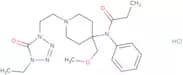
CAS :Produit contrôlé<p>Alfentanil is an opioid analgesic that is used for the treatment of severe or acute pain. It is a potent synthetic analog of fentanyl, which is an opioid analgesic that is used for the treatment of short-term (acute) and long-term (chronic) pain. Alfentanil has been shown to have a high affinity for α1-acid glycoprotein, which has been associated with drug interactions and blood sampling. Alfentanil also has chemical stability in experimental models and does not interact with nonsteroidal anti-inflammatory drugs. This drug may have a matrix effect on the concentration of cortisol in the blood.</p>Formule :C21H33ClN6O3Degré de pureté :Min. 95%Masse moléculaire :452.98 g/mol2-(tert-Butylamino)propiophenone hydrochloride
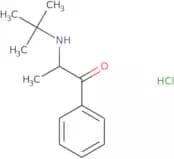
CAS :Produit contrôléPlease enquire for more information about 2-(tert-Butylamino)propiophenone hydrochloride including the price, delivery time and more detailed product information at the technical inquiry form on this pageFormule :C13H20ClNODegré de pureté :Min. 95%Masse moléculaire :241.76 g/molEicosafluorononane
CAS :Produit contrôléEicosafluorononane is a hydrogen fluoride that is used as a chemical reagent to produce dry weight in cells. It has been shown to promote growth factor-induced cell proliferation and monoclonal antibody production. Eicosafluorononane has also been used for diagnostic purposes, with the ability to react with cell culture media and form fluorescent compounds. This agent is lipophilic and can be used in humans, which makes it an ideal candidate for use in a basic fibroblast model. The reaction solution of eicosafluorononane can also be used to measure boron nitride, mainly due to its high thermal expansion coefficient and low solubility coefficient. Eicosafluorononane reacts with trifluoroacetic acid at high temperatures, forming a volatile compound that can be collected by condensation.Formule :C9F20Degré de pureté :Min. 95%Masse moléculaire :488.06 g/mol8-Chloro-1-methyl-2,3,4,5-tetrahydro-1H-benzo[d]azepine
CAS :Produit contrôlé8-Chloro-1-methyl-2,3,4,5-tetrahydro-1H-benzo[d]azepine is an antipsychotic drug that is a member of the class of drugs known as serotonin receptor antagonists. It is a synthetic process that has been used to produce antidepressant and antipsychotic drugs. This drug was first synthesized in 1966 by chemists at Smith Kline & French Laboratories as part of a program to develop novel antidepressants. 8-Chloro-1-methyl-2,3,4,5-tetrahydro-1H-benzo[d]azepine is one of the few antipsychotics that does not cause extrapyramidal side effects such as tardive dyskinesia. The enantiomers are active with the (S) form being more potent than the (R) form.Formule :C11H14ClNDegré de pureté :Min. 95%Masse moléculaire :195.69 g/mol




![S-[2-(Dimethylamino)ethyl]isothiourea Dihydrochloride](/_next/image/?url=https%3A%2Fstatic.cymitquimica.com%2Fproducts%2F3D%2Fthumb-webp%2FFD61318.webp&w=3840&q=75)

![Imidazo[1,2-a]pyridin-8-ylamine dihydrochloride](/_next/image/?url=https%3A%2Fstatic.cymitquimica.com%2Fproducts%2F3D%2Fthumb-webp%2FFI51744.webp&w=3840&q=75)
![8-Chloro-1-methyl-2,3,4,5-tetrahydro-1H-benzo[d]azepine](/_next/image/?url=https%3A%2Fstatic.cymitquimica.com%2Fproducts%2F3D%2Fthumb-webp%2FFC148171.webp&w=3840&q=75)