Halogénures organiques
Dans cette catégorie, vous trouverez des molécules organiques contenant un ou plusieurs atomes d'halogène dans leur structure. Ces halogénures organiques incluent des composés bromés, iodés, chlorés et des halogénures cycliques. Les halogénures organiques sont largement utilisés en synthèse organique, en pharmaceutique, en agrochimie et en science des matériaux en raison de leur réactivité et de leur capacité à subir une variété de transformations chimiques. Chez CymitQuimica, nous offrons une sélection complète d'halogénures organiques de haute qualité pour soutenir vos applications de recherche et industrielles, garantissant une performance fiable et efficace dans vos projets synthétiques et analytiques.
Sous-catégories appartenant à la catégorie "Halogénures organiques"
20437 produits trouvés pour "Halogénures organiques"
Trier par
Degré de pureté (%)
0
100
|
0
|
50
|
90
|
95
|
100
(2S)-2-Amino-2-[(5S)-3-chloro-4,5-dihydroisoxazol-5-Yl]acetic acid
CAS :<p>(2S)-2-Amino-2-[(5S)-3-chloro-4,5-dihydroisoxazol-5-Yl]acetic acid is an inhibitor of the enzyme glutathione reductase (GR) and cytochrome P450. GR activates glutathione in cells to form a powerful antioxidant that protects against oxidative stress. (2S)-2-Amino-2-[(5S)-3-chloro-4,5-dihydroisoxazol-5-Yl]acetic acid inhibits GR and cytochrome P450 activity, leading to increased oxidative stress and neuronal death. This drug has been shown to have inhibitory properties on bowel disease by reducing the production of proinflammatory cytokines IL1β and TNFα. The compound also exhibits anti tumor response against mouse tumors by inducing apoptosis and inhibiting cell proliferation. The compound targets intracellular targets</p>Formule :C5H7ClN2O3Degré de pureté :Min. 95%Couleur et forme :White PowderMasse moléculaire :178.57 g/molDiethylaminosulfur trifluoride
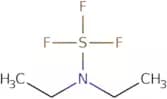
CAS :<p>Diethylaminosulfur trifluoride (DAST) is a reactive chemical that can be used as a methylating agent. It reacts with the hydroxyl group of carotenoids, including β-carotene, to produce x-ray crystal structures with the alcohol methanol solvent. DAST also reacts with 6alkyl and methyl glycosides, such as sucrose, producing a hydroxy derivative. DAST has been shown to have carcinogenic properties in tumor cell lines and is able to induce apoptosis in these cells by damaging their DNA. The use of DAST for cancer treatment can be done through laser ablation or injection into tumors.</p>Formule :C4H10F3NSDegré de pureté :(1H-Nmr) Min. 95%Couleur et forme :Clear LiquidMasse moléculaire :161.19 g/mol3-[(Dimethylamino)methyl]benzoic acid hydrochloride
CAS :<p>Please enquire for more information about 3-[(Dimethylamino)methyl]benzoic acid hydrochloride including the price, delivery time and more detailed product information at the technical inquiry form on this page</p>Formule :C10H13NO2Degré de pureté :Min. 95%Masse moléculaire :179.22 g/mol1-Bromo-4-cyclohex-1-en-1-ylbenzene
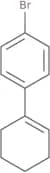
CAS :<p>Please enquire for more information about 1-Bromo-4-cyclohex-1-en-1-ylbenzene including the price, delivery time and more detailed product information at the technical inquiry form on this page</p>Formule :C12H13BrDegré de pureté :Min. 95%Masse moléculaire :237.14 g/mol4-Iodotoluenedifluoride
CAS :<p>4-Iodotoluenedifluoride is a molecule that can be produced by the Friedel-Crafts reaction of iodotoluene with sulfoxides. It has been shown to be a bioactive molecule and an efficient method for the stereoselective synthesis of sulfoxides. 4-Iodotoluenedifluoride is also used in the synthesis of phenoxy compounds, which have been shown to have anti-inflammatory properties. The phenoxy group can be replaced with fluorine, which increases the lipophilicity of these molecules and makes them useful for lipid lowering drugs. These molecules are also capable of inhibiting cholesterol biosynthesis and increasing density lipoprotein (HDL).</p>Formule :C7H7F2IDegré de pureté :Min. 95%Masse moléculaire :256.03 g/mol(3,5-Dichlorophenyl)methanesulfonyl chloride
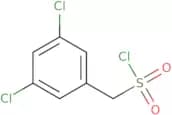
CAS :<p>Please enquire for more information about (3,5-Dichlorophenyl)methanesulfonyl chloride including the price, delivery time and more detailed product information at the technical inquiry form on this page</p>Formule :C7H5Cl3O2SDegré de pureté :Min. 95%Masse moléculaire :259.54 g/mol4-(2-Chloroethyl)morpholine hydrochloride
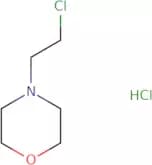
CAS :<p>4-(2-Chloroethyl)morpholine hydrochloride (PCEM) is a potent and selective inhibitor of bacterial topoisomerase IV. The compound has been found to have no effect on the mammalian enzyme, but does inhibit growth in bacteria such as Staphylococcus aureus and Escherichia coli. PCEM exhibits good stability in organic solvents, including water, and is not toxic to mammals at high doses. The compound has been used as an antibacterial agent in pharmaceutical preparations.</p>Formule :C6H12ClNO•HClCouleur et forme :PowderMasse moléculaire :186.08 g/molMethyl 5-bromo-1H-pyrazole-3-carboxylate
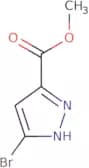
CAS :<p>Please enquire for more information about Methyl 5-bromo-1H-pyrazole-3-carboxylate including the price, delivery time and more detailed product information at the technical inquiry form on this page</p>Formule :C5H5BrN2O2Degré de pureté :Min. 95%Masse moléculaire :205.01 g/molQuaternary ammonium compounds, bis(hydroxyethyl) methyltallow alkyl, chlorides, salts with bentonite
CAS :<p>Please enquire for more information about Quaternary ammonium compounds, bis(hydroxyethyl) methyltallow alkyl, chlorides, salts with bentonite including the price, delivery time and more detailed product information at the technical inquiry form on this page</p>Degré de pureté :Min. 95%4-Bromophenyl isocyanate
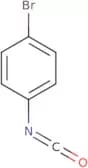
CAS :<p>4-Bromophenyl isocyanate (BPIC) is a chiral molecule that has been synthesized using an asymmetric synthesis. The chemical structure of BPIC consists of a benzene ring with a bromine atom attached to the 4th carbon on the left and two carbons attached to the right. The compound BPIC is a zwitterion, which means it has both a positive and negative charge in solution. This chemical can be used as a reagent for the Suzuki coupling reaction and reacts with nucleophiles such as ethyl diazoacetate to form an acyl halide. This reaction occurs at neutral pH, but does not occur in high salt solutions or in the presence of acyl halides. This molecule can also be used for structural analysis by nmr spectra and proton NMR spectra.</p>Formule :C7H4BrNODegré de pureté :Min. 95%Masse moléculaire :198.02 g/mol6a-Bromo beclomethasone dipropionate
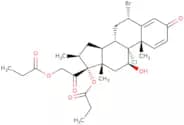
CAS :Produit contrôlé<p>Please enquire for more information about 6a-Bromo beclomethasone dipropionate including the price, delivery time and more detailed product information at the technical inquiry form on this page</p>Formule :C28H36BrClO7Degré de pureté :Min. 95%Masse moléculaire :599.94 g/molMethyl 4-amino-2-fluorobenzoate
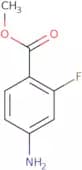
CAS :<p>Please enquire for more information about Methyl 4-amino-2-fluorobenzoate including the price, delivery time and more detailed product information at the technical inquiry form on this page</p>Formule :C8H8FNO2Degré de pureté :Min. 95%Masse moléculaire :169.15 g/molBis(methyldiphenylphosphine)palladium(II) Dichloride
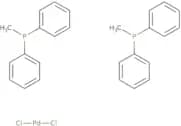
CAS :Produit contrôlé<p>Bis(methyldiphenylphosphine)palladium(II) chloride is an aryl halide catalyst that is used in the preparation of aryl chlorides. It can be used for the synthesis of pharmaceuticals, agrochemicals, perfumes and other chemical compounds. This catalyst has been shown to be effective in the presence of chloride as well as aryl halides. The reaction can be performed in either the presence or absence of solvent. Methyldiphenylphosphine is soluble in organic solvents such as ether, benzene, and toluene.</p>Formule :C26H26Cl2P2PdDegré de pureté :Min. 95%Masse moléculaire :577.76 g/mol2-Chloro-1-(1,2,5-trimethyl-1H-indol-3-yl)ethanone
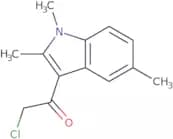
CAS :Produit contrôlé<p>Please enquire for more information about 2-Chloro-1-(1,2,5-trimethyl-1H-indol-3-yl)ethanone including the price, delivery time and more detailed product information at the technical inquiry form on this page</p>Formule :C13H14ClNODegré de pureté :Min. 95%Masse moléculaire :235.71 g/molEthyl 2-chloro-2,2-difluoroacetate
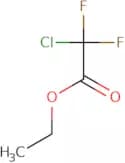
CAS :<p>Ethyl 2-chloro-2,2-difluoroacetate is an organic compound that is used in the synthesis of benzofuran derivatives. It reacts with chlorine to generate a reactive intermediate and then undergoes a nucleophilic substitution reaction to produce the desired compound. The kinetic studies of this reaction have been conducted using isolated yields of the reactants. The active methylene group can undergo a variety of reactions because it has a reactive chlorine atom attached to it. This active substance inhibits the NS5B polymerase, which is responsible for converting RNA into DNA. Ethyl 2-chloro-2,2-difluoroacetate may be used as a potential treatment for inflammatory diseases such as asthma and arthritis because it prevents acetylcholine from binding to its receptor α.</p>Formule :C4H5ClF2O2Degré de pureté :Min. 95%Couleur et forme :Clear LiquidMasse moléculaire :158.53 g/molNickel(II) chloride hexahydrate
CAS :<p>Nickel chloride hexahydrate is a compound that belongs to the group of inorganic compounds. It has a linear range and is used as an electrode material for electrochemical measurements. Nickel chloride hexahydrate forms a helical structure with a supramolecular assembly of the metal ions in its crystal lattice, which is stabilized by hydrogen bonding. This compound can be used in FTIR spectroscopy and deionized water as well as other electrolytes to measure the concentration of chloride, magnesium, and other ions.</p>Formule :NiCl2•(H2O)6Degré de pureté :Min. 95%Couleur et forme :PowderMasse moléculaire :237.69 g/mol2-(Bromomethyl)acrylic acid
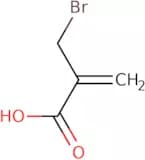
CAS :<p>2-(Bromomethyl)acrylic acid is a monomer that has been synthesized from bromoacetic acid and acrylic acid. It is an efficient method for the synthesis of 2-bromoethyl acrylate, which can be used as a precursor for polyurethanes and other polymers. The 2-bromoethyl acrylate can be obtained through allylation with ethylene glycol, followed by hydrolysis to produce acrylic acid. This monomer reacts with free hydroxyl groups to form esters and ethers. It also reacts with nitrogen atoms to form amides or nitriles. Cell culture studies have shown that this compound has no toxic effects on human erythrocytes or hepatocytes.</p>Formule :C4H5BrO2Degré de pureté :Min. 95%Couleur et forme :PowderMasse moléculaire :164.99 g/mol2-Amino-1-tetralone hydrochloride
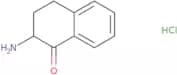
CAS :Produit contrôlé<p>Please enquire for more information about 2-Amino-1-tetralone hydrochloride including the price, delivery time and more detailed product information at the technical inquiry form on this page</p>Formule :C10H11NO·HClDegré de pureté :Min. 95%Couleur et forme :PowderMasse moléculaire :196.65 g/molPerfluorooctanesulphonyl Chloride
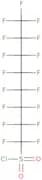
CAS :Produit contrôlé<p>Perfluorooctanesulphonyl Chloride (PFOS) is a chemical that belongs to the class of perfluoroalkyl substances. It is used in the synthesis of tetraethylammonium, peroxide, yields, telomeric, phosphine, cyclic ketone, phosphonium salt, chlorides and olefinic compounds. PFOS also has a number of commercial applications such as in fire-fighting foams and in the manufacture of fluoropolymers. PFOS is harmful to human health when it enters the body because it accumulates in the blood and remains there for years. It may cause low birth weight in newborns and thyroid hormone disruption. It can also cause liver damage in laboratory animals.</p>Formule :C8ClF17O2SDegré de pureté :Min. 95%Masse moléculaire :518.58 g/mol3-(Difluoromethoxy)aniline
CAS :<p>Please enquire for more information about 3-(Difluoromethoxy)aniline including the price, delivery time and more detailed product information at the technical inquiry form on this page</p>Formule :C7H7F2NODegré de pureté :Min. 95%Couleur et forme :PowderMasse moléculaire :159.13 g/mol
![(2S)-2-Amino-2-[(5S)-3-chloro-4,5-dihydroisoxazol-5-Yl]acetic acid](/_next/image/?url=https%3A%2Fstatic.cymitquimica.com%2Fproducts%2F3D%2Fthumb-webp%2FFA17203.webp&w=3840&q=75)

![3-[(Dimethylamino)methyl]benzoic acid hydrochloride](/_next/image/?url=https%3A%2Fstatic.cymitquimica.com%2Fproducts%2F3D%2Fthumb-webp%2FFD124093.webp&w=3840&q=75)