Halogénures organiques
Dans cette catégorie, vous trouverez des molécules organiques contenant un ou plusieurs atomes d'halogène dans leur structure. Ces halogénures organiques incluent des composés bromés, iodés, chlorés et des halogénures cycliques. Les halogénures organiques sont largement utilisés en synthèse organique, en pharmaceutique, en agrochimie et en science des matériaux en raison de leur réactivité et de leur capacité à subir une variété de transformations chimiques. Chez CymitQuimica, nous offrons une sélection complète d'halogénures organiques de haute qualité pour soutenir vos applications de recherche et industrielles, garantissant une performance fiable et efficace dans vos projets synthétiques et analytiques.
Sous-catégories appartenant à la catégorie "Halogénures organiques"
20439 produits trouvés pour "Halogénures organiques"
Trier par
Degré de pureté (%)
0
100
|
0
|
50
|
90
|
95
|
100
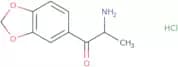
N-Demethyl methylone hydrochloride
CAS :Produit contrôlé<p>Please enquire for more information about N-Demethyl methylone hydrochloride including the price, delivery time and more detailed product information at the technical inquiry form on this page</p>Formule :C10H12ClNO3Degré de pureté :Min. 95%Masse moléculaire :229.66 g/mol5-Bromo-1-methyl-3-(trifluoromethyl)-1H-1,2,4-triazole
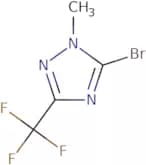
CAS :<p>Please enquire for more information about 5-Bromo-1-methyl-3-(trifluoromethyl)-1H-1,2,4-triazole including the price, delivery time and more detailed product information at the technical inquiry form on this page</p>Formule :C4H3BrF3N3Degré de pureté :Min. 95%Masse moléculaire :229.99 g/mol2,6-Dichloro benzyl bromide
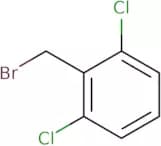
CAS :<p>2,6-Dichlorobenzyl bromide is a pharmacokinetic solvent that is used to dissolve amines. It is an organic solvent that is soluble in water and slightly soluble in ethanol. 2,6-Dichlorobenzyl bromide reacts with Grignard reagents to form acyl halides. This reaction system is called the Friedel-Crafts acylation. 2,6-Dichlorobenzyl bromide can be used for the modification of molecules by alkylation or for the synthesis of neurotensin receptor antagonists or other drugs. There are genotoxic impurities that may be present in this drug, so it should not be used in pregnant women or children because it may cause birth defects or cancer.</p>Formule :C7H5BrCl2Degré de pureté :Min. 95%Masse moléculaire :239.92 g/mol2-Chloro-2',4'-difluoroacetophenone
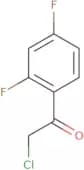
CAS :<p>2-Chloro-2',4'-difluoroacetophenone (2,4-DFAP) is an asymmetric synthesis of urea nitrogen. It has been shown to be a broad-spectrum antimicrobial, with activity against a number of fungi and bacteria. The molecular modelling of 2,4-DFAP has revealed that it has intramolecular hydrogen bonds and is a supramolecular enantiomer. Additionally, the transport properties have been studied and found to have chloride ions in the molecule. This may be responsible for its anti-fungal effects as well as its ability to inhibit the growth of cryptococcus neoformans.</p>Formule :C8H5ClF2ODegré de pureté :Min. 95%Masse moléculaire :190.57 g/mol4-Bromo-2-fluorobenzoic acid methyl ester
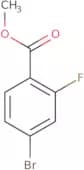
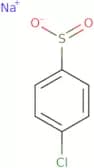
CAS :<p>4-Bromo-2-fluorobenzoic acid methyl ester is a synthetic chemical that is used as a drug substance in the synthesis of pharmaceuticals. It is also a reagent for organic synthesis, specifically cross coupling reactions. 4-Bromo-2-fluorobenzoic acid methyl ester can be used to introduce an alkyl group into a molecule, which can then be used in other synthetic reactions. This chemical has been shown to inhibit prolyl hydroxylase (PHD), which is an enzyme that catalyzes the conversion of proline to hydroxyproline. 4-Bromo-2-fluorobenzoic acid methyl ester also inhibits the Bcl-2 family proteins, including bcl2, bclxl and bax, which are known to play a role in apoptosis. 4-Bromo-2-fluorobenzoic acid methyl ester</p>Formule :C8H6BrFO2Degré de pureté :Min. 95%Masse moléculaire :233.03 g/mol4-Chloro-benzene-sulfinic acid sodium salt
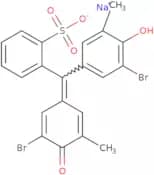
CAS :The 4-chloro-benzenesulfinic acid sodium salt is a type of sulfinic acid. It can be used to control experiments involving methides, halides, and human macrophages. Sodium salts of this compound have been shown to inhibit the growth of Candida glabrata and Galleria mellonella in vitro. The 4-chloro-benzenesulfinic acid sodium salt reacts with chloride ion to form a nucleophilic trifluoroacetate anion, which reacts with thiosulfonates to produce type strain. Trifluoroacetic acid is used as a solvent in the reaction.Formule :C6H4ClNaO2SDegré de pureté :Min. 95%Masse moléculaire :198.6 g/molBromocresol purple sodium salt
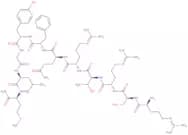
CAS :<p>Bromocresol purple sodium salt is a dye that emits light when it is irradiated with light of a particular wavelength. It has been used to detect amniotic fluid contamination in the laboratory and as an absorber in polymer films. Bromocresol purple sodium salt absorbs ultraviolet and visible light, which causes it to emit red light. The molecules of bromocresol purple sodium salt are long-chain triazoles, which absorb water vapor and emit infrared radiation. This property can be used to detect the presence of alkali metals. The luminescent property of bromocresol purple sodium salt can be enhanced by adding an alkali metal, such as potassium or lithium chloride, to the solution where it is dissolved.</p>Formule :C21H15Br2O5S·NaDegré de pureté :Min. 95%Masse moléculaire :562.2 g/molHemokinin 1 (mouse, rat) trifluoroacetate salt
CAS :<p>Hemokinin 1 is a protein that is encoded by the NK1R gene. It has been shown to be associated with insulin resistance, inflammatory diseases, and pain control. Hemokinin 1 is also a potential treatment for viral infections such as HIV and hepatitis C. Hemokinin 1 interacts with nicotinic acetylcholine receptors (nAChRs) in the brain and blood vessels, which leads to an increase in blood pressure. This protein also interacts with hematopoietic cells, which may be responsible for its function as an antinociceptive agent. Hemokinin 1 has been implicated in autoimmune diseases such as arthritis and atrial fibrillation. This protein is expressed mainly in the brain, liver, heart, kidneys and spleen.</p>Formule :C61H100N22O15SDegré de pureté :Min. 95%Masse moléculaire :1,413.65 g/mol[2-(1-Ethyl-1H-indol-3-yl)-1-methylethyl]amine hydrochloride
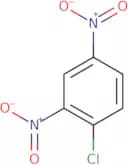
CAS :Produit contrôlé<p>Please enquire for more information about [2-(1-Ethyl-1H-indol-3-yl)-1-methylethyl]amine hydrochloride including the price, delivery time and more detailed product information at the technical inquiry form on this page</p>Formule :C13H18N2Degré de pureté :Min. 95%Masse moléculaire :202.3 g/mol2,4-Dinitrochlorobenzene
CAS :<p>2,4-Dinitrochlorobenzene is a chemical that has been shown to have an anti-allergic effect. It is used as a reagent in analytical methods for the determination of disease activity. 2,4-Dinitrochlorobenzene inhibits the production of nitric oxide (NO) and prostaglandin E2 (PGE2) by binding to reactive oxygen species (ROS). The inhibition of NO and PGE2 synthesis causes a decrease in the activation of nuclear factor kappa B (NF-κB), which leads to decreased expression of various genes that are regulated by NF-κB. 2,4-Dinitrochlorobenzene has also been shown to increase glutathione levels, which may be due to its ability to inhibit protein thiols and squamous cell carcinoma cells.</p>Formule :C6H3ClN2O4Degré de pureté :Min. 95%Couleur et forme :PowderMasse moléculaire :202.55 g/molIodophenol blue
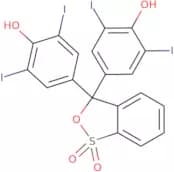
CAS :<p>Iodophenol blue is a dye that has been used in biological research. It is used to stain DNA samples, as it binds to phosphoenolpyruvate (PEP) and sodium carbonate. Iodophenol blue can be used to differentiate tumor cells from the surrounding tissue in biopsy samples. The dye also interacts with amines, resulting in the release of bromophenols and cleavage products. Iodophenol blue can be used as a visual indicator for chemical reactions.</p>Formule :C19H10I4O5SDegré de pureté :Min. 80 Area-%Couleur et forme :PowderMasse moléculaire :857.96 g/mol4-Chloro-2-(methyl-phenyl-sulfamoyl)-benzoic acid methylester
CAS :<p>4-Chloro-2-(methyl-phenyl-sulfamoyl)-benzoic acid methylester is an industrial chemical that is used in the production of other chemicals. It can be produced by the esterification of 4-chlorophenylacetic acid with methyl phenyl sulfonyl chloride, followed by diazotization and chlorination. This chemical also has the ability to form a condensation product with hydrazine.</p>Formule :C15H14ClNO4SDegré de pureté :Min. 95%Masse moléculaire :339.79 g/mol2-fluoro-5-hydroxybenzaldehyde
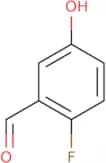
CAS :2-Fluoro-5-hydroxybenzaldehyde (2FHBA) is an olefinic compound that is synthesized from 2,5-dihydroxybenzaldehyde by reductive amination with formaldehyde. The configuration of 2FHBA is dependent on the dihedral angle between the two olefinic groups. Liquid chromatography has been used to analyze the metabolic pathway of 2FHBA in rats and humans. This study showed that tyramine and aligned are metabolites of 2FHBA in rats, while crystallized and emission are metabolites in humans. The positron emission studies also showed that 2FHBA was metabolized by erythrocytes in vitro to produce positron emission.Formule :C7H5FO2Degré de pureté :Min. 95%Masse moléculaire :140.11 g/mol4-[(4-Methyl-1H-pyrazol-1-yl)methyl]piperidine dihydrochloride
CAS :Produit contrôlé<p>Please enquire for more information about 4-[(4-Methyl-1H-pyrazol-1-yl)methyl]piperidine dihydrochloride including the price, delivery time and more detailed product information at the technical inquiry form on this page</p>Formule :C10H17N3Degré de pureté :Min. 95%Masse moléculaire :179.26 g/mol2,5-Dichloropyrazine
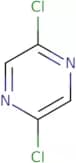
CAS :<p>2,5-Dichloropyrazine is a ligand that binds to the bromodomain of a protein and causes it to deform. The bromodomain contains a metal ion at its core and is an important component of many proteins that regulate gene expression. 2,5-Dichloropyrazine has been shown to bind to the metal ion in the bromodomain of some proteins and cause them to deform. This deformation results in changes in the shape of the protein's DNA-binding site, which can alter the way it regulates gene expression. 2,5-Dichloropyrazine also interacts with hexamethylenetetramine (HMT) to form anions and chlorinating agents. These interactions may be responsible for 2,5-dichloropyrazine's high yield.</p>Formule :C4H2Cl2N2Degré de pureté :Min. 95%Couleur et forme :Clear LiquidMasse moléculaire :148.98 g/molCyclohexanecarbonyl chloride
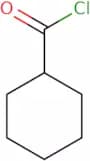
CAS :<p>Cyclohexanecarbonyl chloride is a chemical compound that is used in the treatment of wastewater. It is also used as an antidiabetic agent, and has been shown to have anti-inflammatory and immunosuppressive properties. Cyclohexanecarbonyl chloride is a reactive intermediate that can be prepared by acylation of benzimidazole compounds with cyclohexane rings containing a hydroxyl group. This reaction yields a 1:1 mixture of the two products, which are identical except for their configuration at the benzylic position.</p>Formule :C7H11ClODegré de pureté :Min. 95%Couleur et forme :Colourless To Yellow LiquidMasse moléculaire :146.61 g/mol1-[2-(5-Chloro-1H-indol-3-yl)ethyl]-5-oxopyrrolidine-3-carboxylic acid
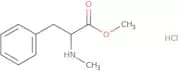
CAS :Produit contrôlé<p>Please enquire for more information about 1-[2-(5-Chloro-1H-indol-3-yl)ethyl]-5-oxopyrrolidine-3-carboxylic acid including the price, delivery time and more detailed product information at the technical inquiry form on this page</p>Formule :C15H15ClN2O3Degré de pureté :Min. 95%Masse moléculaire :306.74 g/molN-Methyl-DL-phenylalanine methyl ester hydrochloride
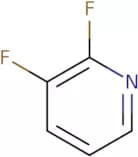
CAS :<p>Please enquire for more information about N-Methyl-DL-phenylalanine methyl ester hydrochloride including the price, delivery time and more detailed product information at the technical inquiry form on this page</p>Formule :C11H15NO2·HClDegré de pureté :Min. 95%Masse moléculaire :229.7 g/mol2,3-Difluoro pyridine
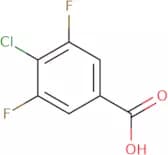
CAS :<p>2,3-Difluoro pyridine is an organic compound with the chemical formula C6H3F2N. It is a colorless liquid that has a strong odor and a boiling point of 147°C. 2,3-Difluoro pyridine has antibacterial properties and can be used to treat bacterial infections by inhibiting the synthesis of proteins in bacterial cells. This inhibition prevents the formation of new cell walls, which leads to cell death. 2,3-Difluoro pyridine is also used as an intermediate in organic chemistry reactions involving hydrogen fluoride. The transport properties of this compound are low due to its high melting point and low solubility in water. There are three different polymorphs for 2,3-difluoropyridine: form II, form III and form IV, with form II being the most common. Form II has a trigonal planar molecular geometry, whereas forms III and IV have tetragonal</p>Formule :C5H3F2NDegré de pureté :Min. 95%Couleur et forme :Clear LiquidMasse moléculaire :115.08 g/mol4-Chloro-3,5-difluorobenzoic acid
CAS :<p>Please enquire for more information about 4-Chloro-3,5-difluorobenzoic acid including the price, delivery time and more detailed product information at the technical inquiry form on this page</p>Formule :C7H3ClF2O2Degré de pureté :Min. 95%Masse moléculaire :192.55 g/mol

![[2-(1-Ethyl-1H-indol-3-yl)-1-methylethyl]amine hydrochloride](/_next/image/?url=https%3A%2Fstatic.cymitquimica.com%2Fproducts%2F3D%2Fthumb-webp%2FFE123632.webp&w=3840&q=75)

![4-[(4-Methyl-1H-pyrazol-1-yl)methyl]piperidine dihydrochloride](/_next/image/?url=https%3A%2Fstatic.cymitquimica.com%2Fproducts%2F3D%2Fthumb-webp%2FFM122832.webp&w=3840&q=75)
![1-[2-(5-Chloro-1H-indol-3-yl)ethyl]-5-oxopyrrolidine-3-carboxylic acid](/_next/image/?url=https%3A%2Fstatic.cymitquimica.com%2Fproducts%2F3D%2Fthumb-webp%2FFC119446.webp&w=3840&q=75)