Halogénures organiques
Dans cette catégorie, vous trouverez des molécules organiques contenant un ou plusieurs atomes d'halogène dans leur structure. Ces halogénures organiques incluent des composés bromés, iodés, chlorés et des halogénures cycliques. Les halogénures organiques sont largement utilisés en synthèse organique, en pharmaceutique, en agrochimie et en science des matériaux en raison de leur réactivité et de leur capacité à subir une variété de transformations chimiques. Chez CymitQuimica, nous offrons une sélection complète d'halogénures organiques de haute qualité pour soutenir vos applications de recherche et industrielles, garantissant une performance fiable et efficace dans vos projets synthétiques et analytiques.
Sous-catégories appartenant à la catégorie "Halogénures organiques"
20440 produits trouvés pour "Halogénures organiques"
Trier par
Degré de pureté (%)
0
100
|
0
|
50
|
90
|
95
|
100
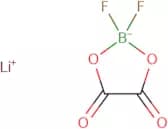
Lithium difluoro(oxalato)borate
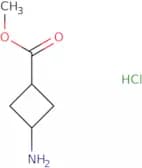
CAS :<p>Lithium difluoro(oxalato)borate is an electron-microscopic corrosion inhibitor that belongs to the class of ester compounds. It is a solid compound that has been shown to be efficacious against oxidation products. The efficiency of this compound is dependent on the concentration and purity of lithium difluoro(oxalato)borate and the type of metal, such as steel or aluminum. Lithium difluoro(oxalato)borate can be used in rechargeable batteries, due to its transport properties, high salt tolerance, and low self-discharge rate. This compound has been shown to have functional groups that are capable of interacting with hydrogen fluoride in an organic solution.</p>Formule :C2BF2O4•LiDegré de pureté :Min. 95%Masse moléculaire :143.77 g/mol(1S,3S)-Methyl 3-aminocyclobutane carboxylate hydrochloride
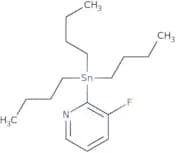
CAS :<p>Please enquire for more information about (1S,3S)-Methyl 3-aminocyclobutane carboxylate hydrochloride including the price, delivery time and more detailed product information at the technical inquiry form on this page</p>Formule :C6H12ClNO2Degré de pureté :Min. 95%Masse moléculaire :165.62 g/mol3-Fluoro-2-(tributylstannyl)pyridine
CAS :Produit contrôlé<p>Please enquire for more information about 3-Fluoro-2-(tributylstannyl)pyridine including the price, delivery time and more detailed product information at the technical inquiry form on this page</p>Formule :C17H30FNSnDegré de pureté :Min. 95%Masse moléculaire :386.14 g/mol3-fluoro-5-(trifluoromethyl)benzonitrile
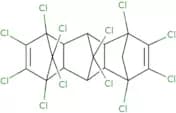
CAS :<p>Please enquire for more information about 3-fluoro-5-(trifluoromethyl)benzonitrile including the price, delivery time and more detailed product information at the technical inquiry form on this page</p>Formule :C8H3F4NDegré de pureté :Min. 95%Masse moléculaire :189.11 g/molDechlorane 603
CAS :<p>Dechlorane 603 is a polychlorinated biphenyl (PCB) that has chlorine atoms in the 2, 3, and 4 positions. It is produced as an unintentional byproduct of the production of polychlorinated biphenyls (PCBs). The analytical method for Dechlorane 603 is gel permeation chromatography. It can be found in human populations with higher levels in infants than adults. Levels have been shown to be lower in those who eat more fish or who have a high fat diet. Dechlorane 603 levels are higher in pregnant women than non-pregnant women. Animal experiments have shown that it can impair development of the brain and reproductive organs.</p>Formule :C17H8Cl12Degré de pureté :Min. 95%Couleur et forme :PowderMasse moléculaire :637.68 g/molDichloromethylsilane
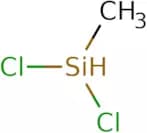
CAS :<p>Dichloromethylsilane (DCS) is a chemical compound that is used in the synthesis of silicone rubber, silicone elastomers, and silicone sealants. It can also be used as a cross-linking agent for polymers such as polyurethane, epoxy resin, and silicone. The synthesis of DCS is achieved by reacting chlorosilanes with methyl alcohol or methyl chloride in the presence of an acid catalyst. DCS exhibits high chemical stability and can be activated at room temperature. This product has been shown to be useful for fabricating medical devices that are implanted into the human body because it does not react with water or blood.</p>Formule :CH4Cl2SiDegré de pureté :Min. 95%Masse moléculaire :115.03 g/mol(5-Carboxypentyl)triphenylphosphonium bromide
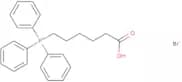
CAS :<p>5-Carboxypentyl)triphenylphosphonium bromide (5CPPBr) is an activated form of the drug taxol. It is a potent anticancer agent that binds to microtubules and stabilizes them. This prevents the microtubules from dissociating, which disrupts the cell’s ability to divide. 5CPPBr also has high uptake in cells and mitochondria, which are important sites for anticancer activity. The drug has shown efficacy in humans and animals, with few side effects. 5CPPBr has been shown to inhibit tumor growth by inducing apoptosis and inhibiting angiogenesis. Further research is needed on its effect on human morphology and hyaluronic acid production.</p>Formule :C24H26BrO2PDegré de pureté :Min. 95%Masse moléculaire :457.34 g/mol2-(2,3-Difluorophenyl)ethan-1-amine hydrochloride
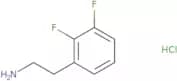
CAS :Produit contrôlé<p>Please enquire for more information about 2-(2,3-Difluorophenyl)ethan-1-amine hydrochloride including the price, delivery time and more detailed product information at the technical inquiry form on this page</p>Formule :C8H10ClF2NDegré de pureté :Min. 95%Masse moléculaire :193.62 g/molMethyl 2-methylpropanimidic acid hydrochloride
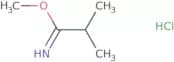
CAS :<p>Methyl 2-methylpropanimidic acid hydrochloride is a neutralizing agent that can be used to react with water, acids, and bases. It has been shown to react with gaseous compounds at temperatures as high as 200°C. Methyl 2-methylpropanimidic acid hydrochloride is soluble in organic solvents such as alcohols, ethers, and acetone and can be used to prepare esters by reacting with the corresponding alcohol or phenol. In addition, it has been shown to interact with haloalkyl groups and oxazinones. This compound also has nod-like receptor binding properties that have been shown to play a role in mediating the transport of organic solutions into cells. A receptor protein that reacts with methyl 2-methylpropanimidic acid hydrochloride has been identified in some organisms. The stereostructure of this compound resembles that of triazines and other organometallic compounds.</p>Formule :C5H11NO·HClDegré de pureté :Min. 95%Masse moléculaire :137.61 g/mol4-Trifluoromethylbenzene sulfonyl chloride
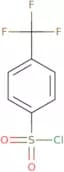
CAS :<p>4-Trifluoromethylbenzene sulfonyl chloride (TFB) is a functional group that is used as a ligand in some chemical reactions. TFB has been shown to be fluorescent, and can be used as a cancer cell marker. It also inhibits the growth of cancer cells by binding to their surface and inhibiting protein synthesis. 4-Trifluoromethylbenzene sulfonyl chloride can be synthesized by reacting ethylene with salicylic acid, followed by the reaction of the resulting ester with chloroform. This process yields TFB and chloride ions, which are then neutralized with sodium hydroxide to yield TFB sulfonate salt.</p>Formule :C7H4ClF3O2SDegré de pureté :Min. 95%Couleur et forme :Colourless Or White To Light (Or Pale) Yellow To Brown SolidMasse moléculaire :244.62 g/molNoscapine hydrochloride hydrate
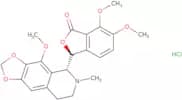
CAS :<p>Noscapine is a drug used to treat bowel disease and as an antitussive. It is classified as a narcotic, but has no addictive properties. Noscapine inhibits the activity of nuclear dna polymerase, which prevents transcription of DNA into RNA. Its rate constant for hydrogen bonding interactions with DNA is 6 orders of magnitude slower than that of other drugs that inhibit this enzyme. Noscapine also inhibits the activity of protein kinases, which are enzymes that transfer a phosphate group from ATP to other proteins. Noscapine has been shown to bind to folate receptors on cells in culture, leading to an increase in chemiluminescence. This drug has also been shown to have anti-cancer effects on some cell lines in vitro by inhibiting the Bcl-2 protein.</p>Formule :C22H24ClNO7·xH2ODegré de pureté :Min. 98 Area-%Couleur et forme :White Off-White PowderMasse moléculaire :449.88 g/mol1-Bromo-3-ethylbenzene
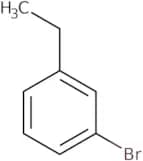
CAS :<p>1-Bromo-3-ethylbenzene (1BEB) is a trifluoroacetic acid that is used as a reagent in the analysis of urine samples. It reacts with glutathione to form a fluorescent product, which can be detected by fluorescence spectroscopy. 1BEB reacts with methyl groups in the sample to produce an intermediate compound that can be measured by liquid chromatography-mass spectrometry (LC/MS). The reaction time for this process depends on the temperature and other conditions such as pH. LC/MS has been shown to be more accurate than kinetic measurements for the determination of 1BEB concentrations in urine because it takes into account the chemical reactions that take place during the analysis. In addition, methylbenzenes are also formed during this process, which can be analysed using gas chromatography-mass spectrometry (GC/MS). GC/MS has been shown to be more accurate than LC/MS methods for evaluating</p>Formule :C8H9BrDegré de pureté :Min. 95%Masse moléculaire :185.06 g/molTricosafluorododecanoic Acid
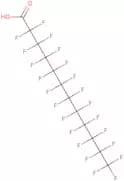
CAS :<p>Tricosafluorododecanoic Acid (TCDA) is a potent cytotoxic agent that has been shown to be effective in killing cancer cells. TCDA is a strong inducer of apoptosis and necrosis, which are processes that cause the death of cells. TCDA also induces cell cycle arrest by binding to mitochondrial membranes and inhibiting the flow of ions across the membrane, leading to a loss of mitochondrial membrane potential. This leads to an accumulation of intracellular calcium and activates signal pathways that activate the cell's death program. TCDA has been shown to have significant cytotoxicity against human breast cancer cells, with little toxicity against healthy human erythrocytes. TCDA is not active against bacteria or fungi, but it is highly toxic to certain protozoans such as Plasmodium falciparum. TCDA can be used as an effective treatment for cancer in combination with radiation therapy because it enhances the therapeutic effects of radiation on tum</p>Formule :C12HF23O2Degré de pureté :Min. 95%Masse moléculaire :614.1 g/molSodium chlorite
CAS :<p>Sodium chlorite is a disinfectant that is used to reduce the number of bacteria in the air, water, and surfaces. It is acidic and has been shown to be effective against infectious diseases such as tuberculosis, cholera, and malaria. Sodium chlorite can be produced through the oxidation of sodium chloride by chlorite ion at high temperatures. The optimum concentration for sodium chlorite is 10-15%. This agent can also be used as an analytical method for determining the presence of organic compounds that are difficult to measure by other methods. Laser ablation coupled with mass spectrometry is one example of this technique. Sodium chlorite can also be used to treat wastewater and inhibits oxidative injury in cells.</p>Formule :NaClO2Degré de pureté :Min. 95%Couleur et forme :White To Yellow SolidMasse moléculaire :90.44 g/molLithium tetrakis(pentafluorophenyl)borate ethyl etherate
CAS :Produit contrôlé<p>Lithium tetrakis(pentafluorophenyl)borate ethyl etherate is a lithium salt of the etherate ester of pentafluorophenylboronic acid (B(C6F5)3). The complex is an electron donor and ligand, which can stabilize the high-energy intermediate state in the reaction. Lithium tetrakis(pentafluorophenyl)borate ethyl etherate reacts with magnesium to form a magnesium salt and ethylene. This product can be used as a co-catalyst for coupling reactions, such as the synthesis of cyclic compounds from alkenes.</p>Formule :C24BF20·(C4H10O)2·LiDegré de pureté :Min. 95%Masse moléculaire :760.11 g/mol1,3-Difluoro-2-propanol
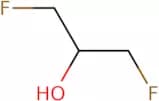
CAS :<p>1,3-Difluoro-2-propanol is a hydrogen bond donor. It is used as an animal repellent and insecticide. It has been shown to be effective against the larvae of mosquitoes and flies. 1,3-Difluoro-2-propanol has also been found to be effective against some fungi, although it is not active against bacteria. The octanol/water partition coefficient (log Kow) of 1,3-difluoro-2-propanol is -0.86. 1,3-Difluoro-2-propanol has been shown to inhibit biochemical reactions in animals by inhibiting ATPase and phosphate uptake in mitochondria. This inhibition leads to the accumulation of metabolites such as lactic acid and pyruvic acid which are responsible for the symptoms seen with exposure to this chemical. 1,3-Difluoro-2-propanol has also been shown</p>Formule :C3H6F2ODegré de pureté :Min. 99 Area-%Couleur et forme :Colorless Clear LiquidMasse moléculaire :96.08 g/mol1-(difluoromethyl)-4-(4,4,5,5-tetramethyl-1,3,2-dioxaborolan
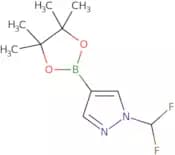
CAS :<p>Please enquire for more information about 1-(difluoromethyl)-4-(4,4,5,5-tetramethyl-1,3,2-dioxaborolan including the price, delivery time and more detailed product information at the technical inquiry form on this page</p>Formule :C10H15BF2N2O2Degré de pureté :Min. 95%Masse moléculaire :244.05 g/mol3-Nitrobenzyl bromide
CAS :<p>3-Nitrobenzyl bromide (3NB) is a lectin that binds to the carbohydrate moieties of glycoproteins. It has been shown to inhibit protease activity and be an inhibitor of nitro group formation by reacting with sodium carbonate. 3NB has also been used in sample preparation for monoclonal antibody production. 3-Nitrobenzyl bromide can be used as a probe for hydrogen bonds, which may be due to its ability to form an intermolecular hydrogen bond with other molecules. 3NB inhibits fatty acid synthesis and cardiac contractile function, which is likely due to its inhibitory properties on hydrogen bonding.</p>Formule :C7H6BrNO2Degré de pureté :Min. 95%Couleur et forme :Off-White PowderMasse moléculaire :216.03 g/mol1-(Piperidine-4-carbonyl)piperidin-4-one hydrochloride
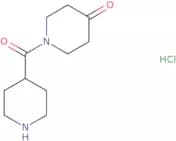
CAS :Produit contrôlé<p>Please enquire for more information about 1-(Piperidine-4-carbonyl)piperidin-4-one hydrochloride including the price, delivery time and more detailed product information at the technical inquiry form on this page</p>Formule :C11H19ClN2O2Degré de pureté :Min. 95%Masse moléculaire :246.73 g/mol1-Chloroundecane
CAS :1-Chloroundecane is an organic compound that has been used as a disinfectant and an oxidizing agent. It can be prepared by the chlorination of undecane, or by the oxidation of 1-chloro-1,2-butadiene with sodium dichromate. 1-Chloroundecane is a white crystalline solid that melts at 8°C. The compound does not have any known medical use. It can be used for sample preparation in analytical chemistry, as well as for surface disinfection and deodorization. 1-Chloroundecane has been shown to inhibit cell growth in culture and to have antioxidant properties.Formule :C11H23ClDegré de pureté :Min. 95%Couleur et forme :Clear LiquidMasse moléculaire :190.75 g/mol