Halogénures organiques
Dans cette catégorie, vous trouverez des molécules organiques contenant un ou plusieurs atomes d'halogène dans leur structure. Ces halogénures organiques incluent des composés bromés, iodés, chlorés et des halogénures cycliques. Les halogénures organiques sont largement utilisés en synthèse organique, en pharmaceutique, en agrochimie et en science des matériaux en raison de leur réactivité et de leur capacité à subir une variété de transformations chimiques. Chez CymitQuimica, nous offrons une sélection complète d'halogénures organiques de haute qualité pour soutenir vos applications de recherche et industrielles, garantissant une performance fiable et efficace dans vos projets synthétiques et analytiques.
Sous-catégories appartenant à la catégorie "Halogénures organiques"
20440 produits trouvés pour "Halogénures organiques"
Trier par
Degré de pureté (%)
0
100
|
0
|
50
|
90
|
95
|
100
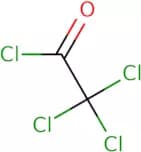
Trichloroacetyl chloride
CAS :<p>Trichloroacetyl chloride is an oxidation catalyst that is used for the synthesis of organic compounds. It is particularly useful in the synthesis of 2-chloropropane from chloropropane and sodium chloride in a reaction solution containing water vapor and hydrogen fluoride. Trichloroacetyl chloride has been shown to be an effective antimicrobial agent against a number of bacterial strains, including Staphylococcus aureus, Salmonella typhimurium, Escherichia coli, and Pseudomonas aeruginosa. This compound also has antibacterial activity against Mycobacterium tuberculosis and Streptococcus pneumoniae. The mechanism of action is not fully understood but may involve the release of chlorine gas and oxidation by oxygen radicals. Trichloroacetyl chloride has been shown to react with magnesium salts to form magnesium trichloride (MgCl2) in an analytical method called "magnesium titration." The reaction between trich</p>Formule :C2Cl4ODegré de pureté :Min. 95%Couleur et forme :Clear LiquidMasse moléculaire :181.83 g/molThiambutene hydrochloride
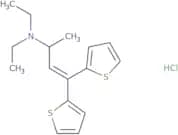
CAS :Produit contrôléThiambutene is a drug that has been used in the past as an anti-anxiety medication, but is now primarily used for controlling seizures. It acts by stimulating the central nervous system and by inhibiting the release of neurotransmitters. Thiambutene also has effects on insulin sensitivity and high cholesterol. The drug is not active orally, but can be administered intravenously or intramuscularly. The onset of action is fast, with peak plasma concentrations occurring within 15 to 30 minutes after administration. Thiambutene's half-life ranges from 1 to 2 hours in humans, but it may be longer in animals.Formule :C16H22ClNS2Degré de pureté :Min. 95%Masse moléculaire :327.94 g/molIndicine hydrochloride
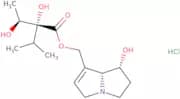
CAS :<p>Indicine hydrochloride is a lasiocarpine derivative that has been shown to cause hepatotoxicity in animals and humans. The mechanism of action of indicine hydrochloride is unclear, but it may be due to the reactive nature of the molecule. Indicine hydrochloride also induces micronucleus formation and metabolic damage in human liver cells. The metabolite formation of indicine hydrochloride is not well understood, but it may be due to its reactive nature or impurities. Indicine hydrochloride can induce micronuclei formation and cellular damage in human liver cells.</p>Formule :C15H25NO5•HClDegré de pureté :Min. 95%Couleur et forme :PowderMasse moléculaire :335.82 g/mol1-(3-Chloropropyl)theobromine
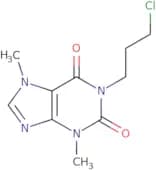
CAS :Produit contrôlé<p>1-(3-Chloropropyl)theobromine is the reaction product of acetylacetone with carbonate and water. It is a high-yielding remedy for cerebral thrombosis and other alkali burns. The chemical formula for 1-(3-chloropropyl)theobromine is C10H14ClO2. It is soluble in water, which makes it an excellent antidote for alkali burns. Acetylacetone reacts with carbonate to produce the alkanol, which then reacts with water to form 1-(3-chloropropyl)theobromine. This chemical has been found to be an effective treatment for cerebral thrombosis and other alkali burns due to its ability to react with both water and blood clots.</p>Formule :C10H13ClN4O2Degré de pureté :Min. 95%Masse moléculaire :256.69 g/mol2-(Chloromethyl)-1-methyl-1H-benzimidazole hydrochloride
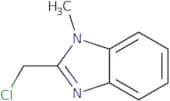
CAS :Produit contrôlé2-(Chloromethyl)-1-methyl-1H-benzimidazole hydrochloride (CMMB) is a synthetic compound that inhibits the enzyme tyrosinase, which is responsible for catalyzing the production of melanin. The tetradentate ligand in CMMB binds to the active site of tyrosinase and prevents it from catalyzing reactions. The redox potentials of CMMB make it possible to oxidize and reduce the compound, which allows for an easy synthesis. The dihedral angle between the amine and pyrimidine rings in CMMB provides a biomimetic structure that can be used to synthesize other aromatic compounds.Formule :C9H9ClN2Degré de pureté :Min. 95%Masse moléculaire :180.63 g/mol1-Bromo-3-(Pentafluorosulfanyl)Benzene
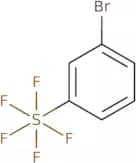
CAS :1-Bromo-3-(pentafluorosulfanyl)benzene is a molecule that can be used in the synthesis of biologically active compounds. It has been shown to have anti-inflammatory properties, which may be due to its ability to modulate the activity of 5-hydroxytryptamine (5-HT). The functionalities of 1-bromo-3-(pentafluorosulfanyl)benzene include cross-coupling (i.e., chemical reactions that join two or more substances together), protonation, and ligand binding. This molecule has been synthesized from 2,4,6-trifluorobenzonitrile and bromine. The isomers for this molecule are cis and trans, with the cis isomer being more active than the trans isomer. Techniques such as molecular modeling have also been used to study 1-bromo-3-(pentafluorosulfanyl)benFormule :C6H4BrF5SDegré de pureté :Min. 95%Masse moléculaire :283.06 g/molN-α-Methyl-D-phenylalanine hydrochloride
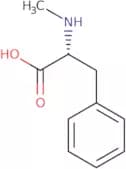
CAS :N-alpha-Methyl-D-phenylalanine hydrochloride is a synthetic pentapeptide that has been shown to be effective against cyclic diseases. It is a naturally occurring amino acid and an important component of the human body. N-alpha-Methyl-D-phenylalanine hydrochloride has been used in research for the treatment of autoimmune diseases, such as inflammatory bowel disease. This drug is also known to have tumor necrosis factor alpha (TNFα) inhibitory activity.Formule :C10H13NO2·HClDegré de pureté :Min. 95%Masse moléculaire :215.68 g/molAlachlor
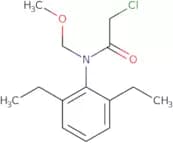
CAS :Produit contrôlé<p>Alachlor is a chlorinated hydrocarbon that is used to treat wastewater. It has significant interactions with water vapor, which can lead to an increase in enzyme activities. Alachlor also binds to mitochondrial membranes and alters the membrane potential. Alachlor has been shown to be toxic to bacterial strains, such as Escherichia coli, and has been shown to cause mutations in mammalian cells. Alachlor is a stable complex with metal ions, such as Cu(II), Fe(II), and Zn(II). The redox cycle of alachlor leads to the formation of reactive oxygen species (ROS) that may affect cellular function. The matrix effect of alachlor may lead to inaccurate analytical results due to its adsorption on the surface of solids.</p>Formule :C14H20ClNO2Degré de pureté :Min. 95%Masse moléculaire :269.77 g/molo-Toluoyl chloride
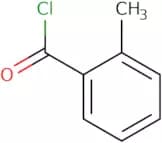
CAS :<p>o-Toluoyl chloride is an antidiabetic agent that inhibits the production of glucose by inhibiting the enzyme glucosidase. It also prevents the absorption of glucose in the small intestine and blocks pancreatic alpha-amylase, which is an enzyme that breaks down starch into maltose. The chemical reaction mechanism for o-toluoyl chloride is a substitution reaction with a hydroxyl group and a benzoate, forming a cation channel. This leads to an increase in the intracellular concentration of cations, which can contribute to inflammatory bowel disease. The biological studies have shown that light emission is generated when o-toluoyl chloride reacts with 2-methyl-4-nitrobenzoic acid. This process has been used as a method for detecting this compound.</p>Formule :C8H7ClODegré de pureté :Min. 95%Couleur et forme :Clear LiquidMasse moléculaire :154.59 g/molDL-Aspartic acid dimethyl ester hydrochloride
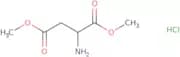
CAS :Please enquire for more information about DL-Aspartic acid dimethyl ester hydrochloride including the price, delivery time and more detailed product information at the technical inquiry form on this pageFormule :C6H11NO4·HClDegré de pureté :Min. 95%Couleur et forme :White PowderMasse moléculaire :197.62 g/molDistigmine bromide
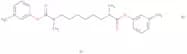
CAS :<p>Distigmine bromide is a cholinergic agent that can be used to treat the symptoms of urinary incontinence. It is also used to treat underactive bladders and the symptoms associated with it. Distigmine bromide belongs to pharmacological agents and is an acetylcholinesterase inhibitor. This drug is administered by mouth, and its effects are long-lasting. It can be used for the treatment of psychotic disorders as well as for diagnosis of bladder disease.</p>Formule :C22H32N4O4•(Br)2Degré de pureté :Min. 95%Couleur et forme :PowderMasse moléculaire :576.32 g/molcis-Terbinafine hydrochloride
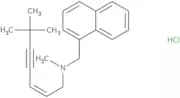
CAS :<p>Please enquire for more information about cis-Terbinafine hydrochloride including the price, delivery time and more detailed product information at the technical inquiry form on this page</p>Formule :C21H25N•HClDegré de pureté :Min. 95%Masse moléculaire :327.89 g/mol4,4'-Oxybis(benzenesulfonyl chloride)
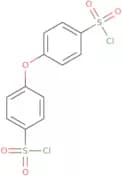
CAS :4,4'-Oxybis(benzenesulfonyl Chloride) is a synthetic compound that is used as a stabilizer in the preparation of polymers. It is an effective nucleophile and reacts with amines to form sulfonic acid esters. 4,4'-Oxybis(benzenesulfonyl Chloride) has been shown to be highly reactive and can be used for the synthesis of n-propyl chloride. The reaction time for this chemical is also short, which leads to high yields.Formule :C12H8Cl2O5S2Degré de pureté :Min. 95%Couleur et forme :PowderMasse moléculaire :367.23 g/mol3-(3-Chlorophenyl)quinazoline-2,4(1H,3H)-dione
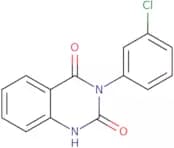
CAS :Produit contrôléPlease enquire for more information about 3-(3-Chlorophenyl)quinazoline-2,4(1H,3H)-dione including the price, delivery time and more detailed product information at the technical inquiry form on this pageFormule :C14H9ClN2O2Degré de pureté :Min. 95%Masse moléculaire :272.69 g/mol2-(3-fluorophenyl)pyrrolidine
CAS :<p>Please enquire for more information about 2-(3-fluorophenyl)pyrrolidine including the price, delivery time and more detailed product information at the technical inquiry form on this page</p>Formule :C10H12FNDegré de pureté :Min. 95%Masse moléculaire :165.21 g/mol5-Bromo-2-thiophenesulfonyl chloride
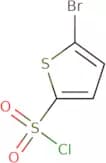
CAS :5-Bromo-2-thiophenesulfonyl chloride (5BrTSCl) is a chemical compound that belongs to the class of matrix metalloproteinase inhibitors. This drug inhibits the activity of MMPs and has anticancer activity. 5BrTSCl blocks the activation of MMPs by binding to their active site, which prevents the cleavage of collagen and other proteins. It also inhibits cell proliferation in a number of cancer cell lines, including human breast cancer cells. 5BrTSCl has been shown to be effective in inhibiting angiogenesis and tumor growth in animal models.Formule :C4H2BrClO2S2Degré de pureté :Min. 95%Couleur et forme :PowderMasse moléculaire :261.55 g/mol2-Amino-5-bromo-N-cyclohexyl-N-methylbenzylamine dihydrochloride
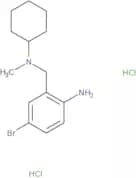
CAS :Please enquire for more information about 2-Amino-5-bromo-N-cyclohexyl-N-methylbenzylamine dihydrochloride including the price, delivery time and more detailed product information at the technical inquiry form on this pageFormule :C14H23BrCl2N2Degré de pureté :Min. 95%Couleur et forme :PowderMasse moléculaire :370.16 g/mol1-Amino-9-fluorenone
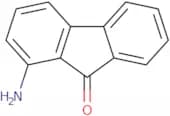
CAS :<p>1-Amino-9-fluorenone is a hydrogen bond acceptor molecule that has been shown to have anticancer activity and rate enhancement. The 1-Amino-9-fluorenone binds to the DNA of cancer cells, inhibiting cell growth and proliferation. This molecule also interacts with the cellular membrane by reversible binding, which leads to an increase in the concentration of intracellular nitric oxide (NO). This increase in NO levels inhibits the growth of cancer cells by blocking their ability to produce ATP. 1-Amino-9-fluorenone has been shown to inhibit hCT116 human colon cancer cells.</p>Formule :C13H9NODegré de pureté :Min. 95%Masse moléculaire :195.22 g/molL-b-Homotyrosine hydrochloride
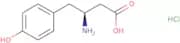
CAS :<p>Please enquire for more information about L-b-Homotyrosine hydrochloride including the price, delivery time and more detailed product information at the technical inquiry form on this page</p>Formule :C10H13NO3·HClDegré de pureté :Min. 95%Masse moléculaire :231.68 g/mol2,3,7,8-Tetrachlorodibenzofuran
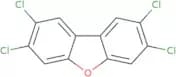
CAS :<p>2,3,7,8-Tetrachlorodibenzofuran (2,3,7,8-TCDF) is a congener of polychlorinated dibenzo-p-dioxin. It is found in the environment as a byproduct from the manufacture of chlorophenols and pentachlorophenol. 2,3,7,8-TCDF is an endocrine disruptor that affects cell nuclei and causes oxidative stress to the liver. There are few studies on 2,3,7,8-TCDF because it is not commercially available for use in research or industry. The only study done on this chemical found that it was potent inducer of glucuronide conjugation enzymes and decreased the activity of rat liver microsomes.</p>Formule :C12H4Cl4ODegré de pureté :Min. 95%Masse moléculaire :305.97 g/mol