Halogénures organiques
Dans cette catégorie, vous trouverez des molécules organiques contenant un ou plusieurs atomes d'halogène dans leur structure. Ces halogénures organiques incluent des composés bromés, iodés, chlorés et des halogénures cycliques. Les halogénures organiques sont largement utilisés en synthèse organique, en pharmaceutique, en agrochimie et en science des matériaux en raison de leur réactivité et de leur capacité à subir une variété de transformations chimiques. Chez CymitQuimica, nous offrons une sélection complète d'halogénures organiques de haute qualité pour soutenir vos applications de recherche et industrielles, garantissant une performance fiable et efficace dans vos projets synthétiques et analytiques.
Sous-catégories appartenant à la catégorie "Halogénures organiques"
20440 produits trouvés pour "Halogénures organiques"
Trier par
Degré de pureté (%)
0
100
|
0
|
50
|
90
|
95
|
100
Sodium tetrachloropalladate(II)
CAS :Sodium tetrachloropalladate(II) is a photoelectron acceptor that absorbs x-rays in the wavelength range of 0.2-1.5 Å. It is used as a nanomaterial for the preparation of microspheres and optical devices. Sodium tetrachloropalladate(II) has been shown to have a chloride ion content of 36%. The chemical composition of this element can be determined by using preparative methods such as suzuki coupling reaction, phase chromatography, or elemental analysis. The isolated yield of sodium tetrachloropalladate(II) can be determined by immobilizing it on an ion exchange resin and eluting with 0.1 M HCl.Formule :Cl4Na2PdDegré de pureté :Min. 95%Masse moléculaire :294.21 g/mol4-Chloro-6-methylnicotinic acid
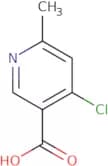
CAS :4-Chloro-6-methylnicotinic acid (4C6MNA) is a chemical substance that is used in the study of plant leaves and their permeability. This substance has been found to be an excellent indicator of chlorophyll content, as it stains leaf cells with a green color. 4C6MNA is taken up by healthy plant cells and mitochondria, where it binds to the chromophore molecule in the mitochondria. The binding of 4C6MNA to the chromophore molecule leads to the production of fluorescence, which can be detected via microscopy. This substance has been used for laser microbeam studies on natural leaves and tobacco plants.Formule :C7H6CINO2Degré de pureté :Min. 95%Masse moléculaire :275.04 g/mol2,2-Bis(4-hydroxyphenyl)-1,1,1-trichloroethane
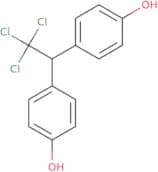
CAS :2,2-Bis(4-hydroxyphenyl)-1,1,1-trichloroethane is an analytical method that is used to measure the estrogenic activity of a chemical. It is also known as methoxychlor and can be used for the analysis of natural compounds. 2,2-Bis(4-hydroxyphenyl)-1,1,1-trichloroethane binds to the estrogen receptor and mimics its effects. This compound was shown to have high values in surface methodology and in vitro assays.Formule :C14H11Cl3O2Degré de pureté :Min. 95 Area-%Couleur et forme :PowderMasse moléculaire :317.59 g/mol[1,4-Bis(diphenylphosphino)butane]palladium(II) Dichloride
CAS :Produit contrôlé[1,4-Bis(diphenylphosphino)butane]palladium(II) dichloride (PdCl2(DPPB)) is a covalent catalyst that is used in the cross-coupling of styrene with chlorides. It has been shown to be a very effective catalyst for this reaction and yields high yields. The use of this catalyst allows for the quantification of the phosphine ligand that is used in the reaction. [1,4-Bis(diphenylphosphino)butane]palladium(II) dichloride has also been shown to be an efficient catalyst for other reactions, such as solvents and diphosphine ligands.Formule :C28H28Cl2P2PdDegré de pureté :Min. 95%Masse moléculaire :603.79 g/molTetrachlorophthalic anhydride
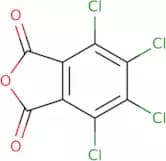
CAS :Produit contrôléTetrachlorophthalic anhydride (TCPA) is a reactive chemical that has been shown to have anti-inflammatory activity. TCPA has been found to inhibit the release of histamine from mast cells in humans, and it inhibits the production of pro-inflammatory cytokines such as tumor necrosis factor alpha (TNF-α). TCPA has also been shown to have a toxic effect on human lymphocyte transformation, which may be due to its ability to induce apoptosis. The toxicity of TCPA was studied in rats and mice, where it was found that TCPA did not cause any significant changes in clinical pathology or hydroxyl group levels.Formule :C8Cl4O3Degré de pureté :Min. 97.5 Area-%Couleur et forme :White/Off-White SolidMasse moléculaire :285.89 g/molMethyl 5-chloro-1-methyl-1H-indole-2-carboxylate
CAS :Produit contrôléPlease enquire for more information about Methyl 5-chloro-1-methyl-1H-indole-2-carboxylate including the price, delivery time and more detailed product information at the technical inquiry form on this pageFormule :C11H10ClNO2Degré de pureté :Min. 95%Masse moléculaire :223.66 g/mol2-Bromo-5-methyl-1,3-thiazole
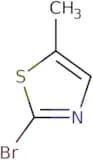
CAS :2-Bromo-5-methyl-1,3-thiazole (2BMT) is a heterocyclic compound that is used as a chemical intermediate for the synthesis of drugs and other organic compounds. 2BMT is synthesized by a two step process from 2-methylbenzothiazole. This compound has been shown to inhibit the enzyme acetylcholinesterase, which produces acetylcholine at nerve endings and in the brain. The monoclonal antibody binding affinity of 2BMT has also been shown to be greater than that of neonicotinoid pesticides.Formule :C4H4BrNSDegré de pureté :Min. 95%Masse moléculaire :178.05 g/mol3-Chlorobenzenesulfonyl chloride
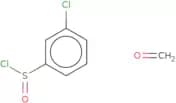
CAS :<p>3-Chlorobenzenesulfonyl chloride is a versatile building block that is used in the preparation of complex compounds. 3-Chlorobenzenesulfonyl chloride is also a reagent, speciality chemical, and useful scaffold for the synthesis of high quality chemical products. It can be used as a starting material to produce a variety of organic molecules with diverse functional groups. 3-Chlorobenzenesulfonyl chloride is commercially available from companies such as Sigma Aldrich, TCI America, and Acros Organics.</p>Formule :C6H4Cl2O2SDegré de pureté :Min. 95%Couleur et forme :Colourless To Yellow LiquidMasse moléculaire :211.07 g/mol3-Nitrobenzylchloride
CAS :<p>3-Nitrobenzylchloride is a chemical compound that has an x-ray crystal structure. This molecule was synthesized by reacting 3-nitrobenzyl alcohol with thionyl chloride in the presence of sodium hydroxide and water. The reaction product was then purified by recrystallization from hexane to obtain the desired compound, which had an analytical purity of 98%. 3-Nitrobenzylchloride is a model system for studying nucleophilic attack, intramolecular hydrogen bonding, and halogen compounds. It can also be used to study radical coupling reactions of nitroalkanes, halides, and amines. 3-Nitrobenzylchloride can be used in analytical chemistry as a reagent for quality control tests on naphthalene and amines.</p>Formule :C7H6ClNO2Degré de pureté :Min. 95%Masse moléculaire :171.58 g/mol1H,1H-Nonafluoropentylamine
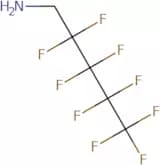
CAS :<p>Please enquire for more information about 1H,1H-Nonafluoropentylamine including the price, delivery time and more detailed product information at the technical inquiry form on this page</p>Formule :C5H4F9NDegré de pureté :Min. 95%Couleur et forme :Clear LiquidMasse moléculaire :249.08 g/mol4-Bromo-4'-methylbiphenyl
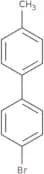
CAS :<p>4-Bromo-4'-methylbiphenyl is a nematic liquid crystal that has two conformations: the extended and the collapsed. These conformations are determined by the balance between homologous and heterologous interactions. The transition temperature of 4-Bromo-4'-methylbiphenyl is affected by its alkyl chain length, which determines how many hydrogen bonds are available for cooperative ordering of the molecules. The isotropic phase has a higher transition temperature than the nematic phase.</p>Formule :C13H11BrDegré de pureté :Min. 95%Masse moléculaire :247.13 g/molMyristoyl chloride
CAS :<p>Myristoyl chloride is an antimicrobial agent that belongs to the group of cationic surfactants. It has been shown to be active against bacteria and fungi, but not against viruses. Myristyl chloride has been used in a number of industries, including food production and processing, for its ability to inhibit microbial growth in acidic environments. This chemical also has anti-inflammatory properties and can be used as a topical treatment for inflammatory diseases such as psoriasis or atopic dermatitis.</p>Formule :C14H27ClODegré de pureté :Min. 95%Couleur et forme :Colourless To Pale Yellow LiquidMasse moléculaire :246.82 g/mol3-Chloro-1-propanesulfonyl chloride
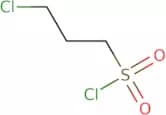
CAS :<p>3-Chloro-1-propanesulfonyl chloride is a synthetic, bifunctional compound that has been shown to have the ability to inhibit cholesterol acyltransferase and cell culture. 3-Chloro-1-propanesulfonyl chloride has also been shown to bind to the 5-ht4 receptor in vivo and in vitro. It is hydrolyzed by trifluoroacetic acid, which can lead to uptake of the compound into cells. The hydroxy group on 3-chloro-1-propanesulfonyl chloride allows for hydrogen bonding with other molecules, such as fatty acids and matrix metalloproteinases. This property may be responsible for its uptake into cellular structures. 3-Chloro-1-propanesulfonyl chloride has been found in wastewater samples at concentrations between 0.07 - 1 micrograms per liter. In cell cultures, it has been shown to inhibit matrix met</p>Formule :C3H6Cl2O2SDegré de pureté :Min. 95%Couleur et forme :Clear LiquidMasse moléculaire :177.05 g/mol5-Fluoro-2-Indanamine
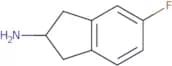
CAS :Produit contrôléPlease enquire for more information about 5-Fluoro-2-Indanamine including the price, delivery time and more detailed product information at the technical inquiry form on this pageFormule :C9H10FNDegré de pureté :Min. 95%Masse moléculaire :151.18 g/mol2,2',4,5,5'-Pentachlorobiphenyl
CAS :Produit contrôlé2,2',4,5,5'-Pentachlorobiphenyl is an environmental pollutant that is not naturally produced. It has been detected in animal tissues and faeces, as well as human tissues and faeces. The metabolite 2,4,5-trichlorophenol has been found to be a precursor of this compound. 2,2',4,5,5'-Pentachlorobiphenyl can persist in the environment for centuries and is difficult to detect because it does not react with many detection methods. This compound has been shown to alter the structure of DNA molecules in animals by inducing mutations in their offspring. The compound also induces changes in the structure of DNA molecules in tissue samples and alters protein synthesis.br>Formule :C12H5Cl5Degré de pureté :Min. 95%Masse moléculaire :326.43 g/mol2-Methoxybenzenesulphonyl chloride
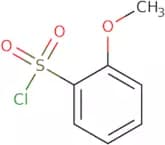
CAS :2-Methoxybenzenesulphonyl chloride is an enzyme inhibitor that has been shown to have anti-cancer and anti-HIV activity. It inhibits the growth of cancer cells by interfering with protein synthesis and preventing RNA transcription. 2-Methoxybenzenesulphonyl chloride has also been shown to be effective in treating chronic hepatitis, degenerative diseases, and autoimmune diseases. This drug is metabolized through a number of metabolic transformations, including oxidation by cytochrome P450 enzymes or conjugation with glucuronic acid. The pro-apoptotic protein Bax is induced by 2-methoxybenzenesulphonyl chloride in human HL60 cells, which may be due to its ability to induce transcriptional regulation.Formule :C7H7ClO3SDegré de pureté :Min. 97%Couleur et forme :PowderMasse moléculaire :206.65 g/molPotassium chlorate
CAS :Produit contrôléPotassium chlorate is a strong oxidizing agent and a salt of potassium and chlorate. Potassium chlorate is used as an oxidizer in fireworks, propellants, and for the treatment of wastewater. It can also be used to generate chlorine dioxide, which is used as a disinfectant. Potassium chlorate has been shown to have genotoxic effects on rat liver cells, which may be due to its ability to induce transcriptional regulation by altering DNA methylation status. Chronic exposure to high concentrations of potassium chlorate can cause apical necrosis in rats. This type of necrosis is caused by the accumulation of potassium ions that lead to a disruption in membrane integrity. Chlorates are also known to cause chronic renal toxicity via oxidative stress mechanisms.Formule :ClKO3Degré de pureté :Min. 95%Couleur et forme :White SolidMasse moléculaire :122.55 g/mol1-Bromomethyl-o-carborane
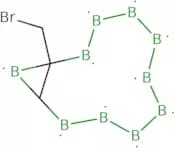
CAS :Produit contrôlé1-Bromomethyl-o-carborane is a boron compound that has been used as a cross-coupling reagent for the conversion of terminal alkynes to acetonitrile. This reagent is prepared by the reaction of lithium diisopropylamide with dicarbonyl compounds, followed by desilylation and alkylation. The hydroxy group can be substituted with triflates or monosubstituted groups. The nature of these substituents will depend on the desired product and reaction conditions. 1-Bromomethyl-o-carborane has been shown to form hyaluronic acid in yields of up to 98%.Formule :C3B10H13BrDegré de pureté :Min. 95%Masse moléculaire :237.15 g/mol4-Amino-3,5-difluorobenzonitrile
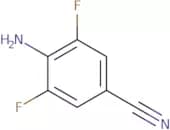
CAS :4-Amino-3,5-difluorobenzonitrile is a fine chemical used as a building block in research chemicals, reagent, and speciality chemical. It is versatile and can be used as a reaction component in the synthesis of complex compounds with various applications. CAS No. 110301-23-0 is an important intermediate for the synthesis of organic compounds and pharmaceuticals. 4-Amino-3,5-difluorobenzonitrile is also used as a scaffold for the synthesis of organic compounds.Formule :C7H4F2N2Degré de pureté :Min. 95%Couleur et forme :PowderMasse moléculaire :154.12 g/mol4-Methoxyphenyl chloroformate
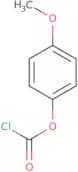
CAS :4-Methoxyphenyl chloroformate is a reactive chemical that can be used to synthesize amides, esters, and anhydrides. It reacts with nucleophiles such as chloride or hydroxide to form an intermediate product. This intermediate product then reacts with the desired molecule to form the desired final product. 4-Methoxyphenyl chloroformate has shown selectivity for binding to opioid receptors, including mu and delta subtypes. This chemical may be used in the synthesis of antibiotic drugs that have similar receptor subtypes. 4-Methoxyphenyl chloroformate also has been shown to modulate G protein signaling pathways in cells, which may lead to improved pharmacokinetic properties.Formule :C8H7ClO3Degré de pureté :Min. 95%Couleur et forme :Clear LiquidMasse moléculaire :186.59 g/mol


![[1,4-Bis(diphenylphosphino)butane]palladium(II) Dichloride](/_next/image/?url=https%3A%2Fstatic.cymitquimica.com%2Fproducts%2F3D%2Fthumb-webp%2FFB60968.webp&w=3840&q=75)