Halogénures organiques
Sous-catégories appartenant à la catégorie "Halogénures organiques"
20442 produits trouvés pour "Halogénures organiques"
Phenylacetyl-(D-Arg2·28,p-chloro-Phe6, Homoarg 9·29,Tyr(Me)10, Abu 15, Nle 27)-GRF (1-29) amide (human)
CAS :Please enquire for more information about Phenylacetyl-(D-Arg2·28,p-chloro-Phe6, Homoarg 9·29,Tyr(Me)10, Abu 15, Nle 27)-GRF (1-29) amide (human) including the price, delivery time and more detailed product information at the technical inquiry form on this pageFormule :C172H284ClN53O41Degré de pureté :Min. 95%Masse moléculaire :3,785.88 g/mol(Arg17)-Amyloid b-Protein (1-42) trifluoroacetate salt
CAS :Please enquire for more information about (Arg17)-Amyloid b-Protein (1-42) trifluoroacetate salt including the price, delivery time and more detailed product information at the technical inquiry form on this page
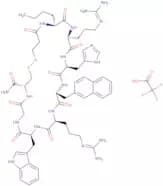
Formule :C203H312N58O60SDegré de pureté :Min. 95%Masse moléculaire :4,557.07 g/molOctreotide trifluoroacetate salt (Dimer, Parallel) (
Please enquire for more information about Octreotide trifluoroacetate salt (Dimer, Parallel) ( including the price, delivery time and more detailed product information at the technical inquiry form on this page
Formule :C98H132N20O20S4Degré de pureté :Min. 95%Masse moléculaire :2,038.48 g/molAmylin (human) trifluoroacetate salt
CAS :Amylin is a hormone that regulates the release of insulin from the pancreas. Amylin is a protein that consists of 39 amino acids, and in its natural form it is not soluble in water. The amyloid fibrils are insoluble aggregates of proteins that can be found in the brain tissue of patients with Alzheimer's disease. Amylin has been shown to have an entrapment efficiency greater than 96% by using polymeric particles with a diameter less than 50 microns. These particles are able to increase water solubility and nutrient metabolism, as well as improve evaporation rates. They also provide an increased surface area for absorption and pharmacological properties. Amylin has been shown to lower postprandial glycemia when used with insulin in type II diabetes mellitus patients, and may also be an anorectic agent.
Formule :C165H261N51O55S2Degré de pureté :Min. 95%Masse moléculaire :3,903.28 g/mol(Dibromomethyl)benzene
CAS :Dibromomethylbenzene is a reactive, non-metallic chemical compound with the formula CHBr2. It is a colorless liquid that is soluble in water and has a strong odor. Dibromomethylbenzene can be used to treat wastewater by removing metals, such as iron and copper, that are not removed by conventional methods. This compound also has been shown to inhibit the growth of infectious bacteria, such as Salmonella enterica and Escherichia coli. Dibromomethylbenzene reacts with metal hydroxides to produce volatile bromide ions, which react with the carbohydrate to form cyclic peptides. These reactions are catalyzed by solid catalysts like activated carbon or alumina.
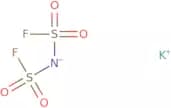
Formule :C7H6Br2Degré de pureté :95%MinMasse moléculaire :249.93 g/molPotassium bis(fluorosulfonyl)imide
CAS :Potassium bis(fluorosulfonyl)imide (K2FSI) is a reactive chemical that can be used to remove sulfur from petroleum products. It is also used in the manufacturing of ethylene and perovskite solar cells. K2FSI reacts with potassium ions to form potassium hexafluorophosphate (KHF2). This reaction reduces the vapor pressure of KHF2 and increases its solubility in water. The use of K2FSI can reduce the amount of energy needed for desulfurization, as it does not require heating. The following are some uses for potassium bis(fluorosulfonyl)imide: - As a catalyst for production of ethylene - In organic solvent to produce perovskite solar cells - To remove sulfur from petroleum products - To make hydrogen fluoride - For desulfurization
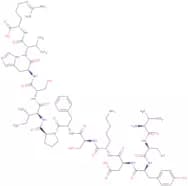
Formule :F2NO4S2•KDegré de pureté :Min. 95%Couleur et forme :White PowderMasse moléculaire :219.23 g/molOvalbumin (257-264) (chicken) trifluoroacetate salt
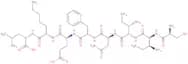
CAS :Please enquire for more information about Ovalbumin (257-264) (chicken) trifluoroacetate salt including the price, delivery time and more detailed product information at the technical inquiry form on this page
Formule :C45H74N10O13·C2HF3O2Degré de pureté :Min. 95%Masse moléculaire :1,077.15 g/molAmyloid beta-Protein (40-1) trifluoroacetate salt
CAS :Trifluoroacetate salt
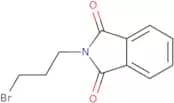
Formule :C194H295N53O58SDegré de pureté :Min. 95%Masse moléculaire :4,329.81 g/molN-(3-Bromopropyl)phthalimide
CAS :N-(3-Bromopropyl)phthalimide is a chiral compound that can be used as a linker in the synthesis of ornithine. It is also an antibacterial agent. N-(3-Bromopropyl)phthalimide binds to the N-terminal amino group of ornithine and reacts with nucleophilic attack on the carbonyl carbon, forming the corresponding amide. The second-order rate constant for this reaction was measured to be 0.037 M-1s-1 at 25°C and pH 7. Photosensitizers such as silver nitrate are added to react with N-(3-bromopropyl)phthalimide and generate reactive oxygen species (ROS), which leads to surface-enhanced Raman scattering (SERS). SERS has been shown to be a useful technique for detecting N-(3-bromopropyl)phthalimide in food products.
Formule :C11H10BrNO2Couleur et forme :PowderMasse moléculaire :268.11 g/mol1,3,6,8-Tetrabromopyrene
CAS :1,3,6,8-Tetrabromopyrene is a brominated derivative of pyrene. It has been shown to be chemically stable and does not react with fatty acids in the same way as other chemicals. 1,3,6,8-Tetrabromopyrene has been used in a study on luminescent probes for electrochemical studies. The probes were synthesized by coupling 1,3,6,8-tetrabromopyrene with an electron donor (e.g., 8-hydroxyquinoline) or acceptor (e.g., triethanolamine). The probe was then applied to a metal surface where it could be observed through electrochemical impedance spectroscopy. This chemical is also used as a functional theory to study the uptake of heavy metals onto polymer matrices. One example of this is when 1,3,6,8-tetrabromopyrene is doped into poly(vinylidene
Formule :C16H6Br4Degré de pureté :Min. 95%Couleur et forme :Off-White PowderMasse moléculaire :517.83 g/mol(2E)-1-[5,6-Dihydro-3-(trifluoromethyl)-1,2,4-triazolo[4,3-a]pyrazin-7(8H)-yl]-4-(2,4,5-trifluorophenyl)-2-buten-1-one
CAS :Please enquire for more information about (2E)-1-[5,6-Dihydro-3-(trifluoromethyl)-1,2,4-triazolo[4,3-a]pyrazin-7(8H)-yl]-4-(2,4,5-trifluorophenyl)-2-buten-1-one including the price, delivery time and more detailed product information at the technical inquiry form on this page
Formule :C16H12F6N4ODegré de pureté :95%NmrMasse moléculaire :390.28 g/molRef: 3D-FD103313
Produit arrêté(D-Trp8)-Somatostatin-14 trifluoroacetate salt
CAS :Please enquire for more information about (D-Trp8)-Somatostatin-14 trifluoroacetate salt including the price, delivery time and more detailed product information at the technical inquiry form on this page
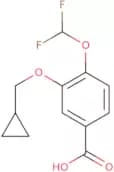
Formule :C76H104N18O19S2Degré de pureté :Min. 95%Masse moléculaire :1,637.88 g/mol3-Cyclopropylmethoxy-4-difluoromethoxy-benzoic acid
CAS :3-Cyclopropylmethoxy-4-difluoromethoxy-benzoic acid is an industrial chemical that is used as a binding agent in the production of dyes, rubber, and pharmaceuticals. The compound is produced by the acylation of 3-chloromethoxybenzoic acid with cyclopropylmethanol. This reaction requires an inorganic base such as potassium carbonate or sodium bicarbonate to activate the chloride. 3-Cyclopropylmethoxy-4-difluoromethoxybenzoic acid can be used as a reactive alkylating agent for the production of amides and other organic compounds, which increases its versatility.
Formule :C12H12O4F2Degré de pureté :Min. 95%Couleur et forme :White/Off-White SolidMasse moléculaire :258.22 g/molRef: 3D-FC34106
Produit arrêtéAcetyl-ACTH (7-24) (human, bovine, rat) trifluoroacetate salt
CAS :Please enquire for more information about Acetyl-ACTH (7-24) (human, bovine, rat) trifluoroacetate salt including the price, delivery time and more detailed product information at the technical inquiry form on this page
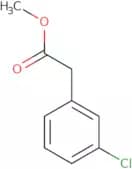
Formule :C107H170N32O21Degré de pureté :Min. 95%Masse moléculaire :2,240.7 g/molMethyl 3-chlorophenylacetate
CAS :Methyl 3-chlorophenylacetate is a chemical intermediate that has been used in the synthesis of pharmaceuticals and organic compounds. It has also been used as a reagent for research, especially in the study of organic chemistry. Methyl 3-chlorophenylacetate is a versatile building block and can be used as a reaction component to synthesize other chemicals. This compound is also an excellent scaffold for medicinal chemistry.
Formule :C9H9ClO2Degré de pureté :Min. 95%Couleur et forme :Clear LiquidMasse moléculaire :184.62 g/molChlorotoxin trifluoroacetate salt
CAS :Chlorotoxin trifluoroacetate salt is a chlorotoxin derivative that has been modified to be more soluble in aqueous solutions. It is used to identify skin cancer and other forms of cancer, as well as for the study of cellular function and structure. The molecule can be injected into tissue or cells, where it binds to nuclei and causes cell death. Chlorotoxin trifluoroacetate salt has minimal toxicity in humans and can be used on histological specimens with little disruption to the tissue. This reagent may also be used to target intracellular targets such as glioma cells.
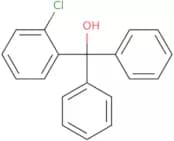
Formule :C158H249N53O47S11Degré de pureté :Min. 95%Masse moléculaire :3,995.72 g/mol(2-Chlorophenyl)diphenylmethanol
CAS :2-Chlorophenyl)diphenylmethanol is an antifungal drug that blocks the function of a calcium ionophore in fungal cells. It has been shown to be effective against a variety of filamentous fungi, including Aspergillus fumigatus, Candida albicans, and Trichosporon cutaneum. This drug is used as a topical antifungal agent for treatment of skin infections caused by these fungi. 2-Chlorophenyl)diphenylmethanol has been shown to have anti-inflammatory properties in animal models of kidney fibrosis and cell binding. Clinical data suggests that it can be used for the prevention or treatment of stem cell transplantation complications such as graft versus host disease and leukemia.
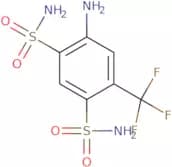
Formule :C19H15ClODegré de pureté :Min. 95%Couleur et forme :PowderMasse moléculaire :294.77 g/mol4-Amino-6-(trifluoromethyl)benzene-1,3-disulfonamide
CAS :4-Amino-6-(trifluoromethyl)benzene-1,3-disulfonamide (4AFBDS) is a chemical compound that can be used for the treatment of wastewater. It has shown to be effective against anhydrase, which is an enzyme that catalyzes the conversion of water to hydrogen peroxide and hydroxide ion. 4AFBDS also attenuates oxidative stress in cardiac cells and inhibits the production of active oxygen species by inhibiting the activity of carbonic anhydrase. The chromatographic method used to detect 4AFBDS was found to be more sensitive than a standard colorimetric assay, making it a better tool for detecting this compound in wastewater samples. br> br> br> br> br> This compound has been shown to have inhibitory effects on e3 ubiquitin ligase, which plays a role in protein degradation via aut
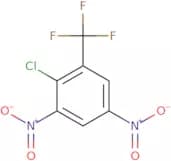
Formule :C7H8F3N3O4S2Degré de pureté :Min. 95%Masse moléculaire :319.28 g/mol2-Chloro-3,5-dinitrobenzotrifluoride
CAS :2-Chloro-3,5-dinitrobenzotrifluoride is a chemical compound that is used as an intermediate in the synthesis of dyes and pharmaceuticals. It reacts with nitrous acid to form 2-chloro-3,5-dinitrobenzoic acid. The hydrogen bond between the hydroxyl group and the chlorine atom in this compound is weak, which leads to a constant value for its spectrometer. This chemical compound has photophysical properties that are dependent on the concentration of solutes. When it is mixed with other solutes such as potassium ion or sulfoxide, it can produce isomers. This chemical compound can be refluxed in a neutral pH environment to form anilines and acetonitrile, two compounds that are important for organic synthesis.
Formule :C7H2ClF3N2O4Degré de pureté :Min. 95%Couleur et forme :Light (Or Pale) Yellow To Yellow SolidMasse moléculaire :270.55 g/molRef: 3D-FC20056
Produit arrêtéGAP 26 trifluoroacetate salt
CAS :13-mer connexin mimetic peptide, composed of residue numbers 63-75 of the first extracellular loop of connexin 43 (gap junction blocker), containing the SHVR amino acid motif.Formule :C70H107N19O19SDegré de pureté :Min. 95%Masse moléculaire :1,550.78 g/mol(Deamino-Cys3, Nle 4,Arg5,D-2-Nal 7,Cys11)-a-MSH (3-11) amide trifluoroacetate salt
CAS :Please enquire for more information about (Deamino-Cys3, Nle 4,Arg5,D-2-Nal 7,Cys11)-a-MSH (3-11) amide trifluoroacetate salt including the price, delivery time and more detailed product information at the technical inquiry form on this pageFormule :C56H76N18O9S2Degré de pureté :Min. 95%Masse moléculaire :1,209.45 g/mol2,6-Dichloro-5-fluoronicotinic acid
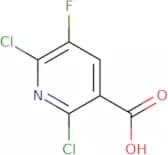
CAS :2,6-Dichloro-5-fluoronicotinic acid (2,6-DCFNA) is a chlorinating agent that is activated in acidic solutions. It is used to produce the disinfectant peracetic acid and in the industrial process of producing phenol. 2,6-DCFNA reacts with chloride to form hypochlorous acid (HOCl), which causes inflammation in cells by activating inflammatory cells such as neutrophils and macrophages. 2,6-DCFNA also inhibits tyrosine kinase activity, which may contribute to its anti-inflammatory properties. The toxic effects of 2,6-DCFNA have been studied on hematopoietic cells in vitro. Studies show that this compound can cause apoptosis or death of these cells and may be useful for the treatment of inflammatory diseases such as rheumatoid arthritis. 2,6-DCFNA has also been shown to inhibit tumor growth when
Formule :C6H2Cl2FNO2Degré de pureté :Min. 95%Couleur et forme :PowderMasse moléculaire :209.99 g/molZinc bromide dihydrate
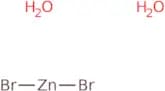
CAS :Zinc bromide dihydrate is a crystalline compound that is used as a catalyst for the conversion of metalloporphyrins to hydroporphyrins. This process is used in the production of vitamin B12. Zinc bromide dihydrate can also be used to inhibit the function of ion pumps, which are proteins that pump ions across membranes. The inhibition of these pumps may lead to a decrease in intracellular calcium levels and an increase in free radicals.
Zinc bromide dihydrate has been shown to react with chlorophylls, vinylated heterostructures, and polyvinyl nonmetals. These reactions produce morphology changes in zinc bromide dihydrate crystalsFormule :ZnBr2•2H2ODegré de pureté :Min. 95%Couleur et forme :PowderMasse moléculaire :261.22 g/molAcetyl-ACTH (4-24) (human, bovine, rat) trifluoroacetate salt
CAS :Please enquire for more information about Acetyl-ACTH (4-24) (human, bovine, rat) trifluoroacetate salt including the price, delivery time and more detailed product information at the technical inquiry form on this pageFormule :C123H193N37O26SDegré de pureté :Min. 95%Masse moléculaire :2,638.15 g/molH-Asp(OtBu)-2-chlorotrityl resin (200-400 mesh)
Please enquire for more information about H-Asp(OtBu)-2-chlorotrityl resin (200-400 mesh) including the price, delivery time and more detailed product information at the technical inquiry form on this page
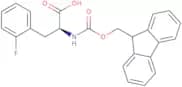
Degré de pureté :Min. 95%Fmoc-2-fluoro-L-phenylalanine
CAS :Please enquire for more information about Fmoc-2-fluoro-L-phenylalanine including the price, delivery time and more detailed product information at the technical inquiry form on this page
Formule :C24H20FNO4Degré de pureté :Min. 95%Couleur et forme :PowderMasse moléculaire :405.42 g/molRef: 3D-FF48029
Produit arrêtéH-Ala-2-chlorotrityl resin (200-400 mesh) (Low Substitution)
Please enquire for more information about H-Ala-2-chlorotrityl resin (200-400 mesh) (Low Substitution) including the price, delivery time and more detailed product information at the technical inquiry form on this page
Degré de pureté :Min. 95%Neuromedin S (rat) trifluoroacetate salt
CAS :Please enquire for more information about Neuromedin S (rat) trifluoroacetate salt including the price, delivery time and more detailed product information at the technical inquiry form on this pageFormule :C193H307N57O49SDegré de pureté :Min. 95%Masse moléculaire :4,241.92 g/molDnp-(Leu421)-Collagen Type VIII a1 Chain (419-426) amide (human, mouse) trifluoroacetate salt
Please enquire for more information about Dnp-(Leu421)-Collagen Type VIII a1 Chain (419-426) amide (human, mouse) trifluoroacetate salt including the price, delivery time and more detailed product information at the technical inquiry form on this page
Formule :C40H64N14O12SDegré de pureté :Min. 95%Masse moléculaire :965.09 g/molH-Ser(tBu)-2-chlorotrityl resin (200-400 mesh)
Please enquire for more information about H-Ser(tBu)-2-chlorotrityl resin (200-400 mesh) including the price, delivery time and more detailed product information at the technical inquiry form on this page
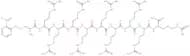
Degré de pureté :Min. 95%H-Cys(NPys)-Arg-Arg-Arg-Arg-Arg-Arg-Arg-Arg-Arg-NH2 trifluoroacetate salt
CAS :Please enquire for more information about H-Cys(NPys)-Arg-Arg-Arg-Arg-Arg-Arg-Arg-Arg-Arg-NH2 trifluoroacetate salt including the price, delivery time and more detailed product information at the technical inquiry form on this pageFormule :C62H118N40O12S2Degré de pureté :Min. 95%Masse moléculaire :1,679.99 g/mol4-Bromoisoindoline hydrochloride
CAS :4-Bromoisoindoline hydrochloride (BII) is a chemical compound that can be used as a building block for making other chemicals. It can also be used to make research chemicals or as a reaction component in the synthesis of other compounds. It has been shown to be an effective reagent and is useful for the production of fine chemicals with high purity.
Formule :C8H9BrClNDegré de pureté :Min. 95%Couleur et forme :PowderMasse moléculaire :234.52 g/mol5-Bromo-2-(methylthio)pyrimidine
CAS :5-Bromo-2-(methylthio)pyrimidine is a synthetic compound that has been used to synthesize palladium complexes. It can also be used in the synthesis of vitamin B1, which is an essential nutrient for humans and animals. 5-Bromo-2-(methylthio)pyrimidine binds with magnesium and reacts with sulfoxide, nucleophilic attack and electronegativity. 5-Bromo-2-(methylthio)pyrimidine is activated by 2-chlorobenzothiazole and hydrogen chloride, which leads to nucleophilic attack on the electrophilic carbon atom. This causes a displacement reaction with the elimination of chlorine gas and production of dihydro.
Formule :C5H5BrN2SDegré de pureté :Min. 95%Masse moléculaire :205.08 g/molRef: 3D-FB139356
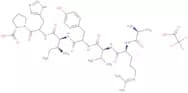
Produit arrêtéAngiotensin A (1-7) trifluoroacetate
CAS :Endogenous heptapetide which causes vasodilation and has anti-hypertensive properties.
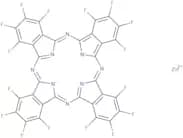
Formule :C40H62N12O9•(C2HF3O2)xDegré de pureté :Min. 95%Couleur et forme :PowderMasse moléculaire :855 g/molZinc 1,2,3,4,8,9,10,11,15,16,17,18,22,23,24,25-hexadecafluoro-29H,31H-phthalocyanine
CAS :Please enquire for more information about Zinc 1,2,3,4,8,9,10,11,15,16,17,18,22,23,24,25-hexadecafluoro-29H,31H-phthalocyanine including the price, delivery time and more detailed product information at the technical inquiry form on this pageFormule :C32F16N8ZnDegré de pureté :Min. 95%Masse moléculaire :865.75 g/molRef: 3D-FZ101052
Produit arrêtéAmmonium Undecafluorohexanoate
CAS :Undecafluorohexanoic acid is a perfluoroalkyl carboxylic acid that has been shown to disrupt steroidogenesis in vitro. It may be able to inhibit the transport of cholesterol, fats, and other lipids in cells, which causes disruption in steroidogenesis. This compound also has anti-cancer properties due to its ability to induce apoptosis and arrest cancer cell proliferation. Undecafluorohexanoic acid may also have developmental effects on animals because it can bind to estrogen receptors and disrupt the normal process of estrogen-mediated signaling pathways.
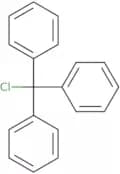
Formule :C6H4F11NO2Degré de pureté :Min. 95%Masse moléculaire :331.08 g/molTrityl chloride resin
CAS :Trityl chloride resin is a chemical compound that is used as a model system for the study of trifluoroacetic acid and its reactions. Trityl chloride resin is insoluble in water and has been used as a reaction solution for transfer reactions. It has been shown to be an effective ligand for many types of receptors, with binding constants ranging from 10 M-1 to 10 M-10. Trityl chloride resin can also be chiral, which means that it may exist in two forms that are mirror images of each other. The physiological effects of this compound are not well understood, but it has been shown to have an effect on coordination geometry.
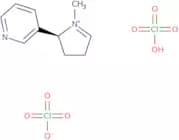
Couleur et forme :PowderS-(-)-Nicotine-delta1’-(5’)-iminium diperchlorate salt
CAS :Please enquire for more information about S-(-)-Nicotine-delta1’-(5’)-iminium diperchlorate salt including the price, delivery time and more detailed product information at the technical inquiry form on this page
Formule :C10H14Cl2N2O8Degré de pureté :Min. 95%Masse moléculaire :361.13 g/molRef: 3D-FN26207
Produit arrêté2,3,5-Trichlorobenzaldehyde
CAS :2,3,5-Trichlorobenzaldehyde is a chemical compound that has been shown to have anticancer and apoptotic effects. It inhibits the growth of bacteria by chelating iron ions and inhibiting bacterial dna synthesis. 2,3,5-Trichlorobenzaldehyde has also been shown to inhibit the growth of cancer cells in culture in an experimental study. This chemical has been used as a substrate for nmr spectroscopy to study its functional groups and radical scavenging activities. 2,3,5-Trichlorobenzaldehyde can be synthesized from phenacyl chloride and benzaldehyde in the presence of hydrogen chloride gas. The carbonyl group in 2,3,5-trichlorobenzaldehyde may cause metabolic disorders such as diabetes mellitus or hyperglycemia.
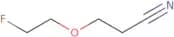
Formule :C7H3Cl3ODegré de pureté :Min. 95%Couleur et forme :PowderMasse moléculaire :209.46 g/mol3-(2-Fluoroethoxy)Propanenitrile
CAS :3-(2-Fluoroethoxy)Propanenitrile is a chemical with toxic properties. It is classified as a fluoroacetic acid and has been used in the production of other chemicals. Fluoroacetic acid is toxic to humans, showing signs of skin irritation, respiratory tract irritation, and kidney damage. 3-(2-Fluoroethoxy)Propanenitrile is not found naturally and has been sponsored by many companies.
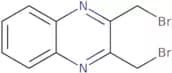
Formule :C5H8FNODegré de pureté :Min. 95%Masse moléculaire :117.12 g/mol2,3-Bis(bromomethyl)quinoxaline
CAS :2,3-Bis(bromomethyl)quinoxaline is a nitrogenous heterocyclic compound that has a coordination geometry of square planar. It has been used as an inhibitor for the protein p21 and the nucleophile in palladium complexes. 2,3-Bis(bromomethyl)quinoxaline is also a model system for studying reaction mechanisms and chemical structures. The electron density map of the compound was obtained by X-ray crystal structure analysis. The reaction mechanism of this molecule is proposed to be through a chelate ring cross-coupling process.
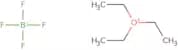
Formule :C10H8Br2N2Degré de pureté :Min. 95%Couleur et forme :Brown PowderMasse moléculaire :315.99 g/molTriethyloxonium tetrafluoroborate
CAS :Triethyloxonium tetrafluoroborate is an antimicrobial agent that inhibits the transfer of electrons from one molecule to another. It has been shown to be effective against methicillin-resistant Staphylococcus aureus and Mycobacterium tuberculosis. Triethyloxonium tetrafluoroborate binds to the bacterial enzyme, Jak1, which is involved in the formation of cytokines and interleukins. This binding inhibits the production of these molecules, leading to cell death by apoptosis. The use of triethyloxonium tetrafluoroborate as a research tool has facilitated its discovery as a potential anti-inflammatory drug for autoimmune diseases such as type 1 diabetes mellitus and rheumatoid arthritis. Triethyloxonium tetrafluoroborate can be used to inhibit amide synthesis, which may have applications in the study of carbohydrate chemistry and nitrogen atoms in biological systems. This compound has also been used
Formule :C6H15BF4ODegré de pureté :Min. 95%Couleur et forme :PowderMasse moléculaire :189.99 g/mol




![(2E)-1-[5,6-Dihydro-3-(trifluoromethyl)-1,2,4-triazolo[4,3-a]pyrazin-7(8H)-yl]-4-(2,4,5-trifluorop…](/_next/image/?url=https%3A%2Fstatic.cymitquimica.com%2Fproducts%2F3D%2Fthumb-webp%2FFD103313.webp&w=3840&q=75)