Halogénures organiques
Sous-catégories appartenant à la catégorie "Halogénures organiques"
20442 produits trouvés pour "Halogénures organiques"
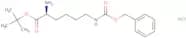
Ne-Z-L-lysine tert-butyl ester hydrochloride
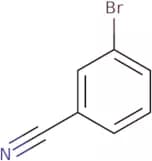
CAS :Ne-Z-L-lysine tert-butyl ester hydrochloride is a multidrug that inhibits the activity of the P-glycoprotein (Pgp) transporter. This drug is an antigen that can be used as a marker for cytostatic drugs, and it can be used in radionuclide localization. Ne-Z-L-lysine tert-butyl ester hydrochloride has been shown to have cytostatic effects on malignant cells, but its cytotoxicity varies depending on the type of cancer cell. Ne-Z-L-lysine tert-butyl ester hydrochloride has also been shown to be degradable and to possess conjugates with antibodies, which makes it useful for treating some types of cancers. Ne-Z-L-lysine tert-butyl ester hydrochloride is not active against resistant cells such as those expressing Pgp or MRP1 proteins.Formule :C18H28N2O4·HClDegré de pureté :Min. 95%Couleur et forme :White PowderMasse moléculaire :372.89 g/mol3-Bromobenzonitrile
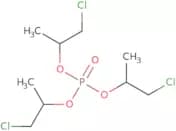
CAS :3-Bromobenzonitrile is an organic compound that has a hydroxyl group and a bromine atom. It is an organic chemical compound that can be synthesized by the reaction of benzene with nitric acid and azide. 3-Bromobenzonitrile has been studied for its biological properties. It also reacts with amines, quinoline derivatives, and other reactive molecules to form new compounds. 3-Bromobenzonitrile has been shown to have transport properties, which can be determined using FT-IR spectroscopy techniques.Formule :C7H4BrNDegré de pureté :Min. 95%Couleur et forme :PowderMasse moléculaire :182.02 g/molTris(1-chloro-2-propyl) phosphate - mixture of isomers
CAS :Tris(1-chloro-2-propyl) phosphate is a synthetic compound that belongs to the class of diphenyl ethers. It is used as an intermediate in the production of other chemicals, such as plastics and pesticides. Tris(1-chloro-2-propyl) phosphate has been shown to be toxic to cells by inhibiting mitochondrial membrane potential and interfering with cellular metabolism. This chemical can cause severe health effects, such as liver damage and death, at high doses. Tris(1-chloro-2-propyl) phosphate can also be detected in human serum and urine samples with high sensitivity.Formule :C9H18Cl3O4PDegré de pureté :Min. 95%Masse moléculaire :327.57 g/molCyclobutanesulfonyl chloride
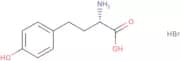
CAS :Cyclobutanesulfonyl chloride is a reagent that is used for the synthesis of 1-6-alkylcyclobutanes. It can be used to synthesize heterocyclic compounds, including those with high optical purity. Cyclobutanesulfonyl chloride has been shown to have antiviral and antiproliferative properties. It has also been shown to exhibit anticancer activity in vitro and in vivo. The mechanism of action for this compound is unclear, but it may inhibit protein synthesis by attacking the amino acid methionine in proteins or by inhibiting DNA replication.Formule :C4H7ClO2SDegré de pureté :Min. 95%Couleur et forme :Clear LiquidMasse moléculaire :154.62 g/molHomo-L-tyrosine hydrobromide
CAS :Homo-L-tyrosine hydrobromide (HLTB) is a prodrug that is converted to L-3,4-dihydroxyphenylalanine (L-dopa) in vivo. It is used as an immunomodulator by stimulating the immune system and reducing inflammation. HLTB has been shown to have anti-inflammatory effects on the production of cytokines and chemokines, which are important for tumor growth and metastasis. HLTB is also known to inhibit tyrosine kinase, which plays a role in the development of some cancers.Formule :C10H14BrNO3Degré de pureté :Min. 95%Masse moléculaire :276.13 g/molHemokinin 1 (human) trifluoroacetate salt
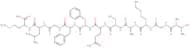
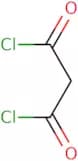
CAS :Hemokinin-1 is a hematopoietic cell growth factor that belongs to the group of neuropeptides. This protein has been shown to stimulate the production of white blood cells and is used as an adjuvant in vaccines. Hemokinin-1 stimulates the production of inflammatory cytokines and other proinflammatory substances. It also has been found to be involved in autoimmune diseases, cancer, and infectious diseases. The antigen binding site on Hemokinin-1 is located at residues Thr-Gly-Lys-Ala-Ser-Gln-Phe-Phe-Gly-Leu (TGLKSGPFGL) and the receptor binding site at residues Met-NH2. The receptor for Hemokinin 1 is the neurokinin 1 receptor (NK1R).Formule :C54H84N14O14SDegré de pureté :Min. 95%Masse moléculaire :1,185.4 g/molMalonyl chloride
CAS :Malonyl chloride is a trifluoroacetic acid derivative that is used as an intermediate in organic synthesis. It has been shown to be a ligand for chelate metal complexes and to react with amines to form amides. It also reacts with alcohols to form esters, and with carboxylic acids to form anhydrides or esters. Malonyl chloride is one of the most commonly used reagents in chemical synthesis due to its functional groups and its low cost. In addition, malonyl chloride can act as a chemoattractant for neutrophils and macrophages by activating the G protein-coupled receptor activity of these cells.Formule :C3H2Cl2O2Degré de pureté :Min. 95%Masse moléculaire :140.95 g/mol3,3'-Dichlorobenzidine dihydrochloride
CAS :3,3'-Dichlorobenzidine dihydrochloride is a chemical compound that is used in the manufacture of industrial chemicals. 3,3'-Dichlorobenzidine dihydrochloride is also used as a biochemical to detect copper and chloride ions in urine samples. This chemical has shown binding activities with receptor α, which is responsible for the transmission of nerve impulses. 3,3'-Dichlorobenzidine dihydrochloride has been shown to have a high affinity for receptor α and can be used as an antagonist for this receptor in binding studies.
Formule :C12H12Cl4N2Degré de pureté :Min. 95%Masse moléculaire :326.05 g/mol8-Bromo-1-octanol
CAS :8-Bromo-1-octanol is a fluorescent compound that has been shown to be resistant to cancer. It can be used as a probe for the detection of malonic acid in urine samples, which are an indicator of oxidative stress. 8-Bromo-1-octanol is stable in the presence of alcohol groups, and can be used to prepare samples for population growth studies. This chemical has also been used to study the growth of bacteria such as Pseudomonas aeruginosa and Escherichia coli. 8-Bromo-1-octanol emits light at a wavelength of 490 nm when exposed to ultraviolet radiation, which makes it useful for detecting chlorine atoms in water samples. The product research involving this chemical includes its effects on k562 cells and P. aeruginosa. Studies have also been done on its hydroxyl group and fatty acids and fatty acid esters, which are found in animal fat and vegetable oils.
Formule :C8H17BrODegré de pureté :Min. 95%Couleur et forme :Colorless Clear LiquidMasse moléculaire :209.12 g/molNeuropeptide Y (13-36) (human, rat) trifluoroacetate salt
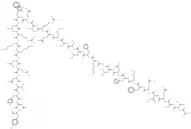
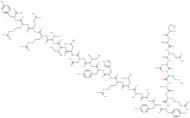
CAS :Trifluoroacetate saltFormule :C134H207N41O36SDegré de pureté :Min. 95%Masse moléculaire :3,000.4 g/molBiotinyl-LL-37 amide trifluoroacetate salt
CAS :Please enquire for more information about Biotinyl-LL-37 amide trifluoroacetate salt including the price, delivery time and more detailed product information at the technical inquiry form on this pageFormule :C215H355N63O54SDegré de pureté :Min. 95%Masse moléculaire :4,718.58 g/mol(Pyr 1)-Opiorphin trifluoroacetate salt
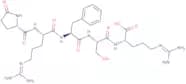
CAS :Please enquire for more information about (Pyr 1)-Opiorphin trifluoroacetate salt including the price, delivery time and more detailed product information at the technical inquiry form on this pageFormule :C29H45N11O8Degré de pureté :Min. 95%Masse moléculaire :675.74 g/molGLP-1 (1-37) (human, bovine, guinea pig, mouse, rat) trifluoroacetate salt
CAS :GLP-1 (1-37) (human, bovine, guinea pig, mouse, rat) trifluoroacetate salt is a posttranslational modification of the endogenous human hormone GLP-1. It is a synthetic form of this hormone that has been modified to allow for improved stability and solubility. This peptide is found in the pancreatic alpha cells and intestinal L cells and stimulates the release of insulin from pancreatic beta cells. GLP-1 (1-37) (human, bovine, guinea pig, mouse, rat) trifluoroacetate salt has also been shown to increase glucose uptake by muscle tissue as well as stimulate the release of incretin hormones such as glucagon-like peptide 1 and gastric inhibitory polypeptide. GLP-1 (1-37) (human, bovine, guinea pig, mouse, rat) trifluoroacetate saltFormule :C186H275N51O59Degré de pureté :Min. 95%Masse moléculaire :4,169.48 g/mol5-Fluoro-2-hydrazinopyridine
CAS :Please enquire for more information about 5-Fluoro-2-hydrazinopyridine including the price, delivery time and more detailed product information at the technical inquiry form on this pageFormule :C5H6FN3Degré de pureté :Min. 95%Masse moléculaire :127.12 g/molAcetyl-(3,4-dehydro-Pro1,4-fluoro-D-Phe2,D-Trp3·6)-LHRH trifluoroacetate salt
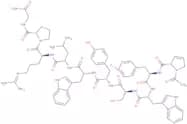
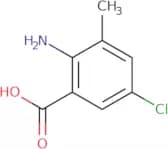
CAS :Please enquire for more information about Acetyl-(3,4-dehydro-Pro1,4-fluoro-D-Phe2,D-Trp3·6)-LHRH trifluoroacetate salt including the price, delivery time and more detailed product information at the technical inquiry form on this pageFormule :C69H85FN16O13Degré de pureté :Min. 95%Masse moléculaire :1,365.51 g/mol2-Amino-5-chloro-3-methylbenzoic acid
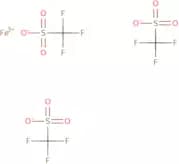
CAS :2-Amino-5-chloro-3-methylbenzoic acid (ACMB) is a substructure of the insecticidal compound chlorantraniliprole. It is a solid at room temperature and has a molecular weight of 142.15 g/mol. ACMB can be extracted from n-hexane, chlorantraniliprole, or xylene using gravimetric analysis. The bioactivity of ACMB can be determined by an anthranilic assay, while its solubility data are available in the literature. ACMB has been shown to have insecticidal activity against lepidoptera larvae and cyanuric activity against mosquito larvae.Formule :C8H8ClNO2Degré de pureté :Min. 95%Masse moléculaire :185.61 g/molIron(III) trifluoromethanesulfonate
CAS :Iron trifluoromethanesulfonate is an inorganic compound that is used as a catalyst in organic reactions. It is a salt of iron(III) and triflic acid, with the formula Fe(O)(CF). It has been shown to be a cocatalyst for benzofuran derivatives and can be used to synthesize methyl ketones, alkylation products, diarylmethanes, primary alcohols, and cleavage products. Iron trifluoromethanesulfonate can also be used as a control experiment to study reaction mechanisms.Formule :C3F9FeO9S3Degré de pureté :Min. 95%Couleur et forme :White SolidMasse moléculaire :503.06 g/molAPL1b27 trifluoroacetate salt
CAS :Please enquire for more information about APL1b27 trifluoroacetate salt including the price, delivery time and more detailed product information at the technical inquiry form on this pageFormule :C103H174N30O38SDegré de pureté :Min. 95%Masse moléculaire :2,472.73 g/molDesmethyl cyclobenzaprine hydrochloride
CAS :Desmethyl cyclobenzaprine hydrochloride is a metabolite of cyclobenzaprine, a drug used for the treatment of muscle spasms. Desmethyl cyclobenzaprine hydrochloride has been shown to have an increased potency for the termination of nerve impulses. These results were determined by in vivo studies using an assay on rat sciatic nerve and a study on human adrenergic receptors. This metabolite also shows potentiation effects with other drugs such as clonidine and prazosin, which are used to treat hypertension and anxiety, respectively. However, clinical relevance is still unknown due to the lack of data on desmethyl cyclobenzaprine hydrochloride's uptake and enhancement in humans.
Formule :C19H20ClNDegré de pureté :Min. 95%Couleur et forme :White To Off-White SolidMasse moléculaire :297.82 g/molAmyloid beta-Protein (11-42) trifluoroacetate salt
CAS :Please enquire for more information about Amyloid beta-Protein (11-42) trifluoroacetate salt including the price, delivery time and more detailed product information at the technical inquiry form on this pageFormule :C152H244N40O42SDegré de pureté :Min. 95%Masse moléculaire :3,335.87 g/mol(2S)-2-Amino-4-methyl-1-[(2R)-2-methyloxiranyl]-1-pentanone trifluoroacetate
CAS :Produit contrôléPlease enquire for more information about (2S)-2-Amino-4-methyl-1-[(2R)-2-methyloxiranyl]-1-pentanone trifluoroacetate including the price, delivery time and more detailed product information at the technical inquiry form on this page
Formule :C9H17NO2•C2HF3O2Degré de pureté :Min. 95%Couleur et forme :PowderMasse moléculaire :285.26 g/mol1,1,2,3,3,3-Hexafluoro-1-propene oxidized polymd.
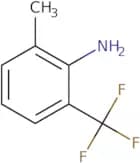
CAS :1,1,2,3,3,3-Hexafluoro-1-propene oxidized polymd. is a cosmetically active organic solvent that is used as an ingredient in cosmetic products. It is also used as a raw material for the production of polymer films. 1,1,2,3,3,3-Hexafluoro-1-propene oxidized polymd. has been shown to be effective in preventing calcium carbonate from agglomerating and provides a constant viscosity in water. This product can also be used as a film-forming polymer with anti-fogging properties. The product also has nutritional supplement properties and can be found in dietary supplements such as fish oil capsules or vitamin E pills.Degré de pureté :Min. 95%Couleur et forme :Clear Liquid2-methyl-6-(trifluoromethyl)aniline
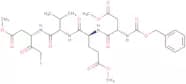
CAS :2-Methyl-6-(trifluoromethyl)aniline is a colorless, oily liquid with a sulfurous odor. It is soluble in water and alcohol. The reaction rate of 2-methyl-6-(trifluoromethyl)aniline with sulfoxides is faster than that of benzyl anilines, but slower than that of anilino derivatives. The addition of hydrophobic groups to the 2-methyl-6-(trifluoromethyl)aniline molecule increases the reaction rate. 2-Methyl-6-(trifluoromethyl)aniline can be used as an anesthetic agent because it is a potent inhibitor of nerve conduction in sciatic nerves. It also has been shown to be effective in desulfurizing propylene, which is important for the production of polypropylene plastics and synthetic rubber. 2-Methyl-6-(trifluFormule :C8H8F3NDegré de pureté :Min. 95%Masse moléculaire :175.15 g/molZ-Asp(OMe)-Glu(OMe)-Val-DL-Asp(OMe)-fluoromethylketone
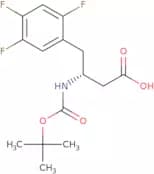
CAS :Z-Asp(OMe)-Glu(OMe)-Val-DL-Asp(OMe)-fluoromethylketone is a small molecule that has been shown to induce apoptosis in cultured cells. It is a caspase-3 inhibitor, which prevents the activation of the caspase cascade and protects cells from oxidative injury. Low doses of Z-Asp(OMe)-Glu(OMe)-Val-DL-Asp(OMe)-fluoromethylketone have been shown to induce apoptosis in cultured cells, with no significant cytotoxicity at high doses. The mechanism of action for this agent is not yet known, but it may promote mitochondrial membrane potential loss and neuronal death by binding to DNA, or induce cell death through a caspase-independent pathway.Formule :C30H41FN4O12Degré de pureté :Min. 95%Masse moléculaire :668.66 g/molBoc-(R)-3-Amino-4-(2,4,5-trifluorophenyl)butanoic acid
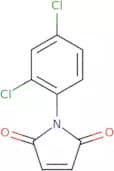
CAS :Intermediate in the synthesis of sitagliptinFormule :C15H18F3NO4Degré de pureté :Min. 95%Masse moléculaire :333.3 g/mol1-(2,4-Dichlorophenyl)-1H-pyrrole-2,5-dione
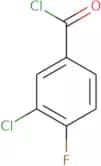
CAS :Maleimide is a chemical compound with the molecular formula CH2=C(O)NHC(=O)CH2-CO2H. It is a reactive monomer that polymerizes in the presence of an initiator to form polymers. Maleimides are also used as cross-linking agents, and have been shown to be thermostable and stable at high temperatures. This particular maleimide is a colorless solid that has been shown to copolymerize with methyl methacrylate and other monomers to form thermally stable, hydrophobic polymers.Formule :C10H5Cl2NO2Degré de pureté :Min. 95%Masse moléculaire :242.06 g/mol3-Chloro-4-fluorobenzoyl chloride
CAS :3-Chloro-4-fluorobenzoyl chloride is a chlorinating agent that is used as a fungicide, phytotoxin, and an insecticide. It is an effective pesticide against many fungal diseases that affect plants. 3-Chloro-4-fluorobenzoyl chloride has been shown to be effective in the treatment of cervical cancer and other cancers. It also has photochromic properties, which make it useful for detecting skin cancer. 3-Chloro-4-fluorobenzoyl chloride is synthesized by reacting chlorine with 4-fluorobenzoyl chloride in the presence of a base such as sodium hydroxide or potassium hydroxide. This reaction can be carried out in either liquid or gaseous phases. The product can be purified by vacuum distillation or crystallization. 3-Chloro-4-fluorobenzoyl chloride is primarily used as a fungicide
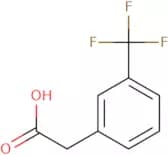
Formule :C7H3Cl2FODegré de pureté :Min. 95%Masse moléculaire :193 g/mol3-(Trifluoromethyl)phenylacetic acid
CAS :3-(Trifluoromethyl)phenylacetic acid is an isoquinoline alkaloid that has been found to have anti-inflammatory properties. It was shown to inhibit TNF-α production in mice with colitis, reducing the severity of the disease. 3-(Trifluoromethyl)phenylacetic acid can be administered orally, and it is metabolized reductively by dihydroisoquinoline reductase enzymes. The drug's pharmacokinetics are not well understood, but it is thought to be a substrate for CYP3A4 and P-glycoprotein. 3-(Trifluoromethyl)phenylacetic acid has been studied as a potential antiviral agent and systemic inflammatory response inhibitor.Formule :C9H7F3O2Degré de pureté :Min. 95%Masse moléculaire :204.15 g/molAmyloid beta/A4 Protein Precursor770 (394-410) trifluoroacetate salt
CAS :Please enquire for more information about Amyloid beta/A4 Protein Precursor770 (394-410) trifluoroacetate salt including the price, delivery time and more detailed product information at the technical inquiry form on this page
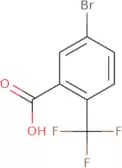
Formule :C86H151N31O26S2Degré de pureté :Min. 95%Masse moléculaire :2,099.44 g/mol5-bromo-2-(trifluoromethyl)benzoic Acid
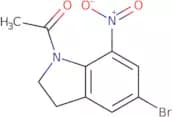
CAS :Please enquire for more information about 5-bromo-2-(trifluoromethyl)benzoic Acid including the price, delivery time and more detailed product information at the technical inquiry form on this pageFormule :C8H4BrF3O2Degré de pureté :Min. 95%Masse moléculaire :269.02 g/mol1-Acetyl-5-bromo-7-nitro-2,3-dihydro-1H-indole
CAS :The 1-Acetyl-5-bromo-7-nitro-2,3-dihydro-1H-indole is a water soluble molecule. It has a molecular weight of 230.3 and a chemical formula of C8H6N2O2Br. The 1A5B7N1 is an aromatic heterocyclic compound that contains a ring with five carbon atoms, three nitrogens, and one oxygen. The 1A5B7N1 is also known as the 5 Bromo 7 Nitro 2,3 Dihydro 1 H Indole or the 5 Bromo 7 Nitro 2,3 Dihydroindole. This molecule has been seen to have bioactive properties in many different ways including photolysis efficiency and molecular orbital.Formule :C10H9BrN2O3Degré de pureté :Min. 95%Masse moléculaire :285.09 g/mol(Nle 8·18,Tyr34)-pTH (1-34) amide (bovine) trifluoroacetate salt
CAS :Please enquire for more information about (Nle 8·18,Tyr34)-pTH (1-34) amide (bovine) trifluoroacetate salt including the price, delivery time and more detailed product information at the technical inquiry form on this pageFormule :C185H293N55O50Degré de pureté :Min. 95%Masse moléculaire :4,087.65 g/mol6-Bromo-1,4-benzodioxane
CAS :6-Bromo-1,4-benzodioxane is an organometallic compound that is used as a ligand in asymmetric hydrogenation reactions. 6-Bromo-1,4-benzodioxane has been shown to catalyze the hydrogenation of 1,2-diphenylacetylene with a high degree of stereoselectivity. The dihedral angles and molecular modeling have been studied for the ligand and catalyst complexes. This prochiral ligand has also been used to mediate the asymmetric hydrogenation of biphenyls in multigram scale.
Formule :C8H7BrO2Degré de pureté :Min. 95%Couleur et forme :PowderMasse moléculaire :215.04 g/mol(Val5)-Angiotensin I trifluoroacetate salt
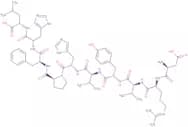
CAS :Angiotensin I is a peptide that belongs to the class of substances called angiotensins. This substance is found in many tissues and organs, including the brain, adrenal gland, and lung. Angiotensin I has been shown to be a pressor agent and also has biochemical effects on amino acid composition. The c-terminal sequence of this substance has been determined by incubating the molecule with pepsin at different pH values. The molecular weight of this substance is 938 Da and it has an amino acid composition of Asp-Arg-Val-Tyr-Val-His-Pro-Phe-His-Leu.Formule :C61H87N17O14Degré de pureté :Min. 95%Masse moléculaire :1,282.45 g/molDL-Alanine ethyl ester hydrochloride
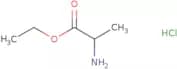
CAS :DL-Alanine ethyl ester hydrochloride is a byproduct of the reaction between ethylene and amines. It can be produced through the addition of l-phenylalanine to acetonitrile. This compound is an organic ester that has been shown to have a variety of reactions with metal ions, such as aluminium, l-glutamic acid, and primary amines. The product can be used in thermodynamic data for reaction systems involving DL-alanine ethyl ester hydrochloride.
Formule :C5H11NO2·HClDegré de pureté :Min. 95%Couleur et forme :White To Off-White SolidMasse moléculaire :153.61 g/molH-Lys(2-chloro-Z)-OBzl·HCl
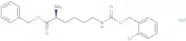
CAS :Please enquire for more information about H-Lys(2-chloro-Z)-OBzl·HCl including the price, delivery time and more detailed product information at the technical inquiry form on this pageFormule :C21H25ClN2O4·HClDegré de pureté :Min. 95%Masse moléculaire :441.35 g/mol(D-Lys(nicotinoyl)1,b-(3-pyridyl)-Ala3,3,4-dichloro-D-Phe5,Asn6,D-Trp7·9, Nle 11)-Substance P trifluoroacetate salt
CAS :Substance P is a tachykinin neuropeptide that belongs to the tachykinin family. It is found in the central and peripheral nervous system and has been shown to have an important role in locomotor activity, protein synthesis, receptor activity, and neurotransmitter release. Substance P is also associated with a number of diseases such as infectious diseases, sciatic nerve pain, and vasoactive intestinal peptide (VIP) production. This substance has been used for the diagnosis of neurogenic bladder dysfunction by measuring its effects on urinary bladder contractility.Formule :C86H104Cl2N18O13Degré de pureté :Min. 95%Masse moléculaire :1,668.76 g/mol4-bromo-5-chloro-2-fluorobenzoic Acid
CAS :Please enquire for more information about 4-bromo-5-chloro-2-fluorobenzoic Acid including the price, delivery time and more detailed product information at the technical inquiry form on this pageFormule :C7H3BrClFO2Degré de pureté :Min. 95%Masse moléculaire :253.45 g/molBiotinyl-BNP-32 (human) trifluoroacetate salt
CAS :Please enquire for more information about Biotinyl-BNP-32 (human) trifluoroacetate salt including the price, delivery time and more detailed product information at the technical inquiry form on this pageFormule :C153H258N52O44S5Degré de pureté :Min. 95%Masse moléculaire :3,690.34 g/molMethyl 3-chloro-4-fluorobenzoate
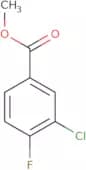
CAS :Methyl 3-chloro-4-fluorobenzoate is a white crystalline solid with a melting point of 61°C. It is soluble in ethyl acetate, ether, and chloroform. Methyl 3-chloro-4-fluorobenzoate is used as a reagent in the synthesis of polymers, pharmaceuticals, and pesticides. It has been shown to be useful as a building block for the synthesis of complex compounds such as heterocycles and polymers. Methyl 3-chloro-4-fluorobenzoate is also used as an intermediate in the production of other chemicals such as pharmaceuticals, catalysts, and herbicides.Formule :C8H6ClFO2Degré de pureté :Min. 95%Masse moléculaire :188.58 g/molACTH (1-39) (mouse, rat) trifluoroacetate salt
CAS :Trifluoroacetate salt
Formule :C210H315N57O57SDegré de pureté :Min. 95%Masse moléculaire :4,582.16 g/mol5-Chloro-2-nitrodiphenylamine
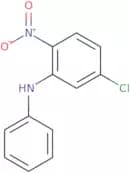
CAS :5-Chloro-2-nitrodiphenylamine is a synthetic dyestuff that belongs to the class of acridones. It can be used as an anti-epileptic drug, although it has not been approved for this use in any country. 5-Chloro-2-nitrodiphenylamine is manufactured by reacting a 6-carboxylic acid with an organic solvent and ammonolysis. This chemical is also known as 6'-chloroacridone and is used in the production of dyes and pigments. The manufacturing process produces impurities such as chloride, which must be removed by evaporation. Nitro groups are introduced during the manufacturing process to improve the dye's stability and color fastness under light exposure.Formule :C12H9ClN2O2Degré de pureté :Min. 95%Couleur et forme :Orange To Red SolidMasse moléculaire :248.66 g/mol(Trifluoromethylthio) Silver(I)
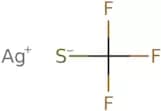
CAS :(Trifluoromethylthio) silver(I) is an efficient method for the synthesis of chiral, functionalized organosulfur compounds. It is prepared by the trifluoromethylthiolation of aryl acetonitriles in the presence of persulfate and a radical coupling agent. The reaction time can be adjusted to suit the desired product, with shorter times producing more complex molecules. This compound can be used as a nucleophile in organic reactions, including sulfide activation reactions.Formule :CHAgF3SDegré de pureté :Min. 95%Masse moléculaire :209.95 g/mol4,4-Difluoro-N-((1S)-3-oxo-1-phenylpropyl)cyclohexanecarboxa
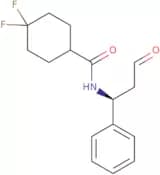
CAS :Please enquire for more information about 4,4-Difluoro-N-((1S)-3-oxo-1-phenylpropyl)cyclohexanecarboxa including the price, delivery time and more detailed product information at the technical inquiry form on this pageFormule :C16H19F2NO2Degré de pureté :Min. 95%Masse moléculaire :295.32 g/molMaxadilan trifluoroacetate salt
CAS :Maxadilan trifluoroacetate salt is a low-potency drug that binds to the GABA receptor and affects the central nervous system. Maxadilan trifluoroacetate salt is structurally related to leishmaniasis, an infectious disease caused by protozoa of the genus Leishmania. Maxadilan trifluoroacetate salt has been shown to prevent the development of autoimmune diseases in mice, including systemic lupus erythematosus, experimental autoimmune encephalomyelitis, and collagen-induced arthritis. Maxadilan trifluoroacetate salt has also been shown to be effective against cutaneous lesions in mice infected with Leishmania major. The mechanism of action is not yet known but may be due to its ability to influence mitochondrial membrane potential or fatty acid metabolism.Formule :C291H466N86O94S6Degré de pureté :Min. 95%Masse moléculaire :6,865.73 g/mol5-Bromo-2-(trifluoromethoxy)benzaldehyde
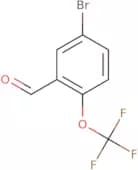
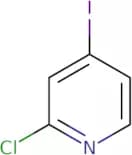
CAS :5-Bromo-2-(trifluoromethoxy)benzaldehyde is a chemical that is used as a reactant in organic chemistry. It can be used as a building block for the synthesis of complex compounds, or as an intermediate in the preparation of fine chemicals. 5-Bromo-2-(trifluoromethoxy)benzaldehyde is also useful in research and development. It has been used to synthesize pharmaceuticals, pesticides, and other organic compounds.Formule :C8H4BrF3O2Degré de pureté :Min. 95%Couleur et forme :PowderMasse moléculaire :269.02 g/mol2-Chloro-4-iodopyridine
CAS :2-Chloro-4-iodopyridine is an antibacterial agent that inhibits bacterial growth by interfering with the synthesis of folic acid. It has been shown to be effective against Escherichia coli, Staphylococcus aureus, and Pseudomonas aeruginosa. 2-Chloro-4-iodopyridine is a ligand that binds to metal ions such as copper and silver. The transfer of electrons from the metal ion to the ligand facilitates the cross-coupling reaction in organic synthesis. Cross-coupling reactions are also used in devices such as solar cells and hydrogen fuel cells. 2-Chloro-4-iodopyridine can also be used for photophysical experiments with single crystal x-ray diffraction studies.Formule :C5H3ClINDegré de pureté :Min. 95%Couleur et forme :White PowderMasse moléculaire :239.44 g/molMeOSuc-Ala-Ala-Pro-Val-chloromethylketone
CAS :MeOSuc-Ala-Ala-Pro-Val-chloromethylketone is a serine protease inhibitor that has been shown to be effective against influenza virus and HIV. It was found to be active against a number of serine proteases, such as trypsin, chymotrypsin, and elastase. MeOSuc-Ala-Ala-Pro-Val-chloromethylketone also has chemotactic activity in thp1 cells and lung fibroblasts. It is activated by the addition of water and has been shown to inhibit the growth of soybean trypsin. However, it does not have any effect on human trypsin.Formule :C22H35ClN4O7Degré de pureté :Min. 95%Masse moléculaire :502.99 g/molH-Cys(Trt)-2-chlorotrityl resin (200-400 mesh) (Low Substitution)
Please enquire for more information about H-Cys(Trt)-2-chlorotrityl resin (200-400 mesh) (Low Substitution) including the price, delivery time and more detailed product information at the technical inquiry form on this pageDegré de pureté :Min. 95%Corticostatin I (rabbit) trifluoroacetate salt
CAS :Please enquire for more information about Corticostatin I (rabbit) trifluoroacetate salt including the price, delivery time and more detailed product information at the technical inquiry form on this pageFormule :C163H259N63O44S6Degré de pureté :Min. 95%Masse moléculaire :3,997.59 g/mol









![(2S)-2-Amino-4-methyl-1-[(2R)-2-methyloxiranyl]-1-pentanone trifluoroacetate](/_next/image/?url=https%3A%2Fstatic.cymitquimica.com%2Fproducts%2F3D%2Fthumb-webp%2FFA100028.webp&w=3840&q=75)