Halogénures organiques
Sous-catégories appartenant à la catégorie "Halogénures organiques"
20442 produits trouvés pour "Halogénures organiques"
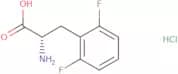
H-2,6-Difluoro-Phe-OH·HCl
CAS :Please enquire for more information about H-2,6-Difluoro-Phe-OH·HCl including the price, delivery time and more detailed product information at the technical inquiry form on this pageFormule :C9H9F2NO2·HClDegré de pureté :Min. 95%Masse moléculaire :237.63 g/molNocistatin (bovine) trifluoroacetate salt
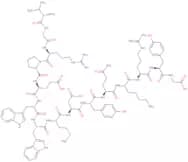
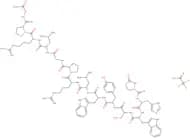
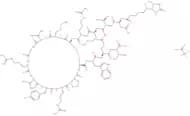
CAS :Please enquire for more information about Nocistatin (bovine) trifluoroacetate salt including the price, delivery time and more detailed product information at the technical inquiry form on this pageFormule :C82H135N21O32Degré de pureté :Min. 95%Masse moléculaire :1,927.07 g/molLIP1 (human) trifluoroacetate salt
Please enquire for more information about LIP1 (human) trifluoroacetate salt including the price, delivery time and more detailed product information at the technical inquiry form on this pageFormule :C133H229N45O37Degré de pureté :Min. 95%Masse moléculaire :3,050.52 g/molH-Lys-Thr-OH hydrochloride salt
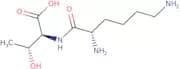
CAS :H-Lys-Thr-OH hydrochloride salt is a synthetic amino acid that has been used in the synthesis of a cyclic peptide. The synthesis was achieved by metathesis reactions, which involved the reaction of an acid chloride with a chiral amine to form an ester. H-Lys-Thr-OH hydrochloride salt has been shown to have high binding constants to its targets and can be used as a selective reagent for the synthesis of virus proteins. It is also able to bind to carboxylate groups, which are common in wild type viruses and gene products. This reagent also has cleavage products, which can be used for efficient method for synthesizing cyclic peptides.
Formule :C10H21N3O4Degré de pureté :Min. 95%Masse moléculaire :247.29 g/mol(D-Trp6)-LHR
Please enquire for more information about (D-Trp6)-LHR including the price, delivery time and more detailed product information at the technical inquiry form on this pageFormule :C83H115N25O17Degré de pureté :Min. 95%Masse moléculaire :1,734.96 g/molMethyl 2-amino-6-bromobenzoate
CAS :Please enquire for more information about Methyl 2-amino-6-bromobenzoate including the price, delivery time and more detailed product information at the technical inquiry form on this page
Formule :C8H8BrNO2Degré de pureté :Min. 95%Couleur et forme :Clear LiquidMasse moléculaire :230.06 g/molCopeptin (rat) trifluoroacetate salt
CAS :Copeptin (rat) trifluoroacetate salt is a peptide that belongs to the group of protein inhibitors. It can inhibit the activity of the acetylcholine receptor, which leads to an increase in muscle tone and rigidity. Copeptin is also used as a research tool for studying protein interactions, antibody-antigen reactions, cell biology, ligand-receptor binding, pharmacology and life sciences. Copeptin has been shown to inhibit ion channels such as nicotinic receptors and potassium channels. The CAS number for copeptin (rat) trifluoroacetate salt is 86280-64-0.Formule :C183H307N57O61Degré de pureté :Min. 95%Masse moléculaire :4,281.74 g/molBiotinyl-LL-37 amide trifluoroacetate salt
CAS :Please enquire for more information about Biotinyl-LL-37 amide trifluoroacetate salt including the price, delivery time and more detailed product information at the technical inquiry form on this pageFormule :C215H355N63O54SDegré de pureté :Min. 95%Masse moléculaire :4,718.58 g/molCART (55-76) (rat) trifluoroacetate salt
CAS :Please enquire for more information about CART (55-76) (rat) trifluoroacetate salt including the price, delivery time and more detailed product information at the technical inquiry form on this pageFormule :C107H166N26O33S3Degré de pureté :Min. 95%Masse moléculaire :2,440.82 g/molMca-Gly-Ala-Lys-Arg-His-Arg-Lys-Val-NH2 trifluoroacetate salt
Please enquire for more information about Mca-Gly-Ala-Lys-Arg-His-Arg-Lys-Val-NH2 trifluoroacetate salt including the price, delivery time and more detailed product information at the technical inquiry form on this pageFormule :C52H83N19O12Degré de pureté :Min. 95%Masse moléculaire :1,166.34 g/molBiotinyl-MCH (salmon) trifluoroacetate salt
CAS :Please enquire for more information about Biotinyl-MCH (salmon) trifluoroacetate salt including the price, delivery time and more detailed product information at the technical inquiry form on this pageFormule :C99H153N29O26S5Degré de pureté :Min. 95%Masse moléculaire :2,325.78 g/molCinnamoyl chloride
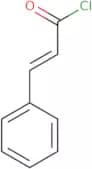
CAS :Cinnamoyl chloride is an organic compound that can be synthesized in an asymmetric fashion. It is a metabolite of cinnamoyl-CoA and has been shown to have photochemical properties. Cinnamoyl chloride has also been shown to inhibit the growth of cervical cancer cells. This compound also has hydroxyl groups, which may act as an amide or receptor activator. Cinnamoyl chloride may be used for the treatment of infectious diseases such as chlamydia and mycoplasma.Formule :C9H7ClODegré de pureté :Min. 95%Couleur et forme :Slightly Yellow PowderMasse moléculaire :166.6 g/mol(Met186)-Melanocyte Protein PMEL 17 (185-193) (human, bovine, mouse) trifluoroacetate salt
CAS :Please enquire for more information about (Met186)-Melanocyte Protein PMEL 17 (185-193) (human, bovine, mouse) trifluoroacetate salt including the price, delivery time and more detailed product information at the technical inquiry form on this pageFormule :C47H74N10O14SDegré de pureté :Min. 95%Masse moléculaire :1,035.22 g/mol5-Bromothieno[2,3-b]pyridine
CAS :Please enquire for more information about 5-Bromothieno[2,3-b]pyridine including the price, delivery time and more detailed product information at the technical inquiry form on this page
Formule :C7H4BrNSDegré de pureté :Min. 95%Masse moléculaire :214.08 g/molBAM-22P (8-22) trifluoroacetate salt
CAS :BAM-22P (8-22) trifluoroacetate salt is a compound that has been shown to be an effective drug for the treatment of pain. It has been shown to have an effect on bone cancer, which can be activated by serotonin. This compound may be beneficial in treating nerve injury and fibrosarcoma cells. BAM-22P (8-22) trifluoroacetate salt is an allosteric modulator of the serotonin receptor and may be used as a treatment for pain in wild-type mice. The molecule is also a serotonin reuptake inhibitor, which prevents the reuptake of serotonin into the presynaptic neuron. This leads to increased levels of serotonin in the synapse and increased pain relief.Formule :C91H127N25O23SDegré de pureté :Min. 95%Masse moléculaire :1,971.2 g/molMalonyl chloride
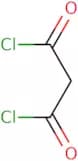
CAS :Malonyl chloride is a trifluoroacetic acid derivative that is used as an intermediate in organic synthesis. It has been shown to be a ligand for chelate metal complexes and to react with amines to form amides. It also reacts with alcohols to form esters, and with carboxylic acids to form anhydrides or esters. Malonyl chloride is one of the most commonly used reagents in chemical synthesis due to its functional groups and its low cost. In addition, malonyl chloride can act as a chemoattractant for neutrophils and macrophages by activating the G protein-coupled receptor activity of these cells.Formule :C3H2Cl2O2Degré de pureté :Min. 95%Masse moléculaire :140.95 g/mol5-Chloro-1H-indazole
CAS :5-Chloro-1H-indazole is a molecule that is structurally related to benzodiazepinones and has been shown to have serotoninergic activity. It was one of the first compounds in the benzodiazepinone class to be synthesized, and it was found to have potent cerebral effects in rats with frequencies between 2 and 6 GHz. 5-Chloro-1H-indazole has been synthesized by reacting 2,6-dichlorobenzoic acid with aniline in tetrahydrofuran (THF) solution, followed by reaction with chlorine gas. The synthesis was analysed using proton NMR spectroscopy and anions.Formule :C7H5ClN2Degré de pureté :Min. 95%Masse moléculaire :152.58 g/mol(Pro3)-Dynorphin A (1-11) amide trifluoroacetate salt
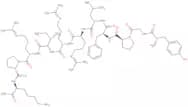
CAS :Please enquire for more information about (Pro3)-Dynorphin A (1-11) amide trifluoroacetate salt including the price, delivery time and more detailed product information at the technical inquiry form on this pageFormule :C66H108N22O12Degré de pureté :Min. 95%Masse moléculaire :1,401.7 g/molMca-Lys-Pro-Leu-Gly-Leu-Dap (Dnp)-Ala-Arg-NH2 trifluoroacetate salt
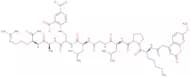
CAS :Please enquire for more information about Mca-Lys-Pro-Leu-Gly-Leu-Dap (Dnp)-Ala-Arg-NH2 trifluoroacetate salt including the price, delivery time and more detailed product information at the technical inquiry form on this pageFormule :C55H80N16O16Degré de pureté :Min. 95%Masse moléculaire :1,221.32 g/mol7-Fluoro-2-methylquinoline
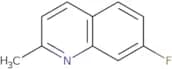
CAS :7-Fluoro-2-methylquinoline is a multistep synthetic compound that belongs to the family of quinoxalines. It has been shown to have potent antibacterial activity against a wide range of bacteria, including methicillin-resistant Staphylococcus aureus (MRSA) and Mycobacterium tuberculosis. 7-Fluoro-2-methylquinoline was developed as an analog of the natural product quinoxaline. The key step in its synthesis is the reaction between an aldehyde and hydroxyalkylating reagent in the presence of iron catalyst. This process results in the formation of functional groups such as hydroxyls, alkoxy, or halogens.Formule :C10H8FNDegré de pureté :Min. 95%Couleur et forme :White PowderMasse moléculaire :161.18 g/molalpha-Chloro-2-nitrobenzaldoxime
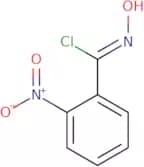
CAS :The heterocycle alpha-chloro-2-nitrobenzaldoxime is a functional group that can be oriented in two different ways. The diversity of the product arises from the fact that it is possible to create new functional groups by substitution on the benzene ring and on the nitrogen. Heterocyclization of alpha-chloro-2-nitrobenzaldoxime can be achieved by using other heterocycles such as isoxazoles, which are readily available in large quantities, as building blocks. This reaction can be catalyzed by reductive means with sodium borohydride and methanol.Formule :C7H5ClN2O3Degré de pureté :Min. 95%Masse moléculaire :200.58 g/mol3,6-Dichloro trimellitic anhydride
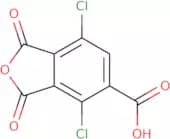
CAS :3,6-Dichloro trimellitic anhydride is a reactive compound that is used in the synthesis of fluorescent probes. It is also used as a reagent to introduce chlorine substituents onto organic molecules. Fluorescence measurements can be used to determine the purity of 3,6-dichloro trimellitic anhydride. This compound reacts with nucleic acids, causing them to fluoresce and making them detectable by spectroscopy. 3,6-Dichloro trimellitic anhydride has been used in research involving the study of nucleic acids and their role in DNA replication and repair.Formule :C9H2Cl2O5Degré de pureté :Min. 95%Masse moléculaire :261.01 g/mol6-(Bromomethyl)-1,1,4,4-tetramethyl-1,2,3,4-tetrahydronaphthalene
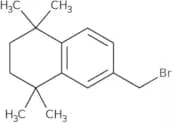
CAS :Please enquire for more information about 6-(Bromomethyl)-1,1,4,4-tetramethyl-1,2,3,4-tetrahydronaphthalene including the price, delivery time and more detailed product information at the technical inquiry form on this pageFormule :C15H21BrDegré de pureté :Min. 80 Area-%Couleur et forme :Clear LiquidMasse moléculaire :281.23 g/mol12-Fluorododecan-1-ol
CAS :12-Fluorododecan-1-ol is a volatile chemical compound that is found in the exoskeleton of termites. It has been shown to be a major component of the termiticide, FluoroCitrate. 12-fluorododecan-1-ol can be used to control the growth of insect populations by interfering with their ability to synthesize fatty acids and alcohols. It also has an effect on protein synthesis and inhibits the activity of citrate synthase, which is an enzyme involved in glycolate metabolism. This compound is also toxic to some species of insects such as Rhinotermitidae. 12-fluorododecan-1-ol can be used as a marker for Reticulitermes flavipes (a type of wood eating cockroach) and it can be used to distinguish between different species or strains of termites.Formule :C12H25FODegré de pureté :Min. 95%Couleur et forme :Clear LiquidMasse moléculaire :204.32 g/molChloromethyl isopropyl carbonate
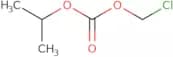
CAS :Chloromethyl isopropyl carbonate (CIC) is a prodrug that is converted to disoproxil in the body. It has significant cytotoxicity and antiviral activity against HIV and other viruses, but has not been used clinically due to its chemical instability. CIC can be administered orally as a prodrug, with the active form of CIC being tenofovir disoproxil. Tenofovir disoproxil is metabolized by proximal tubules and has shown efficacy for treating hepatitis B and C. Tenofovir has also been shown to decrease the incidence of renal disease in HIV patients.
Formule :C5H9ClO3Degré de pureté :Min. 95%Couleur et forme :Colorless PowderMasse moléculaire :152.58 g/mol5-Fluorohistidine
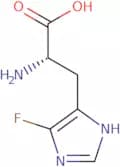
CAS :5-Fluorohistidine is an organic compound with the formula CHFNO. It is a fluorinated derivative of histidine, and a precursor to histamine. 5-Fluorohistidine has been shown to be a potent thyrotropin-releasing hormone (TRH) analog, and is used in the synthesis of histamine. This compound has also been used as a tool for investigating the mechanism of TRH action by studying its stereoselective binding to protrusions from rat brain capillary endothelial cells. 5-Fluorohistidine has also been used as a microbial probe for detecting microbial protrusions from bacterial cells.Formule :C6H8FN3O2Degré de pureté :Min. 95%Masse moléculaire :173.15 g/mol2-(2-Bromoethoxy)tetrahydro-2H-pyran
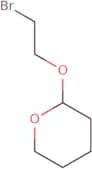
CAS :2-(2-Bromoethoxy)tetrahydro-2H-pyran is a synthetic molecule that has been shown to act as an estrogen receptor modulator, which has the potential to be used for the treatment of hormone-sensitive diseases such as breast cancer. This compound is chemically very similar to other compounds that have been shown to be effective in treating breast cancer. 2-(2-Bromoethoxy)tetrahydro-2H-pyran has a cavity and 6 hydroxyl groups that can form hydrogen bonds with water molecules, leading to its gelling properties. In addition, this compound is thermoreversible and can reversibly gel when heated or cooled. The gelation property of 2-(2-Bromoethoxy)tetrahydro-2H-pyran makes it a promising candidate for use in vaginal tablets, which could potentially lead to treatments for vaginal dryness and atrophy.Formule :C7H13BrO2Degré de pureté :Min. 95%Couleur et forme :Clear LiquidMasse moléculaire :209.08 g/mol2-Bromopropionic acid benzyl ester
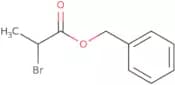
CAS :2-Bromopropionic acid benzyl ester is a synthetic compound with a molecular weight of 220.24 g/mol. It is soluble in organic solvents and has a hydroxyl group at its alpha position. 2-Bromopropionic acid benzyl ester is used in the synthesis of beta-cyclodextrin, which is an important biomaterial for drug delivery as well as other applications. 2-Bromopropionic acid benzyl ester also has antioxidant properties and can be used to treat leukemia cells by inhibiting the production of reactive oxygen species (ROS).
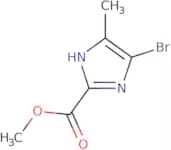
Formule :C10H11BrO2Degré de pureté :Min. 95%Masse moléculaire :243.1 g/molMethyl 4- bromo- 5- methyl- 1H- imidazole- 2- carboxylate
CAS :Please enquire for more information about Methyl 4- bromo- 5- methyl- 1H- imidazole- 2- carboxylate including the price, delivery time and more detailed product information at the technical inquiry form on this pageDegré de pureté :Min. 95%4-tert-Butyl-2,6-dimethylphenylsulfur trifluoride
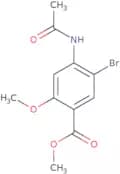
CAS :4-tert-Butyl-2,6-dimethylphenylsulfur Trifluoride is a chemical compound that is used as an intermediate in the synthesis of pharmaceuticals. It has been shown to be effective against 5-HT2C receptors and is used in the treatment of obesity. The mechanism of action for 4-tert-Butyl-2,6-dimethylphenylsulfur Trifluoride is not yet known but it may involve cleavage of amide bonds or stereoisomerism. 4-tert-Butyl-2,6-dimethylphenylsulfur Trifluoride has been synthesized by reacting hydrogen fluoride with sulfur trifluoride in the presence of a base.Formule :C12H17F3SDegré de pureté :90%MinCouleur et forme :PowderMasse moléculaire :250.32 g/mol4-Acetylamino-5-bromo-2-methoxy-benzoic acid methylester
CAS :Please enquire for more information about 4-Acetylamino-5-bromo-2-methoxy-benzoic acid methylester including the price, delivery time and more detailed product information at the technical inquiry form on this page
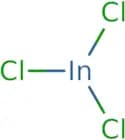
Formule :C11H12BrNO4Degré de pureté :Min. 95%Couleur et forme :PowderMasse moléculaire :302.12 g/molIndium (III) chloride
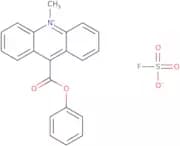
CAS :Indium (III) chloride is a reactive metal with a high oxidation state that has been shown to have significant cytotoxic effects in vitro. It is also genotoxic, which may be due to the generation of hydroxyl radicals and other reactive oxygen species. Indium (III) chloride has been used for the treatment of various infectious diseases, including HIV, Epstein-Barr virus, herpes simplex virus type 1, and influenza A virus. The toxicity of this metal is dependent on the concentration and duration of exposure. Indium (III) chloride is metabolized by plasma mass spectrometry as a substrate molecule for cytochrome P450 enzymes. This reaction results in the formation of an active metabolite that can bind to DNA and affect mitochondrial membrane potential. Indium (III) chloride has also been used as a contrast agent in fluorescein angiography or particle imaging techniques to visualize the presence of biological materials such as tissue necrosis or inflammation.Formule :Cl3InDegré de pureté :Min. 95%Couleur et forme :Clear LiquidMasse moléculaire :221.18 g/mol10-Methyl-9-(phenoxycarbonyl)acridinium fluorosulfonate
CAS :Please enquire for more information about 10-Methyl-9-(phenoxycarbonyl)acridinium fluorosulfonate including the price, delivery time and more detailed product information at the technical inquiry form on this page
Formule :C21H16FNO5SDegré de pureté :Min. 95%Masse moléculaire :413.42 g/mol2,6-Difluoro-4-methoxyphenol
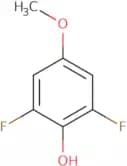
CAS :Please enquire for more information about 2,6-Difluoro-4-methoxyphenol including the price, delivery time and more detailed product information at the technical inquiry form on this page
Formule :C7H6F2O2Degré de pureté :Min. 95%Couleur et forme :PowderMasse moléculaire :160.12 g/mol2,3-Dichloropropionitrile
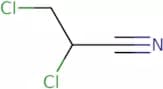
CAS :2,3-Dichloropropionitrile is a synthetic chemical that is used for the chlorination of calcium carbonate. It is also used in the production of ester hydrochloride and acrylonitrile. The reaction vessel contains calcium carbonate and malonic acid, which are heated with hydrochloric acid. 2,3-Dichloropropionitrile is added to the reaction products to produce ester hydrochloride and acrylonitrile. The product can be isolated by adding hydrogen chloride to the reaction mixture.Formule :C3H3Cl2NDegré de pureté :Min. 95%Masse moléculaire :123.97 g/molLHRH (1-5) (free acid) trifluoroacetate salt
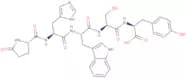
CAS :LHRH (1-5) (free acid) trifluoroacetate salt is a synthetic hormone that is used in the treatment of prostate cancer. It inhibits the release of luteinizing hormone and follicle-stimulating hormone from the anterior pituitary gland, which suppresses testosterone production by the testes. LHRH (1-5) (free acid) trifluoroacetate salt is synthesized industrially using a liquid phase synthesis. The product may be recycled by returning it to the manufacturing process or using it as an additive for plastics or other industrial products. LHRH (1-5) (free acid) trifluoroacetate salt was shown to be active against tumor cells in culture and inhibited cell growth in culture. This drug has been shown to inhibit the production of nitric oxide, which may contribute to its anti-tumor activity. LHRH (1-5) (free acid)Formule :C34H38N8O9Degré de pureté :Min. 95%Couleur et forme :PowderMasse moléculaire :702.71 g/molN-(3-Aminopropyl)-2,2,3,3,4,4,5,5,6,6,7,7,8,8,8-pentadecafluorooctanamide
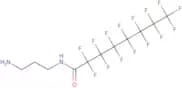
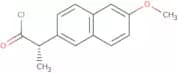
CAS :Produit contrôléPlease enquire for more information about N-(3-Aminopropyl)-2,2,3,3,4,4,5,5,6,6,7,7,8,8,8-pentadecafluorooctanamide including the price, delivery time and more detailed product information at the technical inquiry form on this pageFormule :C11H9F15N2ODegré de pureté :Min. 95%Masse moléculaire :470.18 g/mol(S)-(+)-Naproxen chloride
CAS :COX1/2 inhibitor; nonsteroidal anti-inflammatory drug
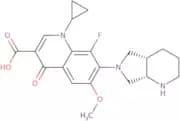
Formule :C14H14Cl2O3Degré de pureté :Min. 95%Masse moléculaire :301.16 g/mol8-Fluoro-6-methoxy moxifloxacin
CAS :Please enquire for more information about 8-Fluoro-6-methoxy moxifloxacin including the price, delivery time and more detailed product information at the technical inquiry form on this pageFormule :C21H24FN3O4Degré de pureté :Min. 95%Masse moléculaire :401.43 g/mol3'-O-Benzyl-2'-Deoxy-5-Trifluoromethyluridine
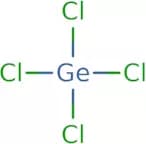
CAS :3'-O-Benzyl-2'-Deoxy-5-Trifluoromethyluridine (BDBMU) is a pyrimidine derivative that can be used as an antiviral drug. It inhibits the synthesis of DNA and RNA by inhibiting viral polymerase. BDBMU is a prodrug of uracil, which is converted to the active compound in tissues. The benzoylation reaction produces a fluorine atom at C5, which increases its potency. This drug has been shown to have minimal toxicity in tumor cells and has been used for the treatment of leukemia and other cancers.Formule :C17H17F3N2O5Degré de pureté :Min. 95%Masse moléculaire :386.32 g/molGermaniumtetrachloride
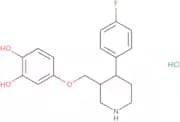
CAS :Germaniumtetrachloride (GeCl4) is a thermal expansion agent that is used in the production of boron nitride and zirconium oxide. It is also used as a catalyst for hydrochloric acid and hydroxyl group reactions. GeCl4 has carcinogenic potential, but this has not been confirmed in animal studies. GeCl4 is an effective solid catalyst for the reaction of hydrogen chloride with ethylene oxide to form polyethylene glycols. The mechanism of this reaction involves a substitution reaction between the chlorine ion and the hydroxyl group on the catalyst surface, forming chlorohydrocarbonate ions, which react with ethylene oxide to form polymer chains. This process can be carried out at room temperature or below, without using any solvents or catalysis promoters such as mercury or sulfur dioxide.Formule :Cl4GeDegré de pureté :Min. 95%Masse moléculaire :214.44 g/molDesmethylene paroxetine hydrochloride salt
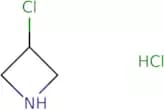
CAS :Please enquire for more information about Desmethylene paroxetine hydrochloride salt including the price, delivery time and more detailed product information at the technical inquiry form on this pageFormule :C18H21ClFNO3Degré de pureté :Min. 95%Masse moléculaire :353.82 g/mol3-Chloroazetidine hydrochloride
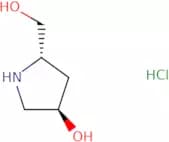
CAS :Please enquire for more information about 3-Chloroazetidine hydrochloride including the price, delivery time and more detailed product information at the technical inquiry form on this pageFormule :C3H6ClN•HClDegré de pureté :Min. 95%Masse moléculaire :128 g/mol(3R,5S)-5-(Hydroxymethyl)pyrrolidin-3-ol hydrochloride
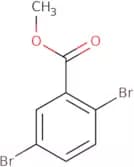
CAS :Please enquire for more information about (3R,5S)-5-(Hydroxymethyl)pyrrolidin-3-ol hydrochloride including the price, delivery time and more detailed product information at the technical inquiry form on this pageDegré de pureté :Min. 95%Methyl 2,5-dibromobenzoate
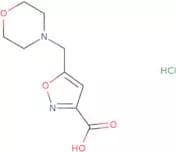
CAS :Methyl 2,5-dibromobenzoate is a cross-coupling reagent that is used to stabilize proteins. It is a hydrophobic compound that binds to the surface of proteins and prevents denaturation. Methyl 2,5-dibromobenzoate has been shown to be an effective binder for protein stabilization in a model system, where it was found to increase the reaction rate of Suzuki coupling reactions. This reagent can be used as a substitute for fluoroaromatic solvents in cross-coupling reactions.Formule :C8H6Br2O2Degré de pureté :Min. 95%Couleur et forme :Off-White PowderMasse moléculaire :293.94 g/mol5-(Morpholin-4-ylmethyl)isoxazole-3-carboxylic acid hydrochloride
CAS :Please enquire for more information about 5-(Morpholin-4-ylmethyl)isoxazole-3-carboxylic acid hydrochloride including the price, delivery time and more detailed product information at the technical inquiry form on this pageFormule :C9H12N2O4•HClDegré de pureté :Min. 95%Masse moléculaire :248.66 g/molDi-tert-butyldichlorosilane
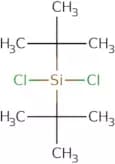
CAS :Di-tert-butyldichlorosilane is a silicon compound that has been used to silylate amines and primary alcohols. It is a sterically hindered molecule with two chloro groups at the same position on one of the silicon atoms, which prevents or limits steric interactions with other molecules. Covid-19 Pandemic is the name given to a new strain of influenza virus that was discovered in 2009. The new strain contains some genetic material from bird flu, which makes it resistant to oseltamivir and zanamivir, drugs commonly used to fight against influenza infection.
Formule :C8H18Cl2SiDegré de pureté :Min. 95%Couleur et forme :Clear LiquidMasse moléculaire :213.22 g/molAcetylcholine perchlorate
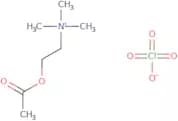
CAS :Acetylcholine perchlorate is a pharmacological agent that is used to induce acetylcholine release by the brain. It can be used to study cholinergic mechanisms in the brain and bowel disease. Acetylcholine perchlorate has been shown to have physiological effects, such as increasing heart rate and blood pressure, which may be due to its ability to activate nicotinic acetylcholine receptors. Acetylcholine perchlorate has also been shown to cause chemiluminescence reactions that are similar to those seen in biological studies of acetylcholine receptors.Formule :C7H16ClNO6Degré de pureté :Min. 95%Couleur et forme :PowderMasse moléculaire :245.66 g/molH-Glu-Gly-Arg-chloromethylketone trifluoroacetate salt
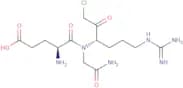
CAS :H-Glu-Gly-Arg-chloromethylketone trifluoroacetate salt is an anticoagulant drug that prevents the formation of blood clots by inhibiting the enzyme thrombin. This drug is effective in enhancing blood flow and oxygen supply to the heart and other organs. H-Glu-Gly-Arg-chloromethylketone trifluoroacetate salt has been shown to have a positive effect on patients with congestive heart failure. It has also been used as an adjuvant therapy in bypassing procedures, where clotting occurs at the site of an artificial conduit placed in the body to allow blood flow between two points. In vitro studies have demonstrated that this drug inhibits protease activity, which may be due to its ability to inhibit fibrinogen and serine protease activity.Formule :C14H25ClN6O5Degré de pureté :Min. 95%Masse moléculaire :392.84 g/molPhenyl-magnesium bromide solution - 1.0 M in THF
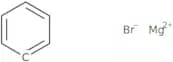
CAS :Phenyl-magnesium bromide solution is a chemical compound that can be used as a pesticide. It has been shown to have carcinoid syndrome-inducing properties in animal studies. Phenyl-magnesium bromide solution has also been found to have biological properties that are beneficial for bowel disease, organometallic reactivity, and congestive heart failure. This chemical compound reacts with ester hydrochloride in the presence of an organic base to form a reactive intermediate that undergoes transfer reactions with other organic compounds. Phenyl-magnesium bromide solution is reactive and can cause metabolic disorders such as palladium-catalyzed coupling.
Formule :C6H5BrMgDegré de pureté :Min. 95%Masse moléculaire :181.31 g/mol





![5-Bromothieno[2,3-b]pyridine](/_next/image/?url=https%3A%2Fstatic.cymitquimica.com%2Fproducts%2F3D%2Fthumb-webp%2FFB111196.webp&w=3840&q=75)