Halogénures organiques
Dans cette catégorie, vous trouverez des molécules organiques contenant un ou plusieurs atomes d'halogène dans leur structure. Ces halogénures organiques incluent des composés bromés, iodés, chlorés et des halogénures cycliques. Les halogénures organiques sont largement utilisés en synthèse organique, en pharmaceutique, en agrochimie et en science des matériaux en raison de leur réactivité et de leur capacité à subir une variété de transformations chimiques. Chez CymitQuimica, nous offrons une sélection complète d'halogénures organiques de haute qualité pour soutenir vos applications de recherche et industrielles, garantissant une performance fiable et efficace dans vos projets synthétiques et analytiques.
Sous-catégories appartenant à la catégorie "Halogénures organiques"
20437 produits trouvés pour "Halogénures organiques"
Trier par
Degré de pureté (%)
0
100
|
0
|
50
|
90
|
95
|
100
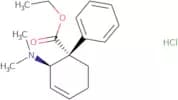
Tilidine hydrochloride
CAS :Produit contrôlé<p>Tilidine hydrochloride is an experimental drug that has been synthesized with the hydrochloric acid, ester hydrochloride, and michaelis–menten kinetics. It has been developed as a potential treatment for acute pain in cancer patients. The control analysis showed that the analytical method was reliable. The pharmacological treatments have shown a carcinogenic potential in animals. Double-blind cross-over studies have shown that tilidine hydrochloride has pharmacokinetic properties and pharmacokinetic study revealed that it is well absorbed after oral administration. Animal studies have shown hepatic impairment with high doses of this drug, so caution should be taken when administering this drug to patients with impaired liver function.</p>Formule :C17H24ClNO2Degré de pureté :Min. 95%Masse moléculaire :309.83 g/mol2,2',5,5'-Tetrachlorobiphenyl
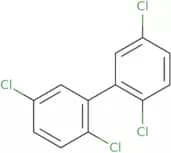
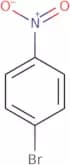
CAS :Produit contrôlé<p>2,2',5,5'-Tetrachlorobiphenyl (PCB) is a biphenyl that has been shown to cause toxicity and oxidative injury in liver cells. PCB interacts with mitochondrial membrane potential by binding to adenine nucleotide and dinucleotide phosphate. This interaction leads to the release of reactive oxygen species, which damages cells by causing oxidative injury. The mechanism of this interaction is not well understood, but it is hypothesized that PCB may bind to the electron transport chain. PCB may also be toxicologically active through its ability to induce cancer gene therapy by inhibiting the activity of a tumor suppressor protein called p53.</p>Formule :C12H6Cl4Degré de pureté :Min. 95%Masse moléculaire :291.99 g/mol1-Bromo-4-nitrobenzene
CAS :<p>1-Bromo-4-nitrobenzene is a bromonitrile that is used to synthesize optical sensors. It is an intermediate in the synthesis of 1,5-dibromo-4-nitrobenzane, which was used as a model system for the reaction mechanism of coupling reactions. The coupling of 1-bromo-4-nitrobenzane with hydrochloric acid and palladium catalysts leads to the formation of a diazonium salt. This reaction can be analyzed by looking at the nitro group and the halides in the molecule. The nitro group reacts with ammonia to form an aminonitrile and water. Halides react with ammonia to form ammonium salts and hydrogen halides. Diazonium salts are then generated by adding nitrous acid (HNO2) or hydroxylamine (NHOH) to these compounds. Finally, transfer reactions are carried out by heating 1</p>Formule :C6H4BrNO2Degré de pureté :Min. 95%Masse moléculaire :202.01 g/mol(4-Fluorophenyl)acetone
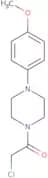
CAS :Produit contrôlé<p>4-Fluorophenylacetone is a phenylacetic acid derivative that inhibits the 5-HT2 receptors. It has been shown to have inhibitory activities against dopamine and serotonin by acting as an agonist at the receptor. 4-Fluorophenylacetone also binds to nucleophilic sites on proteins, which may lead to inhibition of protein synthesis. This product has been used in molecular modeling studies and has been shown to be an amine with a phosphate group that can form a stable bond with other molecules. Brevibacterium sp. strain P7 was used as a model system for this study and it was found that 4-fluorophenylacetone inhibited the growth of this bacterium by binding to the enzyme RNA polymerase, preventing transcription and replication.</p>Formule :C9H9FODegré de pureté :Min. 95%Masse moléculaire :152.17 g/mol1-(Chloroacetyl)-4-(4-methoxyphenyl)piperazine
CAS :Produit contrôlé<p>Please enquire for more information about 1-(Chloroacetyl)-4-(4-methoxyphenyl)piperazine including the price, delivery time and more detailed product information at the technical inquiry form on this page</p>Formule :C13H17ClN2O2Degré de pureté :Min. 95%Masse moléculaire :268.74 g/mol2-Dimethylaminoisopropyl chloride hydrochloride
CAS :<p>2-Dimethylaminoisopropyl chloride hydrochloride is a fluorescent molecule that emits light at wavelengths of 370-430 nm. It has a number of uses, such as detecting the presence or absence of chloride ions in water samples, determining the composition of petroleum products, and measuring the concentration of sodium ions in electrolytes. 2-Dimethylamino-1-propanesulfonic acid chloride hydrochloride can be used to identify the transition metal (Cu) in a sample, because it absorbs light at wavelengths below 450 nm.</p>Formule :C5H12ClN·HClDegré de pureté :Min. 95%Couleur et forme :White to off-white solid.Masse moléculaire :158.07 g/mol1-(4-Fluorophenyl)pyrazole-4-boronic acid
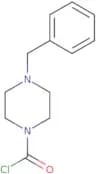
CAS :<p>Please enquire for more information about 1-(4-Fluorophenyl)pyrazole-4-boronic acid including the price, delivery time and more detailed product information at the technical inquiry form on this page</p>Formule :C9H8BFN2O2Degré de pureté :Min. 95%Masse moléculaire :205.98 g/mol4-Benzyl-piperazine-1-carbonylchloride
CAS :Produit contrôlé<p>Please enquire for more information about 4-Benzyl-piperazine-1-carbonylchloride including the price, delivery time and more detailed product information at the technical inquiry form on this page</p>Formule :C12H15ClN2ODegré de pureté :Min. 95%Masse moléculaire :238.71 g/mol7-Chloro-1,2,3,4-tetrahydrobenzo[b]azepin-5-one
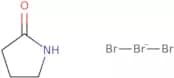
CAS :<p>7-Chloro-1,2,3,4-tetrahydrobenzo[b]azepin-5-one (7CTB) is a synthetic vasopressin analogue that is used as a vasopressin receptor antagonist. It is a competitive inhibitor of the vasopressin V2 receptor and has been shown to be effective in the treatment of diabetes insipidus. 7CTB has also been shown to bind to and inhibit the binding of arginine, an acid binding agent, preventing hydrolysis reactions with other compounds. 7CTB has been shown to be an effective agent for the treatment of congestive heart failure and chronic kidney disease in animal models. The synthesis process involves sulfonylation followed by dieckmann condensation and organic solvent extraction.</p>Formule :C10H10ClNODegré de pureté :Min. 95%Masse moléculaire :195.65 g/molPyrrolidone hydrotribromide
CAS :<p>Pyrrolidone hydrotribromide is a compound that has been used as a solvent in the production of trifluoroacetic acid. It is also used to synthesize β-unsaturated ketones and methyl ketones, which are often found in perfumes. Pyrrolidone hydrotribromide has been shown to inhibit melanocortin-1 receptor (MC1R), which is involved in the development of cancer. This inhibition may be due to its ability to interact with the c1-6 alkyl group on MC1R and disrupt hydrogen bonding between this group and the benzyl group on the melanocortin molecule.</p>Formule :C12H22Br3N3O3Degré de pureté :Min. 95%Masse moléculaire :496.03 g/molGlycyl-H 1152 dihydrochloride
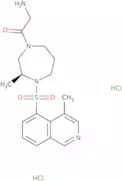
CAS :<p>Please enquire for more information about Glycyl-H 1152 dihydrochloride including the price, delivery time and more detailed product information at the technical inquiry form on this page</p>Formule :C18H24N4O3S•(HCl)2Degré de pureté :Min. 95%Couleur et forme :PowderMasse moléculaire :449.4 g/mol2,6-Dimethoxybenzoyl Chloride
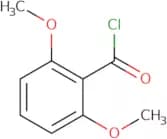
CAS :<p>2,6-Dimethoxybenzoyl chloride is a halide that is used in the synthesis of other compounds. It can be synthesized by the reaction of methoxy groups with demethylation and regiospecific chlorination. This compound has been used to synthesize other substances, such as 2-chloro-2′,6′-diethoxybenzophenone. 2,6-Dimethoxybenzoyl chloride also has enzymatic activity that can be catalyzed by chromatographic science. The chloride ion is the most common anion found in living cells and it is involved in a variety of reactions. Dimethoxybenzamido and tribromide are two types of organic compounds that contain chlorine.</p>Formule :C9H9ClO3Degré de pureté :Min. 95%Masse moléculaire :200.62 g/molPalmitoyl chloride
CAS :<p>Palmitoyl chloride is a chemical compound that has the chemical formula CH3(CH2)16COCl. It is an ester of palmitic acid and chloroform. Palmitoyl chloride has a phase transition temperature of 39°C, giving it high resistance to heat. It can be used as a model system for studying the interactions between hydroxyl groups and chloride ions in water. This compound also has high water permeability and water vapor permeability, making it useful in the treatment of infectious diseases such as malaria. Palmitoyl chloride can be synthesized by reacting sodium carbonate with trifluoroacetic acid, which generates sodium trifluoroacetate. The sodium trifluoroacetate can react with 4-chlorobutyl alcohol to form 4-chlorobutylchloroformate, which reacts with palmitic acid to form palmitoyl chloride.</p>Formule :C16H31ClODegré de pureté :Min. 95%Masse moléculaire :274.87 g/molTetrabutylammonium hexafluorophosphate
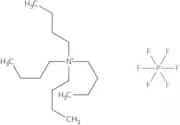
CAS :<p>Tetrabutylammonium hexafluorophosphate is a chemical reagent that is used in organic synthesis. It is a strong Lewis acid that reacts with substrates to form adducts. Tetrabutylammonium hexafluorophosphate reacts with trifluoroacetic acid, ethylene diamine, and hydrogen fluoride to produce the salt tetrabutylammonium hexafluorophosphate dihydrate (TBAPF). The reaction proceeds through an ionic intermediate that involves the abstraction of a proton from the substrate by the tetrabutylammonium cation followed by nucleophilic attack on the anion by water. Tetrabutylammonium hexafluorophosphate dihydrate can be formed via this mechanism as well as through a simple salt metathesis reaction between TBAPF and sodium carbonate. This reagent has been shown to form crystals of good quality for</p>Formule :C16H36F6NPDegré de pureté :Min. 98.0%Couleur et forme :PowderMasse moléculaire :387.43 g/mol3-Bromo-4-oxo-piperidine-1-carboxylic acid ethyl ester
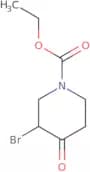
CAS :<p>3-Bromo-4-oxo-piperidine-1-carboxylic acid ethyl ester is a monoclinic crystal of the salt of 3-bromo-4-oxo-piperidine and 1,2-ethanediol. It is used as an intermediate in the synthesis of cisapride, a medication that regulates gastrointestinal motility. 3BOCEP has been shown to hydrolyze in the stomach with a rate constant of 2 x 10 M s. The bromination product is cisapride, which has been shown to regulate gastrointestinal motility by stimulating GI smooth muscle contractions.</p>Formule :C8H12BrNO3Degré de pureté :Min. 95%Masse moléculaire :250.09 g/mol(2S,3S)-5-[2-(Dimethylamino)ethyl]-3-hydroxy-2-(4-methoxyphenyl)-2,3-dihydro-1,5-benzothiazepin-4-one hydrochloride
CAS :<p>(2S,3S)-5-[2-(Dimethylamino)ethyl]-3-hydroxy-2-(4-methoxyphenyl)-2,3-dihydro-1,5-benzothiazepin-4-one hydrochloride is a racemic mixture of two enantiomers. It is a prodrug that is hydrolyzed to its active form, diltiazem. The drug has been shown to be effective in the treatment of hypertension and angina pectoris. (2S,3S)-5-[2-(Dimethylamino)ethyl]-3-hydroxy-2-(4-methoxyphenyl)-2,3-dihydro-1,5-benzothiazepin-4-one hydrochloride has been shown to inhibit the activity of the enzyme phosphodiesterase which breaks down cyclic AMP. This inhibition results in an increase in levels of</p>Formule :C20H24N2O3S·HClDegré de pureté :Min. 95%Masse moléculaire :408.94 g/mol3-Fluoro-4-(tributylstannyl)pyridine
CAS :Produit contrôlé<p>3-Fluoro-4-(tributylstannyl)pyridine is a high affinity, selective, and membrane permeable ligand of the A2B adenosine receptor. It has been shown to be a potent antagonist of A2B receptors in vitro. This compound has also been shown to have a lower affinity for A1, A3, and A4 receptors. 3-Fluoro-4-(tributylstannyl)pyridine has been shown to have high brain uptake in vivo studies. 3-Fluoro-4-(tributylstannyl)pyridine binds to the x-ray structure of the adenosine receptor with high affinity and penetrability. The binding site is proposed to be located on the extracellular side of the receptor near the interface with the second transmembrane domain. In vivo studies have shown that 3-fluoro-4-(tributylstannyl)p</p>Formule :C17H30FNSnDegré de pureté :Min. 95%Masse moléculaire :386.14 g/mol4-Chloro-2-methoxy-5-methylaniline
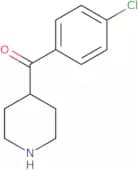
CAS :<p>4-Chloro-2-methoxy-5-methylaniline is a dye molecule that is used in the synthesis of other molecules, such as diketene. It is also used as a solvent, coupling agent, and a dye molecule. This compound can be synthetically prepared by reacting naphthylamine with pyrazolone. The reaction requires catalytic amounts of polyvalent metal salts, such as zinc chloride or iron(III) chloride. The halogenation of 4-chloro-2-methoxy-5-methylaniline to produce 2,4,5-trichlorophenol can be achieved by diazotising the molecule with sodium nitrite and potassium dichromate. 4-Chloro-2-methoxy-5 methylaniline's substituents are methyl groups on the phenyl ring (Cl) and chlorine atoms (C1). Derivatives of this</p>Formule :C8H10ClNODegré de pureté :Min. 95%Masse moléculaire :171.62 g/mol4-(4-Chlorobenzoyl)piperidine
CAS :<p>Please enquire for more information about 4-(4-Chlorobenzoyl)piperidine including the price, delivery time and more detailed product information at the technical inquiry form on this page</p>Degré de pureté :Min. 95%Cyclobutyl bromide
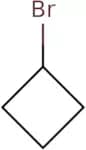
CAS :<p>Cyclobutyl bromide is a cyclopentyl compound that has an hydroxyl group. It is a potent inhibitor of the CB2 receptor, which is primarily expressed on cells of the immune system. Cyclobutyl bromide has been shown to inhibit the uptake of uv light and also has anti-inflammatory properties. Studies have confirmed that this drug inhibits the production of cytokines and chemokines in chronic bronchitis patients, as well as other inflammatory diseases such as rheumatoid arthritis.</p>Formule :C4H7BrDegré de pureté :Min. 95%Couleur et forme :Clear LiquidMasse moléculaire :135 g/mol




![7-Chloro-1,2,3,4-tetrahydrobenzo[b]azepin-5-one](/_next/image/?url=https%3A%2Fstatic.cymitquimica.com%2Fproducts%2F3D%2Fthumb-webp%2FFC51283.webp&w=3840&q=75)

![(2S,3S)-5-[2-(Dimethylamino)ethyl]-3-hydroxy-2-(4-methoxyphenyl)-2,3-dihydro-1,5-benzothiazepin-4-…](/_next/image/?url=https%3A%2Fstatic.cymitquimica.com%2Fproducts%2F3D%2Fthumb-webp%2FFD45531.webp&w=3840&q=75)