Halogénures organiques
Dans cette catégorie, vous trouverez des molécules organiques contenant un ou plusieurs atomes d'halogène dans leur structure. Ces halogénures organiques incluent des composés bromés, iodés, chlorés et des halogénures cycliques. Les halogénures organiques sont largement utilisés en synthèse organique, en pharmaceutique, en agrochimie et en science des matériaux en raison de leur réactivité et de leur capacité à subir une variété de transformations chimiques. Chez CymitQuimica, nous offrons une sélection complète d'halogénures organiques de haute qualité pour soutenir vos applications de recherche et industrielles, garantissant une performance fiable et efficace dans vos projets synthétiques et analytiques.
Sous-catégories appartenant à la catégorie "Halogénures organiques"
20437 produits trouvés pour "Halogénures organiques"
Trier par
Degré de pureté (%)
0
100
|
0
|
50
|
90
|
95
|
100
Bis(trimethylsilyl)bromomethane
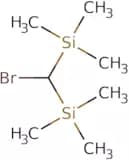
CAS :<p>Bis(trimethylsilyl)bromomethane is an alkali metal compound that is a multinuclear, crystalline solid. It has an x-ray diffraction pattern with peaks at 30, 39, and 44 degrees. The elemental analysis of the compound shows it to be composed of carbon and hydrogen. Bis(trimethylsilyl)bromomethane is a tetrahydrofuran derivative that can be alkylated or silylated with metal compounds. This compound has been shown to have coordination properties when combined with potassium. The molecular structure of bis(trimethylsilyl)bromomethane is composed of two trimethylsiloxy groups linked together by one bromine atom.</p>Formule :C7H19BrSi2Degré de pureté :Min. 95%Couleur et forme :Clear LiquidMasse moléculaire :239.3 g/molCyclopropyl 2-fluorobenzyl ketone
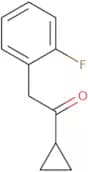
CAS :<p>Cyclopropyl 2-fluorobenzyl ketone is an inhibitor that blocks the production of cyclic nucleotides and thereby inhibits the activity of the enzyme phosphodiesterase. It has been shown to inhibit platelets and inhibit the metabolic rate in rats. The drug also has a cytotoxic effect on rat liver cells, which may be due to its ability to bind hydrogen bonds. Cyclopropyl 2-fluorobenzyl ketone has been found to have a strong inhibitory effect on ticagrelor, statins, and anti-platelet agents. This drug has also shown a potential for adverse drug interactions with other biological products such as erythropoietin, insulin, or heparin.</p>Degré de pureté :Min. 95%Diethyl Chlorothiophosphate
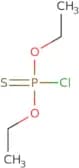
CAS :<p>Diethyl chlorothiophosphate is a chlorinating agent that reacts with sodium carbonate to form diethyl phosphorochloridate. It is used as an analytical reagent and in the production of monoclonal antibodies. It has been shown to effectively inhibit protein synthesis in bacteria by reacting with amino groups, which are essential for protein formation. Diethyl chlorothiophosphate is also able to induce antibody responses in mice. This drug may be toxic if inhaled or ingested and may cause skin irritation.</p>Formule :C4H10ClO2PSDegré de pureté :Min. 95%Masse moléculaire :188.61 g/mol4-Fluorobenzyl chloride
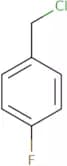
CAS :<p>4-Fluorobenzyl chloride (4FBCl) is a fluorinated benzyl chloride that is used as an intermediate in the synthesis of pharmaceuticals and agrochemicals. 4FBCl inhibits the growth of bacteria by reacting with sodium carbonate to form a molecule with chlorine atoms. 4FBCl has been shown to have cancer-fighting properties and is used as a treatment for malignant tumors. It also has anti-inflammatory properties, which are due to its ability to inhibit the production of growth factors. 4FBCl also has fluorescence properties and can be used as a fluorescent probe in certain reactions involving malonic acid or Friedel-Crafts reactions.</p>Formule :C7H6ClFDegré de pureté :Min. 95%Masse moléculaire :144.57 g/mol2'-Chloro-2-bromoacetophenone
CAS :<p>2'-Chloro-2-bromoacetophenone is a compound that belongs to the class of methyl ketones. It is known to have a high transfer hydrogenation activity and has been used in the synthesis of phenacyl, which is an important biomolecular. It also has a low toxicity and does not irritate skin or mucous membranes. 2'-Chloro-2-bromoacetophenone can be used as an antiarrhythmic agent for respiratory disorders. This compound can be used for formylation reactions, such as those found in microbial metabolism, due to its ability to transfer hydrogen from organic compounds.</p>Formule :C8H6BrClODegré de pureté :Min. 95%Masse moléculaire :233.49 g/mol(Perfluorohexyl)phenyliodonium Trifluoromethanesulfonate
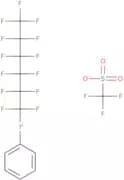
CAS :<p>Please enquire for more information about (Perfluorohexyl)phenyliodonium Trifluoromethanesulfonate including the price, delivery time and more detailed product information at the technical inquiry form on this page</p>Formule :C13H5F16IO3SDegré de pureté :Min. 95%Masse moléculaire :672.12 g/mol4-Bromocrotonic acid - min 98%
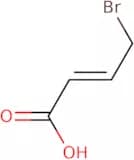
CAS :<p>4-Bromocrotonic acid is a 3-mercaptopropionic acid (3-MPA) derivative. It inhibits the enzyme carnitine acyltransferase, which is involved in the uptake of fatty acids into mitochondria and their subsequent β-oxidation. This leads to an accumulation of fatty acids in the cytosol, which can inhibit insulin-stimulated glucose uptake and protein synthesis. 4-Bromocrotonic acid also inhibits glut1, an amp-activated protein kinase enzyme that plays a key role in cellular metabolism, leading to irreversible inhibition. 4-Bromocrotonic acid is used for analytical purposes as it is a good substrate for mitochondrial enzymes.</p>Formule :C4H5BrO2Degré de pureté :Min. 98 Area-%Couleur et forme :White PowderMasse moléculaire :164.99 g/molL-Glutamic acid γ-tert-butyl ester α-amide hydrochloride
CAS :<p>Please enquire for more information about L-Glutamic acid gamma-tert-butyl ester alpha-amide hydrochloride including the price, delivery time and more detailed product information at the technical inquiry form on this page</p>Formule :C9H18N2O3·HClDegré de pureté :Min. 95%Masse moléculaire :238.71 g/molPiperazine-2-carboxylic acid methyl esterdihydrochloride
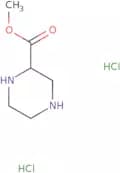
CAS :<p>Piperazine-2-carboxylic acid methyl ester (PPCM) is a chemical compound that is used as an intermediate in the production of ethylenediamine and piperazine-2-carboxylic acid dihydrochloride. It is a white crystalline solid that can be synthesized by reacting ethylene diamine with piperazine-2-carboxylic acid. PPCM has been shown to inhibit the growth of bacteria, yeast, and fungi by inhibiting protein synthesis. This chemical also inhibits the production of proteins essential for respiration and cell wall formation.</p>Formule :C6H14Cl2N2O2Degré de pureté :Min. 95%Masse moléculaire :217.09 g/mol5-Bromo-2,2-difluoro-1,3-benzodioxole
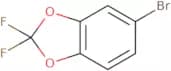
CAS :<p>5-Bromo-2,2-difluoro-1,3-benzodioxole is an industrial chemical that can be used in the production of cuprous cyanide. It is made by reacting methanol with hydrogen fluoride and catalysts. The product yield is high and the reaction process is efficient. 5-Bromo-2,2-difluoro-1,3-benzodioxole can be used to produce 1-4c alkyl cyanides by esterification. The catalyst for this reaction is typically a fluoride salt or a metallic salt such as zinc chloride or ferric chloride. This chemical can also be used to produce cyanide from hydrogen cyanide or hydrocyanic acid. The large scale process flow for this chemical involves use of a catalyst, such as sodium hydroxide, potassium hydroxide, or calcium oxide.</p>Formule :C7H3BrF2O2Degré de pureté :Min. 95%Masse moléculaire :237 g/molO-(2,3,4,5,6-Pentafluorobenzyl)formaldoxime
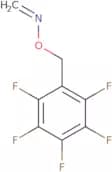
CAS :<p>Please enquire for more information about O-(2,3,4,5,6-Pentafluorobenzyl)formaldoxime including the price, delivery time and more detailed product information at the technical inquiry form on this page</p>Formule :C8H4F5NODegré de pureté :Min. 95%Masse moléculaire :225.12 g/mol1,2,3,5-Tetrafluorobenzene
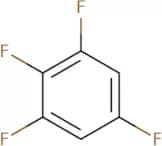
CAS :<p>1,2,3,5-Tetrafluorobenzene is a chemical compound that belongs to the group of aromatic hydrocarbons. It has been shown to have antiinflammatory activity in vitro. 1,2,3,5-Tetrafluorobenzene is a metastable form of hydrogen fluoride and can be used as an intermediate in the synthesis of other fluorine-containing compounds. The molecule has a dipole moment and reacts with hydrogen ions to form hydrogen bonds. It also has high chemical stability and does not react with oxygen or nitrogen at room temperature.</p>Formule :C6H2F4Degré de pureté :Min. 95%Couleur et forme :Clear LiquidMasse moléculaire :150.07 g/molChlorodimethyl(3,3,4,4,5,5,6,6,7,7,8,8,8-Tridecafluorooctyl)-Silane
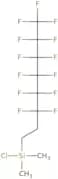
CAS :<p>Chlorodimethyl(3,3,4,4,5,5,6,6,7,7,8,8,8-Tridecafluorooctyl)-Silane is an organic solvent that can be used as a component in the synthesis of synaptic membranes. It has been shown to inhibit spontaneous activity in rat brain slices and exhibits high hydrophobicity. Chlorodimethyl(3,3,4,4,5,5,6,6) - Silane has been used for the patch-clamp technique on human erythrocytes and the immunostaining of proteins. This compound is also useful for the optimization of organic reactions and asymmetric synthesis.</p>Formule :C10H10ClF13SiDegré de pureté :Min. 95%Masse moléculaire :440.7 g/molNonafluoro butanesulfonyl fluoride
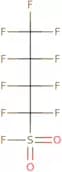
CAS :<p>Nonafluoro butanesulfonyl fluoride is a pyrimidine compound that has been used in toxicological studies. It has been shown to be an effective inhibitor of the enzyme 5-hydroxytryptophan decarboxylase, which converts 5-hydroxytryptophan to serotonin. Nonafluoro butanesulfonyl fluoride has also been shown to inhibit the growth of methyl ketones, hydroxyl group, and hydrogen bond in a reaction solution. The chemical stability of nonafluoro butanesulfonyl fluoride is relatively high and it is resistant to hydrolysis by common reagents. This compound is not mutagenic or carcinogenic in animal studies. The LD50 values for intravenous injection in rats are reported as greater than 2000 mg/kg.</p>Formule :C4F10O2SDegré de pureté :Min. 95%Masse moléculaire :302.09 g/mol[2-(1-Isopropyl-1H-benzimidazol-2-yl)ethyl]amine dihydrochloride
CAS :Produit contrôlé<p>Please enquire for more information about [2-(1-Isopropyl-1H-benzimidazol-2-yl)ethyl]amine dihydrochloride including the price, delivery time and more detailed product information at the technical inquiry form on this page</p>Formule :C12H17N3Degré de pureté :Min. 95%Masse moléculaire :203.28 g/mol4-Bromoisoquinoline
CAS :<p>4-Bromoisoquinoline is an aryl halide that can be used in the cross-coupling reaction with other aryl halides. It has been shown to have anticancer activity and to inhibit the growth of tumour cell lines in vitro. This compound is also efficient for inhibiting leukemia cells. 4-Bromoisoquinoline has been shown to have an inhibitory effect on cancer cells through the inhibition of DNA synthesis and RNA transcription, as well as by inducing apoptosis. The mechanism of action may be due to its ability to bind to aromatic hydrocarbons and halides, which leads to thermodynamic changes and vibrational energy transfer.</p>Formule :C9H6BrNDegré de pureté :Min. 95%Masse moléculaire :208.05 g/molN-[4-Amino-3-(trifluoromethyl)phenyl]-2-methylpropanamide
CAS :<p>Please enquire for more information about N-[4-Amino-3-(trifluoromethyl)phenyl]-2-methylpropanamide including the price, delivery time and more detailed product information at the technical inquiry form on this page</p>Formule :C11H13F3N2ODegré de pureté :Min. 95%Masse moléculaire :246.23 g/molProperidine hydrochloride
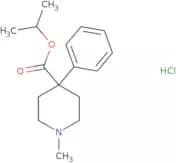
CAS :Produit contrôlé<p>Please enquire for more information about Properidine hydrochloride including the price, delivery time and more detailed product information at the technical inquiry form on this page</p>Formule :C16H24ClNO2Degré de pureté :Min. 95%Masse moléculaire :297.82 g/mol2,3,7,8-Tetrachlorodibenzofuran
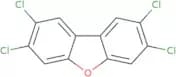
CAS :<p>2,3,7,8-Tetrachlorodibenzofuran (2,3,7,8-TCDF) is a congener of polychlorinated dibenzo-p-dioxin. It is found in the environment as a byproduct from the manufacture of chlorophenols and pentachlorophenol. 2,3,7,8-TCDF is an endocrine disruptor that affects cell nuclei and causes oxidative stress to the liver. There are few studies on 2,3,7,8-TCDF because it is not commercially available for use in research or industry. The only study done on this chemical found that it was potent inducer of glucuronide conjugation enzymes and decreased the activity of rat liver microsomes.</p>Formule :C12H4Cl4ODegré de pureté :Min. 95%Masse moléculaire :305.97 g/molMethixene hydrochloride hydrate
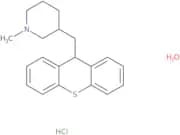
CAS :Produit contrôlé<p>Methixene hydrochloride hydrate is a drug that is used to treat inflammatory bowel disease. It works by inhibiting the activity of enzymes involved in the production of epidermal growth factor, which is a protein that stimulates the growth of cells in the lining of the intestine. Methixene hydrochloride hydrate may also be used for other purposes not listed here. Methixene hydrochloride hydrate can cause liver damage and bone cancer and should not be taken by people with infectious diseases or those who are pregnant. This medication has an effect on dopamine levels and may help with Parkinson's disease. Although methixene hydrochloride hydrate is used to treat many different illnesses, it cannot cure them all.</p>Formule :C20H26ClNOSDegré de pureté :Min. 95%Couleur et forme :PowderMasse moléculaire :363.95 g/mol



![[2-(1-Isopropyl-1H-benzimidazol-2-yl)ethyl]amine dihydrochloride](/_next/image/?url=https%3A%2Fstatic.cymitquimica.com%2Fproducts%2F3D%2Fthumb-webp%2FFI126434.webp&w=3840&q=75)

![N-[4-Amino-3-(trifluoromethyl)phenyl]-2-methylpropanamide](/_next/image/?url=https%3A%2Fstatic.cymitquimica.com%2Fproducts%2F3D%2Fthumb-webp%2FFA17485.webp&w=3840&q=75)