Halogénures organiques
Dans cette catégorie, vous trouverez des molécules organiques contenant un ou plusieurs atomes d'halogène dans leur structure. Ces halogénures organiques incluent des composés bromés, iodés, chlorés et des halogénures cycliques. Les halogénures organiques sont largement utilisés en synthèse organique, en pharmaceutique, en agrochimie et en science des matériaux en raison de leur réactivité et de leur capacité à subir une variété de transformations chimiques. Chez CymitQuimica, nous offrons une sélection complète d'halogénures organiques de haute qualité pour soutenir vos applications de recherche et industrielles, garantissant une performance fiable et efficace dans vos projets synthétiques et analytiques.
Sous-catégories appartenant à la catégorie "Halogénures organiques"
20437 produits trouvés pour "Halogénures organiques"
Trier par
Degré de pureté (%)
0
100
|
0
|
50
|
90
|
95
|
100
4-Amino-3,5-difluorobenzoic Acid
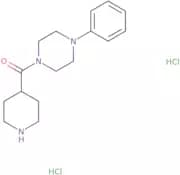
CAS :<p>4-Amino-3,5-difluorobenzoic Acid is a chemical compound that is used to manufacture dyes and pharmaceuticals. It is prepared by the reaction of dimethyl formamide with bromobenzoate and hydrobromic acid. The reaction product is decompressed to remove the toxic hydrogen cyanide gas and then reacted with sodium borohydride in liquid ammonia. This process yields 4-amino-3,5-difluorobenzoic acid which can be purified by recrystallization from water or chloroform.</p>Formule :C7H5F2NO2Degré de pureté :Min. 95%Masse moléculaire :173.12 g/mol(4-Phenylpiperazin-1-yl)piperidin-4-yl-methanone dihydrochloride
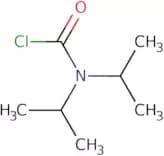
CAS :Produit contrôlé<p>Please enquire for more information about (4-Phenylpiperazin-1-yl)piperidin-4-yl-methanone dihydrochloride including the price, delivery time and more detailed product information at the technical inquiry form on this page</p>Formule :C16H25Cl2N3ODegré de pureté :Min. 95%Masse moléculaire :346.29 g/molN,N-Diisopropylcarbamoyl chloride
CAS :<p>N,N-Diisopropylcarbamoyl chloride is a potent antagonist that has been shown to inhibit the thrombin receptor. This drug may be used in the treatment of retinopathies and other conditions that are caused by matrix effects. N,N-Diisopropylcarbamoyl chloride has also been shown to have antidiabetic properties, which may be due to its ability to stabilize glucose levels. It has also been found to be an effective cancer treatment when combined with other drugs during chemotherapy. The carbonyl group in this molecule reacts with amide groups on proteins in a way that inhibits their activity, leading to cancer cell death. N,N-Diisopropylcarbamoyl chloride can be synthesized using asymmetric synthesis and a polymeric matrix.</p>Formule :C7H14ClNODegré de pureté :Min. 95%Couleur et forme :PowderMasse moléculaire :163.64 g/mol3,5-Dibromopyrazin-2-amine
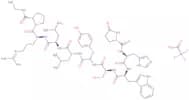
CAS :<p>3,5-Dibromopyrazin-2-amine is a triethyl orthoformate derivative that reacts with formamide to form 3,5-dibromopyrazine. The reaction time is typically less than 10 minutes and the yield is high. The product can be stored in a dry, inert atmosphere for up to 3 months without degradation. The compound has been shown to inhibit cyclic nucleotide phosphodiesterase (PDE) enzymes and cancer cells in vitro.</p>Formule :C4H3Br2N3Degré de pureté :Min. 95%Couleur et forme :White To Yellow To Orange SolidMasse moléculaire :252.89 g/mol(Des-Gly10,D-Leu6,D-Leu7,Pro-NHEt 9)-LHRH trifluoroacetate salt
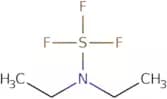
CAS :<p>Please enquire for more information about (Des-Gly10,D-Leu6,D-Leu7,Pro-NHEt 9)-LHRH trifluoroacetate salt including the price, delivery time and more detailed product information at the technical inquiry form on this page</p>Formule :C59H84N16O12Degré de pureté :Min. 95%Masse moléculaire :1,209.4 g/molDiethylaminosulfur trifluoride
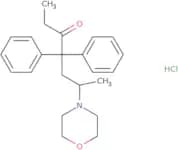
CAS :<p>Diethylaminosulfur trifluoride (DAST) is a reactive chemical that can be used as a methylating agent. It reacts with the hydroxyl group of carotenoids, including β-carotene, to produce x-ray crystal structures with the alcohol methanol solvent. DAST also reacts with 6alkyl and methyl glycosides, such as sucrose, producing a hydroxy derivative. DAST has been shown to have carcinogenic properties in tumor cell lines and is able to induce apoptosis in these cells by damaging their DNA. The use of DAST for cancer treatment can be done through laser ablation or injection into tumors.</p>Formule :C4H10F3NSDegré de pureté :(1H-Nmr) Min. 95%Couleur et forme :Clear LiquidMasse moléculaire :161.19 g/molPhenadoxone hydrochloride
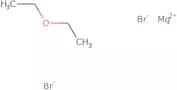
CAS :Produit contrôlé<p>Phenadoxone hydrochloride is a synthetic opioid drug with excitatory effects that is structurally related to meperidine. It has been used as an analgesic and antitussive, but is now rarely prescribed due to the high risk of addiction. Phenadoxone hydrochloride is a haloalkyl drug, which means it contains one or more halogen atoms in its chemical structure. These compounds are known to cause physical dependence and withdrawal symptoms when discontinued after prolonged use. Side effects may include nausea, vomiting, dizziness, headache, blurred vision, constipation, dry mouth and urinary retention. The most efficient method of synthesis involves the reaction of dimethylformamide with phenol and formaldehyde in a ring-opening reaction to form dipipanone. Dipipanone is then converted into phenadoxone hydrochloride by reacting with nitroethane and sodium hydroxide in the presence of hydrogen chloride gas.</p>Formule :C23H30ClNO2Degré de pureté :Min. 95%Masse moléculaire :387.94 g/molMagnesium bromide diethyl etherate
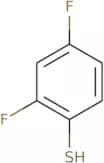
CAS :Produit contrôlé<p>Magnesium bromide diethyl etherate is a magnesium salt of diethyl etherate, which is used in the preparation of caproic acid. It has been shown to be an efficient method for the synthesis of acyl halides through the reaction of aromatic hydrocarbons and chloride. The product has high melting point and is a cyclohexane ring. Magnesium bromide diethyl etherate can also be used for muscle cell proliferation and acrylate encapsulation. This product's reaction products are primary alcohols, which are useful in the production of polyurethane, polyesters, and polyamides.</p>Formule :Br2Mg·C4H10ODegré de pureté :Min. 95%Masse moléculaire :258.23 g/mol2,4-Difluorobenzenethiol
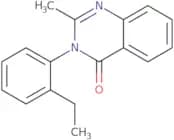
CAS :<p>2,4-Difluorobenzenethiol is a chemical with the molecular formula CHClF2SH. It has a high yield and can be used in the production of medicines and chemicals. Industrially, 2,4-difluorobenzenethiol is used as a raw material for the manufacture of dyes, perfumes and other products. The synthesis of this chemical involves treating 2-fluoroaniline with sulfuric acid. This process produces 2,4-difluorobenzenethiol as a byproduct.</p>Formule :C6H4F2SDegré de pureté :Min. 95%Masse moléculaire :146.16 g/molEtaqualone hydrochloride
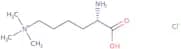
CAS :Produit contrôlé<p>Etaqualone is a water-soluble, white crystalline powder that is soluble in alcohol, acetone, chloroform, ethers, and petroleum ether. It has no odor or taste and does not burn the skin. Etaqualone has been used to treat inflammatory bowel disease and for the treatment of infectious diseases such as malaria. The drug binds to the D2 dopamine receptor and stimulates the release of dopamine in the brain. This action leads to side effects such as drowsiness, dizziness, nausea, vomiting, blurred vision, and convulsions.<br>The name etaqualone is derived from its chemical structure: 2-(2-chlorophenyl)-3-(2-methoxyphenyl)-5-methyloxazolidin-4-one hydrochloride.</p>Formule :C17H16N2ODegré de pureté :Min. 95%Masse moléculaire :264.32 g/molNe-(trimethyl)-L-lysine chloride
CAS :<p>Please enquire for more information about Ne-(trimethyl)-L-lysine chloride including the price, delivery time and more detailed product information at the technical inquiry form on this page</p>Formule :C9H21ClN2O2Degré de pureté :Min. 95%Masse moléculaire :224.73 g/molR-(-)-Apocodeine hydrochloride
CAS :Produit contrôlé<p>Apocodeine hydrochloride is a natural product that is used in the treatment of cancer. It has been shown to have antiproliferative effects on cho-k1 cells, which are human colon carcinoma cells. Apocodeine hydrochloride also inhibits the production of dopamine in rat brain and has been shown to inhibit bromocriptine-induced prolactin release from rat pituitary cells in vitro. Apocodeine hydrochloride has been extensively studied in epidemiological studies and has been found to be effective against cancer, with no adverse side effects.</p>Formule :C18H20ClNO2Degré de pureté :Min. 95%Couleur et forme :PowderMasse moléculaire :317.81 g/mol4-Bromoindazole
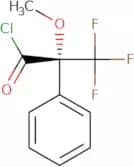
CAS :<p>4-Bromoindazole is an antibacterial agent that binds to the protonated form of the staphylococcal enzyme methicillin-resistant penicillinase (MRP) and prevents the enzyme from participating in the synthesis of cell wall precursors. The molecular modeling studies of 4-bromoindazole have shown that it can bind to pyogenes, a bacterium that causes streptococcal pharyngitis, by hydrogen bonding between its amide group and pyogenes' carboxylic acid group. 4-Bromoindazole also has anticancer activity against cancer cells with v600e mutation. It has been shown that 4-bromoindazole inhibits cancer cell proliferation by binding to the oxacillin site on DNA gyrase and topoisomerase IV, leading to DNA damage and apoptosis.</p>Degré de pureté :Min. 95%S-(+)-α-Methoxy-α-(trifluoromethyl)phenylacetic acid chloride
CAS :<p>S-(+)-alpha-Methoxy-alpha-(trifluoromethyl)phenylacetic acid chloride is an optical, amide, and epoxidation derivatizing agent that is used to chiralify amines. It is a liquid at room temperature with a molecular weight of 123.87 g/mol. This chemical reacts with alcohols to form esters, which can be identified by their different retention times in chromatography. It also reacts with hydroxyl groups to form ethers and esters, as well as hydroxyls on other molecules such as amino acids, peptides, and proteins. S-(+)-alpha-Methoxy-alpha-(trifluoromethyl)phenylacetic acid chloride has been used for the synthesis of bisoprolol from metoprolol and triethylphosphite.</p>Formule :C10H8ClF3O2Degré de pureté :Min. 95%Masse moléculaire :252.62 g/molN-Demethyl methylone hydrochloride
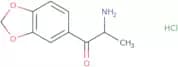
CAS :Produit contrôlé<p>Please enquire for more information about N-Demethyl methylone hydrochloride including the price, delivery time and more detailed product information at the technical inquiry form on this page</p>Formule :C10H12ClNO3Degré de pureté :Min. 95%Masse moléculaire :229.66 g/molBis(2,2,2-trifluoroethyl) ether
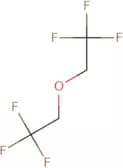
CAS :<p>Bis(2,2,2-trifluoroethyl) ether is a potent inducer of monoamine neurotransmitters. It has been shown to induce the release of gamma-aminobutyric acid (GABA) from cells in culture and to have a physiological effect on GABAergic neurons. Bis(2,2,2-trifluoroethyl) ether binds to the α1 subunit of GABA receptors and increases the rate at which chloride ions enter the cell. This results in an increase in potassium ion levels outside the cell, leading to hyperpolarization and blockade of neural activity. Bis(2,2,2-trifluoroethyl) ether also inhibits locomotor activity.</p>Formule :C4H4F6ODegré de pureté :Min. 95%Masse moléculaire :182.06 g/molPentachlorophenyl N-[(benzyloxy)carbonyl]glycinate
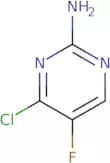
CAS :Produit contrôlé<p>Please enquire for more information about Pentachlorophenyl N-[(benzyloxy)carbonyl]glycinate including the price, delivery time and more detailed product information at the technical inquiry form on this page</p>Formule :C16H10Cl5NO4Degré de pureté :Min. 95%Masse moléculaire :457.52 g/mol4-chloro-5-fluoropyrimidin-2-amine
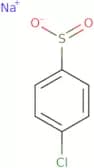
CAS :<p>Please enquire for more information about 4-chloro-5-fluoropyrimidin-2-amine including the price, delivery time and more detailed product information at the technical inquiry form on this page</p>Formule :C4H3ClFN3Degré de pureté :Min. 95%Masse moléculaire :147.54 g/mol4-Chloro-benzene-sulfinic acid sodium salt
CAS :<p>The 4-chloro-benzenesulfinic acid sodium salt is a type of sulfinic acid. It can be used to control experiments involving methides, halides, and human macrophages. Sodium salts of this compound have been shown to inhibit the growth of Candida glabrata and Galleria mellonella in vitro. The 4-chloro-benzenesulfinic acid sodium salt reacts with chloride ion to form a nucleophilic trifluoroacetate anion, which reacts with thiosulfonates to produce type strain. Trifluoroacetic acid is used as a solvent in the reaction.</p>Formule :C6H4ClNaO2SDegré de pureté :Min. 95%Masse moléculaire :198.6 g/mol4-Hydroxy-N-(2-Piperidinylmethyl)-2,5-Bis(2,2,2-Trifluoroethoxy)Benzamide
CAS :<p>Please enquire for more information about 4-Hydroxy-N-(2-Piperidinylmethyl)-2,5-Bis(2,2,2-Trifluoroethoxy)Benzamide including the price, delivery time and more detailed product information at the technical inquiry form on this page</p>Formule :C17H20F6N2O4Degré de pureté :Min. 95%Masse moléculaire :430.34 g/mol





![Pentachlorophenyl N-[(benzyloxy)carbonyl]glycinate](/_next/image/?url=https%3A%2Fstatic.cymitquimica.com%2Fproducts%2F3D%2Fthumb-webp%2FFP123081.webp&w=3840&q=75)