Halogénures organiques
Dans cette catégorie, vous trouverez des molécules organiques contenant un ou plusieurs atomes d'halogène dans leur structure. Ces halogénures organiques incluent des composés bromés, iodés, chlorés et des halogénures cycliques. Les halogénures organiques sont largement utilisés en synthèse organique, en pharmaceutique, en agrochimie et en science des matériaux en raison de leur réactivité et de leur capacité à subir une variété de transformations chimiques. Chez CymitQuimica, nous offrons une sélection complète d'halogénures organiques de haute qualité pour soutenir vos applications de recherche et industrielles, garantissant une performance fiable et efficace dans vos projets synthétiques et analytiques.
Sous-catégories appartenant à la catégorie "Halogénures organiques"
20437 produits trouvés pour "Halogénures organiques"
Trier par
Degré de pureté (%)
0
100
|
0
|
50
|
90
|
95
|
100
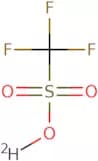
Trifluoromethanesulfonic acid-D
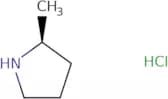
CAS :Produit contrôlé<p>Triflic acid is a strong acid that reacts with nucleophiles such as water, alcohols, and amines. It is used in organic synthesis for desulfurization reactions, for example to convert thiophene to benzothiophene. Triflic acid is a synthetic chemical that is prepared by the reaction of sulfur trioxide with chlorotrifluoroethanesulfonyl fluoride. The protonation of the triflic acid molecule generates a sulfide anion. This anion then reacts with a nucleophile (e.g., chloride ion) to generate a chloride anion and regenerate the triflic acid molecule, which can then react again with another nucleophile. The reaction mechanism is shown below: HSOClF + NH3 → HSOClF + NH2Cl HSOClF + Cl- → HSO-Cl- + Cl The reaction mechanism for this process is shown below: HSOCl</p>Formule :CDF3O3SDegré de pureté :Min. 95%Couleur et forme :Clear LiquidMasse moléculaire :151.08 g/mol(S)-2-Methylpyrrolidine hydrochloride
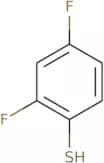
CAS :<p>Please enquire for more information about (S)-2-Methylpyrrolidine hydrochloride including the price, delivery time and more detailed product information at the technical inquiry form on this page</p>Formule :C5H12ClNDegré de pureté :Min. 95%Masse moléculaire :121.61 g/mol2,4-Difluorobenzenethiol
CAS :<p>2,4-Difluorobenzenethiol is a chemical with the molecular formula CHClF2SH. It has a high yield and can be used in the production of medicines and chemicals. Industrially, 2,4-difluorobenzenethiol is used as a raw material for the manufacture of dyes, perfumes and other products. The synthesis of this chemical involves treating 2-fluoroaniline with sulfuric acid. This process produces 2,4-difluorobenzenethiol as a byproduct.</p>Formule :C6H4F2SDegré de pureté :Min. 95%Masse moléculaire :146.16 g/molManganese chloride tetrahydrate
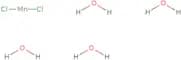
CAS :<p>Manganese chloride tetrahydrate is a salt of manganese and hydrochloric acid. It can be used as a catalyst in the reaction of fatty acids to form esters. Manganese chloride tetrahydrate can be used as a diagnostic agent for liver lesions, by reacting with the liver cells in an acidic solution. The product is a dark blue or greenish-blue powder that dissolves in water, methanol, or other solvents.</p>Formule :MnCl2·4H2ODegré de pureté :Min. 95%Couleur et forme :PowderMasse moléculaire :197.9 g/mol2,3,5,6-Tetrachloro-1,4-benzoquinone
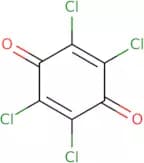
CAS :<p>Fluorescence quencher; oxidizing agent; aromatizing reagent</p>Formule :C6Cl4O2Degré de pureté :Min. 98 Area-%Couleur et forme :Yellow PowderMasse moléculaire :245.87 g/molTrichlorooctadecylsilane
CAS :<p>Trichlorooctadecylsilane is a model system that consists of a monolayer of octadecyltrichlorosilane particles. The dispersive solid-phase extraction technique can be used to extract analytes from the surface of this particle. This technique involves removing the solvent from a sample by passing it through an adsorbent. The hydrophobic effect, which is the phenomenon that a nonpolar substance is dissolved in a nonpolar solvent, will cause analytes to bind to the hydrophobic surface of octadecyltrichlorosilane particles because they are hydrophobic.</p>Degré de pureté :Min. 95%2-(Chloromethyl)-3-(4-fluorophenyl)quinazolin-4(3H)-one
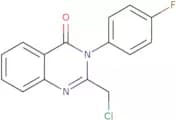
CAS :Produit contrôlé<p>Please enquire for more information about 2-(Chloromethyl)-3-(4-fluorophenyl)quinazolin-4(3H)-one including the price, delivery time and more detailed product information at the technical inquiry form on this page</p>Formule :C15H10ClFN2ODegré de pureté :Min. 95%Masse moléculaire :288.7 g/mol1-[(2-Chlorophenyl)-N-(methylimino)methyl]cyclopentanol hydrochloride
CAS :Produit contrôlé<p>Please enquire for more information about 1-[(2-Chlorophenyl)-N-(methylimino)methyl]cyclopentanol hydrochloride including the price, delivery time and more detailed product information at the technical inquiry form on this page</p>Formule :C13H16ClNO•HClDegré de pureté :Min. 95%Masse moléculaire :274.19 g/mol(5-bromo-2-fluorophenyl)boronic Acid
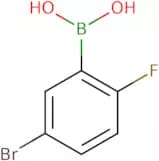
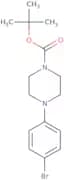
CAS :<p>5-Bromo-2-fluorophenyl)boronic acid is a synthetic chemical that is used in the synthesis of pharmaceuticals and pesticides. This compound is an inhibitor of bace1, which is an enzyme involved in the production of amyloid beta peptide (Aβ) and other proteins implicated in Alzheimer's disease. 5-Bromo-2-fluorophenyl)boronic acid has been shown to be effective at reducing Aβ levels in mice with Alzheimer's disease. It also inhibits pyrethroid, a pesticide that is used on crops to control insects, by binding to the active site of the enzyme. 5-Bromo-2-fluorophenyl)boronic acid has been evaluated for use as a cancer treatment, but these studies have not been completed.</p>Formule :C6H5BBrFO2Degré de pureté :Min. 95%Masse moléculaire :218.82 g/mol4-(4-Bromophenyl)piperazine-1-carboxylic acid tert-butyl ester
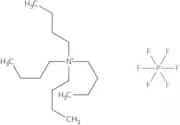
CAS :Produit contrôlé<p>Please enquire for more information about 4-(4-Bromophenyl)piperazine-1-carboxylic acid tert-butyl ester including the price, delivery time and more detailed product information at the technical inquiry form on this page</p>Formule :C15H21BrN2O2Degré de pureté :Min. 95%Masse moléculaire :341.24 g/molTetrabutylammonium hexafluorophosphate
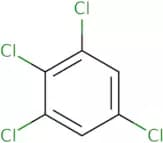
CAS :<p>Tetrabutylammonium hexafluorophosphate is a chemical reagent that is used in organic synthesis. It is a strong Lewis acid that reacts with substrates to form adducts. Tetrabutylammonium hexafluorophosphate reacts with trifluoroacetic acid, ethylene diamine, and hydrogen fluoride to produce the salt tetrabutylammonium hexafluorophosphate dihydrate (TBAPF). The reaction proceeds through an ionic intermediate that involves the abstraction of a proton from the substrate by the tetrabutylammonium cation followed by nucleophilic attack on the anion by water. Tetrabutylammonium hexafluorophosphate dihydrate can be formed via this mechanism as well as through a simple salt metathesis reaction between TBAPF and sodium carbonate. This reagent has been shown to form crystals of good quality for</p>Formule :C16H36F6NPDegré de pureté :Min. 98.0%Couleur et forme :PowderMasse moléculaire :387.43 g/mol1,2,3,5-Tetrachlorobenzene
CAS :<p>1,2,3,5-Tetrachlorobenzene (1,2,3,5-TCB) is a chlorinated aromatic compound that inhibits the growth of bacteria. It has been used as a model system to study the inhibition of aniline-dependent enzymes by 1,2,3,5-TCB. The rate of elimination of 1,2,3,5-TCB from human and rat tissues varies with the type of tissue and the type of fatty acid present in the tissue. In addition to its effects on enzyme activity and bacterial growth rate, 1,2,3,5-TCB can also inhibit mitochondrial electron transport chain function and vitamin B12 absorption.</p>Formule :C6H2Cl4Degré de pureté :Min. 95%Masse moléculaire :215.89 g/mol4-Amino-3,5-difluorobenzoic Acid
CAS :<p>4-Amino-3,5-difluorobenzoic Acid is a chemical compound that is used to manufacture dyes and pharmaceuticals. It is prepared by the reaction of dimethyl formamide with bromobenzoate and hydrobromic acid. The reaction product is decompressed to remove the toxic hydrogen cyanide gas and then reacted with sodium borohydride in liquid ammonia. This process yields 4-amino-3,5-difluorobenzoic acid which can be purified by recrystallization from water or chloroform.</p>Formule :C7H5F2NO2Degré de pureté :Min. 95%Masse moléculaire :173.12 g/mol[2-(5-Fluoro-1-methyl-1H-indol-3-yl)ethyl]amine hydrochloride
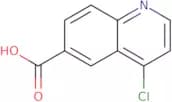
CAS :Produit contrôlé<p>Please enquire for more information about [2-(5-Fluoro-1-methyl-1H-indol-3-yl)ethyl]amine hydrochloride including the price, delivery time and more detailed product information at the technical inquiry form on this page</p>Formule :C11H13FN2·HClDegré de pureté :Min. 95%Masse moléculaire :228.69 g/mol4-Chloroquinoline-6-carboxylicacid
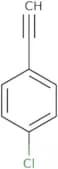
CAS :<p>Please enquire for more information about 4-Chloroquinoline-6-carboxylicacid including the price, delivery time and more detailed product information at the technical inquiry form on this page</p>Formule :C10H6ClNO2Degré de pureté :Min. 95%Masse moléculaire :207.61 g/mol4-Chlorophenylacetylene
CAS :<p>4-Chlorophenylacetylene is a compound that is created by the reaction of chloroform and acetylene. The reaction yield can be increased by using a catalytic amount of silicon, which increases the rate of hydration. Terminal alkynes react with 4-chlorophenylacetylene to form polymers, which are insoluble in most solvents. 4-Chlorophenylacetylene has been shown to have inhibitory activity against the growth of bacteria and fungi when tested in model species such as Escherichia coli and Saccharomyces cerevisiae.</p>Formule :C8H5ClDegré de pureté :Min. 95%Couleur et forme :PowderMasse moléculaire :136.58 g/mol2-Iodo-4-nitroanisole
CAS :<p>2-Iodo-4-nitroanisole is a reagent that catalyzes the labeling of proteins with iodine. The reaction is anomalously slow in the presence of bovine serum albumin and results in an increase in the amount of labeled protein. This reagent can also be used to study the kinetics of reactions involving nitrous oxide. The rate of reaction is dependent on the concentration of hydrogen ions, which is why this reagent is often used in assays that have acidic conditions. 2-Iodo-4-nitroanisole can also be used to label lysine residues on proteins by reacting with nitrous oxide and dinitrogen tetroxide, which react at high rates when they are mixed together.</p>Formule :C7H6INO3Degré de pureté :Min. 95%Masse moléculaire :279.03 g/mol2,2'-Dichlorodiethyl ether
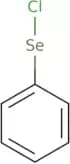
CAS :Produit contrôlé<p>2,2'-Dichlorodiethyl ether (2,2-DDE) is a cationic surfactant that is used in the production of fluorocarbons and other chemicals. It is also used in wastewater treatment as an oxidizing agent. 2,2'-DDE is toxic to humans, with a blood group toxicity profile similar to that of ethylene glycol and diethylene glycol. 2,2'-DDE can be found in the environment due to its use as a component in products and its presence in wastewaters. 2,2'-DDE has been shown to be reactive with hydrogen fluoride and oxidation catalyst, which may cause interactive effects when it is present at high concentrations. This chemical has been shown to induce cell death through histological analysis on cell cultures. Reaction mechanism for this chemical is not known.</p>Formule :C4H8Cl2ODegré de pureté :Min. 95%Couleur et forme :Clear LiquidMasse moléculaire :143.01 g/molPhenylselenenyl chloride
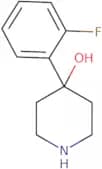
CAS :<p>Phenylselenenyl chloride is an organoselenium compound with the chemical formula CHSeCl. It has been shown to have a low redox potential, which makes it a good candidate for use in organic synthesis. Phenylselenenyl chloride is used as a catalyst in palladium-catalyzed coupling reactions and has been shown to be effective in the synthesis of epoxy hydroxy compounds. The x-ray crystal structures of phenylselenenyl chloride have been determined, revealing that the molecule contains steric interactions between the chloride and hydroxyl groups. This discovery explains why phenylselenenyl chloride is so selective for these two groups and may lead to improved synthetic methods for this molecule.</p>Formule :C6H5ClSeDegré de pureté :Min. 95%Couleur et forme :PowderMasse moléculaire :191.52 g/mol4-(2-Fluorophenyl)-4-piperidinol
CAS :<p>Please enquire for more information about 4-(2-Fluorophenyl)-4-piperidinol including the price, delivery time and more detailed product information at the technical inquiry form on this page</p>Formule :C11H14FNODegré de pureté :Min. 95%Masse moléculaire :195.23 g/mol


![1-[(2-Chlorophenyl)-N-(methylimino)methyl]cyclopentanol hydrochloride](/_next/image/?url=https%3A%2Fstatic.cymitquimica.com%2Fproducts%2F3D%2Fthumb-webp%2FFC146990.webp&w=3840&q=75)

![[2-(5-Fluoro-1-methyl-1H-indol-3-yl)ethyl]amine hydrochloride](/_next/image/?url=https%3A%2Fstatic.cymitquimica.com%2Fproducts%2F3D%2Fthumb-webp%2FFF118334.webp&w=3840&q=75)