Halogénures organiques
Dans cette catégorie, vous trouverez des molécules organiques contenant un ou plusieurs atomes d'halogène dans leur structure. Ces halogénures organiques incluent des composés bromés, iodés, chlorés et des halogénures cycliques. Les halogénures organiques sont largement utilisés en synthèse organique, en pharmaceutique, en agrochimie et en science des matériaux en raison de leur réactivité et de leur capacité à subir une variété de transformations chimiques. Chez CymitQuimica, nous offrons une sélection complète d'halogénures organiques de haute qualité pour soutenir vos applications de recherche et industrielles, garantissant une performance fiable et efficace dans vos projets synthétiques et analytiques.
Sous-catégories appartenant à la catégorie "Halogénures organiques"
20440 produits trouvés pour "Halogénures organiques"
Trier par
Degré de pureté (%)
0
100
|
0
|
50
|
90
|
95
|
100
2-Fluorophenethylamine
CAS :Produit contrôlé2-Fluorophenethylamine is a molecule that can switch between two forms, one hydrophobic and one hydrophilic. When it is in the hydrophobic form, 2-fluorophenethylamine can bind to water molecules to form potential use products. When 2-fluorophenethylamine is in the hydrophilic form, it can desorb from the surface of water. 2-Fluorophenethylamine has been shown to be a neurotransmitter and may have potential use as an anti-depressant or anti-anxiety medication. It has also been suggested that 2-fluorophenethylamine may be used for the treatment of Parkinson's disease, because of its ability to inhibit dopamine degradation. An experiment conducted with spectra found that 2-fluorophenethylamine reacts with hydrogen bonds and other weak interactions to form dimers and monomers. The vibrational spectrum of this molecule shows that there are no strongFormule :C8H10FNDegré de pureté :Min. 95%Masse moléculaire :139.17 g/molN-Acetyl-S-(1,2-dichloroethenyl)-L-cysteine
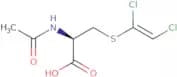
CAS :<p>N-Acetyl-S-(1,2-dichloroethenyl)-L-cysteine is a reactive compound that is formed from the metabolism of acetaminophen. It has been shown to cause oxidative injury in the mitochondria of proximal tubule cells. N-Acetyl-S-(1,2-dichloroethenyl)-L-cysteine disrupts mitochondrial membrane potential and causes ATP depletion. It also causes mitochondrial dysfunction by inhibiting respiratory chain activity and lowering cytosolic calcium levels. N-Acetyl-S-(1,2-dichloroethenyl)-L-cysteine has been shown to be toxic in animals and humans. The main analytical method used to detect this compound is the tetrazolium dye assay.</p>Formule :C7H9Cl2NO3SDegré de pureté :Min. 95%Masse moléculaire :258.12 g/molBis(pyridine)iodonium tetrafluoroborate
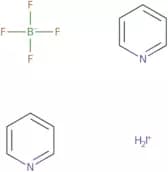
CAS :<p>Bis(pyridine)iodonium tetrafluoroborate is a reagent that can be used to iodinate organic compounds. It is prepared by the reaction of pyridine with iodine and bromine in tetrafluoroboric acid. Bis(pyridine)iodonium tetrafluoroborate is an active compound that can be used for amino acid analysis, optical properties, and functional groups. This compound also can be used for magnetic resonance analysis, palladium-catalyzed coupling, and synthetic reactions. Bis(pyridine)iodonium tetrafluoroborate has been found to have radiation transport properties and a strong reactivity towards acids.</p>Formule :C10H10BF4IN2Degré de pureté :Min. 95%Masse moléculaire :371.91 g/mol[2-(5-Chloro-1-methyl-1H-benzimidazol-2-yl)ethyl]amine dihydrochloride
CAS :Produit contrôléPlease enquire for more information about [2-(5-Chloro-1-methyl-1H-benzimidazol-2-yl)ethyl]amine dihydrochloride including the price, delivery time and more detailed product information at the technical inquiry form on this pageFormule :C10H12ClN3Degré de pureté :Min. 95%Masse moléculaire :209.68 g/molL-Methionine tert-butyl ester hydrochloride
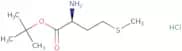
CAS :<p>L-Methionine tert-butyl ester hydrochloride is a peptide that is used for the treatment of lysosomal storage diseases. It is a metabolic precursor for polypeptides and may be useful for the treatment of tissue damage due to elimination. L-Methionine tert-butyl ester hydrochloride has been shown to have a stable half-life in murine studies, and it is eliminated primarily by the kidneys. Radiometabolites with short half-lives are found in blood and urine samples following intravenous administration. The elimination rate of L-Methionine tert-butyl ester hydrochloride can be calculated by measuring the radioactivity in urine over time.</p>Formule :C9H19NO2S•HClDegré de pureté :Min. 95%Couleur et forme :PowderMasse moléculaire :241.78 g/molBis(2,2,2-Trifluoroethyl)amine
CAS :Bis(2,2,2-trifluoroethyl)amine is a colorless liquid that is soluble in water. It has a molecular weight of 122.11 and a boiling point of 217°C. Bis(2,2,2-trifluoroethyl)amine reacts with tetramethylammonium to form a dimer. The reaction is reversible and the bis(2,2,2-trifluoroethyl)amine can be regenerated by the addition of fluoride or an acid such as hydrochloric acid or sulfuric acid. Bis(2,2,2-trifluoroethyl)amine has an anion that can accept a proton from another molecule. This anion is also known as the bisulfite ion which reacts with hydrogen peroxide to form bisulfate and water.Formule :C4H5F6NDegré de pureté :Min. 95%Couleur et forme :PowderMasse moléculaire :181.08 g/molBeclomethasone-21-Aldehyde
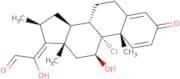
CAS :Produit contrôléPlease enquire for more information about Beclomethasone-21-Aldehyde including the price, delivery time and more detailed product information at the technical inquiry form on this pageFormule :C22H27ClO4Degré de pureté :Min. 95%Couleur et forme :PowderMasse moléculaire :390.9 g/mol3-(Trifluoromethyl)benzyl chloride
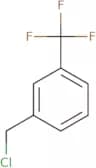
CAS :<p>3-(Trifluoromethyl)benzyl chloride is a chloromethylating agent that reacts with magnesium to form a magnesium chloride solution. 3-(Trifluoromethyl)benzyl chloride is also used in the synthesis of pharmaceuticals, pesticides, and dyes. The reaction produces small amounts of chlorinated byproducts such as chloride, which can be found in wastewater. This chemical has been shown to have adverse effects on the environment through its release into waterways or the atmosphere.</p>Formule :C8H6ClF3Degré de pureté :Min. 95%Couleur et forme :Clear LiquidMasse moléculaire :194.58 g/mol3,5,3',5' -Tetraiodo thyromandelic acid
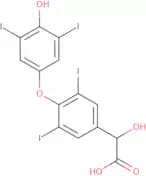
CAS :<p>Please enquire for more information about 3,5,3',5' -Tetraiodo thyromandelic acid including the price, delivery time and more detailed product information at the technical inquiry form on this page</p>Formule :C14H8I4O5Degré de pureté :Min. 95%Couleur et forme :PowderMasse moléculaire :763.83 g/mol2-Bromo-4-methylacetaphenone
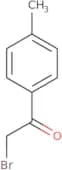
CAS :2-Bromo-4-methylacetophenone is a synthetic compound that inhibits bacterial growth through acetylation of the aromatic ring. It is used in the synthesis of imidazolidinones, which are a class of antibacterial drugs. 2-Bromo-4-methylacetophenone has shown inhibitory activity against MCF-7 breast carcinoma cells and mononuclear cells. It also has been synthesized from phenacyl bromide and potassium carbonate in anhydrous conditions. The crystal system for 2-bromo-4-methylacetophenone is tetragonal with space group P42/mnm.Formule :C9H9BrODegré de pureté :Min. 95%Masse moléculaire :213.07 g/molEthyl 4,6-dichloronicotinate
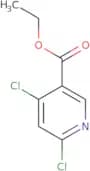
CAS :<p>Ethyl 4,6-dichloronicotinate (EDCN) is a hybrid drug that can be used as a clinical drug for the treatment of cancers. EDCN has been shown to have an antiproliferative effect in hematopoietic cells and tumor cells. It is also able to inhibit tyrosine kinase activity and cellular proliferation by inducing apoptosis. EDCN has been shown to be a potent inhibitor of cancer cell growth in vitro and in vivo, with IC50 values ranging from 1 to 10 μM. This drug is active against leukemia, lymphoma, breast cancer, prostate cancer, colorectal cancer, and other cancers that are sensitive to inhibition by tyrosine kinase inhibitors. EDCN binds reversibly to DNA with high affinity and specificity through hydrogen bonding interactions between the nucleobases on its aromatic ring system and the purine bases on dsDNA. This binding inhibits transcription by blocking access of RNA polymerase II to DNA templates</p>Formule :C8H7Cl2NO2Degré de pureté :Min. 95%Masse moléculaire :220.05 g/mol2-Bromo-5-ethyl-1,3,4-thiadiazole
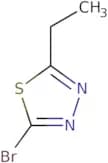
CAS :Please enquire for more information about 2-Bromo-5-ethyl-1,3,4-thiadiazole including the price, delivery time and more detailed product information at the technical inquiry form on this pageFormule :C4H5BrN2SDegré de pureté :Min. 95%Masse moléculaire :193.07 g/mol5-Iodo-2,3-dihydro-1H-inden-2-amine hydrochloride hydrate
Produit contrôlé<p>Please enquire for more information about 5-Iodo-2,3-dihydro-1H-inden-2-amine hydrochloride hydrate including the price, delivery time and more detailed product information at the technical inquiry form on this page</p>Formule :C9H13ClINODegré de pureté :Min. 95%Masse moléculaire :313.56 g/mol2-(4-Fluoro-benzyl)pyrrolidine
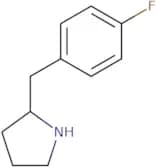
CAS :Produit contrôlé<p>Please enquire for more information about 2-(4-Fluoro-benzyl)pyrrolidine including the price, delivery time and more detailed product information at the technical inquiry form on this page</p>Formule :C11H14FNDegré de pureté :Min. 95%Masse moléculaire :179.23 g/mol(S)-Esmolol hydrochloride
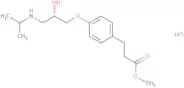
CAS :Produit contrôlé<p>(S)-Esmolol hydrochloride is an optical isomer of esmolol that is used to treat cardiac arrhythmias. It has a low affinity for beta-adrenergic receptors and has been shown to have a profile of antiarrhythmic effects. The drug also has the ability to block potassium channels, which may be due to its structural similarity to propanolol. (S)-Esmolol hydrochloride can be synthesized from the reaction of ethyl chloroformate with potassium phosphate in alkaline conditions. This optical isomer of esmolol is used as a probe for determining the stereochemistry of other compounds.</p>Formule :C16H25NO4•HClDegré de pureté :Min. 95%Masse moléculaire :331.83 g/mol2-(4-Bromophenyl)-2,2'-dimethylacetic acid
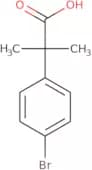
CAS :<p>2-Bromo-2-(4-bromophenyl)-2,2'-dimethylacetic acid (2bpd) is the sodium salt of 2-(4-bromophenyl)-2,2'-dimethylacetic acid. It is a metabolite of terfenadine and thionyl chloride. 2bpd has been shown to be an inhibitor of the histamine H1 receptor. This drug is also a brominated derivative of 2-amino-2-methyl-1-propanol, which has been shown to be an inhibitor of the histamine H1 receptor.</p>Formule :C10H11BrO2Degré de pureté :Min. 95%Masse moléculaire :243.1 g/molClonidine hydrochloride
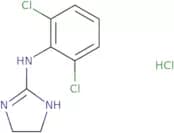
CAS :<p>Clonidine hydrochloride is a drug used in the treatment of hypertension and other cardiac diseases. It belongs to the class of drugs called centrally acting alpha-2 adrenergic agonists. Clonidine hydrochloride is also used for its antihypertensive effects in patients with neurogenic orthostatic hypotension, diabetic neuropathy, and glomerular filtration rate. The long-term efficacy and safety profile of clonidine hydrochloride has been established in clinical trials that have shown it to be effective in reducing symptoms of chronic pain and opioid withdrawal, as well as improving quality of life. Clonidine hydrochloride may be administered orally or transdermally. Clonidine binds to both alpha-1 and alpha-2 adrenergic receptors, which are responsible for vasoconstriction, inhibition of renin secretion from the kidneys, decreased sympathetic nerve activity, and increased parasympathetic nerve activity. This drug also has a protective effect on bone cancer cells</p>Formule :C9H9Cl2N3•HClDegré de pureté :Min. 95%Couleur et forme :PowderMasse moléculaire :266.55 g/mol2-Amino-5,6-dichlorobenzothiazole
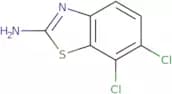
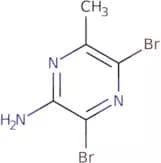
CAS :<p>2-Amino-5,6-dichlorobenzothiazole is an aminobenzothiazole derivative that has been shown to have antibacterial activity. It is a hydrophobic molecule with a skeleton consisting of alternating amines and carboxylic acids. 2-Amino-5,6-dichlorobenzothiazole binds to the fatty acid ester component of bacterial cell walls by hydrogen bonding or ionic interactions, disrupting the integrity of the cell wall and inhibiting the growth of bacteria. 2-Amino-5,6-dichlorobenzothiazole can be used to decolorize dyes and textiles that have been stained by oily materials. It is also used as a surfactant in personal care products such as shampoos and conditioners.</p>Formule :C7H4Cl2N2SDegré de pureté :Min. 95%Masse moléculaire :219.09 g/mol3,5-Dibromo-6-methylpyrazin-2-amine
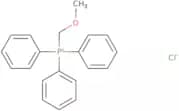
CAS :<p>Please enquire for more information about 3,5-Dibromo-6-methylpyrazin-2-amine including the price, delivery time and more detailed product information at the technical inquiry form on this page</p>Formule :C5H5Br2N3Degré de pureté :Min. 95%Masse moléculaire :266.92 g/mol(Methoxymethyl) triphenylphosphonium chloride
CAS :Methoxymethyl triphenylphosphonium chloride (MMTPC) is a chemical compound that has been used in vitro as an inhibitor of microbial growth. MMTPC has been shown to be effective against a number of bacterial strains, including methicillin-resistant Staphylococcus aureus and Mycobacterium tuberculosis. This agent inhibits the synthesis of proteins and nucleic acids, which may lead to cell death by inhibiting protein synthesis or by preventing DNA synthesis. MMTPC has been shown to be effective for the treatment of congestive heart failure, coronary heart disease, and autoimmune diseases. It also binds to receptors on cells that are involved in the inflammatory response, such as cytokines and leukocytes.Formule :C20H20ClOPDegré de pureté :Min. 95%Couleur et forme :White PowderMasse moléculaire :342.8 g/mol


![[2-(5-Chloro-1-methyl-1H-benzimidazol-2-yl)ethyl]amine dihydrochloride](/_next/image/?url=https%3A%2Fstatic.cymitquimica.com%2Fproducts%2F3D%2Fthumb-webp%2FFC135802.webp&w=3840&q=75)