Biologie végétale
La Biologie Végétale englobe une large gamme de régulateurs de croissance, de phytohormones et de réactifs essentiels pour la recherche et les applications en science des plantes et dans l'industrie alimentaire. Ces produits jouent un rôle crucial dans la régulation de la croissance, du développement et des réponses des plantes aux stimuli environnementaux. Les régulateurs de croissance et les phytohormones, tels que les auxines, les gibbérellines, les cytokinines et l'acide abscissique, sont vitaux pour étudier la physiologie végétale, améliorer les rendements des cultures et développer des pratiques agricoles durables. De plus, divers réactifs soutiennent les procédures expérimentales et les techniques analytiques en recherche en biologie végétale. Chez CymitQuimica, nous offrons une sélection diversifiée de produits de haute qualité adaptés aux besoins des chercheurs et des professionnels en sciences végétales, agriculture et industrie alimentaire, facilitant les avancées en biologie végétale et gestion des cultures.
Sous-catégories appartenant à la catégorie "Biologie végétale"
- Antibiotiques pour la biologie végétale(1 produits)
- Mycosol(3 produits)
- Mycotoxines pour la biologie végétale(1 produits)
- Produits naturels et phytochimiques par origine botanique(6.021 produits)
- Régulateur de croissance des plantes(126 produits)
- Réactifs pour la biologie végétale(15 produits)
901 produits trouvés pour "Biologie végétale"
Trier par
Degré de pureté (%)
0
100
|
0
|
50
|
90
|
95
|
100
Virginiamycin S1
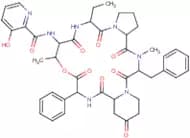
CAS :Virginiamycin S1Formule :C43H49N7O10Degré de pureté :By hplc: 98.76% (Typical Value in Batch COA)Couleur et forme : white powderMasse moléculaire :823.89g/molTerrestrial (Cypripedium) Orchid Medium, contains 600 mg/L Calcium nitrate
Terrestrial (Cypripedium) Orchid Medium, contains 600 mg/L Calcium nitrateCouleur et forme :SolidMurashige and Skoog modified basal salts (without NH4NO3)
Murashige and Skoog modified basal salts (without NH4NO3)
Couleur et forme :White To Off White PowderNordihydrocapsaicin
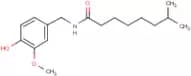
CAS :NordihydrocapsaicinFormule :C17H27NO3Degré de pureté :By hplc: 99.88% (Typical Value in Batch COA)Couleur et forme :PowderMasse moléculaire :293.40g/molChu N6 basal salt medium with vitamins
Chu N6 basal salt medium with vitaminsCouleur et forme :White To Off White PowderMurashige and Skoog modified basal medium, 1 pack = 10L
Murashige and Skoog modified basal medium, 1 pack = 10LCouleur et forme :SolidOrchid Maintenance Medium, Contains Charcoal and Agar
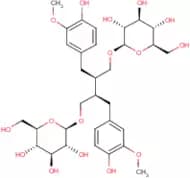
Orchid Maintenance Medium, Contains Charcoal and AgarCouleur et forme :PowderSecoisolariciresinol diglucoside
CAS :Secoisolariciresinol diglucosideDegré de pureté :98%Couleur et forme :Yellow-Brown PowderMasse moléculaire :686.70g/molNitsch and Nitsch basal salt mixture
Nitsch and Nitsch basal salt mixtureCouleur et forme :Yellow PowderMusa (Banana) Multiplication Medium, 1 pack = 50L
Musa (Banana) Multiplication Medium, 1 pack = 50LCouleur et forme :SolidTerrestrial (Cypripedium) Orchid Medium, contains 400 mg/L Calcium nitrate
Terrestrial (Cypripedium) Orchid Medium, contains 400 mg/L Calcium nitrateCape Sundew/Venus Flytrap Multiplication Basal Medium
Cape Sundew/Venus Flytrap Multiplication Basal MediumCouleur et forme :White-Pale Yellow PowderProlactin-releasing peptide (PrRP20)
Prolactin-releasing peptide (PrRP20) was originally identified for being able to stimulate lactin release. However, that is not considered its function anymore, it is reclassified as a neuropeptide with a role in energy balance, and an inhibitor of appetite. PrRP20 is considered a central neuromodulator found within the A1 and A2 noradrenergic neurons and neurons of the dorsomedial nucleus of the hypothalamus. PrRP20 binds with high affinity to the G protein coupled receptor GPR10. Binding can lead to activation of numerous signalling pathways including activation of mitogen-activated protein kinase/extracellular-regulated kinase (MAPK/ERK1/2) and cAMP response element-binding protein (CREB). Not much is known about the binding mechanism and activation of GPR10. Use of PrRP20 and its analogs have aimed to provide greater insight to the binding and activation of GRP10 to better understand how this effects energy balance. With new links being made between diabetes and obesity with Alzheimer's disease it raises the question of whether PrRP20 and GP10 may be a factor in the disease development due to the colocalization in the same brain regions. Further study may lead to novel therapies for obesity, diabetes, and Alzheimer's disease in the future.Masse moléculaire :2,271.2 g/molTruncated flagellin 22 (flg22)
Flagellin is the structural protein which forms the major portion of bacterial flagella filaments. The N- and C- terminals of flagellin are highly conserved regions, whereas the central core can vary greatly between bacterial species. Flagellin 22 (flg22) is the most conserved stretch of amino acids across bacterial species and is located towards the N-terminal of flagellin.Flg22 is a potent elicitor of plant immune responses and is recognised in plants by the membrane bound leucine-rich repeat-receptor kinase FLAGELLIN SENSITIVE 2 (FLS2). Flg22 induces defence gene expression to trigger both local and systemic immune responses and is thus widely used in plant defence studies.Truncated flagellin 22 (flg22-θ”2) represents amino acids 1-20 of flg22. It is a strong and selective agonist of tomato FLS2, with weak agonist activity towards Arabidopsis FLS2 even at high concentrations.Masse moléculaire :2,087.1 g/molMART-1 (27-35) (human)
CAS :Tumour antigens recognised by cytotoxic T cells (CTLs) are a keen area of research to develop antigen-specific cancer therapies. However, hurdles are weak immunogenicity and high rates of degradation in vivo. In the search for a melanoma vaccine, the human tumour antigen Melan-A/MART-1 (27-35) has been used as a model to design peptides with improved characteristics for use in anti-tumour vaccines. The epitope can induce the production of melanoma-specific CD8+ T-cell responses. It has been included in melanoma antigen peptide vaccines, clinical trial data suggest that MART-1 (27-35) in human systems alongside other epitopes does affect the cellular and humoral responses, but much more work is required with this peptide to optimise it for clinical efficacy against melanoma.An alternate route that is possible but less studied is using MART-1 (27-35) to isolate CD8(+) T-cell clones with greater recognition for the epitope due to the contact with the T-cell receptor. This suggests melanomas could be targeted by optimising the T-cell receptor-peptide recognition of the T-cell repertoire by enhancing antigen targeting.Formule :C37H67N9O11Masse moléculaire :813.98 g/molFlagellin 22 (flg22)
Flagellin is a structural protein which forms the major portion of bacterial flagellar filaments. The N- and C-terminals of flagellin are highly conserved regions, whereas the central core can vary greatly between bacterial species. Flagellin 22 (flg22) is the stretch of amino acids most conserved across bacterial species and is located towards the N-terminal of the flagellin protein.Flg22 is a potent elicitor of plant immune responses and is recognised in plants by the membrane bound leucine-rich repeat-receptor kinase FLAGELLIN SENSITIVE 2 (FLS2). Flg22 induces defence gene expression to trigger both local and systemic immune responses and is thus widely used in plant defence studies.Couleur et forme :PowderMasse moléculaire :2,272.48 g/mol