Produits biochimiques et réactifs
Les biochimiques et réactifs sont des substances fondamentales pour la recherche et le développement dans des domaines tels que la biotechnologie, la biologie moléculaire, la pharmacologie et la médecine. Ces produits sont essentiels pour une variété d'applications, y compris la synthèse de composés, l'analyse d'échantillons biologiques, la recherche sur les processus métaboliques et la production de médicaments. Chez CymitQuimica, nous proposons une large sélection de biochimiques et réactifs de haute qualité et pureté, adaptés à divers besoins scientifiques et industriels. Notre catalogue comprend des enzymes, des anticorps, des acides nucléiques, des acides aminés et de nombreux autres produits, tous conçus pour soutenir les chercheurs et les professionnels dans leurs projets de recherche et développement, garantissant des résultats fiables et reproductibles.
Sous-catégories appartenant à la catégorie "Produits biochimiques et réactifs"
- Biomolécules(99.129 produits)
- Par Biological Target(99.160 produits)
- Par usage/effets pharmacologiques(6.787 produits)
- Cryoconservation et composés associés aux cryoconservateurs(21 produits)
- Désinfectants, additifs pour les fluides pour bains chauffants et composés apparentés(28 produits)
- Hormones(346 produits)
- Biologie végétale(6.742 produits)
- Métabolites secondaires(14.222 produits)
130579 produits trouvés pour "Produits biochimiques et réactifs"
Trier par
Degré de pureté (%)
0
100
|
0
|
50
|
90
|
95
|
100
SGCB protein
<p>SGCB protein is an important component of the cell membrane and plays a crucial role in muscle function. It is an antigen that can be targeted by antibodies, making it a valuable tool for research and diagnostic purposes. The SGCB protein has been shown to have anti-glial fibrillary acidic properties, which may be relevant in the treatment of certain neurological disorders. Additionally, conjugated proteins containing SGCB can be used as inhibitors or therapeutic agents. Monoclonal antibodies targeting SGCB protein have been developed and are widely used in various applications, including immunoassays and immunohistochemistry. The detection of SGCB protein in human serum samples has proven to be a useful biomarker for certain diseases. Overall, the SGCB protein is a significant molecule in life sciences research with diverse applications and potential therapeutic implications.</p>Degré de pureté :Min. 95%RPS6KA2 antibody
<p>RPS6KA2 antibody was raised using the middle region of RPS6KA2 corresponding to a region with amino acids LSRQDVHLVKGAMAATYFALNRTPQAPRLEPVLSSNLAQRRGMKRLTSTR</p>Degré de pureté :Min. 95%RAB27B antibody
<p>The RAB27B antibody is a polyclonal antibody that specifically targets the RAB27B protein. This protein plays a crucial role in various cellular processes, including acrosome reactions and calcium binding. By binding to RAB27B, this antibody can modulate its function and exert immunomodulatory effects.</p>ANKRA2 protein (His tag)
<p>Purified recombinant ANKRA2 protein (His tag)</p>Degré de pureté :Min. 95%OAS1 antibody
<p>OAS1 antibody was raised using the N terminal of OAS1 corresponding to a region with amino acids MMDLRNTPAKSLDKFIEDYLLPDTCFRMQINHAIDIICGFLKERCFRGSS</p>Degré de pureté :Min. 95%Rabbit anti Chicken IgG/Y (H + L) (HRP)
<p>This antibody reacts with heavy chains on chicken IgG (IgY) and light chains on all chicken immunoglobulins.</p>Degré de pureté :Min. 95%Goat anti Rabbit IgG (H + L) (Poly-HRP40)
<p>Goat anti-rabbit IgG (H+L) (Poly-HRP40) was raised in goat using rabbit IgG as the immunogen.</p>Degré de pureté :Min. 95%SPAG8 antibody
<p>SPAG8 antibody was raised using the N terminal of SPAG8 corresponding to a region with amino acids SGPVLGSSSGAGHGSGSGSGPGCGSVPGSGSGPGPGSGPGSGPGHGSGSH</p>Pancreastatin antibody
<p>Pancreastatin antibody was raised in rabbit using synthetic pancreastatin as the immunogen.</p>Degré de pureté :Min. 95%Mouse Lymphocyte antibody
<p>Mouse Lymphocyte antibody was raised in rabbit using RBC-free murine thymus and spleen cells as the immunogen.</p>Degré de pureté :Min. 95%Melinamide
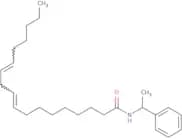
CAS :<p>Melinamide is a fatty acid analog that is used for the treatment of inflammatory bowel disease. It has been shown to regulate the production of pro-inflammatory cytokines, such as tumor necrosis factor-α (TNF-α) and interleukin-1β (IL-1β), in rat liver microsomes. Melinamide has also been shown to decrease oxidative stress on heart tissue and reduce metabolic disorders, such as type 2 diabetes, in rats. In addition, melinamide inhibits the production of TNF-α by human macrophages and reduces inflammation caused by bowel disease in rats. Melinamide is not active against bacterial infections and does not have any significant effects on skin cells or x-ray crystal structures.</p>Formule :C26H41NODegré de pureté :Min. 95%Masse moléculaire :383.6 g/molHps3 antibody
<p>Hps3 antibody was raised in rabbit using the N terminal of Hps3 as the immunogen</p>Degré de pureté :Min. 95%CD43 antibody
<p>The CD43 antibody is a monoclonal antibody used in Life Sciences research. It targets the CD43 protein, which is involved in various cellular processes including mitogen-activated protein and growth factor signaling. The antibody has been shown to inhibit the polymerase activity of activated cells and has cytotoxic effects on certain cell types. Additionally, it has antiviral properties and can target Mycoplasma genitalium, an acidic bacterium that causes infections in humans. The CD43 antibody also interacts with nuclear factor kappa-light-chain-enhancer of activated B cells (NF-κB), endonuclease caspase-9, and β-catenin, further highlighting its potential applications in molecular biology research.</p>TRIML2 Blocking Peptide
<p>A synthetic peptide for use as a blocking control in assays to test for specificity of TRIML2 antibody, catalog no. 70R-4258</p>Degré de pureté :Min. 95%NLGN4X antibody
<p>NLGN4X antibody was raised using the N terminal of NLGN4X corresponding to a region with amino acids SILASYGNVIVITINYRLGILGFLSTGDQAAKGNYGLLDQIQALRWIEEN</p>Degré de pureté :Min. 95%RGS4 antibody
<p>The RGS4 antibody is a highly specialized antibody that has been developed for use in the field of Life Sciences. It is designed to target and bind to the RGS4 protein, which plays a crucial role in various cellular processes. This antibody is monoclonal, meaning it is derived from a single clone of cells and therefore offers high specificity and consistency in its performance.</p>C1ORF110 antibody
<p>C1ORF110 antibody was raised using the N terminal Of C1Orf110 corresponding to a region with amino acids LKVICLYHVKLLTWEQRQLQKELQRLQQAETMKKKFSSYLGNGFQKRPED</p>GUCY1B3 antibody
<p>GUCY1B3 antibody was raised using the N terminal of GUCY1B3 corresponding to a region with amino acids LIEEKESKEEDFYEDLDRFEENGTQESRISPYTFCKAFPFHIIFDRDLVV</p>Degré de pureté :Min. 95%HBXIP protein (His tag)
<p>Purified recombinant Human HBXIP protein (His tag)</p>Degré de pureté :Min. 95%Ephrin A1 antibody
<p>The Ephrin A1 antibody is a highly specialized monoclonal antibody that has been developed for use in various life sciences assays. This antibody specifically targets Ephrin A1, a protein that plays a crucial role in cell signaling and development. It has been extensively tested and validated for its specificity and sensitivity in detecting Ephrin A1 in human serum samples.</p>PABPC4 antibody
<p>PABPC4 antibody was raised using the middle region of PABPC4 corresponding to a region with amino acids RPNPRWQQGGRPQGFQGMPSAIRQSGPRPTLRHLAPTGSECPDRLAMDFG</p>ZFP36 antibody
<p>The ZFP36 antibody is a valuable tool for researchers and scientists working in the field of interstitial and gastrointestinal stromal research. This antibody acts as a reagent, specifically targeting DNA double-strand breaks. It exhibits high affinity towards ligands, making it an ideal choice for various experimental procedures. The ZFP36 antibody can be used in immunohistochemical studies to detect and visualize specific proteins or markers of interest. Moreover, this antibody has shown promise in pluripotent stem cell research, where it can be used to study protein expression patterns and investigate the effects of potential inhibitors or test compounds. With its ability to therapeutically inhibit specific targets, the ZFP36 antibody opens up new possibilities for innovative research and discoveries in the field of molecular biology.</p>EpoR antibody
<p>The EpoR antibody is a highly specialized antibody that targets the erythropoietin receptor (EpoR). It is commonly used in research and diagnostic applications to study the role of EpoR in various biological processes. Erythropoietin (EPO) is a hormone that regulates red blood cell production, and its receptor plays a crucial role in this process.</p>C14orf172 antibody
<p>C14orf172 antibody was raised in mouse using recombinant Human Chromosome 14 Open Reading Frame 172</p>AHCY antibody
<p>AHCY antibody was raised using the N terminal of AHCY corresponding to a region with amino acids SDKLPYKVADIGLAAWGRKALDIAENEMPGLMRMRERYSASKPLKGARIA</p>IL1RA antibody
<p>IL-1ra antibody was raised in Mouse using recombinant human IL-1ra as the immunogen.</p>Goat anti Rat IgG (Fab'2) (HRP)
<p>Goat anti-rat IgG (Fab'2) (HRP) was raised in goat using rat IgG F(ab')2 fragment as the immunogen.</p>Degré de pureté :Min. 95%TMPRSS11D antibody
<p>TMPRSS11D antibody was raised using the middle region of TMPRSS11D corresponding to a region with amino acids IHSVCLPAATQNIPPGSTAYVTGWGAQEYAGHTVPELRQGQVRIISNDVC</p>Degré de pureté :Min. 95%CD133 antibody
<p>The CD133 antibody is a highly specialized monoclonal antibody that has been activated to target specific glycan structures on the surface of cells. It has been extensively studied in the field of Life Sciences and has shown promising results in various applications. This antibody is capable of neutralizing chemokine receptors such as CXCR4 and can also inhibit the activity of colony-stimulating factors like GM-CSF and interleukin-6. The CD133 antibody is widely used in research laboratories for its ability to specifically bind to CD133-expressing cells, allowing for their identification and isolation. It is also commonly used in diagnostic assays and therapeutic development. For those seeking high-quality antibodies, the CD133 antibody is a reliable choice that offers exceptional specificity and sensitivity.</p>Degré de pureté :Min. 95%ELAVL4 antibody
<p>ELAVL4 antibody was raised using the N terminal of ELAVL4 corresponding to a region with amino acids MQTGATTDDSKTNLIVNYLPQNMTQEEFRSLFGSIGEIESCKLVRDKITG</p>IpaD antibody
<p>The IpaD antibody is a glycoprotein that has denaturing properties. It is known for its neuroprotective and neutralizing effects. This high polymer glycan has been found to interact with hormone peptides and collagens. The IpaD antibody is produced through the use of monoclonal antibodies, which are created through recombinant techniques. Its glycosylation plays a crucial role in its functionality. It should be noted that this antibody may have teratogenic effects and caution should be exercised when using it. The IpaD antibody is commonly used in research and diagnostic applications due to its specificity and affinity for its target antigen.</p>AMH antibody
<p>AMH antibody was raised using the middle region of AMH corresponding to a region with amino acids SVDLRAERSVLIPETYQANNCQGVCGWPQSDRNPRYGNHVVLLLKMQARG</p>Degré de pureté :Min. 95%Goat anti Mouse IgG (H + L) (rhodamine)
<p>Goat anti Mouse IgG (H + L) (rhodamine) secondary antibody</p>Degré de pureté :Min. 95%EphB3 antibody
<p>EphB3 antibody was raised in Mouse using a purified recombinant fragment of EphB3(aa39-212) expressed in E. coli as the immunogen.</p>VHL antibody
<p>VHL antibody was raised in rabbit using the N terminal of VHL as the immunogen</p>Degré de pureté :Min. 95%Donkey anti Goat IgG (H + L) (Alk Phos)
<p>Donkey anti Goat IgG (H + L) secondary antibody (Alk phos)</p>Degré de pureté :Min. 95%TPI1 antibody
<p>The TPI1 antibody is a polyclonal antibody that is used in life sciences research. It specifically targets the TPI1 protein, which is involved in the regulation of pro-inflammatory cytokines and TGF-beta signaling pathways. This antibody can be used to study the effects of various compounds, such as gabapentin or ketorolac, on TPI1 expression and function. The TPI1 antibody can also be conjugated to magnetic particles for use in immunomagnetic separation techniques or used in combination with other antibodies to study interactions between proteins. Additionally, this antibody has been shown to inhibit collagen production and endothelial cell proliferation, making it a valuable tool for studying these processes in vitro.</p>C1QTNF7 antibody
<p>C1QTNF7 antibody was raised using the middle region of C1QTNF7 corresponding to a region with amino acids SIVLKSAFSVGITTSYPEERLPIIFNKVLFNEGEHYNPATGKFICAFPGI</p>Degré de pureté :Min. 95%CPN60 antibody
<p>The CPN60 antibody is a powerful tool used in the field of Life Sciences. It belongs to the family of monoclonal antibodies and is colloidal in nature. This antibody specifically targets the CPN60 protein, which is involved in various cellular processes.</p>F7 antibody
<p>F7 antibody was raised in rabbit using the C terminal of F7 as the immunogen</p>Degré de pureté :Min. 95%SLC9A3 antibody
<p>SLC9A3 antibody was raised in rabbit using the middle region of SLC9A3 as the immunogen</p>Degré de pureté :Min. 95%FAS antibody
<p>The FAS antibody is a powerful tool in the field of Life Sciences. It acts as an inhibitory factor, specifically targeting the FAS protein. This acidic antibody has the ability to bind to collagen, insulin, and fibronectin, among other molecules. By binding to the FAS receptor, this antibody can induce fas-mediated apoptosis, a process that leads to targeted cell death. Additionally, it has shown cytotoxic effects against various cell types.</p>EPO antibody
<p>EPO antibody was raised in Mouse using a purified recombinant fragment of human EPO expressed in E. coli as the immunogen.</p>URG4 antibody
<p>URG4 antibody was raised using the middle region of URG4 corresponding to a region with amino acids AILHAFLRLEKTGHMPNYQFVYQNLHDVSVPGPRPRDKRQLLDPPGDLSR</p>Bilirubin protein (Porcine)
<p>Purified native Porcine Bilirubin protein</p>Degré de pureté :Min. 95%ME2 antibody
<p>ME2 antibody was raised using a synthetic peptide corresponding to a region with amino acids MAFTLQERQMLGLQGLLPPKIETQDIQALRFHRNLKKMTSPLEKYIYIMG</p>RBP4 monoclonal antibody
<p>The RBP4 monoclonal antibody is a powerful tool in the field of Life Sciences. It is a DNA aptamer that specifically targets and binds to TGF-β1, an activated growth factor involved in various cellular processes. This antibody has been extensively studied and proven to be highly effective in the detection and quantification of TGF-β1 in various biological samples.</p>ALAS2 antibody
<p>ALAS2 antibody was raised using the N terminal of ALAS2 corresponding to a region with amino acids CPILATQGPNCSQIHLKATKAGGDSPSWAKGHCPFMLSELQDGKSKIVQK</p>Tyrosine Hydroxylase antibody
<p>The Tyrosine Hydroxylase antibody is a powerful tool for researchers in the field of Life Sciences. This monoclonal antibody specifically targets tyrosine hydroxylase, an enzyme involved in the synthesis of dopamine. By binding to and neutralizing this enzyme, the antibody effectively inhibits the production of dopamine, allowing researchers to study its role in various biological processes.</p>Degré de pureté :Min. 95%SOX17 antibody
<p>The SOX17 antibody is a highly specialized monoclonal antibody that targets the SOX17 protein. This protein plays a crucial role in various biological processes, including cell differentiation and development. The antibody specifically binds to the SOX17 protein, neutralizing its activity.</p>BMP6 antibody
<p>BMP6 antibody was raised using the middle region of BMP6 corresponding to a region with amino acids MVAFFKVSEVHVRTTRSASSRRRQQSRNRSTQSQDVARVSSASDYNSSEL</p>Degré de pureté :Min. 95%STAT5A antibody
<p>The STAT5A antibody is a monoclonal antibody that specifically targets the oncogenic kinase STAT5A. It plays a crucial role in regulating cellular responses to interleukin-6, a potent growth factor and mitogen-activated protein. This antibody acts by inhibiting the phosphorylation of STAT5A, preventing its translocation to the nucleus and subsequent activation of target genes. In addition, it has been shown to induce apoptosis and inhibit cell proliferation in various cancer cell lines. The STAT5A antibody is a valuable tool for researchers in the field of Life Sciences who are studying the role of STAT5A in cellular signaling pathways and its potential as a therapeutic target for cancer treatment.</p>Transferrin protein
<p>Transferrin protein is a biomolecule that plays a crucial role in iron transport and homeostasis. It is involved in binding and transporting iron throughout the body, ensuring that it reaches the cells where it is needed. Transferrin protein has been extensively studied for its potential therapeutic applications. One such application is its ability to neutralize the effects of oral haloperidol, a commonly used antipsychotic medication. Studies have shown that transferrin protein can bind to haloperidol and reduce its side effects, such as extrapyramidal symptoms and hyperprolactinemia. This interaction between transferrin protein and haloperidol highlights the potential for targeted drug delivery and improved treatment outcomes. Furthermore, transferrin protein has been investigated for its glycosylation patterns, which can impact its stability, function, and immunogenicity. Understanding these glycosylation patterns can aid in the development of recombinant proteins and antigens with enhanced properties. In</p>Degré de pureté :Min. 95%Alien antibody
<p>Alien antibody was raised in rabbit using Residues 239-250 [ECGGKMHLREGE] of Alien as the immunogen.</p>Degré de pureté :Min. 95%GAPDH antibody
<p>The GAPDH antibody is a highly effective monoclonal antibody that has been activated to target specific proteins in the body. It is commonly used in Life Sciences research to study various cellular processes and pathways. This antibody has been found to neutralize the activity of TGF-beta, a protein involved in cell growth and differentiation. Additionally, it has shown to have glycosylation properties, which can impact protein function and stability. One of the key targets of the GAPDH antibody is E-cadherin, a protein responsible for cell adhesion and tissue integrity. By binding to E-cadherin, this antibody can modulate cell-cell interactions and potentially influence cellular behavior. Furthermore, studies have demonstrated that the GAPDH antibody can inhibit collagen production, which is crucial for maintaining tissue structure and elasticity. This property may have implications in wound healing and tissue regeneration. Another important aspect of the GAPDH antibody is its ability to regulate microvessel density. By targeting specific proteins involved in angiogenesis, this</p>PITPNM1 antibody
<p>PITPNM1 antibody was raised in rabbit using the N terminal of PITPNM1 as the immunogen</p>Degré de pureté :Min. 95%MAP3K8 antibody
<p>The MAP3K8 antibody is a highly effective test substance that targets protein kinase, an essential factor in cellular signaling pathways. This antibody acts as an inhibitor of protein kinase kinase, preventing its activity and disrupting downstream signaling events. The MAP3K8 antibody is delivered in liposome form, ensuring optimal delivery and efficacy. It is widely used in the field of Life Sciences for research purposes. With its potent inhibitory activity, this antibody is a valuable tool for studying mitogen-activated protein (MAP) kinase pathways and their role in various biological processes. Choose the MAP3K8 antibody for reliable and accurate results in your research experiments.</p>Integrin α 7 antibody
<p>Integrin alpha 7 antibody is a highly specialized monoclonal antibody that targets the integrin alpha 7 protein. This antibody has been extensively studied and proven to be effective in various applications, including immunoassays, western blotting, immunohistochemistry, and flow cytometry.</p>BCL2 antibody
<p>The BCL2 antibody is an inhibitory factor used in Life Sciences to study the role of the BCL2 protein in various cellular processes. It interacts with sulphates, taxol, and other molecules to modulate their activity. This antibody targets the tyrosine kinase receptor and fibronectin, playing a crucial role in signal transduction pathways. The BCL2 antibody is available as both polyclonal and monoclonal antibodies, providing researchers with options for their specific experimental needs. Additionally, it has been used to study dopamine signaling, phosphatase activity, and the function of circumsporozoite protein. Its interaction with calpain suggests its involvement in cellular processes such as apoptosis and cell cycle regulation. With its versatility and wide range of applications, the BCL2 antibody is an invaluable tool for researchers in various fields of study.</p>