Produits biochimiques et réactifs
Les biochimiques et réactifs sont des substances fondamentales pour la recherche et le développement dans des domaines tels que la biotechnologie, la biologie moléculaire, la pharmacologie et la médecine. Ces produits sont essentiels pour une variété d'applications, y compris la synthèse de composés, l'analyse d'échantillons biologiques, la recherche sur les processus métaboliques et la production de médicaments. Chez CymitQuimica, nous proposons une large sélection de biochimiques et réactifs de haute qualité et pureté, adaptés à divers besoins scientifiques et industriels. Notre catalogue comprend des enzymes, des anticorps, des acides nucléiques, des acides aminés et de nombreux autres produits, tous conçus pour soutenir les chercheurs et les professionnels dans leurs projets de recherche et développement, garantissant des résultats fiables et reproductibles.
Sous-catégories appartenant à la catégorie "Produits biochimiques et réactifs"
- Biomolécules(99.130 produits)
- Par Biological Target(99.159 produits)
- Par usage/effets pharmacologiques(6.787 produits)
- Cryoconservation et composés associés aux cryoconservateurs(21 produits)
- Désinfectants, additifs pour les fluides pour bains chauffants et composés apparentés(28 produits)
- Hormones(346 produits)
- Biologie végétale(6.747 produits)
- Métabolites secondaires(14.222 produits)
130579 produits trouvés pour "Produits biochimiques et réactifs"
Trier par
Degré de pureté (%)
0
100
|
0
|
50
|
90
|
95
|
100
Artemin antibody
<p>Artemin antibody was raised in rabbit using N terminus of Artemin. as the immunogen.</p>Degré de pureté :Min. 95%SMAD1 antibody
<p>The SMAD1 antibody is a highly specific monoclonal antibody that is used in Life Sciences research. It targets the SMAD1 protein, which plays a crucial role in cell signaling pathways and gene expression regulation. This antibody has been extensively tested and validated for use in various applications, including Western blotting, immunohistochemistry, and flow cytometry.</p>Pneumolysin antibody
<p>Pneumolysin antibody is a polyclonal antibody that is used in Life Sciences research. It specifically targets pneumolysin, a protein produced by Streptococcus pneumoniae, which is responsible for causing pneumonia and other respiratory infections. This antibody has been shown to neutralize the activity of pneumolysin, preventing its damaging effects on host cells. Pneumolysin antibody can be used in various applications such as immunohistochemistry, ELISA, and Western blotting to study the role of pneumolysin in disease progression and to develop new therapeutic strategies. With its high specificity and affinity for pneumolysin, this antibody is a valuable tool for researchers in the field of infectious diseases.</p>Degré de pureté :Min. 95%BRS3 antibody
<p>BRS3 antibody is a monoclonal antibody that specifically targets the BRS3 receptor. This receptor is found on various cells in the human body, including erythropoietin receptor-expressing cells. By binding to the BRS3 receptor, this antibody can modulate the activity of erythropoietin and its downstream signaling pathways.</p>GGPS1 antibody
<p>GGPS1 antibody was raised using the middle region of GGPS1 corresponding to a region with amino acids LGLFFQIRDDYANLHSKEYSENKSFCEDLTEGKFSFPTIHAIWSRPESTQ</p>DERL3 antibody
<p>DERL3 antibody was raised using the middle region of DERL3 corresponding to a region with amino acids FFFNMLFVFRYCRMLEEGSFRGRTADFVFMFLFGGVLMTLLGLLGSLFFL</p>Degré de pureté :Min. 95%RCHY1 antibody
<p>RCHY1 antibody was raised using the N terminal of RCHY1 corresponding to a region with amino acids KLYTCRLCHDNNEDHQLDRFKVKEVQCINCEKIQHAQQTCEECSTLFGEY</p>GFAP antibody
<p>GFAP antibody is a highly specific monoclonal antibody that targets the glial fibrillary acidic protein (GFAP), which is primarily found in the cytoplasm of astrocytes in the central nervous system. This antibody has low density and high affinity for GFAP, making it an ideal tool for detecting and quantifying GFAP expression in various tissues and cell types. It can be used in immunohistochemistry, immunofluorescence, Western blotting, and other applications to study the role of GFAP in neurodegenerative diseases, brain injury, and other neurological disorders. The GFAP antibody is produced using advanced techniques and undergoes rigorous quality control to ensure its specificity and reliability. With its exceptional performance and neutralizing properties, this monoclonal antibody is an indispensable tool for researchers studying astrocyte biology and related fields.</p>α Crystallin B antibody
<p>alpha Crystallin B antibody was raised in mouse using recombinant human Crystallin alpha B (1-175 aa) purified from E. coli as the immunogen.</p>PF-06471553
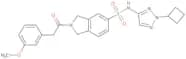
CAS :<p>PF-06471553 is a peptide that binds to the erythropoietin receptor, which is a member of the cytokine receptor family. It is an inhibitor of protein interactions with the erythropoietin receptor, and thus has therapeutic potential to treat chronic kidney disease and related conditions.</p>Formule :C23H25N5O4SDegré de pureté :Min. 95%Masse moléculaire :467.5 g/molCTNNB1 antibody
<p>The CTNNB1 antibody is a specific antibody used in Life Sciences research. It is commonly used to study pluripotent stem cells and their differentiation. This antibody binds to the CTNNB1 protein, also known as beta-catenin, which plays a crucial role in cell adhesion and signaling pathways. The CTNNB1 antibody can be used for various applications such as immunofluorescence, Western blotting, and immunohistochemistry. It has been shown to be effective in detecting CTNNB1 expression in different cell types and tissues. Researchers use this antibody to investigate the function of CTNNB1 in development, disease progression, and therapeutic targets. With its high specificity and sensitivity, the CTNNB1 antibody is an essential tool for studying cellular processes and identifying potential biomarkers.</p>Factor XIII antibody
<p>Factor XIII antibody is a monoclonal antibody that specifically targets and inhibits the activity of Factor XIII, an enzyme involved in blood clot formation. This antibody has been shown to neutralize the activated form of Factor XIII, preventing its ability to cross-link fibrin molecules and stabilize blood clots. Additionally, Factor XIII antibody has cytotoxic effects on certain cancer cells, making it a potential therapeutic option for cancer treatment. This antibody can also be used in research settings to study the role of Factor XIII in various biological processes. With its high specificity and potency, Factor XIII antibody is a valuable tool for scientists and researchers in the field of life sciences.</p>FCRL6 antibody
<p>FCRL6 antibody was raised using the middle region of FCRL6 corresponding to a region with amino acids LRLLFSFHKDGHTLQDRGPHPELCIPGAKEGDSGLYWCEVAPEGGQVQKQ</p>Degré de pureté :Min. 95%FCGRT antibody
<p>FCGRT antibody was raised using the N terminal of FCGRT corresponding to a region with amino acids GWLGPQQYLSYNSLRGEAEPCGAWVWENQVSWYWEKETTDLRIKEKLFLE</p>Degré de pureté :Min. 95%ATG16L1 antibody
<p>ATG16L1 antibody was raised using a synthetic peptide corresponding to a region with amino acids QYNKLLEKSDLHSVLAQKLQAEKHDVPNRHEISPGHDGTWNDNQLQEMAQ</p>Tektin 2 antibody
<p>Tektin 2 antibody was raised using a synthetic peptide corresponding to a region with amino acids RTKLLSLKLSHTRLEARTYRPNVELCRDQAQYGLTDEVHQLEATIAALKQ</p>Cytokeratin 8 antibody
<p>The Cytokeratin 8 antibody is a highly specific and sensitive monoclonal antibody used in Life Sciences research. It is designed for the quantitation and detection of activated cytokeratin 8 in various applications, including immunoblotting, immunohistochemistry, and immunofluorescence.</p>Calnexin antibody
<p>The Calnexin antibody is a growth factor that has various applications in the field of Life Sciences. It can be used in research studies involving trastuzumab, insulin, and anti-HER2 antibodies. This antibody specifically targets the thymidylate amino group in proteins and is commonly used for detecting and quantifying specific proteins of interest. The Calnexin antibody is a monoclonal antibody that recognizes the carbonyl group on proteins and can be utilized in various assays such as Western blotting, immunohistochemistry, and enzyme-linked immunosorbent assays (ELISA). It is also used to detect autoantibodies or Polyclonal Antibodies against specific proteins. With its wide range of applications, the Calnexin antibody is an essential tool for researchers in the Life Sciences field.</p>CUGBP2 Blocking Peptide
<p>A synthetic peptide for use as a blocking control in assays to test for specificity of CUGBP2 antibody, catalog no. 70R-4886</p>Degré de pureté :Min. 95%ERK1/2 antibody
<p>ERK 1/2 antibody was raised in Mouse using a purified recombinant fragment of human MAPK1 expressed in E. coli as the immunogen.</p>KCNK4 antibody
<p>KCNK4 antibody was raised using the N terminal of KCNK4 corresponding to a region with amino acids ELGEVREKFLRAHPCVSDQELGLLIKEVADALGGGADPETNSTSNSSHSA</p>Degré de pureté :Min. 95%SIRT5 antibody
<p>The SIRT5 antibody is a highly specialized monoclonal antibody that plays a crucial role in endothelial growth and blood plasma regulation. This antibody, developed by Life Sciences, is specifically designed to target α-synuclein, a protein associated with neurodegenerative diseases such as Parkinson's disease.</p>CDYL antibody
<p>CDYL antibody was raised using the N terminal of CDYL corresponding to a region with amino acids YIHDFNRRHTEKQKESTLTRTNRTSPNNARKQISRSTNSNFSKTSPKALV</p>PHLDA1 antibody
<p>PHLDA1 antibody was raised using the middle region of PHLDA1 corresponding to a region with amino acids PAVASLEPPVKLKELHFSNMKTVDCVERKGKYMYFTVVMAEGKEIDFRCP</p>CA 19-9 protein
<p>CA 19-9 protein is a biomarker that is found in human serum. It can be detected using monoclonal antibodies and has various applications in research and diagnostics. The immobilization of CA 19-9 protein on an electrode surface allows for the development of cytotoxic or neutralizing assays, making it a valuable tool in studying immune responses. Additionally, CA 19-9 protein has antiangiogenic properties, which means it can inhibit the growth of new blood vessels. This makes it relevant in the field of cancer research, where angiogenesis plays a crucial role in tumor growth and metastasis. Furthermore, CA 19-9 protein can be used as a target for drug delivery systems or as a diagnostic marker for diseases such as pancreatic cancer. Its ability to induce lysis of certain cell types also makes it useful in studying cell death pathways and apoptotic processes involving caspase-9. Overall, CA 19-9 protein is an important molecule in the field of life sciences</p>Degré de pureté :Highly PurifiedTMEM30A antibody
<p>TMEM30A antibody was raised using the N terminal of TMEM30A corresponding to a region with amino acids FTLEKSFEGNVFMYYGLSNFYQNHRRYVKSRDDSQLNGDSSALLNPSKEC</p>Degré de pureté :Min. 95%Hemoglobin protein
<p>Haemoglobin protein is a biochemical compound that plays a crucial role in the transport of oxygen in the bloodstream. It consists of four subunits, each containing an iron-containing heme group that binds to oxygen molecules. Haemoglobin protein is responsible for carrying oxygen from the lungs to various tissues and organs in the body.</p>Degré de pureté :Min. 95%CTNNB1 antibody
<p>The CTNNB1 antibody is a monoclonal antibody that specifically targets the CTNNB1 protein. This protein, also known as β-catenin, plays a crucial role in various cellular processes such as cell adhesion, gene transcription, and signal transduction. The CTNNB1 antibody is widely used in Life Sciences research to study the function and regulation of this important protein.</p>RAP1GAP Blocking Peptide
<p>A synthetic peptide for use as a blocking control in assays to test for specificity of RAP1GAP antibody, catalog no. 70R-9406</p>Degré de pureté :Min. 95%HOXB7 antibody
<p>The HOXB7 antibody is a monoclonal antibody that targets the HOXB7 protein, which is involved in regulating microvessel density and promoting angiogenesis. This antibody specifically binds to extracellular epitopes of the HOXB7 protein and inhibits its activity. It has been shown to reduce microvessel density in tumor tissues and inhibit the growth of blood vessels. The HOXB7 antibody can be used for research purposes, such as studying the role of HOXB7 in cancer progression or as a potential therapeutic agent for inhibiting angiogenesis. Additionally, this antibody can be conjugated with auristatin, a cytotoxic compound, to specifically target and kill cells expressing high levels of HOXB7, such as mesenchymal stem cells or tumor cells.</p>SPO11 antibody
<p>SPO11 antibody was raised using a synthetic peptide corresponding to a region with amino acids KFSLILKILSMIYKLVQSNTYATKRDIYYTDSQLFGNQTVVDNIINDISC</p>Degré de pureté :Min. 95%ABCD2 antibody
<p>ABCD2 antibody was raised in rabbit using the N terminal of ABCD2 as the immunogen</p>Degré de pureté :Min. 95%Mkx antibody
<p>Mkx antibody was raised in rabbit using the C terminal of Mkx as the immunogen</p>Degré de pureté :Min. 95%DYSF antibody
<p>DYSF antibody was raised using a synthetic peptide corresponding to a region with amino acids IVRAFGLQPKDPNGKCDPYIKISIGKKSVSDQDNYIPCTLEPVFGKMFEL</p>Degré de pureté :Min. 95%ACTN2 antibody
<p>The ACTN2 antibody is a pluripotent stem cell serum marker that is used to detect autoantibodies in the blood. It plays a crucial role in various biological processes, including muscle contraction and cell adhesion. This antibody specifically targets ACTN2, a protein involved in the organization of the cytoskeleton and the regulation of gene expression. By binding to ACTN2, the antibody can help researchers study its function and identify potential therapeutic applications. Additionally, this antibody has been shown to have an activated transmembrane conductance effect, making it a valuable tool for studying ion channel activity. With its specificity and versatility, the ACTN2 antibody is an essential component in many research studies and clinical applications related to pluripotent stem cells and cellular signaling pathways.</p>CD80 antibody
<p>The CD80 antibody is a monoclonal antibody that specifically targets the CD80 molecule. It is widely used in Life Sciences research and diagnostics. CD80 is a co-stimulatory molecule expressed on antigen-presenting cells, and its interaction with T cells plays a crucial role in immune responses. The CD80 antibody can be used to detect the presence of CD80 in various samples, such as human serum or cell lysates. It is also commonly used in assays to study the function of CD80 and its role in diseases like autoimmunity and cancer. Additionally, the CD80 antibody has been shown to have cytotoxic effects on certain cancer cells and may be a potential therapeutic agent for diseases such as mesothelioma.</p>C20ORF30 antibody
<p>C20ORF30 antibody was raised using the C terminal Of C20Orf30 corresponding to a region with amino acids KGGADRAVPVLIIGILVFLPGFYHLRIAYYASKGYRGYSYDDIPDFDD</p>Degré de pureté :Min. 95%GPR32 antibody
<p>The GPR32 antibody is a highly specialized antibody that targets the G-protein coupled receptor 32 (GPR32). This receptor plays a crucial role in various biological processes, including endothelial growth and angiogenesis. The GPR32 antibody is designed to specifically bind to GPR32 and inhibit its activity, making it a valuable tool for studying the function of this receptor.</p>LDH5 protein
<p>Purified native Human Lactate Dehydrogenase 5 protein</p>Degré de pureté :≥ 95%. Consistent With Control (Helena Quickgel® Ld Isoenzyme Kit)GTF2IRD1 antibody
<p>GTF2IRD1 antibody was raised in mouse using recombinant Gtf2I Repeat Domain Containing 1 (Gtf2Ird1)</p>Transferrin antibody
<p>Transferrin antibody was raised in rabbit using rat transferrin as the immunogen.</p>Degré de pureté :Min. 95%TMEM24 antibody
<p>TMEM24 antibody was raised using the C terminal Of Tmem24 corresponding to a region with amino acids SGGPSSPPSDPPAMSPGPLDALSSPTSVQEADETTRSDISERPSVDDIES</p>Degré de pureté :Min. 95%Influenza A antibody
<p>Influenza A antibody was raised in mouse using Influenza A as the immunogen.</p>PLSCR3 antibody
<p>PLSCR3 antibody was raised using the middle region of PLSCR3 corresponding to a region with amino acids GCGTDTNFEVKTRDESRSVGRISKQWGGLVREALTDADDFGLQFPLDLDV</p>PECI antibody
<p>PECI antibody was raised using the middle region of PECI corresponding to a region with amino acids AVGISVTLLGLFDAVYASDRATFHTPFSHLGQSPEGCSSYTFPKIMSPAK</p>IL23 antibody
<p>IL23 antibody is a cytotoxic antibody that belongs to the class of monoclonal antibodies. It is used in Life Sciences research for various applications, including the study of actin filaments and the development of therapeutic inhibitors. IL23 antibody has been shown to have high affinity for its target, making it an effective tool in experiments involving human serum or other biomolecules. This antibody can be used in combination with other antibodies, such as trastuzumab or anti-dnp antibodies, to enhance their cytotoxic effects. IL23 antibody also shows potential as a treatment for certain diseases, including cancer and autoimmune disorders, due to its ability to inhibit the activity of specific proteins, such as epidermal growth factor or anti-cd33 antibody.</p>FKBP4 antibody
<p>FKBP4 antibody was raised in rabbit using the C terminal of FKBP4 as the immunogen</p>Degré de pureté :Min. 95%Ephrin B2 protein
<p>Ephrin B2 protein is a multifunctional molecule that plays a crucial role in various biological processes. It acts as an interferon and has been shown to have a refractive index similar to ferritin. Ephrin B2 protein functions as a growth factor and is involved in the regulation of glucokinase, collagen synthesis, and neutralizing activities. This protein can also bind to streptavidin and exhibits properties related to Proteins and Antigens, Conjugated Proteins, liver microsomes, aldehyde metabolism, fibronectin binding, fas-mediated apoptosis, and chemokine signaling pathways. With its diverse range of functions, Ephrin B2 protein is an essential component in various biological systems.</p>Degré de pureté :Min. 95%H-MDYKDHDGDYKDHDIDYKDDDDK-OH
<p>3x DYKDDDDK peptide, also called 3x FLAG peptide, is a 23 aa length peptide used for the competitive elution of DYKDDDDK-tag fusion proteins (with excess of free 3x DYKDDDDK peptide) under non-denaturing conditions, especially when a DYKDDDDK-tagged protein is sensitive to low pH.</p>Neuropilin antibody
<p>Neuropilin antibody was raised using the N terminal of NETO2 corresponding to a region with amino acids GIKHIPATQCGIWVRTSNGGHFASPNYPDSYPPNKECIYILEAAPRQRIE</p>Degré de pureté :Min. 95%ICA1 antibody
<p>ICA1 antibody was raised using the N terminal of ICA1 corresponding to a region with amino acids SKAIVLYQKRICFLSQEENELGKFLRSQGFQDKTRAGKMMQATGKALCFS</p>CD3e antibody
<p>The CD3e antibody is a highly specialized monoclonal antibody used in the field of Life Sciences. It has antiviral properties and is commonly used in research related to adipose tissue. This antibody acts as a family kinase inhibitor, neutralizing the activity of specific kinases involved in cell signaling pathways. It is formulated with colloidal excipients to ensure stability and efficacy.</p>CYP11B2 protein
<p>CYP11B2 protein is a monoclonal antibody that is used in Life Sciences for various research purposes. It acts as a neutralizing agent against the CYP11B2 enzyme, which is involved in the production of aldosterone. This protein can be used in experiments involving electrodes and extract solutions to study the effects of carotenoids and phycocyanin on the activity of CYP11B2. Additionally, CYP11B2 protein has been shown to have stimulatory effects on growth factors such as TGF-beta, epidermal growth factor, and atrial natriuretic peptide. Its use in studies related to platinum-based chemotherapy and natriuretic pathways makes it a valuable tool for researchers in the field of Recombinant Proteins & Antigens.</p>Degré de pureté :Min. 95%STK11 antibody
<p>The STK11 antibody is a highly specialized monoclonal antibody that targets the growth factor STK11. This antibody plays a crucial role in various life sciences applications, particularly in the study of fatty acid metabolism and erythropoietin signaling pathways. It has also been extensively used for research purposes in the field of oncology, specifically in the investigation of epidermal growth factor and TGF-beta signaling.</p>DGKA antibody
<p>The DGKA antibody is a highly specific monoclonal antibody that is used in immunoassays and research applications. It is designed to target and bind to the DGKA protein, which plays a crucial role in various biological processes. This antibody can be used for the detection and quantification of DGKA in samples, making it an essential tool for researchers in the Life Sciences field.</p>MAPT antibody
<p>MAPT antibody was raised using the middle region of MAPT corresponding to a region with amino acids RGAAPPGQKGQANATRIPAKTPPAPKTPPSSGEPPKSGDRSGYSSPGSPG</p>Degré de pureté :Min. 95%Chicken anti Goat IgG (H + L) (biotin)
<p>This antibody reacts with heavy chains on Goat IgG and light chains on all Goat immunoglobulins.</p>Degré de pureté :Min. 95%ATP2C1 Blocking Peptide
<p>A synthetic peptide for use as a blocking control in assays to test for specificity of ATP2C1 antibody, catalog no. 70R-5961</p>Degré de pureté :Min. 95%Influenza A protein
<p>Influenza A protein is a versatile substance that has various applications in the field of life sciences. It can be used for the production of insulins, proteins, and antigens. This protein has been found to interact with annexin A2 and can be targeted by monoclonal antibodies. In addition, it has been studied in relation to human serum, alpha-fetoprotein, autoantibodies, insulin antibody, monoclonal antibody, electrode, glucagon, and insulin. Researchers have also investigated its potential use in developing anti-icos antibodies. With its wide range of applications and interactions, influenza A protein holds great promise in advancing scientific research in multiple disciplines within the life sciences field.</p>Degré de pureté :Min. 95%SATB2 antibody
<p>The SATB2 antibody is a highly specialized monoclonal antibody that targets the SATB2 protein. This protein acts as a phosphatase and growth factor, playing a crucial role in various cellular processes. The SATB2 antibody is designed to specifically bind to the SATB2 protein, neutralizing its activity and preventing it from interacting with other molecules.</p>SLC40A1 antibody
<p>SLC40A1 antibody was raised in rabbit using the middle region of SLC40A1 as the immunogen</p>Degré de pureté :Min. 95%SLC1A1 antibody
<p>SLC1A1 antibody was raised using the N terminal Of Slc1A1 corresponding to a region with amino acids VLVREHSNLSTLEKFYFAFPGEILMRMLKLIILPLIISSMITGVAALDSN</p>Degré de pureté :Min. 95%GPR18 antibody
<p>GPR18 antibody was raised in rabbit using a synthetic peptide conjugated to KLH as the immunogen.</p>Degré de pureté :Min. 95%MHC Class I antibody
<p>The MHC Class I antibody is a potent mitogen that belongs to the group of monoclonal antibodies. It has been extensively studied in the field of Life Sciences for its cytotoxic and growth factor properties. This antibody specifically targets and activates MHC Class I molecules, which are essential for immune recognition and response. Additionally, it has been shown to play a role in collagen immobilization and neutralizing oncolytic adenovirus. With its ability to modulate dopamine and mitogen-activated protein signaling pathways, the MHC Class I antibody is a valuable tool for research in various areas of biology and medicine.</p>MCM8 antibody
<p>MCM8 antibody was raised using the N terminal of MCM8 corresponding to a region with amino acids ELRDAPEKTLACMGLAIHQVLTKDLERHAAELQAQEGLSNDGETMVNVPH</p>