Produits biochimiques et réactifs
Les biochimiques et réactifs sont des substances fondamentales pour la recherche et le développement dans des domaines tels que la biotechnologie, la biologie moléculaire, la pharmacologie et la médecine. Ces produits sont essentiels pour une variété d'applications, y compris la synthèse de composés, l'analyse d'échantillons biologiques, la recherche sur les processus métaboliques et la production de médicaments. Chez CymitQuimica, nous proposons une large sélection de biochimiques et réactifs de haute qualité et pureté, adaptés à divers besoins scientifiques et industriels. Notre catalogue comprend des enzymes, des anticorps, des acides nucléiques, des acides aminés et de nombreux autres produits, tous conçus pour soutenir les chercheurs et les professionnels dans leurs projets de recherche et développement, garantissant des résultats fiables et reproductibles.
Sous-catégories appartenant à la catégorie "Produits biochimiques et réactifs"
- Biomolécules(99.115 produits)
- Par Biological Target(99.074 produits)
- Par usage/effets pharmacologiques(6.785 produits)
- Cryoconservation et composés associés aux cryoconservateurs(21 produits)
- Désinfectants, additifs pour les fluides pour bains chauffants et composés apparentés(28 produits)
- Hormones(346 produits)
- Biologie végétale(6.693 produits)
- Métabolites secondaires(14.219 produits)
130577 produits trouvés pour "Produits biochimiques et réactifs"
Trier par
Degré de pureté (%)
0
100
|
0
|
50
|
90
|
95
|
100
Azido-PEG3-azide
CAS :Produit contrôlé<p>Applications A useful linker for biomolecules.<br></p>Formule :C8H16N6O3Couleur et forme :NeatMasse moléculaire :244.25Lithocholic Acid-d4
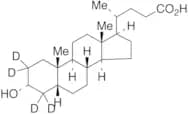
CAS :Produit contrôlé<p>Applications A labelled cholic acid derivative as TGR5 modulator. Found in ox bile, human bile, rabbit bile, and in ox and pig gallstones.<br>References Brindle, J., et al.: Nat. Med., 12, 1439 (2002), Lindon, J., et al.: Biomarkers, 9, 1 (2004), Holmes, E., et al.: Cell, 134, 714 (2008),<br></p>Formule :C242H4H36O3Couleur et forme :Off-WhiteMasse moléculaire :380.60Xanthosine Dihydrate
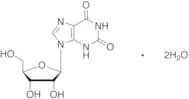
CAS :<p>Applications The deamination product of Guanosine. Potential biomarker for detecting radiation exposure. Used in the amplification of DNA isothermal strand displacement.<br>References Magasanik, B, et al.: J. Bio. Chem., 206, 83 (1954).<br></p>Formule :C10H12N4O6·2H2OCouleur et forme :NeatMasse moléculaire :320.2562'-Deoxy-6-thio Guanosine
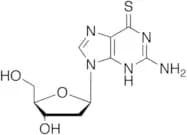
CAS :Produit contrôlé<p>Applications Guanosine (G837900) derivative with cancer chemotherapeutic properties. It is involved in the inhibition of human RNase H-mediated RNA cleavage from DNA-RNA duplexes via incorporation into DNA.<br>References Momparler, R.L. et al.: Cancer Treat. Rep., 62, 135 (1978); Krynetskaia, N.F. et al.: Mol. Pharmacol., 56, 841 (1999);<br></p>Formule :C10H13N5O3SCouleur et forme :NeatMasse moléculaire :283.31Rhodamine 6G
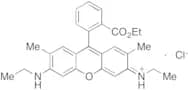
CAS :<p>Applications Rhodamine 6G is a fluorescent hydrophilic pH-sensitive dye that has been used on organosilicate nanoparticles as cell-preserving labels for photoacoustic signal generation. Dyes and metabolites, Environmental Testing<br> Not a dangerous good if item is equal to or less than 1g/ml and there is less than 100g/ml in the package<br>References O’Malley, S.M., et. al.: Chem. Phys. Lett., 615, 30 (2014); Silina, Y.E., et. al.: Analyst, 140, 771 (2015); Ramirez-Perez, F.I., et. al.: J. Biomed. Nanotech., 10, 3337 (2014)<br></p>Formule :C28H30N2O3·ClHCouleur et forme :Dark RedMasse moléculaire :479.01Parathyroid Hormone Fragment (1-34)
CAS :Produit contrôlé<p>Applications A fragment of human parathyroid hormone (hPTH) peptide sequence containing the 34 N-terminal residues of hPTH. This fragment was also found to be an agonist at PTH1 and PTH2 receptors.<br>References Niall, et al.: Proc. Natl. Acad. Sci., 71, 384 (1974); Dobnig,T., et al.: Endocrinol., 138, 4607 (1997); Manabe. et al.: Bone., 40, 1475 (2007);<br></p>Formule :C181H291N55O51S2Couleur et forme :NeatMasse moléculaire :4117.72(R)-Lotaustralin
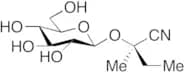
CAS :<p>Applications A bioactive constituent of Chinese natural medicines.<br>References Masayuki, Y., et al.: Chem. Pharm. Bull., 45(9), 1498 (1997)<br></p>Formule :C11H19NO6Couleur et forme :White To Light YellowMasse moléculaire :261.27Flumorph
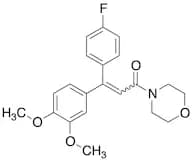
CAS :Produit contrôlé<p>Applications Flumorph can be used in analytical study of simultaneous determination of 106 pesticides in nuts by LC-MS/MS using freeze-out combined with dispersive solid-phase extraction purification.<br>References Wang, J., et al.: J Sep Sci, 40, 2398 (2017)<br></p>Formule :C21H22FNO4Couleur et forme :NeatMasse moléculaire :371.40Octyl β-D-Glucopyranoside
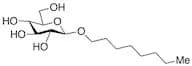
CAS :Produit contrôlé<p>Applications A nonionic detergent for the solubilization of membrane bound protein.<br>References Lairson, L., et al.: Nat. Chem. Biol., 2, 724 (2006), Kwon, S., et al.: App. Environ. Microbiol., 73, 2251 (2007), Makowski, K., et al.: Enz. Microb. Technol., 44, 59 (2009),<br></p>Formule :C14H28O6Couleur et forme :NeatMasse moléculaire :292.37N,N,N',N'-Tetramethyl-p-phenylenediamine Dihydrochloride
CAS :Produit contrôlé<p>Stability Hygroscopic<br>Applications N,N,N',N'-Tetramethyl-p-phenylenediamine dihydrochloride (cas# 637-01-4) is a useful compound for membrane-tethering cytochrome c to study its impact on cell death in yeast.<br>References Toth, A., et al.: Cell Death Dis., 11, 722 (2020)<br></p>Formule :C10H16N2·2(HCl)Couleur et forme :NeatMasse moléculaire :164.25 + 2(36.46)E 215
CAS :<p>Applications E 215 is used in studying the effect of tobacco ingredients (flavorings and additives) on smoke chemistry. It is also a useful reagent in synthesis of Poly(bis(4-carboxyphenoxy)phosphazene).<br>References Baker, R., et al.: Food Chem. Toxicol., 42, S3 (2004); Yashima, E., et al.: J. Am. Chem. Soc., 122, 7813 (2000);<br></p>Formule :C9H9O3·NaCouleur et forme :NeatMasse moléculaire :188.16Biopterin
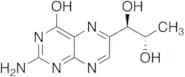
CAS :<p>Stability Hygroscopic<br>Applications A pteridine widely distributed in nature; naturally occurring as the L-erythro-form. Considered as a growth factor for some insects. Fluoresces with a blue color in alkaline solution.<br>References Klatt, P., et al.: J. Biol. Chem., 269, 13861 (1994); Mitnaul, L., et al.: Biochemistry, 92, 885 (1995); Thony, B., et al.: Biochem. J., 347, 1 (2000);<br></p>Formule :C9H11N5O3Couleur et forme :Off WhiteMasse moléculaire :237.22H-D-Ala-D-Leu-OH TFA Salt
CAS :Produit contrôlé<p>Applications H-D-Ala-D-Leu-OH (cas# 67392-69-2) is a useful research chemical.<br></p>Formule :C9H18N2O3·C2HF3O2Couleur et forme :NeatMasse moléculaire :316.274Lucifer Yellow CH Dipotassium Salt (Technical Grade)
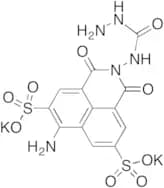
CAS :Produit contrôlé<p>Applications Lucifer Yellow CH dipotassium salt is a highly fluorescent dye useful in marking nerve cells. It can also be utilized in technical or engineered material use in effect of swelling on multiple energy transfer in conjugated polymer nanoparticles.<br>References Groff, L. C., et al.: J Phys Chem, 121, 7549 (2017)<br></p>Formule :C13H9K2N5O9S2Couleur et forme :NeatMasse moléculaire :521.57Capecitabine-2',3'-cyclic Carbonate
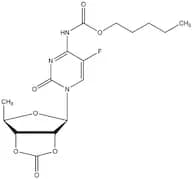
CAS :Produit contrôlé<p>Impurity Capecitabine EP Impurity F/ USP Capecitabine Related Compound C<br>Applications Capecitabine-2',3'-cyclic Carbonate (Capecitabine EP Impurity F) is a capecitabine related compound C is an impurity in Capecitabine (C175650), an antineoplastic agent. Capecitabine is a prodrug of Doxifluridine (D556750).<br>References Muss, H., et al.: New Eng. J. Med., 360, 2055 (2009), Takahashi, S., et al.: Drug Metab. Disposition, 37, 956 (2009), Saltz, L., et al.: J. Clin. Oncol., 27, 653 (2009), Sanderson, H., et al.: Toxicol. Lett., 187, 84 (2009),<br></p>Formule :C16H20FN3O7Couleur et forme :NeatMasse moléculaire :385.341-Methyl-Inosine
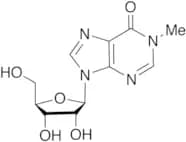
CAS :Produit contrôlé<p>Applications 1-Methyl-Inosine is a modified nucleoside which is present in higher concentrations in the urinary excretion of patients afflicted with breast cancer. It acts a a biomarker for diagnosis of the disease.<br>References Frickenschmidt, A. et al.: Biomark., 13, 435 (2008); Studzinska, S. et al.: J. Chrom. B. Tech. Biomed. Life Sci., 887, 93 (2012);<br></p>Formule :C11H14N4O5Couleur et forme :NeatMasse moléculaire :282.25Gemcitabine
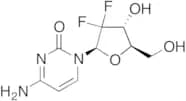
CAS :<p>Applications Gemcitabine is used for breast cancer treatment. First-line treatment for locally advanced pancreatic cancer.<br>References Hamsici, S., et al.: Bioconjugate Chem., (2017); Peng, T., et al.: J. Cell. Biochem., (2017)<br></p>Formule :C9H11F2N3O4Couleur et forme :Off-WhiteMasse moléculaire :263.21-Decanoyl-2-lauroyl-3-chloropropanediol
Produit contrôlé<p>Applications 1-Decanoyl-2–lauroyl-3-chloropropanediol belongs to a group of 3-Chloropropanediol fatty acid esters, which are contaminants found in edible oils and other food sources.<br>References Z. Zelinková, et al.: Food Addi. & Conta., 23:12, 1290-1298 (2006)<br></p>Formule :C25H47ClO4Couleur et forme :NeatMasse moléculaire :447.09DAPT
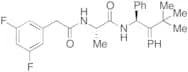
CAS :<p>Applications DAPT is a γ-secretase inhibitor which inhibits thegrowth of cancer cells and epethelial and mesenchymal transition (1,2).<br>References (1) Li, L. et al.: Oncol Lett. 7, 2160 (2014) (2) Wang, M. et al.: Int. J. Onc., 44, 1401 (2014)<br></p>Formule :C23H26F2N2O4Couleur et forme :Off White SolidMasse moléculaire :432.46Acetylurea
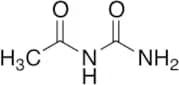
CAS :<p>Applications Acetylurea is used in the preparation Multiple urea derivative compounds which includes glycogen phosphorylase inhibitors<br>References So, S., et al.: J. Comput. Aided Mol. Des., 15, 613-647 (2001)<br></p>Formule :C3H6N2O2Couleur et forme :NeatMasse moléculaire :102.09