Produits biochimiques et réactifs
Les biochimiques et réactifs sont des substances fondamentales pour la recherche et le développement dans des domaines tels que la biotechnologie, la biologie moléculaire, la pharmacologie et la médecine. Ces produits sont essentiels pour une variété d'applications, y compris la synthèse de composés, l'analyse d'échantillons biologiques, la recherche sur les processus métaboliques et la production de médicaments. Chez CymitQuimica, nous proposons une large sélection de biochimiques et réactifs de haute qualité et pureté, adaptés à divers besoins scientifiques et industriels. Notre catalogue comprend des enzymes, des anticorps, des acides nucléiques, des acides aminés et de nombreux autres produits, tous conçus pour soutenir les chercheurs et les professionnels dans leurs projets de recherche et développement, garantissant des résultats fiables et reproductibles.
Sous-catégories appartenant à la catégorie "Produits biochimiques et réactifs"
- Biomolécules(99.185 produits)
- Par Biological Target(99.150 produits)
- Par usage/effets pharmacologiques(6.789 produits)
- Cryoconservation et composés associés aux cryoconservateurs(21 produits)
- Désinfectants, additifs pour les fluides pour bains chauffants et composés apparentés(28 produits)
- Hormones(346 produits)
- Biologie végétale(6.764 produits)
- Métabolites secondaires(14.307 produits)
130581 produits trouvés pour "Produits biochimiques et réactifs"
Trier par
Degré de pureté (%)
0
100
|
0
|
50
|
90
|
95
|
100
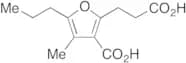
CMPF
CAS :Produit contrôlé<p>Applications CMPF is a drug-binding inhibitor which is also a constituent of urine. CMPF can inhibit specific T4 binding in serum by increasing the free concentration of direct competitors.<br>References Mabuchi, H., Nakahashi, H.: Nephron, 44, 277 (1986); Lim, C.F., et. al.: Metabolism Clin. Exp., 42, 1468 (1993);<br></p>Formule :C12H16O5Couleur et forme :NeatMasse moléculaire :240.25N-Acetyl-L-cysteine-d3
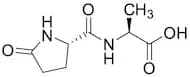
CAS :Produit contrôlé<p>Stability Hygroscopic<br>Applications A labelled metabolite of Methyl isocyanate.<br>References Slatter, J. G., et al.: Chem. Res. Toxicol., 4, 157 (1991),<br></p>Formule :C52H3H6NO3SCouleur et forme :Off-WhiteMasse moléculaire :166.21L-Pyroglutamyl-L-alanine
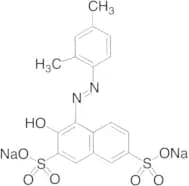
CAS :Produit contrôléFormule :C8H12N2O4Couleur et forme :NeatMasse moléculaire :200.192Acid Red 26 (>80%)
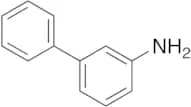
CAS :Produit contrôlé<p>Applications Acid Red 26 is an acid azo red dye used in inks and fabrics. Contributor to environmental pollution and textile effluents. Dyes and metabolites, Environmental Testing.Environmental toxin on US EPA Toxic Release Inventory list (TRI) list.<br>References Nguyen, T. et al.: J. Env. Sci. Health. A., 51, 744 (2016);<br></p>Formule :C18H14N2O7S2·2NaDegré de pureté :>80%Couleur et forme :NeatMasse moléculaire :480.423-Aminobiphenyl
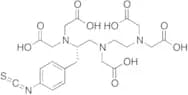
CAS :Produit contrôlé<p>Applications 3-Aminobiphenyl<br> Not a dangerous good if item is equal to or less than 1g/ml and there is less than 100g/ml in the package<br></p>Formule :C12H11NCouleur et forme :YellowMasse moléculaire :169.22p-SCN-Bn-DTPA Trihydrochloride Salt (>90%)
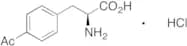
CAS :<p>Applications p-SCN-Bn-DOTA, is a Bifunctional chelator, that can be used in the preparation of gadolinium complexes as MRI blood contrast agents.<br></p>Formule :C22H28N4O10S•3(HCl)Degré de pureté :>90%Couleur et forme :Off White To Light YellowMasse moléculaire :540.54 + 3(36.46)4-Acetyl-L-phenylalanine Hydrochloride
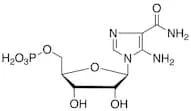
CAS :<p>Applications 4-Acetyl-L-phenylalanine Hydrochloride is the 4-acetyl analogue of the essential amino acid L-phenylaniline. 4-Acetyl-L-phenylalanine as well as other unnatural amino acids can be genetically incorporated successfully into proteins in Escherichia coli as well as mammalian cells.<br>References Liu, W. et al.: Nature Meth., 4, 239 (2007); Liu, C. et al.: Nature Biotechnol., 29, 164 (2011);<br></p>Formule :C11H13NO3•HClCouleur et forme :NeatMasse moléculaire :207.2336465-Aminoimidazole-4-carboxamide-1-β-D-Ribofuranosyl 5’-Monophosphate
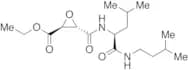
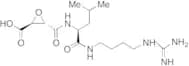
CAS :Produit contrôléFormule :C9H15N4O8PCouleur et forme :NeatMasse moléculaire :338.21E-64d
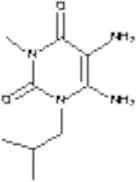
CAS :Produit contrôlé<p>Applications E-64d is an inhibitor of cathepsins B and L as well as a potential inhibitor of calpain. E-64d has been shown to inhibit lysosomal proteases. E-64d has been used in combination with Prepstatin A to interfere with autolysosomal digestion. E-64d displays neurovascular and neuronal protective effects after focal cerebral ischemia in rats.<br>References Wilcox, D. et al.: Biochem. J., 285, 495 (1992); McGowan, E.B. et al.: Biochem. Biophys. Res. Comm., 158, 432 (1989); Tsubokawa, T. et al.: J. Neurosci. Res., 84, 832 (2006);<br></p>Formule :C17H30N2O5Couleur et forme :NeatMasse moléculaire :342.434,5-Diamino-3-isobutyl-1-methylpyrimidine-2,6-dione
CAS :Produit contrôléFormule :C9H16N4O2Couleur et forme :NeatMasse moléculaire :212.25γ-Linolenic Acid
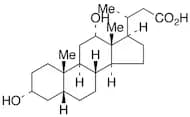
CAS :Produit contrôlé<p>Stability Light Sensitive<br>Applications γ-Linolenic Acid is a fatty acid found mainly in vegetable oil. Studies suggest that γ-Linolenic Acid may have immune regulating and anti-inflammatory effects. γ-Linolenic Acid has also been used in the treatment of atopic eczeme although its efficacy is disputed.<br>References Ziboh, V. et al.: Fatty Acids Food Health Implic., 791 (2008); Kapoor, R. et al.: Curr. Phar, Biotechnol., 7, 531 (2006); Horrobin, D. et al.: Am. J. Nutrit., 71, 367S (2000);<br></p>Formule :C18H30O2Couleur et forme :NeatMasse moléculaire :278.43Nor-Desoxycholic Acid
CAS :Produit contrôlé<p>Stability Hygroscopic<br>Applications A derivative of Deoxycholic acid (DC); the bile acid nor-DC showed considerable and continuing efflux into the perfusate; this involved mostly the unchanged acid. Nor-DC was not amidated but was metabolized to mostly ester glucuronides and hydroxylated derivatives.<br>References Haslewood, G., et al.: Biochem. J., 62, 637 (1956), Clayton, L. M., et al.: J. Pharmacol. Exp. Therap., 248, 1130 (1989), Aggarwal, S., et al.: Steroids, 57, 107 (1992), Batta, A., et al.: J. Lipid Res., 33, 1403 (1992),<br></p>Formule :C23H38O4Couleur et forme :NeatMasse moléculaire :378.55TopFluor Cholesterol
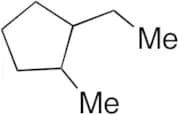
CAS :Produit contrôléFormule :C36H51BF2N2OCouleur et forme :NeatMasse moléculaire :576.611-Ethyl-1-methylcyclopentane
CAS :Produit contrôlé<p>Applications 1-Ethyl-1-methylcyclopentane, is one of the chemical components of Gas-Phase organic carbon emissions from motor vehicles. It is also a volatile component of frying oils.<br>References Gentner, D. R., et al.: Environ. Sci. Tech., 47, 11937 (2013); Prevot, A. Frying Food, 155 (1988);<br></p>Formule :C8H16Couleur et forme :NeatMasse moléculaire :112.21Disperse Red 1 (Technical Grade)
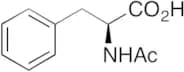
CAS :Produit contrôlé<p>Applications Disperse Red 1 is an azo disperse dye which is water insoluble. Disperse Red 1 can be used to dye polyester and acetate fibers. Dyes and metabolites, Environmental Testing.<br>References Sareek, J.: J. Soc. Dyers Colour., 78, 326 (1962); Iskender, M., et al.: Textile Res. J., 75, 462 (2005)<br></p>Formule :C16H18N4O3Couleur et forme :NeatMasse moléculaire :314.34N-Acetyl-L-phenylalanine
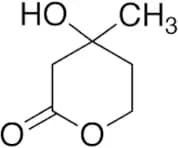
CAS :Produit contrôlé<p>Applications N-Acetyl-L-phenylalanine is an protected analogue of L-Phenylalanine (P319415), an essential amino acid produced for medical, feed, and nutritional applications such as in the preparation of Aspartame.<br>References Sriram, S., et al.: J. Med. Chem., 56, 2540 (2013); Parker, B.M., et al.: J. Biotech., 155, 396 (2011);<br></p>Formule :C11H13NO3Couleur et forme :NeatMasse moléculaire :207.23D,L-Mevalonic Acid Lactone
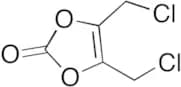
CAS :<p>Stability Hygroscopic<br>Applications A metabolite from endophytes of the medicinal plant Erythrina crista-galli.<br>References Stadler, M., et al.: Planta Med., 60, 128 (1994), Kopcke, B., et al.: Phytochemistry, 60, 709 (2002), Chu, M., et al.: J. Nat. Prod., 66, 1527 (2003), Weber, D., et al.: J. Antibiot., 57, 559 (2004),<br></p>Formule :C6H10O3Couleur et forme :NeatMasse moléculaire :130.144,5-Bis(chloromethyl)-1,3-dioxol-2-one
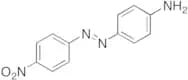
CAS :<p>Stability Moisture Sensitive<br>Applications 4,5-Bis(chloromethyl)-1,3-dioxol-2-one is an impurity of Olmesartan Medoxomil (O550000), which is an angiotensin II receptor antagonist. Used as an anti-hypertensive.<br>References Yanagisawa, H., et al.: J. Med. Chem., 39, 323 (1996), Puchler, K., et al.: J. Hypertens., 15, 1809 (1997),<br></p>Formule :C5H4Cl2O3Couleur et forme :NeatMasse moléculaire :182.9896Disperse Orange 3 (Technical Grade)
CAS :Produit contrôlé<p>Applications Disperse Orange 3 is an azo disperse dye which is water insoluble. Disperse Orange 3 can be used to dye polyester and acetate fibers. Dyes and metabolites, Environmental Testing.<br>References Nishida, K., et al.: J. Soc. Dyers Colour., 105, 112 (1989); De Wael, K.: Sci. Justice, 52, 81 (2012)<br></p>Formule :C12H10N4O2Couleur et forme :OrangeMasse moléculaire :242.23