Produits biochimiques et réactifs
Les biochimiques et réactifs sont des substances fondamentales pour la recherche et le développement dans des domaines tels que la biotechnologie, la biologie moléculaire, la pharmacologie et la médecine. Ces produits sont essentiels pour une variété d'applications, y compris la synthèse de composés, l'analyse d'échantillons biologiques, la recherche sur les processus métaboliques et la production de médicaments. Chez CymitQuimica, nous proposons une large sélection de biochimiques et réactifs de haute qualité et pureté, adaptés à divers besoins scientifiques et industriels. Notre catalogue comprend des enzymes, des anticorps, des acides nucléiques, des acides aminés et de nombreux autres produits, tous conçus pour soutenir les chercheurs et les professionnels dans leurs projets de recherche et développement, garantissant des résultats fiables et reproductibles.
Sous-catégories appartenant à la catégorie "Produits biochimiques et réactifs"
- Biomolécules(99.084 produits)
- Par Biological Target(99.070 produits)
- Par usage/effets pharmacologiques(6.784 produits)
- Cryoconservation et composés associés aux cryoconservateurs(21 produits)
- Désinfectants, additifs pour les fluides pour bains chauffants et composés apparentés(28 produits)
- Hormones(346 produits)
- Biologie végétale(6.693 produits)
- Métabolites secondaires(14.217 produits)
130573 produits trouvés pour "Produits biochimiques et réactifs"
Trier par
Degré de pureté (%)
0
100
|
0
|
50
|
90
|
95
|
100
Coagulation Factor III ELISA kit
<p>ELISA Kit for detection of Mouse Coagulation Factor III in the research laboratory</p>Degré de pureté :Min. 95%Human VCAM1 ELISA Kit
<p>ELISA kit for detection of VCAM1 in the research laboratory</p>Degré de pureté :Min. 95%Rat IGF2 ELISA Kit
<p>ELISA kit for detection of IGF2 in the research laboratory</p>Degré de pureté :Min. 95%Progesterone ELISA Kit
<p>ELISA kit for detection of Progesterone in the research laboratory</p>Degré de pureté :Min. 95%Human IFN β ELISA kit
<p>ELISA Kit for detection of IFNb in the research laboratory</p>Degré de pureté :Min. 95%05:0 PC
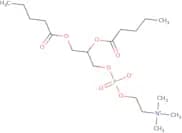
CAS :<p>05:0 PC is a peptide binding sequence that has been shown to inhibit the replication of viral sequences. 05:0 PC binds to the amino acid sequence in protein, which is a model system for peptide binding. The endoplasmic reticulum, or ER, is the site of synthesis for proteins and its low efficiency may be due to the spontaneous nature of the protein synthesis process. The ER can also be seen as an inhibitor molecule that prevents the virus from replicating. 05:0 PC has been shown to inhibit papillomavirus and HIV-1 replication in vitro. This peptide has also been shown to block interactions between viruses and cells that allow viral replication.</p>Formule :C18H36NO8PDegré de pureté :Min. 95%Masse moléculaire :425.45 g/molProlactin Releasing Peptide (1-31), bovine
<p>Catalogue peptide; min. 95% purity</p>Formule :C157H244N54O41SMasse moléculaire :3,576.01 g/molCJC-1295
CAS :<p>CJC-1295 is a synthetic peptide, which is an analogue of growth hormone-releasing hormone (GHRH). It is synthesized through recombinant DNA technology, which allows for precise control over its sequence and length. This particular peptide is designed to bind to GHRH receptors in the pituitary gland. By activating these receptors, CJC-1295 stimulates the release of growth hormone (GH) into the bloodstream.The primary function of CJC-1295 is to influence the endocrine system, particularly enhancing the release of endogenous growth hormone. It achieves this by increasing the amplitude and frequency of GH pulses without affecting the natural negative feedback mechanisms that regulate GH production. This mode of action distinguishes CJC-1295 from other growth hormone therapies, as it promotes a more physiological pattern of hormone secretion.CJC-1295 is used in various scientific contexts, primarily in research focusing on growth hormone deficiencies, muscle wasting conditions, and certain metabolic disorders. Its ability to increase GH release also makes it a subject of interest in studies related to aging, tissue repair, and regeneration. The longer half-life of CJC-1295 compared to natural GHRH peptides further enhances its applications in research, allowing for more sustained and controlled experimentation.</p>Degré de pureté :Min. 95%[Ala81]-MBP (74-85)
<p>Catalogue peptide; min. 95% purity</p>Formule :C55H94N20O21Masse moléculaire :1,371.48 g/molAmyloid beta-Protein (36-38)
CAS :<p>Amyloid beta-Protein (36-38) is a peptide that has molecular weight of 4.3 kDa. It is a fragment of amyloid precursor protein, which is cleaved by enzymes in the brain to create the peptide. Amyloid beta-Protein (36-38) has been found to be involved in Alzheimer's disease as it aggregates into β-sheet bundles and forms amyloid plaques in the brain. This protein can be detected using vibrational spectroscopy and has been observed to have a strain that changes depending on pH. This molecule also undergoes proteolysis by peptidases, which break down proteins into amino acids for analysis with an amino acid analyzer. The solute can be analyzed with an acid analysis or spectrometer, which are used to determine functional groups such as carboxylic acids, hydroxyls, or amides. Amyloid beta-Protein (36-38)</p>Formule :C9H17N3O4Degré de pureté :Min. 95%Masse moléculaire :231.25 g/molH-His-Arg-OH
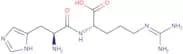
CAS :<p>H-His-Arg-OH is a synthetic peptide that has been shown to have cytotoxic effects on mammalian cells. The H-His-Arg-OH peptide can be used for the treatment of heart disease and autoimmune diseases, such as rheumatoid arthritis. This peptide has been found to be resistant to congestive heart failure, which is caused by a number of factors, including hypertension and valvular stenosis. It has also been shown to have an immunoglobulin G1 (IgG1) genotype.</p>Formule :C12H21N7O3Degré de pureté :Min. 95%Masse moléculaire :311.34 g/molMyelin Oligodendrocyte Glycoprotein (35-55) (mouse, rat) trifluoroacetate
CAS :<p>Myelin oligodendrocyte glycoprotein (MOG) is a myelin protein found in the central nervous system. MOG is a ligand for CD200, which is an inhibitory receptor expressed by astrocytes. It has been shown that MOG can induce the proliferation and differentiation of primary cultures of rat astrocytes in vitro. MOG induces the production of reactive oxygen species in mitochondria and increases the expression of acid-binding protein, which are both important factors in the demyelination process. MOG has also been implicated as a potential factor in the development of multiple sclerosis. Further research into this protein may lead to new treatments or cures for disorders such as encephalomyelitis, nervous system diseases, or even cancer.</p>Formule :C118H177N35O29S•C2HO2F3Degré de pureté :Min. 95%Couleur et forme :PowderMasse moléculaire :2,695.98 g/molHead activator
<p>Catalogue peptide; min. 95% purity</p>Formule :C54H84N12O14Masse moléculaire :1,125.36 g/mol








![[Ala81]-MBP (74-85)](/_next/image/?url=https%3A%2Fstatic.cymitquimica.com%2Fproducts%2F3D%2Fthumb-webp%2FVAC-00644.webp&w=3840&q=75)