Produits biochimiques et réactifs
Les biochimiques et réactifs sont des substances fondamentales pour la recherche et le développement dans des domaines tels que la biotechnologie, la biologie moléculaire, la pharmacologie et la médecine. Ces produits sont essentiels pour une variété d'applications, y compris la synthèse de composés, l'analyse d'échantillons biologiques, la recherche sur les processus métaboliques et la production de médicaments. Chez CymitQuimica, nous proposons une large sélection de biochimiques et réactifs de haute qualité et pureté, adaptés à divers besoins scientifiques et industriels. Notre catalogue comprend des enzymes, des anticorps, des acides nucléiques, des acides aminés et de nombreux autres produits, tous conçus pour soutenir les chercheurs et les professionnels dans leurs projets de recherche et développement, garantissant des résultats fiables et reproductibles.
Sous-catégories appartenant à la catégorie "Produits biochimiques et réactifs"
- Biomolécules(99.205 produits)
- Par Biological Target(99.900 produits)
- Par usage/effets pharmacologiques(6.790 produits)
- Cryoconservation et composés associés aux cryoconservateurs(21 produits)
- Désinfectants, additifs pour les fluides pour bains chauffants et composés apparentés(28 produits)
- Hormones(346 produits)
- Biologie végétale(6.835 produits)
- Métabolites secondaires(14.345 produits)
130607 produits trouvés pour "Produits biochimiques et réactifs"
Trier par
Degré de pureté (%)
0
100
|
0
|
50
|
90
|
95
|
100
Bis[2,5-Dimethoxy-4-(p-nitrophenylazo)benzenediazonium] Chlorozincate
CAS :<p>Applications Bis[2,5-Dimethoxy-4-(p-nitrophenylazo)benzenediazonium] Chlorozincate can be used for test kits to detect and identify narcotics. It has also been assessed for its suitability as oxygen reduction electrocatalysts and sonoelectrocatalysts.<br>References Callahan, M.D., et.al., U.S., 13,(2017); Sljukic, B., et.al., Electroanalysis, 17,1025-1034,(2005);<br></p>Formule :C14H12N5O4Cl4ZnCouleur et forme :NeatMasse moléculaire :835.776-Hydroxy-L-DOPA
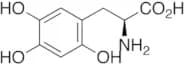
CAS :Produit contrôlé<p>Impurity Levodopa EP Impurity A; Levodopa USP Related Compound A<br>Stability Hygroscopic<br>Applications 6-Hydroxy-L-DOPA (Levodopa EP Impurity A; Levodopa USP Related Compound A) is the 6-hydroxy derivative of the amino acid L-DOPA (D533751) with neurotoxic properties. Studies show that exogenously administered 6-Hydroxy-L-DOPA is biotransformed by amino acid decarboxylase to the highly potent and catecholamine-selective neurotoxin, 6-Hydroxydopamine. The treatment of 6-Hydroxy-L-DOPA in rats resulted in the stimulation of acetylcholinesterase.<br>References Jaim-Etcheverry, G. et al.: Brain Res., 100, 699 (1975); Kostrzewa, R.M. et al.: Amino Acids, 14, 175 (1998); Berthet, A. et al.: J. Neurosci., 29, 4829 (2009);<br></p>Formule :C9H11NO5Couleur et forme :Brown To BlackMasse moléculaire :213.192-Propylmalonic Acid
CAS :Produit contrôlé<p>Applications 2-Propylmalonic acid (cas# 616-62-6) is a useful research chemical.<br></p>Formule :C6H10O4Couleur et forme :NeatMasse moléculaire :146.14Arainosine
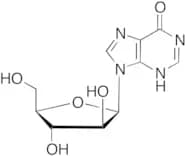
CAS :Produit contrôlé<p>Applications Arainosine is used in the preparation of 5'-O-D-valyl adenine 9-β-D-arabinofuranoside, a potential prodrug for improving the oral bioavailability of the antiviral agent Vidarabine (V305030).<br>References Shen, W., et al.: Nucleos. Nucleot. Nucl., 28, 43 (2009)<br></p>Formule :C10H12N4O5Couleur et forme :White To Off-WhiteMasse moléculaire :268.23L-Ornithine-2,3,3,4,4,5,5-d7 hydrochloride
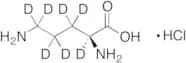
CAS :Produit contrôlé<p>Applications L-Ornithine-2,3,3,4,4,5,5-d7 hydrochloride is the labelled analogue of L-Ornithine Hydrochloride (O695550), a non-essential amino acid for human development but is required intermediate in arginine biosynthesis. L-Ornithine is found in virtually all vertebrate tissues as well as incorporated into proteins, such as tyrocidine. Isolation from chicken excreta.<br>References Fattori, D., et al.: J. Med. Chem., 50, 550 (2007), Gomez-Alonso, S., et al.: J. Agric. Food Chem., 55, 608 (2007), Subramaniam, R., et al.: Bioorg. Med. Chem. Lett., 18, 3333 (2008),<br></p>Formule :C5D7H5N2O2·ClHCouleur et forme :NeatMasse moléculaire :175.11049260882-(Hydroxyamino)acetic Acid
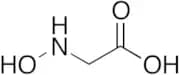
CAS :Produit contrôlé<p>Applications 2-(Hydroxyamino)acetic Acid is a novel lactase inhibitor.<br>References Hattori, M., et al.: J. Insect Physiol., 51, 1359 (2005); Murao, S., et al.: Biosci. Biotech. Biochem., 56, 987 (1992)<br></p>Formule :C2H5NO3Couleur et forme :NeatMasse moléculaire :91.071-Anilino-3-phenylimino-1-propene Hydrochloride
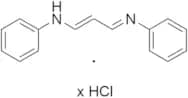
CAS :Produit contrôléFormule :C15H14N2·xHClCouleur et forme :NeatDabsyl Chloride
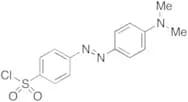
CAS :<p>Applications Dabsyl Chloride is used for HPLC amine derivatization to detect proteins and other molecules.<br> Not a dangerous good if item is equal to or less than 1g/ml and there is less than 100g/ml in the package<br>References Romero, R. et al.: Chromatograph., 51, 404 (2000); Ikeda, M. et al.: Amino Acids., 8, 401 (1995):<br></p>Formule :C14H14ClN3O2SCouleur et forme :NeatMasse moléculaire :323.80Calcitriol-d6
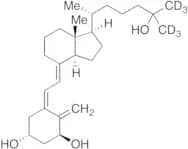
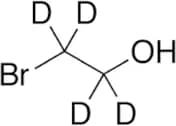
CAS :Produit contrôlé<p>Stability Light Sensitive, Temperature Sensitive<br>Applications The biologically active form of vitamin D3. Calcium regulator; vitamin (antirachitic); antihyperparathyroid; antineoplastic; antipsoriatic.<br> Not a dangerous good if item is equal to or less than 1g/ml and there is less than 100g/ml in the package<br>References Myrtle, J.F., et al.: J. Biol. Chem., 245, 1190 (1970), Lawson, D.E.M., et al.: Nature, 230, 228 (1971), Norman, A.W., et al.: Science, 173, 51 (1971), Suda, T., et al.: Vitamins, 45, 175 (1972), Muindi, J.R., et al.: Clin. Pharmacol. Ther., 72, 648 (2002),<br></p>Formule :C272H6H38O3Couleur et forme :BeigeMasse moléculaire :422.672-Bromoethanol-d4
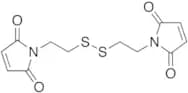
CAS :Produit contrôlé<p>Applications Isotope labelled 2-Bromoethanol is an widely used intermediate in organic synthesis.<br> Not a dangerous good if item is equal to or less than 1g/ml and there is less than 100g/ml in the package<br>References Tian, Z., et al.: Int. J. Quant. Chem., 111, 631 (2011); Thayer, F.K., et al.: Org. Syntheses., 6, (1926);<br></p>Formule :C22H4HBrOCouleur et forme :NeatMasse moléculaire :128.99Dithio-bis-maleimidoethane
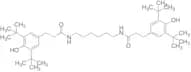
CAS :Produit contrôlé<p>Stability Hygroscopic<br>Applications A sulfhydryl reactive homobifunctional crosslinking reagent.Spacer Arm: 13.3 Angstroms<br>References Han, J.C., et al.: Anal. Biochem., 220, 5 (1994)<br></p>Formule :C12H12N2O4S2Couleur et forme :NeatMasse moléculaire :312.36Antioxidant 1098
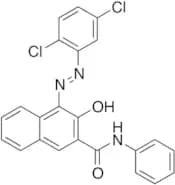
CAS :Produit contrôlé<p>Applications Antioxidant 1098 (cas# 23128-74-7) is used as a modifier in polymer stabilization.<br>References Li, C.; et al.: J. Appl. Poly. Sci., 134 (2017).<br></p>Formule :C40H64N2O4Couleur et forme :NeatMasse moléculaire :636.95Pigment Red 2 (Technical Grade)
CAS :Produit contrôléFormule :C23H15Cl2N3O2Couleur et forme :NeatMasse moléculaire :436.29Disodium NADP (~90%)
CAS :Produit contrôlé<p>Applications Disodium NADP is used in method for preparing 2,4-Diamino Butyric Acid by enzyme catalysis.<br>References Yu, T., et al.: Faming Zhuanli Shenqing, (2020);<br></p>Formule :C21H26N7O17P3·2NaDegré de pureté :~90%Couleur et forme :NeatMasse moléculaire :787.3692-Amino-6-mercaptopurine-9-D-riboside Hydrate
CAS :<p>Stability Hygroscopic<br>Applications 2-Amino-6-mercaptopurine-9-D-riboside Hydrate (cas# 345909-25-3) is a compound useful in organic synthesis.<br></p>Formule :C10H13N5O4S·x(H2O)Couleur et forme :Light Yellow PowderMasse moléculaire :299.31N6-Methyladenosine
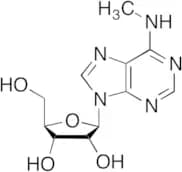
CAS :Produit contrôlé<p>Applications N6-Methyladenosine is the most common internal modification of eukaryotic mRNA. The result of this modification is specifically recognized mRNA in the cytoplasm which regulates mRNA stability.N6-Methyladenosine is made when a protein complex containin the writer enzyme METTL3 adds a methyl group to adenosine. Two different eraser enzymes ALKBH5 and FTO can remove a methyl group to turn m6A bach into adenosine.<br>References Miura, G. et al.: Nat. Chem. Biol., 11, 903 (2015); Deng, X. et al.: Nucl. Acids Res., 43, 6557 (2015); Chem. and Eng. News, p.35, Feb. 18, 2019<br></p>Formule :C11H15N5O4Couleur et forme :Off-WhiteMasse moléculaire :281.27Trypan Blue (Technical Grade)
CAS :<p>Applications Trypan Blue is an azo based, hydrophilic, tetrasulfonated blue acid dye widely utilized for assessing cell viability. As an easy method to determining the viability of cells, Trypan Blue will stain dead cells with permeable membranes blue, while the dye is excluded by most living cells and their intact membranes thereby allowing visual determination of living versus dead cells. Although Trypan Blue is predominately used for assessing cell viability of cultured cells, other applications for this dye have been reported. In rat abdominal organ slices Trypan Blue has been utilized to determine cell viability as well as islet cell cluster cell viability from caprine pancreatic samples. Dyes and metabolites.<br>References Bonnefille, P. et al. 2010. Fundam Clin Pharmacol. PMID: 21121944; Han, T.H. et al. 2010. J Acupunct Meridian Stud. 3(4): 241-248. PMID: 21185538; Saadatnia, G. et al. 2010. Trop Biomed. 27(1): 125-130. PMID: 20562822; Hani, H. et al. 2010. Xenotransplantation. 17(6): 469-480. PMID: 21158948<br></p>Formule :C34H24N6O14S4·4NaCouleur et forme :NeatMasse moléculaire :960.80E-64d
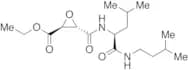
CAS :Produit contrôlé<p>Applications E-64d is an inhibitor of cathepsins B and L as well as a potential inhibitor of calpain. E-64d has been shown to inhibit lysosomal proteases. E-64d has been used in combination with Prepstatin A to interfere with autolysosomal digestion. E-64d displays neurovascular and neuronal protective effects after focal cerebral ischemia in rats.<br>References Wilcox, D. et al.: Biochem. J., 285, 495 (1992); McGowan, E.B. et al.: Biochem. Biophys. Res. Comm., 158, 432 (1989); Tsubokawa, T. et al.: J. Neurosci. Res., 84, 832 (2006);<br></p>Formule :C17H30N2O5Couleur et forme :NeatMasse moléculaire :342.43Campestanol
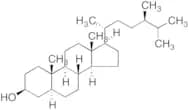
CAS :<p>Applications Campestanol can be used as analyte in biological and analytical studies for the determination of 22 natural brassinosteroids in a minute sample of plant tissue by UHPLC-ESI-MS/MS.<br>References Tarkowska, D., et al.: Anal. Bioanal. Chem., 408, 6799-6812 (2016)<br></p>Formule :C28H50OCouleur et forme :NeatMasse moléculaire :402.70
![Bis[2,5-Dimethoxy-4-(p-nitrophenylazo)benzenediazonium] Chlorozincate](/_next/image/?url=https%3A%2Fstatic.cymitquimica.com%2Fproducts%2FTR%2Fthumb-webp%2FD640711.webp&w=3840&q=75)