Produits biochimiques et réactifs
Les biochimiques et réactifs sont des substances fondamentales pour la recherche et le développement dans des domaines tels que la biotechnologie, la biologie moléculaire, la pharmacologie et la médecine. Ces produits sont essentiels pour une variété d'applications, y compris la synthèse de composés, l'analyse d'échantillons biologiques, la recherche sur les processus métaboliques et la production de médicaments. Chez CymitQuimica, nous proposons une large sélection de biochimiques et réactifs de haute qualité et pureté, adaptés à divers besoins scientifiques et industriels. Notre catalogue comprend des enzymes, des anticorps, des acides nucléiques, des acides aminés et de nombreux autres produits, tous conçus pour soutenir les chercheurs et les professionnels dans leurs projets de recherche et développement, garantissant des résultats fiables et reproductibles.
Sous-catégories appartenant à la catégorie "Produits biochimiques et réactifs"
- Biomolécules(99.116 produits)
- Par Biological Target(99.075 produits)
- Par usage/effets pharmacologiques(6.785 produits)
- Cryoconservation et composés associés aux cryoconservateurs(21 produits)
- Désinfectants, additifs pour les fluides pour bains chauffants et composés apparentés(28 produits)
- Hormones(346 produits)
- Biologie végétale(6.700 produits)
- Métabolites secondaires(14.220 produits)
130578 produits trouvés pour "Produits biochimiques et réactifs"
Trier par
Degré de pureté (%)
0
100
|
0
|
50
|
90
|
95
|
100
N-[(Benzyloxy)carbonyl]glycylglycine
CAS :<p>Applications N-[(Benzyloxy)carbonyl]glycylglycine is a reagent in the synthesis of Glycylglycyl-L-tyrosine (G718500), which is a fungal tyrosinases and their capability to oxidize peptide-bound tyrosine residues is important in a view of applicability of tyrosinases.<br>References Bowness, J., et al.: Biochem. J., 53, 620 (1953), Cuff, M., et al.: J. Mol. Biol., 278, 855 (1998), Kubo, I., et al.: Bioorg. Med. Chem., 12, 5349 (2004),<br></p>Formule :C12H14N2O5Couleur et forme :NeatMasse moléculaire :266.254-Aminohippuric Acid
CAS :Produit contrôlé<p>Applications 4-Aminohippuric Acid is used in the measurement of renal plasma flow as a diagnostic tool which may be applied towards kidney disorders.<br>References Phillips, R. et al.: Am. J. Physiol., 152, 523 (1948);<br></p>Formule :C9H10N2O3Couleur et forme :Off White SolidMasse moléculaire :194.197β-Hydroxy Cholesterol
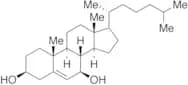
CAS :Produit contrôlé<p>Applications A metabolite of Cholesterol. Its membrane organizing properties could have implications in Altzheimer’s disease.<br>References Wang, J., et al.: Biochemistry, 43, 1010 (2004), Lemaire-Ewing, S., et al.: Cell Biol. Toxicol., 21, 97 (2005), Fuda, H., et al.: J. Lipid Res., 48, 1343 ( 2007), Sasaki, H., et al.: Metabolism, 56, 357 (2007); S.L. Regen et al.: J. Amer. Chem. Soc., 131, 12354 (2009)<br></p>Formule :C27H46O2Couleur et forme :NeatMasse moléculaire :402.65N-Methyl-L-alanine
CAS :Produit contrôlé<p>Applications N-Methyl-L-alanine is a reactant used in the preparation of site-specific trastuzumab maytansinoid antibody-drug conjugates with improved therapeutic activity.<br>References Pillow, T.H., et. al.: J. Med. Chem., 57, 7890 (2014)<br></p>Formule :C4H9NO2Couleur et forme :NeatMasse moléculaire :103.12Dihexadecyldimethylammonium Chloride
CAS :Produit contrôlé<p>Applications Dihexadecyldimethylammonium Chloride is used in hair cosmetic as a emulsion agent.<br>References Guimaraes, J. P. D., et al., PCT Int. Appl. (2020), WO 2020257889 A1;<br></p>Formule :C34H72N·ClCouleur et forme :NeatMasse moléculaire :530.4Phenyl(9H-purin-6-yl)amine
CAS :Produit contrôlé<p>Applications Phenyl(9H-purin-6-yl)amine (cas# 1210-66-8) is a compound useful in organic synthesis.<br></p>Formule :C11H9N5Couleur et forme :NeatMasse moléculaire :211.224,4'-Methylenebis-benzen-2,6-d2-amine
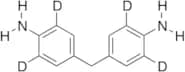
CAS :Produit contrôlé<p>Applications 4,4'-Methylenebis-benzen-2,6-d2-amine is the labelled compound form of 4,4'-Methylenedianiline (M304180) which is used in the production of polyurethane foams and epoxy resins (1). Potential contributor in pulmonary arterial hypertension (PAH) in rats through alteration of the serotenergic transport system (2). Drinking water contaminant candidate list 3 (CCL 3) compound as per United States Environmental Protection Agency (EPA), environmental, and food contaminants. Dyes and metabolites, Environmental Testing.<br>References Hebert, V., et al.: Cardiovas. Toxicol., 11, 316-24 (2011); Carroll-Turpin, M., et al.: Toxicol. Sci., 147, 235-45 (2015)<br></p>Formule :C13D4H10N2Couleur et forme :NeatMasse moléculaire :202.29(R,S)-Equol 4’-Sulfate Sodium Salt (90%)
CAS :Produit contrôlé<p>Stability Moisture and Temperature Sensitive<br>Applications (R,S)-Equol 4’-Sulfate is a sulfated metabolite of isoflavone Daidzein (D103500).<br>References Heinonen, S., et al.: Anal. Biochem., 274, 211 (1999), Setchell, K., et al.: J. Nutr., 132, 3577 (2002), Thigpen, J., et al.: Comp. Med., 53, 607 (2003), Yee, S., et al.: Food Chem. Toxicol., 46, 2713 (2008),<br></p>Formule :C15H13O6S·NaDegré de pureté :90%Couleur et forme :NeatMasse moléculaire :344.31E-64d
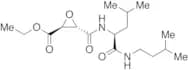
CAS :Produit contrôlé<p>Applications E-64d is an inhibitor of cathepsins B and L as well as a potential inhibitor of calpain. E-64d has been shown to inhibit lysosomal proteases. E-64d has been used in combination with Prepstatin A to interfere with autolysosomal digestion. E-64d displays neurovascular and neuronal protective effects after focal cerebral ischemia in rats.<br>References Wilcox, D. et al.: Biochem. J., 285, 495 (1992); McGowan, E.B. et al.: Biochem. Biophys. Res. Comm., 158, 432 (1989); Tsubokawa, T. et al.: J. Neurosci. Res., 84, 832 (2006);<br></p>Formule :C17H30N2O5Couleur et forme :NeatMasse moléculaire :342.439-cis-Retinal
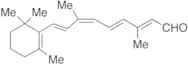
CAS :Produit contrôlé<p>Stability Light Sensitive, Temperature Sensitive<br>Applications 9-cis-Retinal is an isomer of all-trans-Retinal (R240000).<br>References Yan, E., et al.: Biochemistry, 43, 10867 (2004), Kukura, P., et al.: Science, 310, 1006 (2005), Ridge, K., et al.: J. Biol. Chem., 282, 9297 (2007),<br></p>Formule :C20H28OCouleur et forme :NeatMasse moléculaire :284.44Androst-4-ene-3,17-dione-2,2,4,6,6,16,16-d7
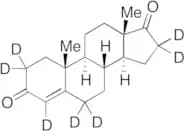
CAS :Produit contrôlé<p>Applications Androst-4-ene-3,17-dione-2,2,4,6,6,16,16-d7 is an intermediate in the synthesis of Dehydroepiandrosterone-d5 which is the labeled analogue of Dehydro Epiandrosterone (D229585). Dehydro Epiandrosterone is a major secretory steroidal product of the adrenal gland; secretion progresively declines with aging. May have estrogen-or androgen-like effects depending on the hormonal milieu. Intracellularly converted to androstenedione. It is used in treatment of menopausal syndrome.<br>References Yahara, M., et al.: J. Toxicol. Sci., 2, 161 (1977), Morales, A.J., et al.: J. Clin. Endocrinol. Metab., 78, 1360 (1994), Ebeling, P., et al.: Lancet, 343, 1479 (1994),<br></p>Formule :C19D7H19O2Couleur et forme :NeatMasse moléculaire :293.46Glycerol Trilinoleate
CAS :<p>Applications Polyunsaturaded fatty acid.<br></p>Formule :C57H98O6Couleur et forme :NeatMasse moléculaire :879.38Hydantoin
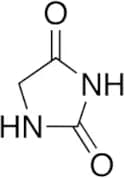
CAS :Produit contrôlé<p>Applications Hydantoin (cas# 461-72-3) is a compound useful in organic synthesis.<br></p>Formule :C3H4N2O2Couleur et forme :NeatMasse moléculaire :100.08Tetragalacturonic Acid
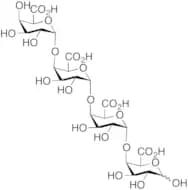
CAS :Produit contrôlé<p>Applications Tetragalacturonic Acid, is the product of polygalacturonic acid degradation. The mixture of Oligogalacturonic Acids has shown to have shoot growth in cockscomb (Celosia argentea L.) seedlings.<br>References Suzuki, T., et al.: J. Plant Growth Reg., 21, 209 (2003);<br></p>Formule :C24H34O25Couleur et forme :NeatMasse moléculaire :722.5114,15-Epoxyeicosatrienoic Acid
CAS :Produit contrôlé<p>Applications Epoxyeicosatrienoic Acid (EET) has antihypertensive and anti-inflammatory properties and play a role in the maintenance of renal vascular function. N,N'-dicyclohexylurea (DCU) increased release of 14,15-EET when the cells were stimulated with a calcium ionophore.Also, it is derived from Arachidonic Acid >97% (A765000), which is an essential fatty acid and a precursor in the biosynthesis of prostaglandins, thromboxanes, and leukotrienes. Arachidonic Acid occurs in liver, brain, glandular organs, and depot fats of animals, in small amounts in human depot fats, and Arachidonic Acid is also a constituent of animal phosphatides.<br>References Zhao, X., et al.: J. Am. Soc. Nephrol., 15, 1244 (2004); Fang, X., et al.: J. Biol. Chem., 276, 14867 (2001); Kurosawa, T., et al.: J. Cell. Physiol., 219, 606 (2009); Mazalli, M., et al.: J. Agric. Food Chem., 57, 5028 (2009);<br></p>Formule :C20H32O3Couleur et forme :NeatMasse moléculaire :320.4661-Palmitoyl-rac-glycerol
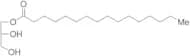
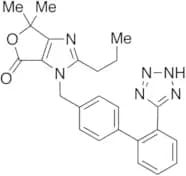
CAS :<p>Applications 1-Palmitoyl-rac-glycerol is a biomarker of metabolic responses to hepatotoxicants and carcinogens.<br>References Broadhurst, D., et al.: Metabolomics, 2, 171 (2006), Shi, J., et al.: Nat. Biotechnol., 25, 930 (2007),<br></p>Formule :C19H38O4Couleur et forme :NeatMasse moléculaire :330.50Olmesartan Lactone Impurity
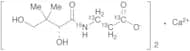
CAS :<p>Impurity Olmesartan EP Impurity B/ Olmesartan Medoximil USP Related Compound A<br>Applications Olmesartan Lactone Impurity (Olmesartan EP Impurity B) is a cyclic ester impurity of Olmesartan (O550000).<br></p>Formule :C24H24N6O2Couleur et forme :WhiteMasse moléculaire :428.49Pantothenic Acid-13C3,15N Hemicalcium Salt
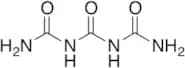
CAS :<p>Applications Labelled Pantothenic Acid. A member of the B complex vitamins; essential vitamin for the biosynthesis of coenzyme A in mammalian cells. Occurs ubiquitously in all animal and plant tissue. The richest common source is liver, but jelly of the queen bee contains 6 times as much as liver. Rice bran and molasses are other good sources.<br>References Gardner, P., et al.: Food Chem., 68, 471 (2000), Ou, B., et al.: J. Agric. Food Chem., 50, 2772 (2002), Bahorun, T., et al.: J. Sci. Food Agric., 84, 1553 (2004),<br></p>Formule :C3C6H1615NO5·CaCouleur et forme :BeigeMasse moléculaire :484.47Triuret
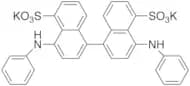
CAS :<p>Applications Triuret is a byproduct of purine degradation in living organisms. It is a product from the pyrolsis of urea.<br>References Sergiu P. P., et al:. HHS Public Access, (2010);<br></p>Formule :C3H6N4O3Couleur et forme :NeatMasse moléculaire :146.104,4'-Dianilino-1,1'-binaphthyl-5,5'-disulfonic Acid Dipotassium
CAS :Produit contrôlé<p>Applications 4,4'-Dianilino-1,1'-binaphthyl-5,5'-disulfonic Acid is a bifunctional fluorescent probe for proteins.<br>References Hawe, A., et al.: Anal. Biochem., 378, 115 (2008), Hawe, A., et al.: Eur. J. Pharm. Sci., 38, 79 (2009), Hawe, A., et al.: Pharm. Res., 27, 314 (2010),<br></p>Formule :C32H22N2O6S2·2KCouleur et forme :NeatMasse moléculaire :672.854
![N-[(Benzyloxy)carbonyl]glycylglycine](/_next/image/?url=https%3A%2Fstatic.cymitquimica.com%2Fproducts%2FTR%2Fthumb-webp%2FB287100.webp&w=3840&q=75)