Produits biochimiques et réactifs
Les biochimiques et réactifs sont des substances fondamentales pour la recherche et le développement dans des domaines tels que la biotechnologie, la biologie moléculaire, la pharmacologie et la médecine. Ces produits sont essentiels pour une variété d'applications, y compris la synthèse de composés, l'analyse d'échantillons biologiques, la recherche sur les processus métaboliques et la production de médicaments. Chez CymitQuimica, nous proposons une large sélection de biochimiques et réactifs de haute qualité et pureté, adaptés à divers besoins scientifiques et industriels. Notre catalogue comprend des enzymes, des anticorps, des acides nucléiques, des acides aminés et de nombreux autres produits, tous conçus pour soutenir les chercheurs et les professionnels dans leurs projets de recherche et développement, garantissant des résultats fiables et reproductibles.
Sous-catégories appartenant à la catégorie "Produits biochimiques et réactifs"
- Biomolécules(99.185 produits)
- Par Biological Target(99.150 produits)
- Par usage/effets pharmacologiques(6.789 produits)
- Cryoconservation et composés associés aux cryoconservateurs(21 produits)
- Désinfectants, additifs pour les fluides pour bains chauffants et composés apparentés(28 produits)
- Hormones(346 produits)
- Biologie végétale(6.764 produits)
- Métabolites secondaires(14.307 produits)
130581 produits trouvés pour "Produits biochimiques et réactifs"
Trier par
Degré de pureté (%)
0
100
|
0
|
50
|
90
|
95
|
100
KLRC3 antibody
<p>KLRC3 antibody was raised using the N terminal of KLRC3 corresponding to a region with amino acids MSKQRGTFSEVSLAQDPKWQQRKPKGNKSSISGTEQEIFQVELNLQNASL</p>Degré de pureté :Min. 95%Cyclin B1 antibody
<p>The Cyclin B1 antibody is a highly specialized polyclonal antibody that is used in the field of Life Sciences. It is specifically designed to target and bind to the Cyclin B1 protein, which plays a crucial role in cell division and proliferation. This antibody is available in both monoclonal and polyclonal forms, providing researchers with options to suit their specific needs.</p>UBE2E2 antibody
<p>UBE2E2 antibody was raised using a synthetic peptide corresponding to a region with amino acids GDQRESVQQEPEREQVQPKKKEGKISSKTAAKLSTSAKRIQKELAEITLD</p>NGAL protein
<p>NGAL protein is a multifunctional protein that plays a crucial role in various biological processes. It acts as an epidermal growth factor and has anti-mesothelin properties, making it valuable in the field of Life Sciences. NGAL protein functions as a growth factor and chemokine, promoting cell proliferation and migration. It can be used as a recombinant protein or antigen for research purposes.</p>Degré de pureté :Min. 95%RAP1B antibody
<p>The RAP1B antibody is an acidic growth factor that plays a crucial role in various biological processes. It is commonly used in Life Sciences research to study the functions of RAP1B, a small GTPase protein. This polyclonal antibody is highly specific and binds to RAP1B with high affinity, making it an excellent tool for detecting and quantifying RAP1B levels in different samples.</p>Cyclin D1 antibody
<p>The Cyclin D1 antibody is a powerful tool in the field of Life Sciences. This antibody specifically targets and binds to Cyclin D1, an important protein involved in cell cycle regulation. It is available as both monoclonal and polyclonal antibodies, offering researchers a variety of options for their experiments.</p>TCP1 antibody
<p>The TCP1 antibody is a powerful tool used in various research fields, particularly in the life sciences. This antibody is known for its inhibitory properties against natriuretic peptides and activated protein kinases. It also acts as a neutralizing agent against chemokines, making it an essential component in immunoassays.</p>Mouse anti Human IgE
<p>Human IgE antibody was raised in mouse using human myeloma IgE as the immunogen.</p>CLN8 antibody
<p>CLN8 antibody was raised using a synthetic peptide corresponding to a region with amino acids VFGVQSTAAGLWALLGDPVLHADKARGQQNWCWFHITTATGFFCFENVAV</p>Degré de pureté :Min. 95%CD130 antibody
<p>The CD130 antibody is a polyclonal antibody that is widely used in the field of Life Sciences. It specifically targets the tyrosine kinase receptor CD130, which plays a crucial role in various cellular processes. This antibody can be used for research purposes to study the function and regulation of CD130.</p>CD44 antibody
<p>CD44 antibody is a hormone peptide that specifically binds to CD44, a cell surface glycoprotein involved in various cellular processes. This antibody is widely used in Life Sciences research and is commonly used as a tool to study the functions of CD44. It can be used in experiments such as immunohistochemistry, flow cytometry, and Western blotting to detect and analyze CD44 expression levels. CD44 antibody can also be used for therapeutic purposes, such as targeted therapy for certain types of cancer. It has been shown to have cytotoxic effects on cancer cells by blocking growth factor signaling pathways or inducing apoptosis. Additionally, CD44 antibody can be conjugated with other molecules, such as trastuzumab or epidermal growth factor, to enhance its specificity and efficacy in targeting specific cells or tissues. With its versatility and wide range of applications, CD44 antibody is an essential tool for researchers and clinicians in the field of Life Sciences.</p>Degré de pureté :Min. 95%TIMP3 antibody
<p>The TIMP3 antibody is a polyclonal antibody that specifically targets TGF-beta. It is widely used in life sciences research to study the role of TGF-beta in various biological processes. This antibody has been shown to inhibit the activity of pancreatic elastase, an enzyme involved in tissue destruction. Additionally, it has been found to interfere with glycosylation, a process essential for proper protein function. The TIMP3 antibody can also block the activity of growth factors and lectins, further highlighting its versatility in research applications. With its cytotoxic properties, this antibody holds promise as a potential medicament for various diseases. It has demonstrated efficacy in targeting human serum and inhibiting the activity of VEGF, a key factor involved in angiogenesis. Overall, the TIMP3 antibody offers researchers a valuable tool for studying TGF-beta-related processes and developing novel therapeutic strategies.</p>HSP90 antibody
<p>The HSP90 antibody is a highly specific monoclonal antibody that targets the heat shock protein 90 (HSP90). This protein plays a crucial role in cellular processes such as protein folding, cell signaling, and stress response. The HSP90 antibody can be used for various applications in Life Sciences research, including Western blotting, immunohistochemistry, and immunofluorescence.</p>LSS antibody
<p>LSS antibody was raised using a synthetic peptide corresponding to a region with amino acids KCPHVTEHIPRERLCDAVAVLLNMRNPDGGFATYETKRGGHLLELLNPSE</p>GOLM1 antibody
<p>The GOLM1 antibody is a highly effective nanocomposite that targets actin filaments in the body. This monoclonal antibody has been specifically designed to neutralize the activity of TGF-beta, a protein that plays a crucial role in cell growth and differentiation. By blocking TGF-beta, the GOLM1 antibody inhibits the formation of collagen and other extracellular matrix proteins, thereby preventing tissue fibrosis and promoting tissue repair. This antibody can be used in various life science applications, including research studies and diagnostic assays. With its high specificity and potency, the GOLM1 antibody is an invaluable tool for scientists and researchers working in the field of cell biology.</p>EPS8L1 antibody
<p>EPS8L1 antibody was raised using the middle region of EPS8L1 corresponding to a region with amino acids LQKEELRAVSPEEGARVYSQVTVQRSLLEDKEKVSELEAVMEKQKKKVEG</p>N-(4'-Cyano[1,1'-biphenyl]-4-yl)-N'-[4-(3H-imidazo[4,5-b]pyridin-7-yl)phenyl] urea
CAS :<p>N-(4'-Cyano[1,1'-biphenyl]-4-yl)-N'-[4-(3H-imidazo[4,5-b]pyridin-7-yl)phenyl] urea is a peptide that can be used as a research tool for studying the activation of ion channels. This peptide has been shown to inhibit the activity of potassium channels and may be useful in treating neurological disorders such as epilepsy. N-(4'-Cyano[1,1'-biphenyl]-4-yl)-N'-[4-(3H-imidazo[4,5-b]pyridin-7-yl)phenyl] urea has also been shown to bind to neuronal receptors and may be useful in treating neuropathic pain.</p>Formule :C26H18N6ODegré de pureté :Min. 95%Masse moléculaire :430.5 g/molIsokotanin B
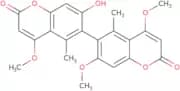
CAS :Produit contrôlé<p>Isokotanin B is a peptide that belongs to the class of ligands. It is an inhibitor of ion channels and has been shown to inhibit voltage-gated sodium channels in a rat model. Isokotanin B also binds to receptors, including those for the neurotransmitter acetylcholine, which are involved in the transmission of signals between neurons. This drug may play a role in cell biology, pharmacology, and other fields of life science. Isokotanin B has high purity, is stable under most conditions, and can be used as a research tool or reagent.</p>Formule :C23H20O8Degré de pureté :Min. 95%Masse moléculaire :424.4 g/molN-[4-(Aminosulfonyl)phenyl]-2-[3-cyano-4-(2-methylpropoxy)phenyl]-4-methyl-5-thiazolecarboxamide
CAS :<p>N-[4-(Aminosulfonyl)phenyl]-2-[3-cyano-4-(2-methylpropoxy)phenyl]-4-methyl-5-thiazolecarboxamide is a potent, high purity, and selective activator of the transient receptor potential cation channel subfamily V member 1 (TRPV1) ion channel. It has been shown to inhibit the activity of TRPV1 channels in rat dorsal root ganglion neurons, thereby blocking pain signals. N-[4-(Aminosulfonyl)phenyl]-2-[3-cyano-4-(2-methylpropoxy)phenyl]-4-methyl-5-thiazolecarboxamide has also been shown to be an effective inhibitor of TRPA1 channels and a blocker of histamine H(3) receptors. This product is not expected to cause any immunological reactions in humans or animals.</p>Formule :C22H22N4O4S2Degré de pureté :Min. 95%Masse moléculaire :470.60 g/molRat Macrophage antibody (FITC)
<p>Rat macrophage antibody (FITC) was raised in rabbit using rat macrophages as the immunogen.</p>IL18R1 antibody
<p>IL18R1 antibody was raised using the N terminal of IL18R1 corresponding to a region with amino acids PFYLKHCSCSLAHEIETTTKSWYKSSGSQEHVELNPRSSSRIALHDCVLE</p>Degré de pureté :Min. 95%CEA antibody
<p>The CEA antibody is a monoclonal antibody that specifically targets e-cadherin, a glycoprotein involved in cell adhesion. This antibody is designed to recognize and bind to e-cadherin, inhibiting its activity and preventing cell-cell interactions. The CEA antibody is commonly used in life sciences research and biochemical studies to investigate the role of e-cadherin in various cellular processes.</p>Trazodone antibody
<p>The Trazodone antibody is a monoclonal antibody that belongs to the field of Life Sciences. It is an antifibrotic agent that specifically targets glycoproteins involved in fibrosis. This antibody recognizes and binds to specific glycosylation sites on target proteins, inhibiting their phosphatase activity and preventing the formation of amyloid plaques. The Trazodone antibody has been shown to be effective in reducing fibrosis in various animal models and has potential therapeutic applications in the treatment of fibrotic diseases. Its unique specificity and high affinity make it a valuable tool for researchers studying fibrosis and related disorders.</p>Degré de pureté :Min. 95%AFP antibody
<p>The AFP antibody is a specific antibody that targets alpha-fetoprotein (AFP), a protein that is often associated with certain types of cancer. This monoclonal antibody has been extensively studied in the field of Life Sciences and has shown promising results in cancer research. The AFP antibody works by binding to AFP and inhibiting its function, which can help prevent the growth and spread of cancer cells. It has been used in various research applications, including studies on the role of AFP in tumor development and progression. The AFP antibody is highly specific and can be used for detection purposes, such as in immunohistochemistry or ELISA assays. Its use in combination with other antibodies or techniques, such as saponin permeabilization or nuclear staining, allows for more comprehensive analysis of cellular processes involving AFP. Researchers and scientists rely on the AFP antibody to gain valuable insights into the mechanisms underlying cancer development and to develop potential therapeutic strategies targeting this protein.</p>PSA antibody
<p>The PSA antibody is a monoclonal antibody that specifically targets prostate-specific antigen (PSA). It is commonly used in medical research and diagnostics for the detection and quantification of PSA levels. This antibody has high specificity and sensitivity, making it a valuable tool in the diagnosis and monitoring of prostate cancer. The PSA antibody works by binding to PSA molecules, preventing their interaction with other proteins and inhibiting their activity. It can be used in various applications such as immunoassays, immunohistochemistry, and western blotting. The PSA antibody is nephrotoxicity-free and does not interfere with other cellular processes or pathways. With its exceptional performance and reliability, this antibody is an essential component in the field of life sciences and offers great potential for further advancements in prostate cancer research.</p>IQCE antibody
<p>IQCE antibody was raised using the middle region of IQCE corresponding to a region with amino acids KKMGSALLSLSRSVQELTEENQSLKEDLDRVLSTSPTISKTQGYVEWSKP</p>Septin 2 antibody
<p>Septin 2 antibody was raised using the N terminal of 40423 corresponding to a region with amino acids MSKQQPTQFINPETPGYVGFANLPNQVHRKSVKKGFEFTLMVVGESGLGK</p>Degré de pureté :Min. 95%USP10 antibody
<p>The USP10 antibody is a growth factor that belongs to the class of antibodies. It is specifically designed to target and neutralize dinitrophenyl (DNP) antigens. This monoclonal antibody has been extensively tested and validated for its high specificity and affinity towards DNP antigens. It can be used in various applications, including immunoassays, Western blotting, ELISA, and flow cytometry.</p>SSB protein
<p>SSB protein is a cytotoxic monoclonal antibody that neutralizes the activity of the SSB protein in human serum. This protein is involved in various biological processes, including DNA replication and repair. In Life Sciences, SSB protein plays a crucial role in the binding and stabilization of single-stranded DNA during DNA synthesis. Additionally, it interacts with other proteins such as calmodulin and a1 protein to regulate cellular functions.</p>Degré de pureté :Min. 95%MCL1 antibody
<p>The MCL1 antibody is a highly specialized tool used in various assays and research applications. It is designed to specifically target and inhibit the activity of MCL1, a protein involved in cell survival and apoptosis regulation. This monoclonal antibody works by binding to MCL1 and neutralizing its function, allowing researchers to investigate its role in different cellular processes.</p>SERP1 antibody
<p>The SERP1 antibody is a highly specialized monoclonal antibody that targets and neutralizes the growth factor epidermal growth factor (EGF). This antibody is derived from histidine-rich polyclonal antibodies, making it highly effective in inhibiting the activity of EGF. It specifically binds to EGF and prevents its interaction with cell surface receptors, thus blocking downstream signaling pathways involved in cell proliferation and survival.</p>KRT2A antibody
<p>KRT2A antibody was raised using the middle region of Krt2A corresponding to a region with amino acids EVKAQYEEIAQRSKEEAEALYHSKYEELQVTVGRHGDSLKEIKIEISELN</p>TAK1 antibody
<p>The TAK1 antibody is a highly specialized growth factor protein used in Life Sciences research. It acts as an anti-MERTK antibody, targeting the MERTK receptor involved in cell signaling pathways. This antibody can be used in various applications such as Western blotting, immunohistochemistry, and flow cytometry. It specifically binds to transferrin and stimulates the growth of colonies of cells in vitro. The TAK1 antibody also plays a crucial role in regulating actin filaments and colony-stimulating factors. It is available as both polyclonal and monoclonal antibodies, providing researchers with versatile options for their experiments. Additionally, this antibody has shown potential effects on adipose tissue and steroid metabolism, as well as its interaction with transforming growth factor-beta 1 (TGF-β1).</p>HER2 antibody
<p>The HER2 antibody is a monoclonal antibody that specifically targets the HER2 protein, which is overexpressed in certain types of cancer cells. This antibody inhibits the growth and proliferation of cancer cells by blocking the interaction between HER2 and other growth factors, such as epidermal growth factor and hepatocyte growth factor. Additionally, the HER2 antibody has been shown to have anti-angiogenic properties by inhibiting the production of vascular endothelial growth factor (VEGF) and VEGF-C, which are essential for the formation of new blood vessels. This antibody can be used as a targeted therapy for patients with HER2-positive cancers, such as breast and gastric cancer.</p>




![N-(4'-Cyano[1,1'-biphenyl]-4-yl)-N'-[4-(3H-imidazo[4,5-b]pyridin-7-yl)phenyl] urea](/_next/image/?url=https%3A%2Fstatic.cymitquimica.com%2Fproducts%2F3D%2Fthumb-webp%2FLEC41426.webp&w=3840&q=75)
![N-[4-(Aminosulfonyl)phenyl]-2-[3-cyano-4-(2-methylpropoxy)phenyl]-4-methyl-5-thiazolecarboxamide](/_next/image/?url=https%3A%2Fstatic.cymitquimica.com%2Fproducts%2F3D%2Fthumb-webp%2FXMC64693.webp&w=3840&q=75)