Produits biochimiques et réactifs
Les biochimiques et réactifs sont des substances fondamentales pour la recherche et le développement dans des domaines tels que la biotechnologie, la biologie moléculaire, la pharmacologie et la médecine. Ces produits sont essentiels pour une variété d'applications, y compris la synthèse de composés, l'analyse d'échantillons biologiques, la recherche sur les processus métaboliques et la production de médicaments. Chez CymitQuimica, nous proposons une large sélection de biochimiques et réactifs de haute qualité et pureté, adaptés à divers besoins scientifiques et industriels. Notre catalogue comprend des enzymes, des anticorps, des acides nucléiques, des acides aminés et de nombreux autres produits, tous conçus pour soutenir les chercheurs et les professionnels dans leurs projets de recherche et développement, garantissant des résultats fiables et reproductibles.
Sous-catégories appartenant à la catégorie "Produits biochimiques et réactifs"
- Biomolécules(99.130 produits)
- Par Biological Target(99.159 produits)
- Par usage/effets pharmacologiques(6.787 produits)
- Cryoconservation et composés associés aux cryoconservateurs(21 produits)
- Désinfectants, additifs pour les fluides pour bains chauffants et composés apparentés(28 produits)
- Hormones(346 produits)
- Biologie végétale(6.747 produits)
- Métabolites secondaires(14.222 produits)
130579 produits trouvés pour "Produits biochimiques et réactifs"
Trier par
Degré de pureté (%)
0
100
|
0
|
50
|
90
|
95
|
100
PARP10 antibody
<p>PARP10 antibody was raised in rabbit using the middle region of PARP10 as the immunogen</p>Degré de pureté :Min. 95%HSD11B2 antibody
<p>HSD11B2 antibody was raised using a synthetic peptide corresponding to a region with amino acids ERWPWPSGGAWLLVAARALLQLLRSDLRLGRPLLAALALLAALDWLCQRL</p>AKT2 antibody
<p>The AKT2 antibody is a powerful tool in the field of Life Sciences. It is widely used in various research applications, including electrochemical impedance spectroscopy. This Polyclonal Antibody specifically targets AKT2, a key protein involved in many cellular processes. By binding to AKT2, this antibody can effectively neutralize its activity and provide valuable insights into its function.</p>PLVAP antibody
<p>The PLVAP antibody is a glycopeptide that belongs to the class of antibodies used in Life Sciences. It is specifically designed to target and bind to PLVAP (Plasmalemma Vesicle-Associated Protein), an important protein involved in various biological processes. This antibody is available in both polyclonal and monoclonal forms, providing researchers with options for their specific experimental needs.</p>RRAD antibody
<p>RRAD antibody was raised using the middle region of RRAD corresponding to a region with amino acids YDIWEQDGGRWLPGHCMAMGDAYVIVYSVTDKGSFEKASELRVQLRRARQ</p>Degré de pureté :Min. 95%GUSB Blocking Peptide
<p>A synthetic peptide for use as a blocking control in assays to test for specificity of GUSB antibody, catalog no. 70R-1858</p>Degré de pureté :Min. 95%IFN γ protein
<p>Region of IFN Gamma protein corresponding to amino acids MQGTLIESLE SLKNYFNSSS MDAMEGKSLL LDIWRNWQKD GNTKILESQI ISFYLRLFEV LKDNQAISNN ISVIESHLIT NFFSNSKAKK DAFMSIAKFE VNNPQIQHKA VNELIRVIHQ LSPESSLRKR KRSRC.</p>Degré de pureté :Min. 95%IGFBP2 antibody
<p>IGFBP2 antibody was raised using the middle region of IGFBP2 corresponding to a region with amino acids KPLKSGMKELAVFREKVTEQHRQMGKGGKHHLGLEEPKKLRPPPARTPCQ</p>Degré de pureté :Min. 95%ACTA1 antibody
<p>ACTA1 antibody was raised in rabbit using the C terminal of ACTA1 as the immunogen</p>PGP9.5 antibody
<p>The PGP9.5 antibody is a highly specific and sensitive tool used in life sciences research. It is a polyclonal antibody that targets the protein gene product 9.5 (PGP9.5), also known as ubiquitin carboxyl-terminal hydrolase L1 (UCHL1). This antibody recognizes and binds to PGP9.5, allowing for its detection and quantification in various biological samples.</p>MGAT2 antibody
<p>MGAT2 antibody was raised using a synthetic peptide corresponding to a region with amino acids PKNAALKLGCINAEYPDSFGHYREAKFSQTKHHWWWKLHFVWERVKILRD</p>SHIP1 antibody
<p>The 6-Fluoro-3-indoxyl-beta-D-galactopyranoside is a powerful antituberculosis drug that falls under the class of rifamycins. It is highly effective in treating tuberculosis infections and contains active compounds that exhibit bactericidal activity. The mechanism of action involves binding to DNA-dependent RNA polymerase, preventing transcription and replication, thereby inhibiting bacterial growth. This drug has been extensively studied using advanced techniques like transcription-quantitative polymerase chain and patch-clamp technique. It undergoes various metabolic transformations, including hydrolysis by esterases or glucuronidases, oxidation by cytochrome P450 enzymes, reduction by glutathione reductase, or conjugation with glucuronic acid. Additionally, it specifically targets Mycobacterium tuberculosis strains and inhibits cell growth in culture.</p>SLFN12 antibody
<p>SLFN12 antibody was raised using the N terminal of SLFN12 corresponding to a region with amino acids KLRKKQNESVSRAMCALLNSGGGVIKAEIENEDYSYTKDGIGLDLENSFS</p>Trazodone antibody
<p>The Trazodone antibody is a reactive monoclonal antibody that falls under the category of Life Sciences. It is specifically designed to target and neutralize tumor necrosis factor-alpha (TNF-α) and interleukin (IL), which are key inflammatory factors in the body. This antibody has shown inhibitory effects on adipose tissue and chemokine production, making it a potential therapeutic option for conditions associated with inflammation and immune dysregulation. Additionally, the Trazodone antibody has been found to have neutralizing activity against Brucella abortus, a bacterium that causes brucellosis in animals and humans. This suggests its potential use in treating infections caused by this pathogen. Furthermore, this antibody exhibits inhibitory effects on family kinase inhibitors and calmodulin, which are involved in various cellular processes such as signal transduction and calcium signaling. By targeting these proteins, the Trazodone antibody may have implications for the treatment of diseases related to their dys</p>Degré de pureté :Min. 95%KCNV2 antibody
<p>KCNV2 antibody was raised using the N terminal of KCNV2 corresponding to a region with amino acids RSGSQASIHGWTEGNYNYYIEEDEDGEEEDQWKDDLAEEDQQAGEVTTAK</p>p70S6K antibody
<p>The p70S6K antibody is a highly specialized monoclonal antibody used in Life Sciences research. It is designed to target and detect the presence of p70S6K, an important protein involved in cell signaling pathways. This antibody has been extensively tested and validated for use in various applications, including immunohistochemistry, Western blotting, and ELISA assays.</p>EEF1G antibody
<p>EEF1G antibody was raised using the middle region of EEF1G corresponding to a region with amino acids RAVLGEVKLCEKMAQFDAKKFAETQPKKDTPRKEKGSREEKQKPQAERKE</p>C13ORF31 antibody
<p>C13ORF31 antibody was raised using the middle region of C13Orf31 corresponding to a region with amino acids TIITSSLIPDIFIHGFTTRTGGISYIPTLSSFNLFSSSKRRDPKVVVQEN</p>p53 antibody
<p>The p53 antibody is a monoclonal antibody that specifically targets the p53 protein, a key regulator of cell growth and division. This antibody is widely used in Life Sciences research for various applications, including immunohistochemical detection and Western blot analysis. The p53 antibody recognizes the carboxy-terminal region of the p53 protein, which includes the tetramerization domain. It has been shown to be highly specific and sensitive in detecting p53 expression levels in human serum samples, making it a valuable serum marker for various diseases and conditions. Additionally, this antibody can also be used to study the role of p53 in different cellular processes, such as apoptosis and DNA repair. Its high affinity and specificity make it an essential tool for researchers studying protein kinases and epidermal growth factor signaling pathways.</p>PRSS35 antibody
<p>PRSS35 antibody was raised using the N terminal of PRSS35 corresponding to a region with amino acids PTQNITTKGVSVRRKRQVYGTDSRFSILDKRFLTNFPFSTAVKLSTGCSG</p>Degré de pureté :Min. 95%Hey1 antibody
<p>Hey1 antibody was raised in rabbit using the C terminal of Hey1 as the immunogen</p>Degré de pureté :Min. 95%SCN5A Blocking Peptide
<p>A synthetic peptide for use as a blocking control in assays to test for specificity of SCN5A antibody, catalog no. 70R-5111</p>Degré de pureté :Min. 95%GNE-9605
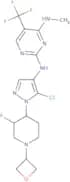
CAS :<p>GNE-9605 is a small molecule that is structurally unrelated to any other known kinase inhibitors. It has been shown to bind to and inhibit the activity of the GNE-9605 enzyme with high selectivity, which has been shown to be expressed in cells in vitro. Studies have also shown that this molecule can cross the blood brain barrier and accumulate in tissues such as the brain, spinal cord, and retina. GNE-9605 has been shown to have neuroprotective effects on cellular function by inhibiting the GNE-9605 enzyme.</p>Formule :C17H20ClF4N7ODegré de pureté :Min. 95%Masse moléculaire :449.83 g/molATP5C1 protein (His tag)
<p>Purified recombinant ATP5C1 protein (His tag)</p>Degré de pureté :Min. 95%Glutamate Dehydrogenase antibody
<p>Glutamate dehydrogenase antibody was raised in rabbit using glutamate dehydrogenase isolated from bovine liver as the immunogen.</p>Degré de pureté :Min. 95%Elastin antibody
<p>Elastin antibody is a highly specialized adeno-associated monoclonal antibody that targets elastin, an important protein found in connective tissues. It is commonly used in the field of Life Sciences for research purposes. Elastin antibody specifically binds to elastin molecules and can be used to study their distribution and function in various biological processes. This antibody has been extensively validated and is widely recognized for its high specificity and sensitivity. It can be used in a variety of applications, including immunohistochemistry, Western blotting, and ELISA assays. With its unique properties, Elastin antibody is an essential tool for researchers studying the role of elastin in different physiological and pathological conditions.</p>DPP4 antibody
<p>DPP4 antibody was raised in rabbit using a synthetic peptide conjugated to KLH as the immunogen.</p>Degré de pureté :Min. 95%JNK Inhibitor VIII
CAS :<p>JNK inhibitor VIII is a potent, selective and cell-permeable JNK inhibitor that is effective in inhibiting the activation of pro-inflammatory genes. It has been shown to inhibit the proliferation and induce apoptosis in leukemia cells, as well as blocking the growth of primary human prostate cancer cells. JNK inhibitor VIII blocks ubiquitin ligases involved in protein degradation and mitochondrial membrane potential, which induces reactive oxygen species (ROS) production by mitochondria. This leads to an increase in cytosolic Ca2+, c-jun phosphorylation, and potential drug target for cancer therapy.</p>Formule :C18H20N4O4Degré de pureté :Min. 95%Masse moléculaire :356.38 g/molZNF138 Blocking Peptide
<p>A synthetic peptide for use as a blocking control in assays to test for specificity of ZNF138 antibody, catalog no. 70R-8721</p>Degré de pureté :Min. 95%MZF1 antibody
<p>The MZF1 antibody is a monoclonal antibody that specifically targets and binds to the MZF1 protein. This protein is involved in various cellular processes, including the regulation of gene expression and cell differentiation. The MZF1 antibody can be used in research and diagnostic applications to study the role of MZF1 in different biological systems.</p>