Produits biochimiques et réactifs
Les biochimiques et réactifs sont des substances fondamentales pour la recherche et le développement dans des domaines tels que la biotechnologie, la biologie moléculaire, la pharmacologie et la médecine. Ces produits sont essentiels pour une variété d'applications, y compris la synthèse de composés, l'analyse d'échantillons biologiques, la recherche sur les processus métaboliques et la production de médicaments. Chez CymitQuimica, nous proposons une large sélection de biochimiques et réactifs de haute qualité et pureté, adaptés à divers besoins scientifiques et industriels. Notre catalogue comprend des enzymes, des anticorps, des acides nucléiques, des acides aminés et de nombreux autres produits, tous conçus pour soutenir les chercheurs et les professionnels dans leurs projets de recherche et développement, garantissant des résultats fiables et reproductibles.
Sous-catégories appartenant à la catégorie "Produits biochimiques et réactifs"
- Biomolécules(99.084 produits)
- Par Biological Target(99.070 produits)
- Par usage/effets pharmacologiques(6.784 produits)
- Cryoconservation et composés associés aux cryoconservateurs(21 produits)
- Désinfectants, additifs pour les fluides pour bains chauffants et composés apparentés(28 produits)
- Hormones(346 produits)
- Biologie végétale(6.693 produits)
- Métabolites secondaires(14.217 produits)
130573 produits trouvés pour "Produits biochimiques et réactifs"
Trier par
Degré de pureté (%)
0
100
|
0
|
50
|
90
|
95
|
100
SERPINA1 antibody
<p>The SERPINA1 antibody is a powerful tool in the field of Life Sciences. It is a monoclonal antibody that specifically targets and binds to SERPINA1, also known as alpha-1 antitrypsin (AAT). This antibody has been widely used in research studies focused on amyloid plaque formation and clearance.</p>PCDHA10 antibody
<p>PCDHA10 antibody was raised using the N terminal of PCDHA10 corresponding to a region with amino acids ESRLLDSRFPLEGASDADVGENALLTYKLSPNEYFVLDIINKKDKDKFPV</p>Degré de pureté :Min. 95%JPH203
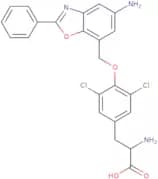
CAS :<p>JPH203 is a compound that has been shown to inhibit the growth of hypoxic tumor cells. It was found to induce apoptosis in tubule cells through a number of mechanisms, including the inhibition of cyclin D2 protein synthesis and the disruption of cellular signaling pathways. JPH203 is structurally similar to organic anion transporters (OATs), which are drug transporters in the body. This property may help it to cross the blood-brain barrier and reach tumors in the brain. JPH203 has also been shown to inhibit cancer cell proliferation and induce apoptosis in colorectal adenocarcinoma cells, as well as inhibiting tumor growth in animal models.</p>Formule :C23H19Cl2N3O4Degré de pureté :Min. 95%Masse moléculaire :472.32 g/molDDAH2 antibody
<p>DDAH2 antibody was raised using the N terminal of DDAH2 corresponding to a region with amino acids MYTLHTKRVKAAARQMWTSNLSKVRQSLKNVYHKCKIRHQDSTGYPTVTS</p>Degré de pureté :Min. 95%GOLM1 antibody
<p>The GOLM1 antibody is an active agent in the field of Life Sciences. It belongs to the class of antibodies and has shown promising results in various studies. This antibody specifically targets GOLM1, a glycoprotein that is involved in several cellular processes.</p>GAP43 antibody
<p>The GAP43 antibody is a glycopeptide that acts as a neutralizing agent against phosphatase. It is commonly used in ophthalmic formulations and has shown efficacy in reducing inflammation caused by chemokines like TNF-α. This polyclonal antibody is widely used in life sciences research to study biomolecules, particularly in the field of antibodies. The GAP43 antibody has also been found to interact with epidermal growth factor, histidine, erythropoietin, and other growth factors. Additionally, it has been shown to affect microvessel density, making it a valuable tool for studying angiogenesis.</p>Degré de pureté :Min. 95%UPF3B antibody
<p>UPF3B antibody was raised using a synthetic peptide corresponding to a region with amino acids KIDRIPERDKLKDEPKIKVHRFLLQAVNQKNLLKKPEKGDEKELDKREKA</p>PSMD9 antibody
<p>PSMD9 antibody was raised in rabbit using the middle region of PSMD9 as the immunogen</p>Degré de pureté :Min. 95%TNFRSF6B antibody
<p>TNFRSF6B antibody is a highly specialized monoclonal antibody used in Life Sciences research. It is designed to specifically target and bind to TNFRSF6B, a member of the tumor necrosis factor receptor superfamily. This antibody is widely used in various assays and experiments to study the role of TNFRSF6B in different biological processes.</p>MLF2 antibody
<p>MLF2 antibody was raised using the C terminal of MLF2 corresponding to a region with amino acids WRRETSRFRQQRPLEFRRLESSGAGGRRAEGPPRLAIQGPEDSPSRQSRR</p>Degré de pureté :Min. 95%FLJ14803 antibody
<p>FLJ14803 antibody was raised using the N terminal Of Flj14803 corresponding to a region with amino acids MMQGEAHPSASLIDRTIKMRKETEARKVVLAWGLLNVSMAGMIYTEMTGK</p>Degré de pureté :Min. 95%DHX15 antibody
<p>DHX15 antibody was raised using a synthetic peptide corresponding to a region with amino acids GHTSLPQCINPFTNLPHTPRYYDILKKRLQLPVWEYKDRFTDILVRHQSF</p>CYP4V2 antibody
<p>CYP4V2 antibody was raised using the middle region of CYP4V2 corresponding to a region with amino acids RYFPNPEEFQPERFFPENAQGRHPYAYVPFSAGPRNCIGQKFAVMEEKTI</p>Degré de pureté :Min. 95%MOV10L1 antibody
<p>MOV10L1 antibody was raised using a synthetic peptide corresponding to a region with amino acids LNVGQEVIAVVEENKVSNGLKAIRVEAVSDKWEDDSRNHGSPSDCGPRVL</p>CTNNB1 antibody
<p>The CTNNB1 antibody is a monoclonal antibody that is used in immunochemical staining assays. It specifically targets the CTNNB1 protein, which plays a crucial role in pluripotent stem cell maintenance and differentiation. This antibody has a high molecular weight cut-off, allowing it to effectively detect and bind to the CTNNB1 protein in various biological samples. The CTNNB1 antibody can be used in a variety of applications, including Western blotting, immunohistochemistry, immunofluorescence, and enzyme-linked immunosorbent assays (ELISA). Its high specificity and sensitivity make it an ideal tool for researchers studying the function and expression of the CTNNB1 protein in different biological contexts. With its reliable performance and accurate results, the CTNNB1 antibody is an essential component for any laboratory conducting studies on pluripotent stem cells or related research areas.</p>Cdx1 antibody
<p>Cdx1 antibody was raised in rabbit using the C terminal of Cdx1 as the immunogen</p>Degré de pureté :Min. 95%HHV6 gp60 + gp100 antibody
<p>HHV6 gp60/gp100 antibody was raised in mouse using 60/110 KDa envelope glycoprotein of HHV6 as the immunogen.</p>C13ORF8 antibody
<p>C13ORF8 antibody was raised in rabbit using the middle region of C13ORF8 as the immunogen</p>Degré de pureté :Min. 95%EPM2A antibody
<p>EPM2A antibody was raised in mouse using recombinant human EPM2A (243-331aa) purified from E. coli as the immunogen.</p>OGDH antibody
<p>OGDH antibody was raised using the N terminal of OGDH corresponding to a region with amino acids MFHLRTCAAKLRPLTASQTVKTFSQNRPAAARTFQQIRCYSAPVAAEPFL</p>GRK2 antibody
<p>The GRK2 antibody is a monoclonal antibody that targets the G protein-coupled receptor kinase 2 (GRK2). This antibody has shown efficacy in neutralizing the effects of GRK2, which plays a crucial role in various cellular processes. It has been found to inhibit the activation of growth factors and mesenchymal stem cells, making it a potential therapeutic option for conditions related to abnormal cell growth. Additionally, the GRK2 antibody has been studied for its potential anticoagulant properties, as it can bind to fatty acids and antiphospholipid antibodies, reducing their plasma levels. This specific antibody shows promise in the field of Life Sciences and may have applications in treating conditions such as insulin resistance and complications associated with oral contraceptives.</p>LETM1 antibody
<p>LETM1 antibody was raised using the middle region of LETM1 corresponding to a region with amino acids MALKNKAAKGSATKDFSVFFQKIRETGERPSNEEIMRFSKLFEDELTLDN</p>ZNF585B antibody
<p>ZNF585B antibody was raised in rabbit using the N terminal of ZNF585B as the immunogen</p>Degré de pureté :Min. 95%RAB11FIP5 antibody
<p>The 6-Fluoro-3-indoxyl-beta-D-galactopyranoside is an antituberculosis drug that falls under the class of rifamycins. It is highly effective in treating tuberculosis infections, thanks to its bactericidal activity. This active compound works by binding to DNA-dependent RNA polymerase, which prevents transcription and replication, inhibiting bacterial growth. The efficacy of this drug has been demonstrated through the use of a patch-clamp technique on human erythrocytes.</p>Hsp27 antibody
<p>Hsp27 antibody was raised in mouse using recombinant human Hsp27 (1-205aa) purified from E. coli as the immunogen.</p>Goat anti Human IgM mu chain (FITC)
<p>Goat anti Human IgM mu chain secondary antibody (FITC) (mu chain specific)</p>Degré de pureté :Min. 95%Goat anti Mouse IgG (H + L) (Alk Phos)
<p>This antibody reacts with heavy (gamma) chains on mouse IgG and light chains on all mouse immunoglobulins.</p>Degré de pureté :Min. 95%SMAD7 antibody
<p>The SMAD7 antibody is a monoclonal antibody that targets the protein β-catenin. It has been shown to have inhibitory effects on the natriuretic and growth factor signaling pathways. This antibody specifically binds to interleukin receptors, blocking their activation and downstream signaling. Additionally, it has been found to neutralize the effects of epidermal growth factor and other growth factors involved in cell proliferation and differentiation. The SMAD7 antibody is commonly used in life sciences research for studying cellular signaling pathways and as a tool for investigating the role of β-catenin in various biological processes. With its high specificity and affinity, this antibody is a valuable tool for researchers in the field of molecular biology.</p>RARA Blocking Peptide
<p>A synthetic peptide for use as a blocking control in assays to test for specificity of RARA antibody, catalog no. 70R-1301</p>Degré de pureté :Min. 95%WIF1 antibody
<p>WIF1 antibody was raised in Mouse using a purified recombinant fragment of human WIF1 expressed in E. coli as the immunogen.</p>PSA antibody
<p>PSA antibody was raised in mouse using highly pure human Free PSA as the immunogen.</p>