Produits biochimiques et réactifs
Les biochimiques et réactifs sont des substances fondamentales pour la recherche et le développement dans des domaines tels que la biotechnologie, la biologie moléculaire, la pharmacologie et la médecine. Ces produits sont essentiels pour une variété d'applications, y compris la synthèse de composés, l'analyse d'échantillons biologiques, la recherche sur les processus métaboliques et la production de médicaments. Chez CymitQuimica, nous proposons une large sélection de biochimiques et réactifs de haute qualité et pureté, adaptés à divers besoins scientifiques et industriels. Notre catalogue comprend des enzymes, des anticorps, des acides nucléiques, des acides aminés et de nombreux autres produits, tous conçus pour soutenir les chercheurs et les professionnels dans leurs projets de recherche et développement, garantissant des résultats fiables et reproductibles.
Sous-catégories appartenant à la catégorie "Produits biochimiques et réactifs"
- Biomolécules(99.130 produits)
- Par Biological Target(99.159 produits)
- Par usage/effets pharmacologiques(6.787 produits)
- Cryoconservation et composés associés aux cryoconservateurs(21 produits)
- Désinfectants, additifs pour les fluides pour bains chauffants et composés apparentés(28 produits)
- Hormones(346 produits)
- Biologie végétale(6.747 produits)
- Métabolites secondaires(14.222 produits)
130579 produits trouvés pour "Produits biochimiques et réactifs"
Trier par
Degré de pureté (%)
0
100
|
0
|
50
|
90
|
95
|
100
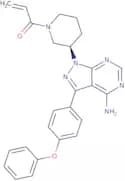
Ibrutinib
CAS :<p>Ibrutinib is a small-molecule inhibitor of Bruton’s tyrosine kinase, a crucial enzyme to the B-cell receptor pathway. Bruton’s tyrosine kinase becomes continuously activated in B-cell cancers and therefore promotes the survival of tumor cells. Ibrutinib binds irreversibly and covalently to a cysteine residue within the ATP-binding site of the enzyme, thus preventing ATP binding and downstream signal transduction. The ability of Ibrutinib to inhibit Bruton’s tyrosin kinase and hence the B-cell receptor pathway it can be used in the treatment of some B cell cancers such as diffuse large B-cell lymphoma (DLBCL) and chronic lymphocytic leukemia (CLL).</p>Formule :C25H24O2N6Degré de pureté :Min. 95%Couleur et forme :PowderMasse moléculaire :440.5 g/molInfliximab Heavy chain (46-60)
<p>Infliximab is a biologic medicine used in the treatment of numerous autoimmune diseases including Crohn disease, rheumatoid arthritis, and ankylosing spondylitis. Infliximab binds with high affinity to tumour necrosis factor-α (TNF-α) blocking most of the cytokine effects, which includes mediating the inflammatory responses. Infliximab is a chimeric human-mouse IgG monoclonal antibody- the constant regions of the heavy and light chains are human-derived. The heavy chain peptide (46-60) has been identified as an antigen for antigen-specific T cell analysis. Numerous methods of immunological analysis can be applied to this peptide to hopefully provide further insight to these autoimmune conditions.</p>Masse moléculaire :1,689.9 g/molp63 antibody
<p>p63 antibody was raised in sheep using p63 MAP kinase as the immunogen.</p>Degré de pureté :Min. 95%α-Factor
CAS :<p>The alpha factor pheromone arrests yeast in the G1 phase of their cell cycle, this allows the opposite mating type cells to synchronise. Alpha factor mating pheromone induces the expression of mating genes, changes in nuclear architecture, and polarizes growth toward the mating partner. STE2 encodes the alpha factor pheromone transmembrane G-protein coupled receptor (GPCR) found on mating-type-A cells in yeast. Alpha factor binds Ste2 and activates prototypic mitogen-activated protein kinase (MAPK) cascade. The dose of pheromone exposure differentially activates the MAPK Fus3 for alternate effects. A high dose of alpha factor leads to growth arrest and schmooing formation for mating, a lower dose causes elongated cell growth.</p>Formule :C82H114N20O17SDegré de pureté :Min. 95%Couleur et forme :PowderMasse moléculaire :1,683.97 g/molH-VMNVPDFDFPPEFYEHAKAL-OH
<p>H-VMNVPDFDFPPEFYEHAKAL-OH is a custom peptide that can be synthesized rapidly by our peptide experts in under 2 weeks. H-VMNVPDFDFPPEFYEHAKAL-OH is provided at greater that >95% purity (HPLC) from Cymit Quimica for a variety of research applications. We also offer H-VMNVPDFDFPPEFYEHAKAL-OH in bulk quantities in addition to our standard pack sizes.Please enquire for more information about H-VMNVPDFDFPPEFYEHAKAL-OH at the technical inquiry form on this page</p>Degré de pureté :Min. 95%Histone H3 (1-20)-[S]-Biotin
<p>Histone H3 (1-20)-[S]-Biotin is derived from Histone 3 (H3) which is one of the four core histones (H2A, H2B, H3 and H4) fundamental in compacting eukaryotic DNA into a structure known as the nucleosome. The nucleosome arises when 147 base pairs of DNA wrap around a H3-H4 tetramer and two H2A-H2B dimers, forming the histone octamer core. Both H4 and H3 are highly conserved and perform roles in binding to segments of DNA which enter and leave the nucleosome and in chromatin formation. Similar to the other core histone, H3 has a globular domain and a flexible N-terminal domain, 'histone tail' which can undergo modifications such as acetylation, methylation, phosphorylation and ubiquitination. Due to histones containing a large number of lysine and arginine residues they have a positive net charge which interacts in an electrostatic manner with the negatively charged phosphate groups in DNA. The transcriptional activation or silencing of the chromatin is controlled by ATP-dependent chromatin remodelling factors and histone modifying enzymes which target histone proteins. Both processes function to alter the positioning of the nucleosome, allowing the DNA it to be either available or inaccessible to the transcription machinery.Another modification process histones can undergo is biotinylation where the covalent attachment of a biotin molecule is catalysed by the enzyme Biotinidase. This cleaves biocytin to generate a biotinyl-thiester intermediate. The biotinyl can then be transferred onto the histone lysine ɛ-amino group which in this case it is covalently attached to Histone 3. Overall the biotinylation sites identified in histone 3 are: K4, K9 and K18. The presence of biotinylated histones have been detected in human cells such as lymphocytes and lymphomas.</p>Couleur et forme :PowderMasse moléculaire :2,424.4 g/molIrbp (1-20)
CAS :<p>Irbp (1-20) is a synthetic peptide fragment derived from the interphotoreceptor retinoid-binding protein (IRBP). This product originates from a segment of IRBP, a vital protein found in the interphotoreceptor matrix of the eye. IRBP plays a crucial role in the transport of retinoids between the photoreceptors and retinal pigment epithelium, essential for the visual cycle.</p>Formule :C101H164N24O28SDegré de pureté :Min. 95%Couleur et forme :PowderMasse moléculaire :2,194.59 g/molFluor-NAPVSIPQ-OH
<p>Peptide Fluor-NAPVSIPQ-OH is a Research Peptide with significant interest within the field academic and medical research. This peptide is available for purchase at Cymit Quimica in multiple sizes and with a specification of your choice.</p>H-PFEFVSSPAGNTSVM-cysteamide
<p>H-PFEFVSSPAGNTSVM-cysteamide is a custom peptide that can be synthesized rapidly by our peptide experts in under 2 weeks. H-PFEFVSSPAGNTSVM-cysteamide is provided at greater that >90% purity (HPLC) from Cymit Quimica for a variety of research applications. We also offer H-PFEFVSSPAGNTSVM-cysteamide in bulk quantities in addition to our standard pack sizes.Please enquire for more information about H-PFEFVSSPAGNTSVM-cysteamide at the technical inquiry form on this page</p>Degré de pureté :Min. 95%Osteocalcin antibody
<p>The Osteocalcin Antibody is a highly effective family kinase inhibitor that is widely used in Life Sciences assays. This Monoclonal Antibody specifically targets collagen and has been extensively tested for its serine protease inhibitory activity. It is also known for its ability to neutralize antibodies, making it an essential tool in various research applications. The Osteocalcin Antibody has been proven to effectively bind to alpha-fetoprotein, providing accurate and reliable results in diagnostic tests. With its exceptional protein kinase inhibitory properties, this Antibody offers precise and reproducible data for researchers in the field of chemokine studies. Trust the Osteocalcin Antibody for exceptional performance and reliable results in your experiments.</p>Amisulpride - Bio-X ™
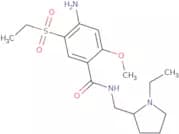
CAS :Produit contrôlé<p>Amisulpride is an antipsychotic drug that has been used to treat schizophrenia. It is a dopamine receptor antagonist. Additionally, this drug has been researched and used to treat acute mania, schizoaffective disorder, and bipolar depression. Amisulpride works by binding to dopamine receptors in the brain which then blocks the action of dopamine. Amisulpride has been shown to be effective in treatment trials for schizophrenia that are resistant to standard treatments such as clozapine, haloperidol, or risperidone. In addition, this drug has been shown to be effective in reducing serum prolactin levels and improving cognitive performance in patients with schizophrenia.</p>Formule :C17H27N3O4SDegré de pureté :Min. 95%Couleur et forme :PowderMasse moléculaire :369.48 g/molAIP-II
<p>Auto-inducing peptide (AIP) is a cyclic thiolactone quorum sensing peptide from Staphylococcus aureus which is responsible for activating the agr response. AIP is released from the bacteria and its extracellular concentration is then sensed by a two-component system on the bacterial surface, AgrC and AgrA. AgrC is the membrane histidine kinase receptor and AgrA is a response regulator- upon binding of AIP, AgrC phosphorylates AgrA.AIP accumulates during growth activating an AgrC and AgrA cascade when it reaches a critical signal level. This cascade activates P2 and P3 promoters which autoactivate the agr system and upregulate RNAIII transcription. RNAIII regulates the expression of virulence factors including toxins, super-antigens, and exo-enzymes. Extensive research to identify AIP:AgrC inhibitors aims to find therapeutics against pathogens.AgrD is the precursor peptide of AIP, and AgrB is an integral membrane endopeptidase essential to biosynthesize AIP. This AIP system is conserved among many Gram-positive bacteria. S. aureus strains are categorized into four groups (I-IV) according to their AIP signal and cognate extracellular receptor, AgrC.AIP-II has the conserved thiolactone macrocycle of the AIP family. Asn-3, Leu-8, and Phe-9 have been shown to be critical for activation of the agr response while inhibition relies on Leu-8 and Phe-9. The reactive thiol ester bond is only necessary for activation of the agr response. Further work may provide further AIP:AgrC inhibitors.</p>Couleur et forme :PowderMasse moléculaire :878.4 g/molH-FAVFGLGNK^-OH
<p>Peptide H-FAVFGLGNK^-OH is a Research Peptide with significant interest within the field academic and medical research. This peptide is available for purchase at Cymit Quimica in multiple sizes and with a specification of your choice.</p>H-LPPYVFT-OH
<p>H-LPPYVFT-OH is a custom peptide that can be synthesized rapidly by our peptide experts in under 2 weeks. H-LPPYVFT-OH is provided at greater that >95% purity (HPLC) from Cymit Quimica for a variety of research applications. We also offer H-LPPYVFT-OH in bulk quantities in addition to our standard pack sizes.Please enquire for more information about H-LPPYVFT-OH at the technical inquiry form on this page</p>Degré de pureté :Min. 95%PSA antibody
<p>The PSA antibody is a monoclonal antibody that is used for the detection and measurement of prostate-specific antigen (PSA) in human serum. It specifically binds to PSA, which is a growth factor produced by the prostate gland. The PSA antibody can be used in various applications such as immunoassays and bioassays for ultrasensitive detection of PSA levels. It works by utilizing electrochemical impedance spectroscopy, where the antibody-coated electrode reacts with the PSA present in the sample, resulting in a measurable change in electrical properties. This highly reactive monoclonal antibody provides accurate and reliable results, making it an essential tool in prostate cancer screening and diagnosis. Additionally, it has potential applications in research related to collagen and epidermal growth factor. Trust the PSA antibody for precise and efficient detection of PSA levels, aiding in early detection and monitoring of prostate cancer.</p>H-ISASAEELR^-OH
<p>Peptide H-ISASAEELR^-OH is a Research Peptide with significant interest within the field academic and medical research. This peptide is available for purchase at Cymit Quimica in multiple sizes and with a specification of your choice.</p>H-NRKKPAILRRNIHSL-OH
<p>H-NRKKPAILRRNIHSL-OH is a custom peptide that can be synthesized rapidly by our peptide experts in under 2 weeks. H-NRKKPAILRRNIHSL-OH is provided at greater that >80% purity (HPLC) from Cymit Quimica for a variety of research applications. We also offer H-NRKKPAILRRNIHSL-OH in bulk quantities in addition to our standard pack sizes.Please enquire for more information about H-NRKKPAILRRNIHSL-OH at the technical inquiry form on this page</p>Degré de pureté :Min. 95%H-VIEYTDLEK-OH
<p>H-VIEYTDLEK-OH is a custom peptide that can be synthesized rapidly by our peptide experts in under 2 weeks. H-VIEYTDLEK-OH is provided at greater that >95% purity (HPLC) from Cymit Quimica for a variety of research applications. We also offer H-VIEYTDLEK-OH in bulk quantities in addition to our standard pack sizes.Please enquire for more information about H-VIEYTDLEK-OH at the technical inquiry form on this page</p>Degré de pureté :Min. 95%CA 242 protein
<p>CA242 is supplied as a partially purified form, extracted from Human Colon Adenocarcinoma Cell line. As CA242 is found on the same mucin-complex as CA50 and sialylated Lewis a (CA19-9), this product is supplied in matrix with these and other proteins. The Mw weight of the mucin can range from 200 kDa to over 1,000 kDa due to aggregation, and the units reported in tumor marker assays are arbitrary units (AU), not associated with mass or activity. The assays use epitope specific monoclonal antibodies.</p>Degré de pureté :Purity Ratio = ___ U/Ml/OdInfluenza A antibody
<p>The Influenza A antibody is a powerful tool used in Life Sciences research. It is specifically designed to target and neutralize the Influenza A virus, a common strain of the flu. This monoclonal antibody is highly specific and binds to the viral protein complex, preventing it from infecting host cells.</p>Xenin
<p>Leptin and melanocortin are well characterised for their roles in energy balance and the regulation of feeding. However, xenin was subsequently isolated from human gastric mucosa and identified as a gastrointestinal peptide hormone. Evidence shows xenin plasma levels rise after meals while administration of xenin leads to feelings of satiation. Unfortunately, the mechanism of xenin regulation on food uptake is still not fully understood. Work has shown xenin negatively effects food intake by a dose dependent manner, the hypothalamus seems to have a key role in this. Furthermore, the signally pathways activated by xenin is independent of those used by leptin or melanocortins. Further work with xenin could provide vital answers to the inhibitory mechanism of this gastrointestinal hormone. It would provide more data to help tackle the ongoing obesity crisis and rise in the number of diabetic patients.</p>Couleur et forme :PowderMasse moléculaire :2,969.7 g/molPhytochelatin 2
<p>Custom research peptide; min purity 95%. For different specs please use the Peptide Quote Tool</p>Nangibotide
<p>Nangibotide, also referred as LR12, is an antagonist of triggering receptor expressed on myeloid cells (TREM)-1, and was derived from residues 94 to 105 of TREM-like transcript-1 (TLT-1).TREM-1 plays a crucial role in the onset of sepsis by amplifying the host immune response. TLT-1- and TLT-1-derived peptides therefore exhibit anti-inflammatory properties by dampening TREM-1 signalling. LR12 blocks TREM-1 by binding to the TREM-1 ligand and provides protective effects during sepsis such as inhibiting hyper-responsiveness, organ damage, and death, without causing deleterious effects. The protective effects of modulating TREM-1 signalling are also evident in other models of inflammation such as: pancreatitis- haemorrhagic shock- inflammatory bowel diseases and inflammatory arthritis.</p>Couleur et forme :PowderMasse moléculaire :1,342.5 g/molH-TVVTQF^-OH
<p>Peptide H-TVVTQF^-OH is a Research Peptide with significant interest within the field academic and medical research. This peptide is available for purchase at Cymit Quimica in multiple sizes and with a specification of your choice.</p>HSV1 + HSV2 ICP27 antibody
<p>HSV1 + HSV2 ICP27 antibody was raised in mouse using herpes simplex virus regulatory ICP27 as the immunogen.</p>Adenovirus antibody
<p>Adenovirus antibody was raised in mouse using ADV as the immunogen.</p>Degré de pureté :>90% By Sds-PageClick (KFF)3K
<p>(KFF)3K is a cationic cell penetrating peptide which can be conjugated to PNA oligomers to aid in their penetration of the bacterial cell wall to function as anti-microbials. (KFF)3K is labelled at the N-terminus with an alkyne attachment for ease of reaction with an opposite Click reactive partner (azide).</p>Degré de pureté :Min. 95%Couleur et forme :PowderMasse moléculaire :1,491.8 g/molH-Glu(Met-OH)-OH
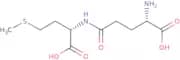
CAS :<p>H-Glu(Met-OH)-OH is an enzyme that catalyzes the conversion of stachyose to sucrose. It is also a synthetase that catalyzes the formation of fatty acids. H-Glu(Met-OH)-OH has been shown to be active in cancer cells and may be used as a potential therapeutic target for cancer treatment. This enzyme is inhibited by sodium hydroxide solution, hydrochloric acid, and urea nitrogen. The activity of H-Glu(Met-OH)-OH is measured by its ability to synthesize fatty acids from glucose in the presence of ATP and NADPH. Hydroxide solution can also be used to measure the activity of H-Glu(Met-OH)-OH as it converts stachyose to sucrose in the presence of ATP, NADP+, and sodium hydroxide solution. The rate at which this reaction occurs can be measured using a spectrophotometer with a carboxylate absorb</p>Formule :C10H18N2O5SDegré de pureté :Min. 95%Couleur et forme :SolidMasse moléculaire :278.33 g/molH-PIGHNRMYNMVPFFP-OH
<p>H-PIGHNRMYNMVPFFP-OH is a custom peptide that can be synthesized rapidly by our peptide experts in under 2 weeks. H-PIGHNRMYNMVPFFP-OH is provided at greater that >80% purity (HPLC) from Cymit Quimica for a variety of research applications. We also offer H-PIGHNRMYNMVPFFP-OH in bulk quantities in addition to our standard pack sizes.Please enquire for more information about H-PIGHNRMYNMVPFFP-OH at the technical inquiry form on this page</p>Degré de pureté :Min. 95%Saha chloroalkane T1
CAS :<p>Saha Chloroalkane T1 is a specialized chemical compound, typically categorized as a chloroalkane. It emerges from a synthetic process involving the chlorination of hydrocarbons, specifically alkanes, which serves as its primary source. The mode of action for chloroalkanes like Saha Chloroalkane T1 involves the stable incorporation of chlorine atoms, enhancing reactivity and providing versatility in chemical reactions.</p>Formule :C33H55ClN4O11Degré de pureté :Min. 95%Masse moléculaire :719.26 g/molH-NDGYLMFQQVPMVEIDGMK^-OH
<p>Peptide H-NDGYLMFQQVPMVEIDGMK^-OH is a Research Peptide with significant interest within the field academic and medical research. This peptide is available for purchase at Cymit Quimica in multiple sizes and with a specification of your choice.</p>Mastoparan
<p>Mastoparan is a 14-residue cationic peptide toxin isolated from the wasp Vespula lewisii venom which shows an important potency as an antimicrobial and anticancer agent but also as a Cell Permeable Peptide.<br>Mastoparan is mainly known to be a receptor-independant and allosteric regulator of G-protein by stimulating GTPase activity.<br>Besides modulating the activity of G-protein, Mastoparan have the ability to bind other intracellular targets such as Ca2+-ATP (implicated in Ca2+ release), small GTP binding proteins rho and rac, and many others.<br>Mastoparan also belongs to the cell permeable peptide (CPP) family. As such, Mastoparan increases the membrane conductance and permeability of planar lipid bilayer and liposomal membranes which leads to enhanced the penetration of Ca2+, Na+ or K+ ions.<br>Mastoparan have also a potential antibiotic effect due to its potent antimicrobial activity which can turn Mastoparan to a potential drug for infectious diseases.<br>Some studies have also reported that Mastoparan exhibits potent anti-cancer activities toward leukemia, myeloma, and breast cancer cells with an approximately half maximal inhibitory concentration (IC50) of 9µM, 11µM and 22µM respectively.<br>Mastoparan have shown to be more specific to cancer cells than to normal cells.</p>Masse moléculaire :1,478 g/molFmoc-Glu(OtBu)-Rink-Amide MBHA Resin
<p>Fmoc-Glu(OtBu)-Rink-Amide MBHA Resin is a high purity, ion channel ligand that is used in research as a pharmacological tool. It is an activator of Kv1.3 channels and inhibits the function of Kv1.2 channels. This product can be used for the study of protein interactions and receptor pharmacology. Fmoc-Glu(OtBu)-Rink-Amide MBHA Resin also has been found to inhibit the binding of antibodies to cells and can be used for immunoprecipitation experiments. This product has CAS number 188476-46-4 and is available in 1 g and 5 g sizes.</p>Degré de pureté :Min. 95%MBP protein
<p>1-387 amino acids: MKIEEGKLVI WINGDKGYNG LAEVGKKFEK DTGIKVTVEH PDKLEEKFPQ VAATGDGPDI IFWAHDRFGG YAQSGLLAEI TPDKAFQDKL YPFTWDAVRY NGKLIAYPIA VEALSLIYNK DLLPNPPKTW EEIPALDKEL KAKGKSALMF NLQEPYFTWP LIAADGGYAF KYENGKYDIK DVGVDNAGAK AGLTFLVDLI KNKHMNADTD YSIAEAAFNK GETAMTINGP WAWSNIDTSK VNYGVTVLPT FKGQPSKPFV GVLSAGINAA SPNKELAKEF LENYLLTDEG LEAVNKDKPL GAVALKSYEE ELAKDPRIAA TMENAQKGEI MPNIPQMSAF WYAVRTAVIN AASGRQTVDE ALKDAQTNSS SNNNNNNNNN NLGIEGR</p>Degré de pureté :Min. 95%NSE antibody
<p>NSE antibody was raised in mouse using NSE from the human brain as the immunogen.</p>YSA amide
<p>YSA binds to the extracellular domain of ephrin type-A receptor 2 (EphA2) with high affinity and selectivity. YSA binding activates EphA2 and its tumour suppressing downstream signalling pathways (including inhibition of the PI3K/Akt and ERK pathways), and promotes receptor internalisation.EphA2 is highly expressed in many types of solid tumour, and the level of EphA2 expression is positively correlated with malignancy and poor prognosis in some cancer types.YSA has been shown to be an effective targeting peptide of chemotherapeutic drugs to EphA2 expressing tumours. YSA-drug conjugates are able to selectively target EphA2 expressing tumours, both activating tumour supressing downstream signalling pathways, and becoming effectively internalised by cancer cells to further increase the potency of the chemotherapeutic drug. YSA-drug conjugates have been shown to be dramatically more effective at inhibiting tumour growth than chemotherapy alone. Selective tumour targeting with YSA could also reduce the systemic toxicity caused by nonselective and highly toxic chemotherapy agents, and thus reduce adverse side effects of chemotherapy.The uncharged C-terminal amide has the potential to increase the biological activity of this peptide.</p>Masse moléculaire :1,345.6 g/molH-GAGSSQHQER^-OH
<p>Peptide H-GAGSSQHQER^-OH is a Research Peptide with significant interest within the field academic and medical research. This peptide is available for purchase at Cymit Quimica in multiple sizes and with a specification of your choice.</p>PD-1 (27-41)
<p>PD-1 (27-41) peptide is derived from the programmed cell death-1 (PD-1) which interacts with its ligand, PD-L1 to regulate immune homeostasis. PD-1 and its ligand PD-L1 are critical in regulating T cell activation, tolerance and immuno-pathology. PD-1 is an immune checkpoint and guards against autoimmunity through two mechanisms. First, it promotes apoptosis of antigen-specific T-cells in lymph nodes. Second, it reduces apoptosis in regulatory T cells.Several types of cancer cells overexpress PD-L1 in order to escape from the PD-1/PD-L1 immuno-surveillance mechanism. Consequently PD-1 inhibitors and PD-L1 inhibitors could be used as a therapeutic in the treatment of cancers.</p>Couleur et forme :PowderMasse moléculaire :1,679.8 g/molH-SPCRSVTQF-OH
<p>H-SPCRSVTQF-OH is a custom peptide that can be synthesized rapidly by our peptide experts in under 2 weeks. H-SPCRSVTQF-OH is provided at greater that >95% purity (HPLC) from Cymit Quimica for a variety of research applications. We also offer H-SPCRSVTQF-OH in bulk quantities in addition to our standard pack sizes.Please enquire for more information about H-SPCRSVTQF-OH at the technical inquiry form on this page</p>Degré de pureté :Min. 95%Compound 42
CAS :<p>Compound 42 is a stilbene derivative that has potent inhibitory activity against the cb2 receptor. It is also a potent inhibitor of growth factor-β1 and epidermal growth factor, and can slow the growth of cancer cells. Compound 42 has shown anti-cancer properties in vitro. It inhibits the growth of cancer cells by binding to their 5-ht7 receptors, which are protein molecules that stimulate cell division, and by inhibiting the function of epidermal growth factor. The chemical structure of Compound 42 is shown below:</p>Formule :C19H16O4Degré de pureté :Min. 95%Masse moléculaire :308.33 g/molHistone H3 (20-36) K27Me3
<p>The Histone H3 (20-36)-K27Me3 is derived from Histone 3 (H3) which is one of the four core histones (H2A, H2B, H3 and H4) fundamental in compacting eukaryotic DNA into the nucleosome. The nucleosome arises when 147 base pairs of DNA wrap around a H3-H4 tetramer and two H2A-H2B dimers, forming the histone octamer core. Both H4 and H3 are highly conserved and perform roles in binding to segments of DNA which enter and leave the nucleosome and in chromatin formation. Similar to the other core histone, H3 has a globular domain and a flexible N-terminal domain, 'histone tail' which can undergo modifications such as acetylation, methylation, phosphorylation and ubiquitination. Due to histones containing a large number of lysine and arginine residues they have a positive net charge which interacts in an electrostatic manner with the negatively charged phosphate groups in DNA. The transcriptional activation or silencing of the chromatin is controlled by ATP-dependent chromatin remodelling factors and histone modifying enzymes which target histone proteins. Both processes function to alter to change the positioning of the nucleosome, allowing the DNA it to be either available to the transcription machinery or inaccessible.The Histone H3 (20-36) lysine 27 has been trimethylated which is usually a marker of repressive chromatin. H3K27 trimethylation also prevents H3 from interacting with SET1-like complexes, thus inhibiting the trimethylation of H3K4.</p>Masse moléculaire :1,668 g/molStichodactyla Toxin (ShK) (Amide)
<p>A synthetic sea anemone toxin peptide, that can be applied as a voltage dependent K+ channel (A Channel) blocker.</p>Formule :C169H275N55O47S7Degré de pureté :Min. 95%Masse moléculaire :4,053.86 g/molCys-TAT (49-57)
<p>Cys- Modified HIV TAT Sequence 49-57, a derivatizable cell-penetrating peptide (CPP) for click chemistry. Product available as a Trifluoroacetate Salt</p>Formule :C56H112N32O11SDegré de pureté :Min. 95%Masse moléculaire :1,441.79 g/molH-VNTLTER^-OH
<p>Peptide H-VNTLTER^-OH is a Research Peptide with significant interest within the field academic and medical research. This peptide is available for purchase at Cymit Quimica in multiple sizes and with a specification of your choice.</p>




![Histone H3 (1-20)-[S]-Biotin](/_next/image/?url=https%3A%2Fstatic.cymitquimica.com%2Fproducts%2F3D%2Fthumb-webp%2FCRB1000542.webp&w=3840&q=75)