Biologie cellulaire et moléculaire
Sous-catégories appartenant à la catégorie "Biologie cellulaire et moléculaire"
- Réactifs pour la culture cellulaire(1.277 produits)
- Cryoconservation et composés associés aux cryoconservateurs(21 produits)
- Composés liés à l'ADN et à l'ARN(2.521 produits)
- Colorants, teintes, teintures, imagerie fluorescente(3.007 produits)
- Électrophorèse(299 produits)
- Réactifs d'immunoanalyse(275 produits)
- Nucléosides(3.569 produits)
- Nucléotides(2.645 produits)
10773 produits trouvés pour "Biologie cellulaire et moléculaire"
MF-Mouse TNFRSF1B(Tumor Necrosis Factor Receptor Superfamily, Member 1B) ELISA Kit
This ELISA kit uses the Sandwich-ELISA principle. The micro ELISA plate provided in this kit has been pre-coated with an antibody specific to Mouse TNFRSF1B. Samples (or Standards) are added to the micro ELISA plate wells and combined with the specific antibody and biotinylated detection antibody specific for Mouse TNFRSF1B. Then Avidin-Horseradish Peroxidase (HRP) conjugate are added successively to each micro plate well and incubated. Free components are washed away. The substrate solution is added to each well. Only those wells that contain Mouse TNFRSF1B, biotinylated detection antibody and Avidin-HRP conjugate will appear blue in color. The enzyme-substrate reaction is terminated by the addition of stop solution and the color turns yellow. The optical density (OD) is measured spectrophotometrically at a wavelength of 450 nm. The OD value is proportional to the concentration of Mouse TNFRSF1B. You can calculate the concentration of Mouse TNFRSF1B in the samples by comparing the OD of the samples to the standard curve.
MF-Human KIM-1(Kidney Injury Molecule 1) ELISA Kit
This ELISA kit uses the Sandwich-ELISA principle. The micro ELISA plate provided in this kit has been pre-coated with an antibody specific to Human KIM-1. Samples (or Standards) are added to the micro ELISA plate wells and combined with the specific antibody and biotinylated detection antibody specific for Human KIM-1. Then Avidin-Horseradish Peroxidase (HRP) conjugate are added successively to each micro plate well and incubated. Free components are washed away. The substrate solution is added to each well. Only those wells that contain Human KIM-1, biotinylated detection antibody and Avidin-HRP conjugate will appear blue in color. The enzyme-substrate reaction is terminated by the addition of stop solution and the color turns yellow. The optical density (OD) is measured spectrophotometrically at a wavelength of 450 nm. The OD value is proportional to the concentration of Human KIM-1. You can calculate the concentration of Human KIM-1 in the samples by comparing the OD of the samples to the standard curve.
MF-Human GHR(Growth Hormone Receptor) ELISA Kit
This ELISA kit uses the Sandwich-ELISA principle. The micro ELISA plate provided in this kit has been pre-coated with an antibody specific to Human GHR. Samples (or Standards) are added to the micro ELISA plate wells and combined with the specific antibody and biotinylated detection antibody specific for Human GHR. Then Avidin-Horseradish Peroxidase (HRP) conjugate are added successively to each micro plate well and incubated. Free components are washed away. The substrate solution is added to each well. Only those wells that contain Human GHR, biotinylated detection antibody and Avidin-HRP conjugate will appear blue in color. The enzyme-substrate reaction is terminated by the addition of stop solution and the color turns yellow. The optical density (OD) is measured spectrophotometrically at a wavelength of 450 nm. The OD value is proportional to the concentration of Human GHR. You can calculate the concentration of Human GHR in the samples by comparing the OD of the samples to the standard curve.
MF-Human S100B(S100 Calcium Binding Protein B) ELISA Kit
This ELISA kit uses the Sandwich-ELISA principle. The micro ELISA plate provided in this kit has been pre-coated with an antibody specific to Human S100B. Samples (or Standards) are added to the micro ELISA plate wells and combined with the specific antibody and biotinylated detection antibody specific for Human S100B. Then Avidin-Horseradish Peroxidase (HRP) conjugate are added successively to each micro plate well and incubated. Free components are washed away. The substrate solution is added to each well. Only those wells that contain Human S100B, biotinylated detection antibody and Avidin-HRP conjugate will appear blue in color. The enzyme-substrate reaction is terminated by the addition of stop solution and the color turns yellow. The optical density (OD) is measured spectrophotometrically at a wavelength of 450 nm. The OD value is proportional to the concentration of Human S100B. You can calculate the concentration of Human S100B in the samples by comparing the OD of the samples to the standard curve.
MF-Rat VEGF-A(Vascular Endothelial Cell Growth Factor A) ELISA Kit
This ELISA kit uses the Sandwich-ELISA principle. The micro ELISA plate provided in this kit has been pre-coated with an antibody specific to Rat VEGF-A. Samples (or Standards) are added to the micro ELISA plate wells and combined with the specific antibody and biotinylated detection antibody specific for Rat VEGF-A. Then Avidin-Horseradish Peroxidase (HRP) conjugate are added successively to each micro plate well and incubated. Free components are washed away. The substrate solution is added to each well. Only those wells that contain Rat VEGF-A, biotinylated detection antibody and Avidin-HRP conjugate will appear blue in color. The enzyme-substrate reaction is terminated by the addition of stop solution and the color turns yellow. The optical density (OD) is measured spectrophotometrically at a wavelength of 450 nm. The OD value is proportional to the concentration of Rat VEGF-A. You can calculate the concentration of Rat VEGF-A in the samples by comparing the OD of the samples to the standard curve.
MF-Mouse IGF-2(Insulin Like Growth Factor 2) ELISA Kit
This ELISA kit uses the Sandwich-ELISA principle. The micro ELISA plate provided in this kit has been pre-coated with an antibody specific to Mouse IGF-2. Samples (or Standards) are added to the micro ELISA plate wells and combined with the specific antibody and biotinylated detection antibody specific for Mouse IGF-2. Then Avidin-Horseradish Peroxidase (HRP) conjugate are added successively to each micro plate well and incubated. Free components are washed away. The substrate solution is added to each well. Only those wells that contain Mouse IGF-2, biotinylated detection antibody and Avidin-HRP conjugate will appear blue in color. The enzyme-substrate reaction is terminated by the addition of stop solution and the color turns yellow. The optical density (OD) is measured spectrophotometrically at a wavelength of 450 nm. The OD value is proportional to the concentration of Mouse IGF-2. You can calculate the concentration of Mouse IGF-2 in the samples by comparing the OD of the samples to the standard curve.
EHD1
EHD1 is a member of the C-terminal EPS15-Homology Domain-containing (EHD) protein family and is involved in recycling cell surface receptors.
Masse moléculaire :1,367.7 g/molDystrophin (396-405)
Forms of inherited muscular dystrophy such as Duchenne muscular dystrophy (DMD) and Becker muscular dystrophy (BMD) result from mutations targeting the dystrophin gene. These disorders are X-linked, progressive, and cause the gradual weakening of the muscles leading to respiratory failure and ultimately reduces the patient lifespan.In DMD, mutations lead to the production of premature stop codons and hence the truncated dystrophin protein product is vulnerable to nonsense mediated decay and degradation. Therefore, dystrophin production in muscle cells is reduced. On the other hand, nonsense mutations which also contribute to DMD, cause exon skipping in BMD and result in an internally truncated protein product which are partially functional. The symptoms of BMD are later onset compared with DMD which develop in patients between 2 to 7 years.Treatments of dystrophin disorders are in clinical trials including antisense oligonucleotide exon skipping and gene therapy. However, the efficacies of these treatments are not easily quantified. Currently levels of muscular dystrophin are quantified by western blot which can be unreliable. The peptide provided here, aligning residues dystrophin (396-405), has been shown to provide absolute quantification of dystrophin levels from biopsies using parallel reaction monitoring. This will hopefully allow better management of dystrophin disorders with better quantifications tools based on dystrophin (396-405). Further study with this dystrophin fragment could prove to be a vital step in the understanding and treatment of dystrophin disorders. Within our catalogue we also have other peptides tested for dystrophin quantification available plus the full-length dystrophin protein.
Dystrophin, DMD
The Dystrophin protein, encoded by the dystrophin gene, is part of the dystrophin glycoprotein complex which connects the inner cytoskeleton to the extracellular matrix in muscle fibres. This allows the muscle cell plasma membrane to remain structurally stable.Forms of inherited muscular dystrophy such as Duchenne muscular dystrophy (DMD) and Becker muscular dystrophy (BMD) result from mutations targeting the dystrophin gene. These disorders are X-linked, progressive and cause the gradually weakening of the muscles leading to respiratory failure and ultimately reduces the patient lifespan.In DMD, mutations lead to the production of premature stop codons and hence the truncated dystrophin protein product is vulnerable to nonsense mediated decay and degradation. Therefore dystrophin production in muscle cells is reduced. On the other hand, nonsense mutations which also contribute to DMD, cause exon skipping in BMD and result in an internally truncated protein product which are partially functional. The symptoms of BMD are later onset compared with DMD which develop in patients between 2 to 7 years.
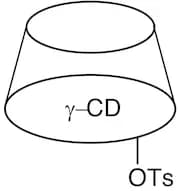
Masse moléculaire :1,515.8 g/molMono-2-O-(p-toluenesulfonyl)-γ-cyclodextrin
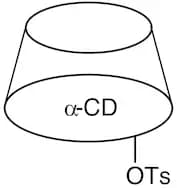
CAS :Formule :C55H86O42SDegré de pureté :>95.0%(HPLC)Couleur et forme :White to Almost white powder to crystalMasse moléculaire :1,451.31Mono-2-O-(p-toluenesulfonyl)-α-cyclodextrin
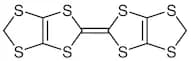
CAS :Formule :C43H66O32SDegré de pureté :>98.0%(HPLC)Couleur et forme :White to Almost white powder to crystalMasse moléculaire :1,127.03Bis(methylenedithio)tetrathiafulvalene
CAS :Formule :C8H4S8Couleur et forme :Red to Dark red to Brown powder to crystalMasse moléculaire :356.60