Antibiotiques
Sous-catégories appartenant à la catégorie "Antibiotiques"
- Antibiotiques macrolides(26 produits)
- Antibiotiques stéroïdiens(31 produits)
- Antibiotiques de type tétracycline(20 produits)
- antibiotiques β-lactames(11 produits)
4103 produits trouvés pour "Antibiotiques"
Cefazolin, Antibiotic for Culture Media Use Only
CAS :Cefazolin is a semi-synthetic, non-beta lactam antibiotic used for the treatment of a variety of bacterial infections. It inhibits cell wall synthesis by binding to one or more of penicillin-binding proteins (PBPs), which are bacterial transpeptidases that crosslink peptidoglycan strands. Cefazolin binds to PBPs present on the surface of all Gram-negative bacteria as well as many Gram-positive bacteria. It is not effective against methicillin-resistant staphylococcus and MRSA unless combined with another antibiotic such as vancomycin or flucloxacillin. A study showed that cefazolin can decrease inflammation and tumor necrosis factor-beta levels in pregnant women with systemic inflammatory disease. It has been tested in the development of an anti-inflammatory agent for use in patients with autoimmune diseases such as rheumatoid arthritis and lupus erythe.Formule :C14H14N8O4S3Masse moléculaire :454.51 g/molCyclosporin L
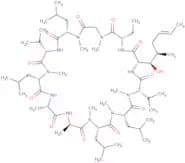
CAS :Cyclosporin L is an immunosuppressive agent, which is a cyclic polypeptide derived from the soil fungus Tolypocladium inflatum. It primarily functions by inhibiting the activity of calcineurin, a key phosphatase involved in the activation of T-cells. This inhibition prevents the transcription of interleukin-2 and other cytokines critical for T-cell proliferation.
Formule :C61H109N11O12Degré de pureté :90%MinMasse moléculaire :1,188.59 g/molClindamycin-2,3-diphosphate
Clindamycin-2,3-diphosphate is a biochemical compound, which is derived from the antibiotic clindamycin, sourced through chemical modification to include diphosphate groups. Its mode of action involves inhibiting bacterial protein synthesis by binding to the 50S ribosomal subunit, thus interfering with peptide chain initiation and elongation. This disruption effectively halts bacterial growth, particularly in Gram-positive bacteria, and is crucial in combatting infections resistant to other antibiotics.Formule :C18H35ClN2O11P2SDegré de pureté :Min. 95%Masse moléculaire :584.94 g/molNafcillin sodium
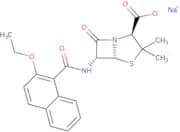
CAS :Nafcillin sodium is a beta-lactam antibiotic, which is a semisynthetic derivative of the organic compound penicillin. It is specifically engineered to be resistant to the inactivation by penicillinase enzymes produced by certain bacteria. This feature allows it to remain effective against a range of penicillinase-producing staphylococcal infections.Formule :C21H21N2NaO5SDegré de pureté :Min. 95%Couleur et forme :PowderMasse moléculaire :436.46 g/molLysostaphin, from staphylococcus staphylolyticus
CAS :Lysostaphin, from Staphylococcus staphylolyticus is a zinc metalloenzyme with action on bacterial cell walls by cleaving polyglycine cross-links and is used for treating staphylococcal infections and in research applications.Degré de pureté :Min. 95%Couleur et forme :PowderNifurquinazol
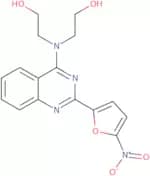
CAS :Nifurquinazol is an antimicrobial agent, which is a synthetic compound derived from the nitrofuran class of antibiotics. Its mode of action involves inhibition of bacterial enzymes critical for DNA and protein synthesis, thereby interfering with microbial cell replication and survival.
Formule :C16H16N4O5Degré de pureté :Min. 95%Masse moléculaire :344.32 g/molDeacetylanisomycin
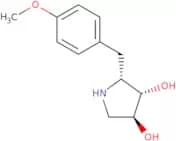
CAS :Deacetylanisomycin is a bacterial metabolite, which is derived from the soil bacterium Streptomyces griseolus. It acts as an inhibitor of protein synthesis by binding to the 60S ribosomal subunit, thus interfering with peptide bond formation during translation. This mode of action is key to its effectiveness in studying the mechanisms of protein synthesis interruption.Formule :C12H17NO3Degré de pureté :Min. 95%Couleur et forme :White To Off-White SolidMasse moléculaire :223.27 g/molOligomycin B
CAS :Oligomycin B is an antibiotic compound, which is derived from Streptomyces species. It is an inhibitor of the mitochondrial ATP synthase complex, specifically targeting the F₀ subunit of ATP synthase. This action obstructs the proton channel, preventing the flow of protons across the mitochondrial membrane. As a result, Oligomycin B effectively halts ATP synthesis by oxidative phosphorylation, which is crucial for the survival of aerobic organisms.
Formule :C45H72O12Degré de pureté :Min. 95%Couleur et forme :PowderMasse moléculaire :805.05 g/molTobramycin, Antibiotic for Culture Media Use Only
CAS :Produit contrôléTobramycin is used to treat severe infections with gram-negative bacteria and it is often applied in combination with beta-lactams. It has similar antimicrobial effects to gentamicin and is effective against all Enterobacteriacae, but more effective than gentamicin against P. aeruginosa, which is why it is often used for gentamicin-resistant strains, especially in the case of cystic fibrosis.Formule :C18H37N5O9Degré de pureté :Min. 97 Area-%Masse moléculaire :467.51 g/molRef: 3D-Q-201837
10gÀ demander25gÀ demander50gÀ demander100gÀ demander250gÀ demander-Unit-ggÀ demanderGeneticin Disulfate (G418), Antibiotic for Culture Media Use Only
CAS :Geneticin is very efficient against gram-negative bacteria, however it is not applied for treating infections due to high renal toxicity. Geneticin and its resistance genes found application in the selection of transgenic cell lines including yeasts such as P. pastoris and S. serevisiae, other eukaryotic cell lines such as CHO or HEK293, but also plant cells and bacterial cells.Formule :C20H44N4O18S2Degré de pureté :Min. 97.0 Area-%Masse moléculaire :692.71 g/molPorfiromycin
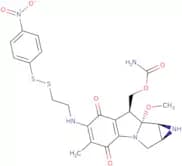
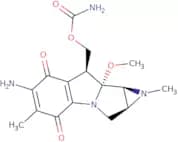
CAS :Porfiromycin is an antineoplastic antibiotic with action on DNA alkylation and cross-linking and is used for research on cancer treatment, particularly for hypoxic tumors.
Formule :C16H20N4O5Degré de pureté :Min. 95 Area-%Couleur et forme :PowderMasse moléculaire :348.35 g/molThiostrepton
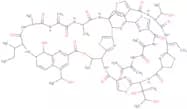
CAS :Thiostrepton is a thiopeptide antibiotic with action on bacterial protein synthesis by binding to the ribosome and is used for treating bacterial infections in veterinary medicine and research applications.Formule :C72H85N19O18S5Degré de pureté :Min. 95%Couleur et forme :White To Light (Or Pale) Yellow SolidMasse moléculaire :1,664.89 g/molLydicamycin
CAS :Lydicamycin is an antibacterial compound, which is a polyketide-derived antibiotic produced by the microorganism Streptomyces. This natural compound functions by inhibiting bacterial protein synthesis, effectively interrupting critical cellular processes within susceptible bacteria. The mode of action primarily focuses on binding to the bacterial ribosome, thereby disrupting protein production and inhibiting bacterial growth.
Formule :C47H74N4O10Degré de pureté :Min. 95%Masse moléculaire :855.11 g/molCeftaroline fosamil acetate
CAS :Cephalosporin antibiotic active against gram-positive bacteria including MRSAFormule :C24H25N8O10PS4Degré de pureté :Min. 98 Area-%Masse moléculaire :744.74 g/mol(+)-Madindoline A
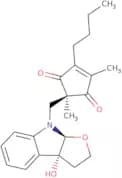
CAS :(+)-Madindoline A is a chemical substance that inhibits the growth of cancer cells. It has been shown to inhibit colon cancer cell proliferation and induce apoptosis by inhibiting signal pathways and suppressing inflammatory responses. (+)-Madindoline A is an experimental model for the study of bowel disease and inflammatory diseases, as it can be used to treat both bowel disease and inflammatory diseases. It also has inhibitory effects on the production of proinflammatory cytokines in human protein cells and natural compounds in experimental models. (+)-Madindoline A is found in small amounts in food compositions such as apples, carrots, cauliflower, celery, cucumbers, garlic, leeks, lettuce, onions, peas, peppers, potatoes and tomatoes.
Formule :C22H27NO4Degré de pureté :Min. 95%Masse moléculaire :369.45 g/molAmikacin B Sulfate
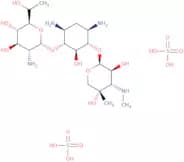
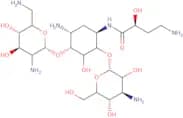
CAS :Inhibitor of protein synthesis; aminoglycosideFormule :C22H44N6O12xH2so4Degré de pureté :Min. 95%Masse moléculaire :584.62 g/molent NAP 226-90
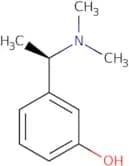
CAS :ent NAP 226-90 is an organic compound functioning as an antibacterial agent, which is derived from a biologically active natural product. Its mode of action involves the inhibition of essential bacterial enzymes, leading to the disruption of cellular processes within susceptible microorganisms. This compound is particularly effective against a broad spectrum of gram-positive bacteria, making it valuable in medical microbiology research for understanding bacterial resistance mechanisms.Formule :C10H15NODegré de pureté :Min. 95%Masse moléculaire :165.23 g/molHypothemycin
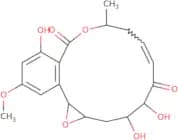
CAS :Hypothemycin is a natural product that serves as a potent inhibitor of protein kinases. It is derived from the fungus Hypomyces subiculosus and belongs to the class of resorcylic acid lactones. Its mode of action involves binding covalently to the ATP-binding site of kinases, leading to the inhibition of their activity. This covalent modification is achieved through the formation of a Michael-type addition with a reactive ene-diene functionality within its structure. By targeting these critical enzymes, hypothemycin disrupts key signaling pathways that are essential for cell growth and proliferation.Degré de pureté :Min. 95%(10E)-3-O-De(a-L-cladinose)-10-dehydro-11-dehydroxy-6-O-methyl-erythromycin 2'-acetate
CAS :Erythromycin derivative
Formule :C32H55NO10Degré de pureté :Min. 95%Masse moléculaire :613.78 g/mol