Antibiotiques
Les antibiotiques sont des composés conçus pour détruire ou inhiber la croissance de divers microorganismes, jouant un rôle crucial dans le traitement des infections et la prévention de la propagation des maladies. Cette catégorie offre une gamme diversifiée d'ingrédients actifs spécifiquement destinés à la recherche dans le domaine biochimique. Ces composés sont des outils essentiels pour étudier les mécanismes bactériens, les modèles de résistance et le développement de nouveaux agents thérapeutiques. Les chercheurs peuvent explorer une large variété d'antibiotiques pour comprendre leurs effets, optimiser leur utilisation et développer de nouveaux traitements pour combattre les menaces microbiennes émergentes. La disponibilité d'un spectre aussi large d'antibiotiques soutient la recherche avancée et l'innovation en microbiologie et en sciences pharmaceutiques.
Sous-catégories appartenant à la catégorie "Antibiotiques"
- Antibiotiques macrolides(26 produits)
- Antibiotiques stéroïdiens(31 produits)
- Antibiotiques de type tétracycline(20 produits)
- antibiotiques β-lactames(11 produits)
4100 produits trouvés pour "Antibiotiques"
Trier par
Degré de pureté (%)
0
100
|
0
|
50
|
90
|
95
|
100
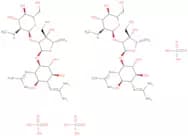
Dihydrostreptomycin sesquisulfate
CAS :<p>Dihydrostreptomycin sesquisulfate is an aminoglycoside antibiotic, which is derived from the bacterium Streptomyces griseus. Its mode of action involves binding to the 30S subunit of the bacterial ribosome, leading to the disruption of protein synthesis. This binding interferes with the initiation complex formation, causing misreading of mRNA and ultimately inhibiting bacterial growth.</p>Formule :C21H41N7O12•(H2SO4)1Degré de pureté :Min. 95%Masse moléculaire :730.71 g/molLysostaphin, from staphylococcus staphylolyticus
CAS :<p>Lysostaphin, from Staphylococcus staphylolyticus is a zinc metalloenzyme with action on bacterial cell walls by cleaving polyglycine cross-links and is used for treating staphylococcal infections and in research applications.</p>Degré de pureté :Min. 95%Couleur et forme :PowderClindamycin sulfoxide
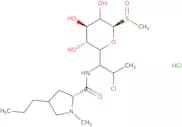
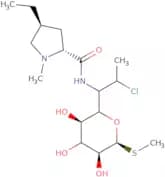
CAS :<p>Clindamycin sulfoxide is a potent metabolite of the lincosamide antibiotic clindamycin, which is derived from the fermentation product of *Streptomyces lincolnensis*. This compound acts by inhibiting bacterial protein synthesis through binding to the 50S ribosomal subunit, thereby interfering with the translocation steps in protein elongation. The mechanism effectively suppresses the growth of a broad range of Gram-positive bacteria, including *Staphylococcus aureus*, *Streptococcus pneumoniae*, and anaerobic microorganisms.</p>Formule :C18H33ClN2O6SDegré de pureté :Min. 95%Masse moléculaire :440.98 g/molBorrelidin
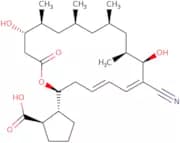
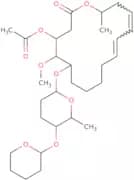
CAS :<p>Borrelidin is a potent antibiotic of the polyketide class, which is isolated from various Streptomyces species. Its mode of action is characterized by its inhibition of threonyl-tRNA synthetase, effectively disrupting protein synthesis within bacteria. Additionally, Borrelidin is known for its unique anti-angiogenic properties, which result from the inhibition of endothelial cell proliferation, making it a compound of interest in cancer research.</p>Degré de pureté :Min. 95%Erythromycin F
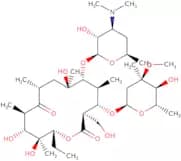
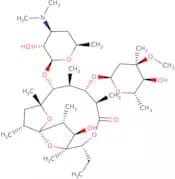
CAS :<p>Erythromycin F is an antibiotic, which is a naturally derived product obtained from the bacterium *Streptomyces erythreus*. It operates by inhibiting bacterial protein synthesis through binding to the 50S ribosomal subunit. This binding effectively blocks the translocation steps in protein elongation, thus preventing the growth and multiplication of susceptible bacteria.</p>Formule :C37H67NO14Degré de pureté :Min. 95%Masse moléculaire :749.93 g/molBoromycin
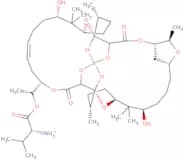
CAS :Boromycin is a macrolide antibiotic, which is derived from the fermentation of certain strains of Streptomyces bacteria. It operates as an ionophore with the ability to transport ions across lipid membranes, effectively disrupting ionic gradients. This mechanism of action compromises essential cellular processes in target organisms, thereby exerting its antimicrobial effects.Formule :C45H74BNO15Degré de pureté :Min. 95%Masse moléculaire :879.88 g/molStreptidine
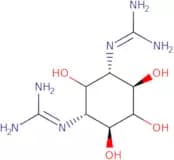
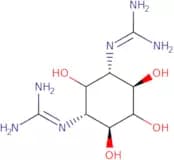
CAS :<p>Streptidine is an amino cyclitol, which is a component of certain aminoglycoside antibiotics. This compound originates from the actinomycete *Streptomyces griseus*, a soil bacterium known for its ability to produce a variety of antibiotics. Streptidine plays a crucial role in the mechanism of aminoglycosides by contributing to the binding affinity of these antibiotics to the bacterial ribosome.</p>Formule :C8H18N6O4Degré de pureté :Min. 95%Masse moléculaire :262.13895Cefodizime
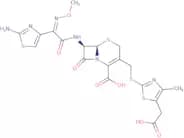
CAS :<p>Cefodizime is a third-generation cephalosporin antibiotic, which is derived from the fungus Acremonium. It exerts its bactericidal effects by inhibiting bacterial cell wall synthesis. This action is achieved through binding to penicillin-binding proteins (PBPs), leading to the interruption of peptidoglycan cross-linking essential for the bacterial cell wall integrity. The breakdown of cell wall synthesis results in the lysis and death of the bacterial cell.</p>Degré de pureté :Min. 95%PC 190723
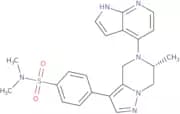
CAS :<p>PC 190723 is a synthetic chemical compound, which is derived through targeted chemical synthesis processes involving precise organic reactions. Its mode of action involves disrupting cellular division by inhibiting specific protein functions essential for the mitotic process. This molecular interaction results in potent effects on cell division, making it a valuable tool for studying cellular mechanics and developing therapeutic strategies.</p>Formule :C14H8ClF2N3O2SDegré de pureté :Min. 95%Masse moléculaire :355.75 g/molCefquinome
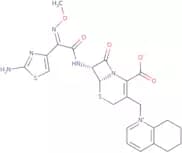
CAS :<p>Cefquinome is a broad-spectrum antibiotic, which is a fourth-generation cephalosporin. It is derived from the β-lactam class of antibiotics and is specifically designed for veterinary applications. Its mode of action involves the inhibition of bacterial cell wall synthesis, leading to cell lysis and death. This action is facilitated through the binding of cefquinome to penicillin-binding proteins, which undermines the structural integrity of bacterial cell walls, proving effective against both Gram-positive and Gram-negative bacteria.</p>Formule :C23H24N6O5S2Degré de pureté :Min. 95%Masse moléculaire :528.61 g/molStreptidine dihydrochloride
CAS :<p>Streptidine dihydrochloride is a biochemical compound, specifically a derivative of streptomycin, which is obtained through chemical modification of the aminoglycoside antibiotic streptomycin. It is composed of streptidine, a constituent sugar derivative, that is integral to the structure of streptomycin, rendered as a hydrochloride salt to enhance solubility and stability.</p>Formule :C8H18N6O4·2HClDegré de pureté :Min. 95%Pirlimycin HCl
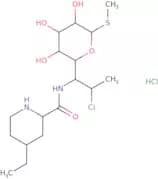
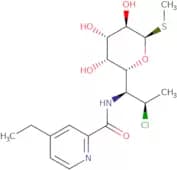
CAS :<p>Pirlimycin HCl is an antibacterial product, which is a semi-synthetic derivative of the natural antibiotic lincomycin produced by Streptomyces lincolnensis. Its mode of action involves the inhibition of bacterial protein synthesis by binding to the 50S ribosomal subunit, thereby preventing the elongation of peptide chains. This action is particularly effective against Gram-positive bacteria, including Staphylococcus and Streptococcus species.</p>Formule :C17H31ClN2O5S·HClDegré de pureté :Min. 95%Couleur et forme :White PowderMasse moléculaire :447.42 g/mol11-Deoxyfusidic acid
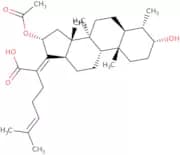
CAS :<p>11-Deoxyfusidic acid is a steroidal antibiotic, which is derived from the fermentation broth of certain strains of fungi, specifically within the Fusidium genus. Its mode of action involves inhibiting bacterial protein synthesis by interacting with elongation factor G (EF-G) on the ribosome, thus disrupting essential processes and impeding bacterial growth.</p>Formule :C31H48O5Degré de pureté :Min. 95%Masse moléculaire :500.71 g/molCefquinome sulfate
CAS :<p>Cefquinome sulfate is a cephalosporin antibiotic, which is a synthetic, broad-spectrum antimicrobial agent. It is derived from the beta-lactam family, specifically designed to combat Gram-positive and Gram-negative bacterial pathogens. The mode of action involves inhibiting bacterial cell wall synthesis. It achieves this by binding to penicillin-binding proteins (PBPs) within the bacterial cell wall, ultimately leading to cell lysis and death due to the interruption of necessary cell wall components.</p>Formule :C23H26N6O9S3Degré de pureté :Min. 95%Couleur et forme :White To Light (Or Pale) Yellow To Beige To Light Brown SolidMasse moléculaire :626.69 g/molCefotaxime sodium - Sterile grade
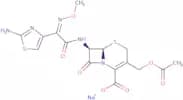
CAS :<p>Cefotaxime sodium - Sterile grade is a cephalosporin antibiotic, which is derived from the beta-lactam class of antibacterial agents. It effectively disrupts bacterial cell wall synthesis by binding to and inhibiting penicillin-binding proteins, leading to cell lysis and death. This mechanism of action is potent against a variety of Gram-positive and Gram-negative bacteria, making it a valuable tool in clinical settings.</p>Formule :C16H17N5O7S2·NaDegré de pureté :Min. 95%Masse moléculaire :478.46 g/molTridehydro pirlimycin
CAS :<p>Tridehydro pirlimycin is an antibiotic compound, which is a synthetic derivative with origins in the lincosamide family. It is characterized by its ability to inhibit bacterial protein synthesis by binding to the 50S ribosomal subunit, leading to a bacteriostatic effect. The compound is primarily developed for its use in veterinary medicine, particularly in the treatment and management of bacterial infections in animals.</p>Formule :C17H25ClN2O5SDegré de pureté :Min. 95%Masse moléculaire :404.91 g/mol14-Chloro daunorubicin
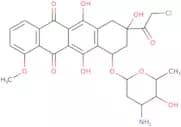
CAS :<p>14-Chloro daunorubicin is a chemotherapeutic agent, which is a synthetic derivative of the naturally occurring anthracycline antibiotic, daunorubicin. This compound is specifically modified to include a chlorine atom at the 14th position, which enhances its pharmacological effectiveness compared to its parent compound. The drug acts primarily by intercalating into DNA, disrupting the function of topoisomerase II, and generating free radicals. These mechanisms collectively inhibit DNA replication and transcription, leading to cell apoptosis, particularly in rapidly dividing cancer cells.</p>Formule :C27H28ClNO10Degré de pureté :Min. 95%Masse moléculaire :561.96 g/molCeftobiprole medocaril
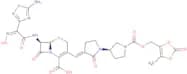
CAS :<p>Ceftobiprole medocaril is a prodrug of the cephalosporin class, which is a beta-lactam antibiotic. It is synthetically derived, designed to combat Gram-positive and Gram-negative bacteria. The mode of action involves binding to penicillin-binding proteins (PBPs), crucial for bacterial cell wall synthesis, ultimately leading to bacterial cell lysis and death.</p>Formule :C26H26N8O11S2Degré de pureté :Min. 95%Masse moléculaire :690.66 g/molCeftizoxime alapivoxil
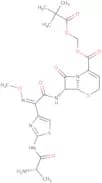
CAS :Ceftizoxime alapivoxil is a prodrug antibiotic, which is derived from ceftizoxime, a third-generation cephalosporin. This semi-synthetic source enables the compound to effectively combat a wide range of bacterial infections by improving oral bioavailability compared to its parent compound. Once administered, ceftizoxime alapivoxil is metabolized in the body to release ceftizoxime, which exerts its antibacterial activity by binding to penicillin-binding proteins (PBPs) on bacterial cell walls. This binding action inhibits the transpeptidation step critical for cell wall synthesis, leading to cell lysis and bacterial death.Degré de pureté :Min. 95%Clindamycin-2,3-diphosphate
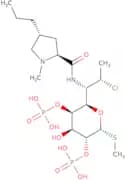
<p>Clindamycin-2,3-diphosphate is a biochemical compound, which is derived from the antibiotic clindamycin, sourced through chemical modification to include diphosphate groups. Its mode of action involves inhibiting bacterial protein synthesis by binding to the 50S ribosomal subunit, thus interfering with peptide chain initiation and elongation. This disruption effectively halts bacterial growth, particularly in Gram-positive bacteria, and is crucial in combatting infections resistant to other antibiotics.</p>Formule :C18H35ClN2O11P2SDegré de pureté :Min. 95%Masse moléculaire :584.94 g/molOligomycin A
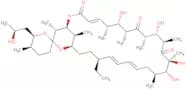
CAS :<p>Oligomycin A is a macrolide antibiotic, which is isolated from the Streptomyces species of bacteria. Its mode of action involves inhibiting ATP synthase by binding to the F_O subunit of the enzyme complex in the mitochondrial membrane. This binding effectively stops the flow of protons across the membrane, which is critical for ATP generation through oxidative phosphorylation.</p>Formule :C45H74O11Degré de pureté :Min. 95%Couleur et forme :PowderMasse moléculaire :791.06 g/mol8-Fluoro erythromycin
CAS :<p>8-Fluoro erythromycin is a synthetic derivative of the macrolide antibiotic erythromycin. It is derived from the fermentation of *Streptomyces erythraeus*, a species known for producing erythromycin, which is chemically modified to include a fluorine atom at the eighth position. This modification enhances its pharmacokinetic properties, improving its stability and bioavailability compared to the parent compound.</p>Formule :C37H66FNO13Degré de pureté :Min. 95%Masse moléculaire :751.92 g/molCeftaroline fosamil acetate
CAS :<p>Cephalosporin antibiotic active against gram-positive bacteria including MRSA</p>Formule :C24H25N8O10PS4Degré de pureté :Min. 98 Area-%Masse moléculaire :744.74 g/molRifamdin
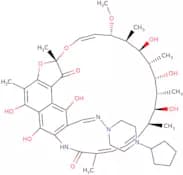
CAS :<p>Rifamdin is an antibiotic, which is a chemical substance derived from the source compound rifampicin. Its mode of action involves the inhibition of bacterial DNA-dependent RNA polymerase, which effectively suppresses bacterial RNA synthesis, leading to cell death. This mechanism primarily targets Mycobacterium tuberculosis, the causative agent of tuberculosis.</p>Formule :C46H64N4O12Degré de pureté :Min. 95%Masse moléculaire :865.02 g/molLydicamycin
CAS :<p>Lydicamycin is an antibacterial compound, which is a polyketide-derived antibiotic produced by the microorganism Streptomyces. This natural compound functions by inhibiting bacterial protein synthesis, effectively interrupting critical cellular processes within susceptible bacteria. The mode of action primarily focuses on binding to the bacterial ribosome, thereby disrupting protein production and inhibiting bacterial growth.</p>Formule :C47H74N4O10Degré de pureté :Min. 95%Masse moléculaire :855.11 g/molN'-Desmethyl azithromycin
CAS :<p>N'-Desmethyl azithromycin is a semi-synthetic derivative antibiotic, which is derived from the chemical modification of azithromycin, a macrolide antibiotic sourced originally from the bacterium *Streptomyces erythreus*. It functions primarily by inhibiting bacterial protein synthesis, binding specifically to the 50S ribosomal subunit, which results in the prevention of transpeptidation and translocation processes during translation. This action effectively halts bacterial growth, rendering it bacteriostatic.</p>Formule :C37H70N2O12Degré de pureté :Min. 95%Masse moléculaire :734.96 g/molClindamycin B hydrochloride
CAS :<p>Clindamycin B hydrochloride is a semi-synthetic antibiotic, which is derived from the parent compound, lincomycin, obtained from the bacterium *Streptomyces lincolnensis*. It exerts its antibacterial effects by binding to the 50S subunit of the bacterial ribosome, inhibiting protein synthesis by preventing peptide bond formation, which is essential for bacterial growth and survival.</p>Formule :C17H31ClN2O5S•HClDegré de pureté :Min. 95%Couleur et forme :White To Off-White SolidMasse moléculaire :447.42 g/molFosmidomycin sodium
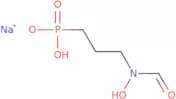
CAS :<p>Fosmidomycin sodium is an antibiotic compound, which is derived from phosphonic acid. It functions as an inhibitor of the enzyme 1-deoxy-D-xylulose 5-phosphate reductoisomerase (DXR), crucial in the non-mevalonate pathway of isoprenoid biosynthesis. By targeting this enzyme, fosmidomycin sodium disrupts the production of isoprenoids, essential components for the growth and survival of certain bacteria and parasites.</p>Formule :C4H9NNaO5PDegré de pureté :Min. 95%Masse moléculaire :205.08 g/molErythromycin B
CAS :<p>Erythromycin B is a semisynthetic macrolide antibiotic, which is derived from the actinomycete *Saccharopolyspora erythraea*. Its mode of action involves inhibiting bacterial protein synthesis by binding to the 50S ribosomal subunit. This interference with protein synthesis effectively hampers bacterial growth, making it a potent bacteriostatic agent.</p>Formule :C37H67NO12Degré de pureté :90%NmrMasse moléculaire :717.93 g/mol6'-N-Cbz-kanamycin A
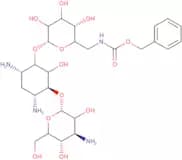
CAS :<p>6'-N-Cbz-kanamycin A is a semi-synthetic aminoglycoside antibiotic derivative, specifically a Cbz (carbobenzyloxy) protected form of kanamycin A. It is derived from the natural product kanamycin, which is an antibiotic obtained from the bacterium *Streptomyces kanamyceticus*. The modification involves the introduction of a protective Cbz group at the 6' position, which can improve solubility, stability, or enable further chemical modifications.</p>Formule :C26H42N4O13Degré de pureté :Min. 95%Masse moléculaire :618.63 g/molRolitetracycline
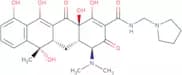
CAS :<p>Rolitetracycline is a semi-synthetic tetracycline antibiotic, which is derived from the natural compound tetracycline. It functions primarily by inhibiting protein synthesis in susceptible bacteria. This is achieved through the binding to the 30S ribosomal subunit, effectively blocking the attachment of aminoacyl-tRNA to the mRNA-ribosome complex, thereby preventing the addition of new amino acids to the nascent peptide chain. As a result, bacterial cell growth is inhibited, leading to bacteriostatic effects.</p>Formule :C27H33N3O8Degré de pureté :Min. 95%Couleur et forme :PowderMasse moléculaire :527.57 g/molClindamycin-2,4-diphosphate
CAS :<p>Clindamycin-2,4-diphosphate is a phosphorylated derivative of the antibiotic clindamycin, which is a semi-synthetic lincosamide antibiotic originally derived from Streptomyces lincolnensis. Its mode of action involves the inhibition of bacterial protein synthesis by binding to the 50S ribosomal subunit, thereby preventing peptide chain elongation during translation. This mechanism effectively disrupts protein production in susceptible bacteria, leading to their growth inhibition or death.</p>Formule :C18H35ClN2O11P2SDegré de pureté :Min. 95%Masse moléculaire :584.94 g/molAnhydro erythromycin A
CAS :<p>Anhydro erythromycin A is a semi-synthetic derivative of erythromycin A, which has been shown to be an effective inhibitor of bacterial growth, showing higher selectivity for this inhibition. It is a prodrug that is activated by acid catalysis and can be used as a substitute against methicillin-resistant staphylococcus. Anhydro erythromycin A was developed with the goal of increasing its stability and its potency against methicillin-resistant Staphylococcus aureus, which has been shown to be resistant to erythromycin.</p>Formule :C37H65NO12Degré de pureté :Min. 95%Couleur et forme :White PowderMasse moléculaire :715.91 g/mol2'-O-Acetylspiramycin I
CAS :<p>2'-O-Acetylspiramycin I is a semi-synthetic derivative of spiramycin, which is a macrolide antibiotic originally sourced from the bacterium *Streptomyces ambofaciens*. The modification involves the acetylation at the 2'-hydroxyl group of spiramycin, enhancing certain pharmacokinetic properties.</p>Formule :C45H76N2O15Degré de pureté :Min. 95%Masse moléculaire :885.09 g/molVirginiamycin - Complex of M1+S1
CAS :<p>Virginiamycin - Complex of M1+S1 is an antibiotic compound, which is derived from the actinobacterium Streptomyces virginiae. It functions through the inhibition of bacterial protein synthesis by binding to the 50S ribosomal subunit, thereby obstructing peptide bond formation and impeding microbial growth. The complex is composed of two major components: Virginiamycin M1 and Virginiamycin S1, which synergistically enhance antimicrobial efficacy.</p>Formule :C71H84N10O17Degré de pureté :Min. 95%Masse moléculaire :1,349.48 g/molCefotiam
CAS :<p>Cefotiam is a broad-spectrum cephalosporin antibiotic, which is a beta-lactam compound derived from the mold Acremonium. It functions by inhibiting bacterial cell wall synthesis, particularly by targeting penicillin-binding proteins, which leads to cell lysis and death in susceptible bacteria. This mechanism of action makes it effective against various Gram-positive and Gram-negative bacteria.</p>Formule :C18H23N9O4S3Degré de pureté :Min. 95%Couleur et forme :PowderMasse moléculaire :525.62 g/molPhleomycin
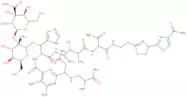
CAS :<p>Phleomycin is an antibiotic, which is derived from the bacterium *Streptomyces verticillus*. Its mode of action involves binding to DNA and inducing breaks by generating free radicals in the presence of oxygen and ferrous ions, leading to cell death. Phleomycin is prominently used in molecular biology applications as a selective agent in the generation of stable transfectants. It is particularly effective in selecting for cells that have integrated vectors conferring resistance, such as the Sh ble gene used in yeast, plant, and mammalian cell systems. Due to its potent DNA-cleaving ability, Phleomycin is valuable in studies requiring stringent selection pressure. Researchers commonly utilize it in experiments focusing on genetic modification and cellular resistance development.</p>Formule :C51H75N17O21S2Degré de pureté :Min. 95%Masse moléculaire :1,326.38 g/molPiericidin A
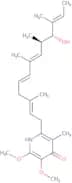
CAS :<p>Piericidin A is a microbial metabolite, specifically a type of polyketide, which is derived from the bacterium of the genus Streptomyces. This compound acts as an electron transport chain inhibitor by specifically binding to the ubiquinone binding site of complex I (NADH:ubiquinone oxidoreductase) in mitochondria. This mode of action results in the disruption of ATP production through oxidative phosphorylation.</p>Formule :C25H37NO4Degré de pureté :Min. 95%Masse moléculaire :415.57 g/molArbekacin sulfate
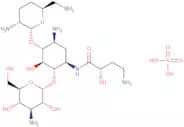
CAS :<p>Inhibitor of DNA replication; aminoglycoside class</p>Formule :C22H44N6O10·xH2SO4Degré de pureté :Min. 95%Couleur et forme :White PowderMasse moléculaire :650.7 g/molN-Desisobutyl-N-propyl rifabutin
CAS :<p>N-Desisobutyl-N-propyl rifabutin is a synthetic derivative of rifabutin, which is an antibiotic belonging to the rifamycin class. This compound is sourced from modifications of the parent molecule rifabutin, itself derived from the rifamycin family produced by the bacterium Amycolatopsis, traditionally used for its antimicrobial properties. The mode of action involves the inhibition of bacterial RNA polymerase, effectively preventing the transcription process necessary for bacterial replication and protein synthesis. This disruption of RNA synthesis provides potent antimicrobial activity.</p>Formule :C45H60N4O11Degré de pureté :Min. 95%Masse moléculaire :832.98 g/molVancomycin aglycon
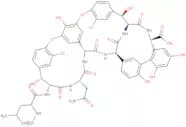
CAS :<p>Vancomycin aglycon is a glycopeptide antibiotic, which is a derivative of vancomycin. It is sourced from the fermentation products of certain Amycolatopsis species, a genus of actinobacteria. The mode of action of vancomycin aglycon involves the inhibition of bacterial cell wall synthesis. It specifically binds to the D-Ala-D-Ala terminus of nascent peptidoglycan chains, thereby preventing the cross-linking that is crucial for maintaining cell wall integrity.</p>Formule :C53H52Cl2N8O17Degré de pureté :Min. 95%Masse moléculaire :1,143.93 g/molN-Biotinyl-12-aminododecanoyltobramycin amide
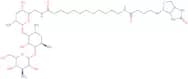
CAS :<p>N-Biotinyl-12-aminododecanoyltobramycin amide is a synthetic bioconjugate, which is derived from the aminoglycoside antibiotic tobramycin. This compound is chemically modified by the addition of a biotin moiety linked through a 12-aminododecanoyl spacer. The source of this product is rooted in the conjugation of biotin to tobramycin, allowing for targeted delivery and potential hybrid applications in both therapeutic and diagnostic fields.</p>Formule :C40H74N8O12SDegré de pureté :Min. 95%Masse moléculaire :891.13 g/molSitafloxacin
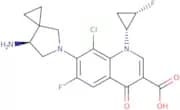
CAS :<p>Sitafloxacin is an antibacterial agent belonging to the fluoroquinolone class of antibiotics, which is synthetically derived from chemical processes involving fluorinated quinolones. Its mode of action involves the inhibition of bacterial DNA gyrase and topoisomerase IV, enzymes crucial for bacterial DNA replication and transcription. By interfering with these enzymes, Sitafloxacin effectively hampers bacterial DNA synthesis, leading to the eventual demise of the bacterial cell.</p>Formule :C19H18ClF2N3O3Degré de pureté :Min. 95%Couleur et forme :SolidMasse moléculaire :409.81 g/molCefazolin, Antibiotic for Culture Media Use Only
CAS :Cefazolin is a semi-synthetic, non-beta lactam antibiotic used for the treatment of a variety of bacterial infections. It inhibits cell wall synthesis by binding to one or more of penicillin-binding proteins (PBPs), which are bacterial transpeptidases that crosslink peptidoglycan strands. Cefazolin binds to PBPs present on the surface of all Gram-negative bacteria as well as many Gram-positive bacteria. It is not effective against methicillin-resistant staphylococcus and MRSA unless combined with another antibiotic such as vancomycin or flucloxacillin. A study showed that cefazolin can decrease inflammation and tumor necrosis factor-beta levels in pregnant women with systemic inflammatory disease. It has been tested in the development of an anti-inflammatory agent for use in patients with autoimmune diseases such as rheumatoid arthritis and lupus erythe.Formule :C14H14N8O4S3Masse moléculaire :454.51 g/molTulathromycin B - 95%
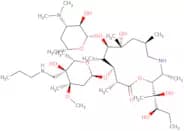
CAS :<p>Inhibitor of protein synthesis; macrolide class</p>Formule :C41H79N3O12Degré de pureté :Min. 95%Masse moléculaire :806.08 g/mol25-Desacetyl rifapentin
CAS :<p>25-Desacetyl rifapentin is a derivative of rifapentin, an antibiotic belonging to the rifamycin class, sourced from the bacterial species *Amycolatopsis rifamycinica*. This compound functions by inhibiting bacterial DNA-dependent RNA polymerase, which is crucial for transcription in susceptible bacterial strains. By inhibiting this enzyme, 25-Desacetyl rifapentin effectively hampers RNA synthesis, ultimately leading to bacterial cell death.</p>Formule :C45H62N4O11Degré de pureté :Min. 95%Couleur et forme :PowderMasse moléculaire :834.99 g/molImipenem Monohydrate, Antibiotic for Culture Media Use Only
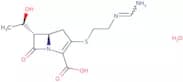
CAS :Imipenem acts as an antimicrobial through inhibiting cell wall synthesis of various gram-positive and gram-negative bacteria. It remains very stable in the presence of beta-lactamase (both penicillinase andcephalosporinase) produced by some bacteria, and is a strong inhibitor of beta-lactamases from some gram-negative bacteria that are resistant to most beta-lactam antibiotics.Formule :C12H19N3O5SDegré de pureté :Min. 98.0 Area-%Masse moléculaire :317.36 g/molTrovafloxacin mesylate
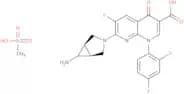
CAS :<p>Trovafloxacin mesylate is a synthetic antibiotic belonging to the fluoroquinolone class, which is derived from chemical synthesis processes rather than natural sources. The mode of action of trovafloxacin mesylate involves the inhibition of bacterial enzymes DNA gyrase and topoisomerase IV. These enzymes are essential for DNA replication, repair, and transcription within the bacterial cell. By inhibiting these enzymes, trovafloxacin mesylate disrupts bacterial DNA processes, leading to cell death and exerting its antibacterial effects.</p>Formule :C21H19F3N4O6SDegré de pureté :Min. 95%Masse moléculaire :512.46 g/molMitomycin D
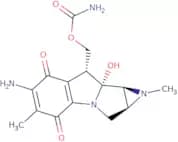
CAS :<p>Mitomycin D is an antibiotic and chemotherapeutic agent known for its ability to inhibit DNA synthesis, making it a potent antitumor agent. It is derived from the bacterium *Streptomyces caespitosus*. Mitomycin D functions as a DNA crosslinking agent by alkylating the DNA strands, which interferes with DNA replication and transcription. This mechanism leads to the cessation of cellular division and ultimately induces apoptosis in rapidly dividing cells.</p>Formule :C15H18N4O5Degré de pureté :Min. 95%Masse moléculaire :334.33 g/mol