Antibiotiques
Sous-catégories appartenant à la catégorie "Antibiotiques"
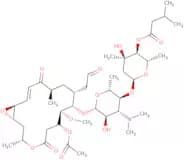
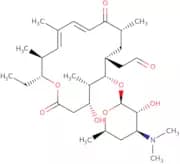
- Antibiotiques macrolides(26 produits)
- Antibiotiques stéroïdiens(31 produits)
- Antibiotiques de type tétracycline(20 produits)
- antibiotiques β-lactames(11 produits)
4473 produits trouvés pour "Antibiotiques"
Nortopixantrone
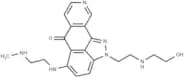
CAS :Nortopixantrone(BBR 3438) is a novel 9-azacyclophenanthracene pyrazole that shows antitumor activity in a human prostate cancer model.Formule :C20H24N6O2Degré de pureté :>99.99%Couleur et forme :SolidMasse moléculaire :380.44Swainsonine
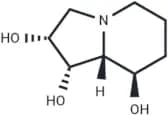
CAS :Swainsonine (Tridolgosir) is an alkaloid isolated from Astragalus membranaceus and is a potent and reversible inhibitor of alpha-mannosidase. swainsonine has antitumour activity and induces apoptosis and cell cycle arrest in the G2/M phase.Formule :C8H15NO3Degré de pureté :98%Couleur et forme :Lyophilized PowderMasse moléculaire :173.21A 53868A
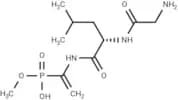
CAS :A 53868A is an antibiotic, it is isolated from Streptomyces luridus.Formule :C11H22N3O5PDegré de pureté :98%Couleur et forme :SolidMasse moléculaire :307.287Formycin A
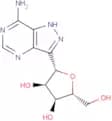
CAS :Formycin A shows antitumor and antiviral activities. Formycin A , a purine nucleoside antibiotic, is a potent human immunodeficiency virus type 1 (HIV-1) inhibitor with an EC50 of 10 μM.Formule :C10H13N5O4Degré de pureté :98%Couleur et forme :SolidMasse moléculaire :267.24Linezolid N-Oxide
CAS :Produit contrôléFormule :C16H20FN3O5Couleur et forme :NeatMasse moléculaire :353.35Enduracidin hydrochloride
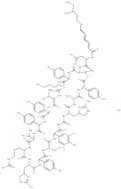
CAS :Enduracidin hydrochloride is an antimicrobial compound, which is a lipopeptide antibiotic derived from the genus Streptomyces, specifically Streptomyces fungicidicus or Streptomyces roseosporus. The compound exerts its antimicrobial activity by inhibiting the synthesis of bacterial cell walls, primarily targeting the lipid II cycle, a critical precursor in the peptidoglycan synthesis pathway. This inhibition disrupts the construction of peptidoglycan layers, ultimately leading to bacterial cell lysis and death.
Formule :C107H138Cl2N26O31HClDegré de pureté :Min. 95%Masse moléculaire :2,391.76 g/molPazufloxacin hydrochloride
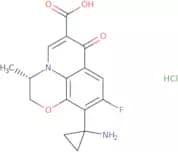
CAS :Pazufloxacin hydrochloride is a synthetic antibacterial agent, which is derived from the fluoroquinolone class of antibiotics with a broad-spectrum activity against various bacterial pathogens. This compound, sourced through chemical synthesis, functions primarily by inhibiting bacterial DNA gyrase and topoisomerase IV, which are critical enzymes for DNA replication, transcription, repair, and recombination. The inhibition of these enzymes leads to the disruption of bacterial DNA processes, ultimately resulting in bacterial cell death.
Formule :C16H15FN2O4•HClDegré de pureté :Min. 95%Masse moléculaire :354.76 g/molKanamycin sulfate, Antibiotic for Culture Media Use Only
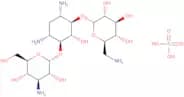
CAS :Kanamycin sulfate is a water-soluble antibiotic. Genes encoding kanamycin resistance are commonly used as selection markers in molecular biology .It acts during the translation mechanism in prokaryotic ribosomes to avoid bacterial cell growth.
Formule :C18H38N4O15SMasse moléculaire :582.58 g/molTomopenem
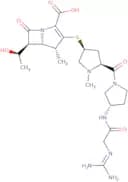
CAS :Tomopenem is a carbapenem antibiotic, which is a product of synthetic origin with broad-spectrum antibacterial properties. It acts by inhibiting the synthesis of bacterial cell walls through binding to penicillin-binding proteins, thereby disrupting the structural integrity of the cell wall and leading to bacterial cell lysis and death.
Formule :C23H35N7O6SDegré de pureté :Min. 95%Masse moléculaire :537.63 g/molCefsulodin sodium salt (SCE-129), Antibiotic for Culture Media Use Only
CAS :Cefsulodin sodium salt is a beta lactam antibiotic in the third-generation cephalosporin family that inhibits penicillin-binding proteins (PBPs) to disrupt bacterial cell wall synthesis.
Formule :C22H19N4NaO8S2Degré de pureté :Min. 97.0 Area-%Masse moléculaire :554.53 g/molTicarcillin disodium salt - 80%
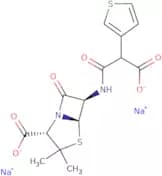
CAS :Ticarcillin disodium salt is a beta-lactam antibiotic that has in vitro activity against Gram-positive and Gram-negative bacteria. Ticarcillin is active against penicillinase-producing strains of Staphylococcus aureus, Enterobacter aerogenes, Proteus mirabilis, Escherichia coli, Pseudomonas aeruginosa, Klebsiella pneumoniae, Serratia marcescens, Streptococcus pyogenes, Streptococcus faecalis, and Streptococcus pneumoniae. Furthermore, it inhibits transpeptidase activity of the cell wall of bacteria which prevents peptidoglycan synthesis. It is bactericidal for many bacteria at low concentrations.
Formule :C15H14N2Na2O6S2Degré de pureté :Min. 90 Area-%Couleur et forme :PowderMasse moléculaire :428.4 g/molPotassium clavulanate
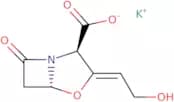
CAS :Potassium clavulanate is a beta-lactamase inhibitor and an antibacterial agent. The presence of potassium clavulanate in culture media inhibits the activity of beta-lactamases, which are enzymes that confer resistance to penicillin and other beta-lactam antibiotics. It also has been shown to be active against bacterial infections such as tuberculosis, sepsis, and pneumonia, where it can inhibit the growth of bacteria by interfering with their ability to form cell walls. Potassium clavulanate is also used as an antimicrobial agent for blood culture technique and antimicrobial treatment.
Formule :C8H8NO5·KDegré de pureté :Min. 95%Couleur et forme :White PowderMasse moléculaire :237.25 g/molTigecycline hydrochloride
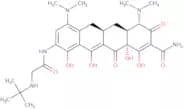
CAS :Inhibitor of protein synthesis; glycylcycline class
Formule :C29H39N5O8·HClDegré de pureté :Min. 95%Masse moléculaire :622.11 g/molAmicoumacin B
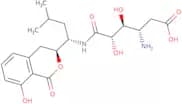
CAS :Amicoumacin B is a potent antibiotic, which is isolated from the bacterial species Bacillus pumilus. It acts by inhibiting protein synthesis, targeting the ribosomal 30S subunit and disrupting translational fidelity in bacterial cells. This interference in protein production leads to the effective elimination of various Gram-positive and certain Gram-negative bacteria.
Degré de pureté :Min. 95%Anthracycline
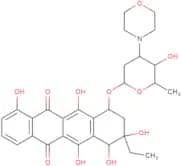
CAS :Anthracycline is a class of chemotherapy drugs, which are anthraquinone antibiotics derived from the bacterial genus Streptomyces. They exert their therapeutic effects primarily through intercalation into DNA, disrupting the function of enzymes such as topoisomerase II, thus preventing the transcription and replication processes in rapidly dividing cancer cells. Furthermore, they generate free radicals, leading to oxidative stress and subsequent cell damage. These mechanisms collectively result in apoptosis of malignant cells. Anthracyclines are utilized extensively in oncology for the treatment of various malignancies, including leukemias, lymphomas, breast cancer, and sarcomas. The efficacy of anthracyclines in inhibiting tumor growth must be balanced against their cardiotoxic potential, which is a significant consideration in their clinical use. This dual nature makes them both pivotal and challenging in chemotherapy regimens, necessitating careful management and monitoring throughout treatment.
Formule :C30H35NO11Degré de pureté :Min. 95%Masse moléculaire :585.60 g/molEthambutol
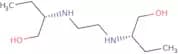
CAS :Ethambutol is an antimicrobial compound, specifically an antitubercular agent, which is a synthetic derivative of ethylenediamine. It is classified as a bacteriostatic agent that primarily targets Mycobacterium tuberculosis. The mode of action of Ethambutol involves the inhibition of arabinosyl transferases, enzymes essential for the polymerization of arabinogalactan, a critical component of the mycobacterial cell wall. By disrupting cell wall biosynthesis, Ethambutol effectively hampers the growth and proliferation of the bacteria.
Formule :C10H24N2O2Degré de pureté :Min. 95%Masse moléculaire :204.31 g/molNitrocycline
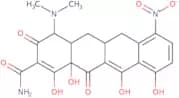
CAS :Nitrocycline is a broad-spectrum antibiotic, which is a synthetic derivative of tetracycline with enhanced antibacterial properties. As a chemically synthesized compound, nitrocycline has been engineered to overcome resistance mechanisms common in bacterial pathogens. Its mode of action involves the inhibition of protein synthesis, achieved by binding to the 30S ribosomal subunit, effectively preventing the addition of new amino acids to nascent peptide chains. This binding action interrupts bacterial growth and replication, providing robust activity against both Gram-positive and Gram-negative bacteria.
Formule :C21H21N3O9Degré de pureté :Min. 95%Masse moléculaire :459.4 g/molCarbomycin
CAS :Carbomycin is a macrolide antibiotic, which is derived from the bacterium Streptomyces halstedii. This antibiotic functions by binding to the 50S ribosomal subunit, thereby inhibiting bacterial protein synthesis. Through this mechanism, carbomycin effectively disrupts the growth and replication of susceptible bacterial strains, making it a potent tool in combating bacterial infections.
Formule :C42H67NO16Degré de pureté :Min. 95%Masse moléculaire :841.98 g/molRepromicin
CAS :Repromicin is a novel antibiotic, which is derived from a unique strain of actinobacteria. This organism is known for its ability to produce a wide range of bioactive compounds. Repromicin operates by inhibiting bacterial protein synthesis, a mode of action that involves binding to the bacterial ribosome and interfering with the translation process. This leads to an effective halt in bacterial growth and proliferation.
Formule :C31H51NO8Degré de pureté :Min. 95%Masse moléculaire :565.74 g/mol