


Hétérocycles azotés (N)
Dans cette catégorie, vous trouverez une grande variété d'hétérocycles contenant de l'azote. Les hétérocycles sont des chaînes de carbone qui forment un cycle où au moins une position est occupée par un hétéroatome, dans ce cas, l'azote. Ces composés sont essentiels dans la synthèse de produits pharmaceutiques, agrochimiques et colorants, offrant une réactivité et une stabilité uniques. Chez CymitQuimica, nous offrons une sélection complète d'hétérocycles contenant de l'azote de haute qualité pour soutenir vos recherches et applications industrielles.
Sous-catégories appartenant à la catégorie "Hétérocycles azotés (N)"
- Azépane(434 produits)
- Benzotriazoles(436 produits)
- Diazépanes(331 produits)
- Imidazoles(4.006 produits)
- Imidazolines(385 produits)
- Isoxazole(1.077 produits)
- Piperazines(3.735 produits)
- Pipéridines(8.394 produits)
- Pyrazines(1.297 produits)
- Pyrazole(5.919 produits)
- Pyrazolidine(21 produits)
- Pyrazoline(142 produits)
- Pyridazine(856 produits)
- Pyridines(21.910 produits)
- Pyrimidine(6.038 produits)
- Pyrroles(2.440 produits)
- Pyrrolidines(5.814 produits)
- Pyrroline(48 produits)
- Pyrrolo[1,2-b]pyridazine(10 produits)
- Tétrazole(510 produits)
- Triazines(462 produits)
- Triazoles(1.679 produits)
Affichez 14 plus de sous-catégories
17855 produits trouvés pour "Hétérocycles azotés (N)"
Trier par
Degré de pureté (%)
0
100
|
0
|
50
|
90
|
95
|
100
1-Pyridin-2-ylmethylpiperidine-4-carboxylic acid
CAS :<p>Please enquire for more information about 1-Pyridin-2-ylmethylpiperidine-4-carboxylic acid including the price, delivery time and more detailed product information at the technical inquiry form on this page</p>Formule :C12H16N2O2Degré de pureté :Min. 95%Masse moléculaire :220.27 g/mol6-(Chloromethyl)pteridine-2,4-diamine monohydrochloride
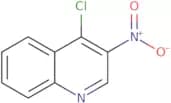
CAS :<p>Please enquire for more information about 6-(Chloromethyl)pteridine-2,4-diamine monohydrochloride including the price, delivery time and more detailed product information at the technical inquiry form on this page</p>Formule :C7H7ClN6•HClDegré de pureté :Min. 95%Masse moléculaire :247.08 g/mol4-Chloro-3-nitroquinoline
CAS :<p>4-Chloro-3-nitroquinoline is a quinoline derivative that can be synthesized by cross-coupling reaction. The amide and n-oxide functional groups are the most reactive sites. It can react with nucleophiles such as haloamines, azides, and pyridazines to form covalent bonds. 4-Chloro-3-nitroquinoline has been shown to have anti-HIV activity in vitro and in vivo in animal models. In addition, this compound has shown potential use for the treatment of leishmania.</p>Formule :C9H5ClN2O2Degré de pureté :Min. 95%Couleur et forme :Slightly Yellow PowderMasse moléculaire :208.6 g/mol4-[(4-Methylpiperazin-1-yl)methyl]benzoic acid
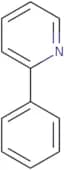
CAS :<p>4-[(4-Methylpiperazin-1-yl)methyl]benzoic acid is an organic compound. It is a white solid that is insoluble in water but soluble in organic solvents. The molecule has a molecular weight of 224.8 g/mol and contains a carbonyl group and amine functional groups. 4-[(4-Methylpiperazin-1-yl)methyl]benzoic acid can be prepared by the acylation of 4-(aminomethyl)-benzoic acid with imidazole hydrochloride in the presence of sodium carbonate as a base.</p>Formule :C13H18N2O2Degré de pureté :Min. 95%Masse moléculaire :234.29 g/mol2-Phenylpyridine
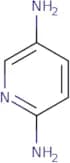
CAS :<p>2-Phenylpyridine is a heterocyclic organic compound that has been shown to have x-ray crystal structures. It has redox potentials, nitrogen atoms, and a fatty acid group attached. 2-Phenylpyridine has been shown to have nmr spectra that are characteristic of a transfer reaction mechanism. The steric interactions and the biphenyl groups have been shown to have ancillary effects on the reaction mechanism. 2-Phenylpyridine is also known to coordinate in a geometric shape called octahedral, which is most likely due to hydrogen bonding and photophysical properties. The analytical chemistry of this molecule consists of determining its melting point, boiling point, and density. 2-phenylpyridine</p>Formule :C11H9NDegré de pureté :Min. 95%Masse moléculaire :155.2 g/mol2,5-Diaminopyridine
CAS :<p>2,5-Diaminopyridine is an organic compound that is expressed in the human body. It has been shown to inhibit the growth of cells in culture by binding to their DNA and preventing the production of hydrogen bonds. 2,5-Diaminopyridine has also been used clinically to treat inflammatory diseases such as rheumatoid arthritis. The hydrogen bond formation and inhibition of cell growth occurs at a low concentration of 2,5-Diaminopyridine. This drug may have potential as a therapeutic agent for cancer treatment because it inhibits the transcription factor CXCR4.</p>Formule :C5H7N3Degré de pureté :Min. 98.0 Area-%Couleur et forme :Yellow To Purple To Brown SolidMasse moléculaire :109.13 g/mol2-[(5-Chloropyridin-2-yl)amino]-2-oxoacetic acid ethyl ester monohydrochloride
CAS :<p>Intermediate in the synthesis of edoxaban</p>Formule :C9H9ClN2O3·HClDegré de pureté :Min. 95%Masse moléculaire :265.09 g/molCoproporphyrin III
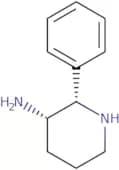
CAS :<p>Please enquire for more information about Coproporphyrin III including the price, delivery time and more detailed product information at the technical inquiry form on this page</p>Formule :C36H38N4O8Degré de pureté :Min. 95%Masse moléculaire :654.71 g/mol(2S,3S)-(-)-3-Amino-2-phenylpiperidine
CAS :<p>The process of asymmetric epoxidation is used to convert alkenes into epoxides in a single step. This reaction is catalyzed by the use of a chiral catalyst with an enantiomeric excess (ee) greater than 50%. The reactants are added to the catalyst and hydrogen peroxide, which oxidizes the alkenes. The resulting epoxides can be isolated from the reaction mixture by distillation or extraction. Factors that affect this reaction include the type of reactant, solvent, temperature, and pressure.</p>Formule :C11H16N2Degré de pureté :Min. 95%Masse moléculaire :176.26 g/mol8-Chloro-5,6-dihydro-11H-benzo[5,6]cyclohepta[1,2-b]pyridin-11-one
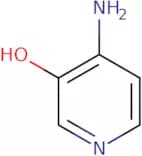
CAS :<p>Please enquire for more information about 8-Chloro-5,6-dihydro-11H-benzo[5,6]cyclohepta[1,2-b]pyridin-11-one including the price, delivery time and more detailed product information at the technical inquiry form on this page</p>Formule :C14H10ClNODegré de pureté :Min. 95%Masse moléculaire :243.69 g/mol4-Amino-3-hydroxypyridine
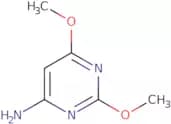
CAS :<p>4-Amino-3-hydroxypyridine is a cholinergic drug that has a dose-proportional profile. This drug has been shown to be clinically relevant in humans, and the clinical studies have demonstrated a clear pharmacokinetic profile. 4-Amino-3-hydroxypyridine is metabolized by carbamic acid to form an active metabolite, which binds acetylcholine receptors on cells. This binding results in increased levels of acetylcholine, which can lead to muscle contraction. The drug also inhibits plasma concentrations of other drugs such as warfarin and phenytoin, which may lead to adverse effects or reduced therapeutic efficacy. 4-Amino-3-hydroxypyridine also has functional groups that make it soluble in water and able to cross the blood–brain barrier. In cell culture experiments, 4-amino-3-hydroxypyridine inhibited the growth of rat striatal neurons.</p>Formule :C5H6N2ODegré de pureté :Min. 95%Couleur et forme :Off-White PowderMasse moléculaire :110.11 g/mol4-Amino-2,6-dimethoxypyrimidine
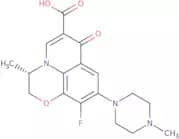
CAS :<p>4-Amino-2,6-dimethoxypyrimidine is an organic compound that has been shown to be a methylating agent. It reacts with the hydrogen chloride present in seawater to form methyl chloride and hydrochloric acid. 4-Amino-2,6-dimethoxypyrimidine also interacts with hydrogen bonds and forms hydrogen bonds with other molecules. The molecular modeling study revealed that this compound is soluble in mineral acids such as sulfuric acid and hydrochloric acid. The solubility data also showed that 4-amino-2,6-dimethoxypyrimidine is soluble in water but not in chlorinated water. This drug has shown significant antifungal activity against Cryptococcus neoformans and Gram-negative organisms such as Escherichia coli, Salmonella typhi, Pseudomonas aeruginosa, Klebsiella pneumoniae, Proteus mirabilis, Enterobacter</p>Formule :C6H9N3O2Degré de pureté :Min. 95%Masse moléculaire :155.15 g/mol9-Piperazino levofloxacin
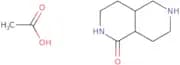
CAS :<p>Please enquire for more information about 9-Piperazino levofloxacin including the price, delivery time and more detailed product information at the technical inquiry form on this page</p>Formule :C18H20FN3O4Degré de pureté :Min. 95%Masse moléculaire :361.37 g/molOctahydro-2,6-naphthyridin-1(2H)-one acetate
CAS :Produit contrôlé<p>Please enquire for more information about Octahydro-2,6-naphthyridin-1(2H)-one acetate including the price, delivery time and more detailed product information at the technical inquiry form on this page</p>Formule :C8H14N2O•C2H4O2Degré de pureté :Min. 95%Masse moléculaire :214.26 g/molPyridine hydrochloride
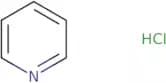
CAS :<p>Pyridine hydrochloride is a white crystalline solid. It has high values for affinity to the CB2 receptor and can be used for the treatment of metabolic disorders, such as diabetes. Pyridine hydrochloride can be synthesized in two ways: by hydrogenation of pyridine with hydrochloric acid or by reacting pyridine with hydrogen fluoride. This compound also has an effect on locomotor activity and increases glutamate levels in the brain, which may contribute to its therapeutic effects. Pyridine hydrochloride is also used as a fluorescent derivative in analytical methods that measure nucleotide levels, such as the phosphorimager technique.</p>Formule :C5H5N·HClDegré de pureté :Min. 95%Couleur et forme :White To Yellow To Light Brown SolidMasse moléculaire :115.56 g/mol2,5-Dibromopyridine
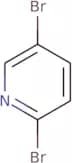
CAS :<p>2,5-Dibromopyridine is a chemical compound that can be used as a coupling agent in palladium-catalyzed cross-coupling reactions. It is used on the surface of metal particles to increase the efficiency of the reaction, and has been shown to react with substrates such as sodium hydroxide solution, sodium carbonate, halides and hydroxides. 2,5-Dibromopyridine also reacts with benzoate to form a palladium complex. 2,5-Dibromopyridine can be used as an oxidant or reductant depending on the type of reaction it is being used in. It has redox potentials at -0.6 volts for oxidation and +0.6 volts for reduction.</p>Formule :C5H3Br2NDegré de pureté :Min. 95%Couleur et forme :PowderMasse moléculaire :236.89 g/mol2,4-Dichloro-5-fluoropyrimidine
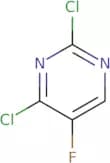
CAS :<p>2,4-Dichloro-5-fluoropyrimidine is an aromatic hydrocarbon that has been shown to inhibit the growth of mouse tumor cells in vitro. It also inhibits the production of amines by reacting with industrial chemicals and sodium carbonate. This compound has potent inhibitory activity against autoimmune diseases and cytotoxic potency on mcf-7 cells. Furthermore, 2,4-Dichloro-5-fluoropyrimidine has been shown to have a chlorinating effect on cancer cells.</p>Formule :C4HCl2FN2Degré de pureté :Min. 95%Couleur et forme :Off-White PowderMasse moléculaire :166.97 g/molN-[5-[5-(2-Methyl-1-oxoisoindolin-5-yl)thien-2-yl]pyridin-3-yl]-2-nitrobenzenesulfonamide
CAS :<p>Please enquire for more information about N-[5-[5-(2-Methyl-1-oxoisoindolin-5-yl)thien-2-yl]pyridin-3-yl]-2-nitrobenzenesulfonamide including the price, delivery time and more detailed product information at the technical inquiry form on this page</p>Formule :C24H18N4O5S2Degré de pureté :Min. 95%Couleur et forme :PowderMasse moléculaire :506.56 g/mol1-Acetylpiperazine
CAS :<p>1-Acetylpiperazine is a growth factor that has been shown to stimulate the proliferation of keratinocytes and dermal fibroblasts. It also inhibits the production of proinflammatory cytokines, such as tumor necrosis factor alpha (TNF-α) and interleukin-1 beta (IL-1β), in immune cells. 1-Acetylpiperazine has been shown to have antimicrobial properties against Gram-positive bacteria, including methicillin resistant Staphylococcus aureus and Clostridium perfringens. The compound binds to the receptor for epidermal growth factor in cancer cells, which may be responsible for its anticancer effects. 1-Acetylpiperazine has also been shown to inhibit the binding of imatinib to its receptor, which may be responsible for its anticancer effects.</p>Formule :C6H12N2ODegré de pureté :Min. 95%Masse moléculaire :128.18 g/molBoc-4-aminopiperidine
CAS :<p>Boc-4-aminopiperidine is a molecule that is used as a substrate in chemical reactions. It reacts with sodium hydroxide solution to form an imine, which is hydrogenated by reducing agents such as NaBH4. This reaction yields the products 4-aminopiperidine and acetaldehyde. Boc-4-aminopiperidine is also utilized as a cholinesterase inhibitor, which inhibits the breakdown of acetylcholine at nerve endings. The inhibitory activity of Boc-4-aminopiperidine can be determined using diagnostic techniques and it can be used to inhibit viruses such as HIV and influenza A virus.</p>Formule :C10H20N2O2Degré de pureté :Min. 95%Masse moléculaire :200.28 g/mol


![4-[(4-Methylpiperazin-1-yl)methyl]benzoic acid](/_next/image/?url=https%3A%2Fstatic.cymitquimica.com%2Fproducts%2F3D%2Fthumb-webp%2FFM136767.webp&w=3840&q=75)
![2-[(5-Chloropyridin-2-yl)amino]-2-oxoacetic acid ethyl ester monohydrochloride](/_next/image/?url=https%3A%2Fstatic.cymitquimica.com%2Fproducts%2F3D%2Fthumb-webp%2FFC63138.webp&w=3840&q=75)

![8-Chloro-5,6-dihydro-11H-benzo[5,6]cyclohepta[1,2-b]pyridin-11-one](/_next/image/?url=https%3A%2Fstatic.cymitquimica.com%2Fproducts%2F3D%2Fthumb-webp%2FFC20116.webp&w=3840&q=75)
![N-[5-[5-(2-Methyl-1-oxoisoindolin-5-yl)thien-2-yl]pyridin-3-yl]-2-nitrobenzenesulfonamide](/_next/image/?url=https%3A%2Fstatic.cymitquimica.com%2Fproducts%2F3D%2Fthumb-webp%2FFM167955.webp&w=3840&q=75)

