Hétérocycles azotés (N)
Sous-catégories appartenant à la catégorie "Hétérocycles azotés (N)"
- Azépane(436 produits)
- Benzotriazoles(438 produits)
- Diazépanes(335 produits)
- Imidazoles(4.031 produits)
- Imidazolines(385 produits)
- Isoxazole(1.088 produits)
- Piperazines(3.758 produits)
- Pipéridines(8.442 produits)
- Pyrazines(1.304 produits)
- Pyrazole(5.960 produits)
- Pyrazolidine(21 produits)
- Pyrazoline(143 produits)
- Pyridazine(860 produits)
- Pyridines(22.005 produits)
- Pyrimidine(6.084 produits)
- Pyrroles(2.449 produits)
- Pyrrolidines(5.840 produits)
- Pyrroline(48 produits)
- Pyrrolo[1,2-b]pyridazine(10 produits)
- Tétrazole(531 produits)
- Triazines(466 produits)
- Triazoles(1.689 produits)
17863 produits trouvés pour "Hétérocycles azotés (N)"
2,6-Dibromopyrazine
CAS :2,6-Dibromopyrazine is a quinoxaline molecule with two nitrogen atoms. It is an electropolymerizable material that can be used to create patterned surfaces. 2,6-Dibromopyrazine has been used in the fabrication of devices such as fluorescent lamps and light emitting diodes (LEDs). The fluorescence of these devices depends on the alignment of molecules within the device. The number and position of nitrogen atoms in the molecule determine the wavelength emission. 2,6-Dibromopyrazine is a structural isomer of 1,8-dibromopyrazine.
2,6-Dibromopyrazine has homologues such as anilines and amines that have been used in organic synthesis for decades.Formule :C4H2Br2N2Degré de pureté :Min. 95%Couleur et forme :SolidMasse moléculaire :237.88 g/mol3-Piperazin-1-yl-benzo[d]isothiazole hydrochloride
CAS :3-Piperazin-1-yl-benzo[d]isothiazole hydrochloride is an atypical antipsychotic that belongs to the group of inorganic compounds. It has been shown to have a high affinity for acidic surfaces and can be used in industrial applications such as the removal of metal ions from water by filtration. 3-Piperazin-1-yl-benzo[d]isothiazole hydrochloride is synthesized by reacting an inorganic base with a piperazine compound, followed by hydrolysis of the piperazine ring using acid. Impurities are often found during synthesis, which may contain traces of other compounds such as pyridine or methylamine.Formule :C11H13N3SDegré de pureté :Min. 95%Couleur et forme :PowderMasse moléculaire :219.31 g/mol2-[2-[4-[Bis(4-fluorophenyl)methyl]piperazin-1-yl]ethoxy]acetic acid HCl
CAS :2-[2-[4-[Bis(4-fluorophenyl)methyl]piperazin-1-yl]ethoxy]acetic acid HCl (BAY-85788) is a drug which acts as a histamine receptor antagonist. It has been shown to be effective in the treatment of idiopathic urticaria. BAY-85788 has also been found to have less potential for drug interactions than other histamine receptor antagonists, and does not cause an increase in blood pressure, unlike other compounds with this activity. This compound is metabolized by cytochrome P450 enzymes and does not contain nitrogen atoms or heterocyclic rings. Experimental studies have shown that orally administered BAY-85788 is absorbed from the GI tract and eliminated unchanged in urine. Studies have also shown that BAY-85788 is active against inflammatory diseases such as atopic dermatitis, asthma, and chronic obstructive pulmonary disease (COPDFormule :C21H24F2N2O3·xHClDegré de pureté :Min. 95%Couleur et forme :PowderMasse moléculaire :390.42 g/mol1-Benzyl-3-hydroxypiperidine hydrochloride
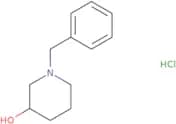
CAS :1-Benzyl-3-hydroxypiperidine hydrochloride is a versatile building block that can be used as a research chemical, reagent, speciality chemical or useful building block. It is a high quality compound with many potential uses as a reaction component or scaffold.Formule :C12H17NO·HClDegré de pureté :Min. 95%Couleur et forme :PowderMasse moléculaire :227.73 g/molTetrahydro-1,3-dimethyl-1H-pyrimidin-2-one
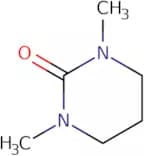
CAS :Tetrahydro-1,3-dimethyl-1H-pyrimidin-2-one is an organic compound that is used in the synthesis of drugs and other organic compounds. It can be synthesized by reacting hydrogen fluoride with nitrogen atoms. Tetrahydro-1,3-dimethyl-1H-pyrimidin-2-one can form stable complexes with iodination reactions and has been used to prepare monoclonal antibodies. This molecule has also been studied using x-ray crystal structures and titration calorimetry to investigate its reaction mechanism. The light emission from this molecule is due to intermolecular hydrogen bonding between a pyrazole ring and a phenyl ring.Formule :C6H12N2ODegré de pureté :Min. 98%Couleur et forme :Colorless Slightly Yellow Clear LiquidMasse moléculaire :128.17 g/molRef: 3D-FT28861
Produit arrêté5-Chloro-2-phenyl-1H-imidazole-4-carboxaldehyde
CAS :Formule :C10H7ClN2ODegré de pureté :>97.0%(HPLC)(N)Couleur et forme :Orange to Amber to Dark red powder to crystalMasse moléculaire :206.632-Amino-4,6-dihydroxypyrimidine
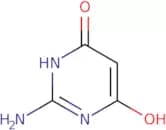
CAS :2-Amino-4,6-dihydroxypyrimidine is a chemical compound that is used in the synthesis of pemetrexed. It has been shown to inhibit the growth of cancer cells in cell culture by cross-coupling with nitrogen atoms in DNA and thereby inhibiting replication. 2-Amino-4,6-dihydroxypyrimidine also reacts with halides to form reaction intermediates that are capable of reacting with hydrogen bonds and other functional groups. This chemical compound has been shown to have radical scavenging activities in acidic environments and vibrational properties.
Formule :C4H5N3O2Degré de pureté :Min. 98 Area-%Couleur et forme :PowderMasse moléculaire :127.1 g/mol2-Chloro-5-fluoropyridine-3-carboxylic acid
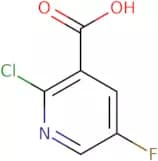
CAS :2-Chloro-5-fluoropyridine-3-carboxylic acid is an intermediate in the synthesis of fluorine compounds used in the industrial process. It can be synthesized by chlorinating 5-fluoropyridine with chlorine gas and a catalyst such as platinum, or by hydrogenating 2-chloro-5-pyridinecarboxylic acid. This chemical is used to manufacture other chemicals such as ethylene oxide, tetrafluoroethylene, and hexafluoroethane.
Formule :C6H3ClFNO2Degré de pureté :Min. 95%Masse moléculaire :175.54 g/mol4,6-Dihydroxy-1H-pyrazolo[3,4-d]pyrimidine
CAS :4,6-Dihydroxypyrazolo[3,4-d]pyrimidine is a xanthine derivative that is used as a therapeutic agent. It has inhibitory properties against xanthine oxidase and other enzymes. 4,6-Dihydroxypyrazolo[3,4-d]pyrimidine inhibits the activity of xanthine oxidase by covalent bonding to the iron atom in the enzyme's active site. This binding prevents the conversion of hypoxanthine to xanthine and subsequently prevents the conversion of xanthine to uric acid. The resulting accumulation of hypoxanthine can lead to bowel disease. 4,6-Dihydroxypyrazolo[3,4-d]pyrimidine has also been shown to be toxic when administered orally in large doses or injected intravenously in small doses because it binds to matrix proteins and causes epidermal necrosis.
Formule :C5H4N4O2Degré de pureté :Min. 95%Couleur et forme :White PowderMasse moléculaire :152.11 g/molRef: 3D-FD00465
Produit arrêté4-Chloro-6-hydroxypyrimidine
CAS :4-Chloro-6-hydroxypyrimidine is an organic compound that is used as a precursor to other chemical compounds. It can be prepared by the reaction of ethylene with chlorine in the presence of carbon disulphide. 4-Chloro-6-hydroxypyrimidine has been shown to react with halides, amidines, and ethylene to form tritiated pyrimidines. It also reacts with disulphides, chlorinates and uracil. 4-Chloro-6-hydroxypyrimidine is reactive and can undergo desulfurization reactions with aluminium and malonate to form chloride or sulphoxide. The halides, amidines, and ethylene are all reactive substances that can react with each other or undergo other reactions to form new substances.
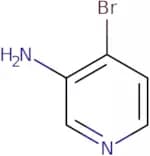
Formule :C4H3ClN2ODegré de pureté :Min. 95%Couleur et forme :White To Light (Or Pale) Yellow SolidMasse moléculaire :130.53 g/mol3-Amino-4-bromopyridine
CAS :3-Amino-4-bromopyridine is a receptor binding ligand that belongs to the group of synthetic, active natural products. It has been shown to stabilize nicotinic acetylcholine receptors and inhibit the release of acetylcholine. 3-Amino-4-bromopyridine has been shown to be a potent antagonist at nicotinic acetylcholine receptors and can be used in the treatment of disorders such as Parkinson's disease, Alzheimer's disease, and schizophrenia. 3-Amino-4-bromopyridine binds to pyridiniums in an inorganic acid environment and stabilizes them, which prevents their interaction with carbolines that are important for the modulation of neuronal activity.
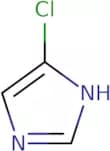
Formule :C5H5BrN2Degré de pureté :Min. 95%Couleur et forme :Off-White PowderMasse moléculaire :173.01 g/mol4-Chloro-1H-imidazole
CAS :4-Chloro-1H-imidazole is an organic chemical compound that contains a heterocyclic ring with one nitrogen and three carbons. It is classified as a weak acid. 4-Chloro-1H-imidazole can be found in hydrochloric acid, methyl ketones, and the acid conjugates of pyrazole rings. It has minimal toxicity. 4-Chloro-1H-imidazole binds to receptors in the body, which may account for its effects on blood pressure and heart rate. This drug also reacts with diazonium salts to form an intermediate that is then oxidized by chloride ions to form a reactive intermediate that can react with histidine or flavin (a type of vitamin B2) to form a fluorescent product that can be detected by light absorption or fluorescence emission spectroscopy.
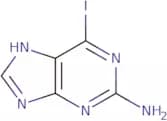
Formule :C3H3ClN2Degré de pureté :Min. 95%Couleur et forme :White PowderMasse moléculaire :102.52 g/mol2-Amino-6-iodopurine
CAS :2-Amino-6-iodopurine is an analog of the purine nucleoside guanine, which has been used to synthesize a variety of boronic acids. The most common use for 2-amino-6-iodopurine is in the synthesis of benzylboronic acid, which can be used as an organometallic reagent in organic synthesis. This compound also has dehydrogenase activity and has been shown to catalyze the conversion of benzoic acid to benzaldehyde, mediated by NADH. 2-Amino-6-iodopurine is found in the biosynthesis of ribonucleotides and deoxyribonucleotides, where it reacts with chloride ions and phosphate groups to form adenylate and xanthosine monophosphates.
Formule :C5H4IN5Degré de pureté :Min. 95%Couleur et forme :PowderMasse moléculaire :261.02 g/mol5-Nitro-7-azaindole
CAS :5-Nitro-7-azaindole is a heterocyclic compound that is structurally related to the furoquinolines. It has been shown to act as an inhibitor of benzene and pyridine oxidases, which are enzymes that catalyze the conversion of these compounds into reactive intermediates. The reaction mechanism of 5-Nitro-7-azaindole with benzene and pyridine oxidases involves the formation of covalent bonds with reactive sulfur atoms in the enzyme active site. 5-Nitro-7-azaindole also inhibits bacterial growth by inhibiting DNA synthesis. This compound has been found to be scalable and can be produced at large scales without loss in quality. 5-Nitro-7-azaindole is not stereoselective and it is not an aromatic system, meaning that it does not have a benzene ring.
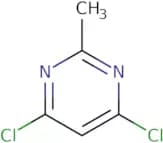
Formule :C7H5N3O2Degré de pureté :Min. 95%Couleur et forme :PowderMasse moléculaire :163.13 g/mol4,6-Dichloro-2-methylpyrimidine
CAS :2-Chloro-6-methylaniline is a synthetic compound that has been used in the synthesis of medicines, such as dasatinib. It is a nucleophile that binds to the receptor site on cells and blocks the binding of natural hormones. It is also an inhibitor of certain enzymes, including RNA polymerase and protein kinase. 2-Chloro-6-methylaniline is industrially produced by reacting sodium chloride with chlorosulfonic acid or hydrochloric acid in an autoclave at a temperature of 180 °C for three hours. The product can be purified by adding magnesium oxide and activated with hydrochloric acid to form 2-chloro-6-methylpyrimidine. The main impurities are 4,6-dichloro2 methylpyrimidine and 6,8 dichloro2 methylpyrimidine.
Formule :C5H4Cl2N2Degré de pureté :Min. 95%Couleur et forme :White To Yellow SolidMasse moléculaire :163 g/mol2,6-Pyridinedicarboxylic acid dimethyl ester
CAS :2,6-Pyridinedicarboxylic acid dimethyl ester is a drug that has shown anticancer activity in animal models. It binds to DNA, forming a ternary complex with the DNA and the enzyme topoisomerase I. The binding of this drug to the enzyme prevents it from breaking the DNA strands during replication, causing the cell to die. It has been shown that 2,6-pyridinedicarboxylic acid dimethyl ester can be used as a non-competitive inhibitor of topoisomerase I. Furthermore, it has been demonstrated that 2,6-pyridinedicarboxylic acid dimethyl ester is able to bind to human endometrial cancer cells with high affinity. Finally, 2,6-pyridinedicarboxylic acid dimethyl ester was found in x-ray crystal structures of complexes with hydrogen bonds and low activation enthalpy and entropy.
Formule :C9H9NO4Degré de pureté :Min. 95%Couleur et forme :White PowderMasse moléculaire :195.17 g/mol4-Methylpyrimidine
CAS :4-Methylpyrimidine is a molecule used in the treatment of cancer. It is an inhibitor of the enzyme topoisomerase II, which is involved in DNA replication and repair. 4-Methylpyrimidine binds to the active site of topoisomerase II and blocks its activity. 4-Methylpyrimidine has been shown to be effective against Covid-19 pandemic, which was responsible for a severe outbreak of pneumonia in 2009. The reaction mechanism of 4-methylpyrimidine involves methylpyrazine, a chloride ligand, and molybdenum as the metal center. FT-IR spectroscopy has been used to identify the structural analysis of this molecule.
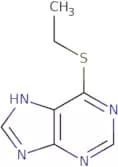
Formule :C5H6N2Degré de pureté :Min. 95%Couleur et forme :Clear LiquidMasse moléculaire :94.12 g/mol6-Ethylmercaptopurine
CAS :6-Ethylmercaptopurine is a purine analogue that inhibits the synthesis of DNA. It is used as an inhibitor of protein synthesis and in the treatment of inflammatory bowel disease. 6-Ethylmercaptopurine has been shown to inhibit the activity of ATPase, which may be responsible for its ability to suppress the proliferation of cells. This drug can also act as an analog to adenosine, which can be used to determine ATP levels in a cell or tissue sample by measuring the amount of p-nitrophenyl phosphate produced. 6-Ethylmercaptopurine has been shown to block phosphatase activity, which may lead to inflammation in some cases.
6-Ethylmercaptopurine has a molecular weight of 194.2 g/mol and an optimum pH of 4.5Formule :C7H8N4SDegré de pureté :Min. 95%Couleur et forme :Off-White PowderMasse moléculaire :180.23 g/mol6-Nitroquinoline
CAS :6-Nitroquinoline is a nucleophilic compound that reacts with nitroalkanes to form alkyl nitrites. It undergoes a bioreductive reaction, in which it is reduced to the corresponding amine by hydrogen peroxide and ammonia. 6-Nitroquinoline contains functional groups that can act as either electron donors or electron acceptors and is therefore reactive towards other compounds. The reaction mechanism involves nucleophilic attack at the carbon atom in the ring of the 6-nitroquinoline molecule, resulting in an addition product. 6-Nitroquinoline has been shown to react with fluorophores such as fluorescein, forming a fluorescent product that can be detected by spectroscopy. This chemical can also form hydrogen bonds with other molecules, which are important for its reactivity. The reaction products of this compound are nitrite and quinolines where one or more of the nitrogens have been oxidized to nitro groups.
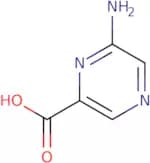
ENDFormule :C9H6N2O2Degré de pureté :Min. 95%Couleur et forme :White PowderMasse moléculaire :174.16 g/mol6-Amino-2-pyrazinecarboxylic acid
CAS :6-Amino-2-pyrazinecarboxylic acid is a high quality reagent that is used as an intermediate for the synthesis of complex compounds. It is also a useful scaffold for the production of valuable speciality chemicals. This chemical is also used as a reaction component in research and development to produce versatile building blocks. 6-Amino-2-pyrazinecarboxylic acid has been shown to be useful for producing fine chemicals and speciality chemicals, which are often used in many industries.
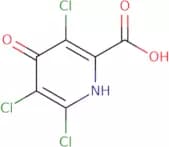
Formule :C5H5N3O2Degré de pureté :Min. 95%Couleur et forme :Yellow To Brown SolidMasse moléculaire :139.11 g/mol3,5,6-Trichloro-4-hydroxy-2-picolinic acid
CAS :3,5,6-Trichloro-4-hydroxy-2-picolinic acid is a high quality reagent that is used as a building block for the synthesis of complex compounds with potential pharmaceutical applications. It can be used as an intermediate in the production of fine chemicals and speciality chemicals. This compound is also useful for research purposes and as a versatile building block for reactions.
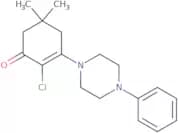
Formule :C6H2Cl3NO3Degré de pureté :Min. 95%Couleur et forme :White to off-white solid.Masse moléculaire :242.44 g/mol2-Chloro-5,5-dimethyl-3-(4-phenylpiperazinyl)cyclohex-2-en-1-one
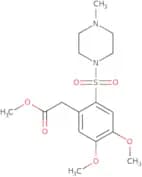
CAS :Please enquire for more information about 2-Chloro-5,5-dimethyl-3-(4-phenylpiperazinyl)cyclohex-2-en-1-one including the price, delivery time and more detailed product information at the technical inquiry form on this pageFormule :C18H23ClN2ODegré de pureté :Min. 95%Couleur et forme :PowderMasse moléculaire :318.84 g/molMethyl 2-(4,5-dimethoxy-2-((4-methylpiperazin-1-yl)sulfonyl)phenyl)acetate
CAS :Please enquire for more information about Methyl 2-(4,5-dimethoxy-2-((4-methylpiperazin-1-yl)sulfonyl)phenyl)acetate including the price, delivery time and more detailed product information at the technical inquiry form on this pageDegré de pureté :Min. 95%5,5-Dimethyl-3-(4-phenylpiperazinyl)cyclohex-2-en-1-one
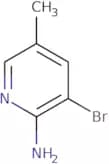
CAS :Please enquire for more information about 5,5-Dimethyl-3-(4-phenylpiperazinyl)cyclohex-2-en-1-one including the price, delivery time and more detailed product information at the technical inquiry form on this pageFormule :C18H24N2ODegré de pureté :Min. 95%Couleur et forme :PowderMasse moléculaire :284.4 g/mol2-Amino-3-bromo-5-methylpyridine
CAS :2-Amino-3-bromo-5-methylpyridine is an imidazopyrazine that interacts with the magnetic field and can be used as a ligand. It has been synthesized from pyrazole derivatives and has been shown to have antimicrobial activity against Cryptococcus neoformans. 2-Amino-3-bromo-5-methylpyridine has also been shown to inhibit the growth of bacterial cells by binding to the nicotinamide adenine dinucleotide phosphate (NADP) cofactor in bacterial cells, thereby preventing ATP production. This drug is structurally related to fluoroquinolones, which are known for their antibacterial activity. 2-Amino-3-bromo-5-methylpyridine is an amido compound that ionizes in acidic environments and transfers electrons via resonance transfer. Its FTIR spectra show strong absorption bands at 3595 cm−1
Formule :C6H7BrN2Degré de pureté :Min. 95%Masse moléculaire :187.04 g/molN-(3,5-bis(trifluoromethyl)phenyl)-2-pyrimidin-2-ylthioethanamide
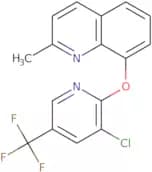
CAS :Please enquire for more information about N-(3,5-bis(trifluoromethyl)phenyl)-2-pyrimidin-2-ylthioethanamide including the price, delivery time and more detailed product information at the technical inquiry form on this pageDegré de pureté :Min. 95%3-Chloro-2-(2-methyl(8-quinolyloxy))-5-(trifluoromethyl)pyridine
CAS :Please enquire for more information about 3-Chloro-2-(2-methyl(8-quinolyloxy))-5-(trifluoromethyl)pyridine including the price, delivery time and more detailed product information at the technical inquiry form on this page
Formule :C16H10ClF3N2ODegré de pureté :Min. 95%Couleur et forme :PowderMasse moléculaire :338.71 g/mol2-(4,6-dimethylpyrimidin-2-ylthio)-N-(4-iodophenyl)acetamide
CAS :Please enquire for more information about 2-(4,6-dimethylpyrimidin-2-ylthio)-N-(4-iodophenyl)acetamide including the price, delivery time and more detailed product information at the technical inquiry form on this page
Degré de pureté :Min. 95%2-Chloro(3-pyridyl) 4-(5-chloro-2-methylphenyl)piperazinyl ketone
CAS :Please enquire for more information about 2-Chloro(3-pyridyl) 4-(5-chloro-2-methylphenyl)piperazinyl ketone including the price, delivery time and more detailed product information at the technical inquiry form on this page
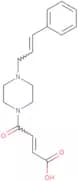
Formule :C17H17Cl2N3ODegré de pureté :Min. 95%Couleur et forme :PowderMasse moléculaire :350.24 g/mol4-Oxo-4-(4-(3-phenylprop-2-enyl)piperazinyl)but-2-enoic acid
CAS :Please enquire for more information about 4-Oxo-4-(4-(3-phenylprop-2-enyl)piperazinyl)but-2-enoic acid including the price, delivery time and more detailed product information at the technical inquiry form on this page
Formule :C17H20N2O3Degré de pureté :Min. 95%Couleur et forme :PowderMasse moléculaire :300.35 g/mol2,6-Bis(bromomethyl)pyridine
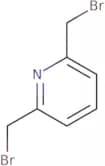
CAS :2,6-Bis(bromomethyl)pyridine (BMP) is a pyridine derivative that is used as a catalyst in organic synthesis. It has been shown to be an effective catalyst for the conversion of picolinic acid to xanthopterin in the presence of sodium. The reactivity of BMP can be attributed to its functionalities and the metal ion that it contains. The reaction mechanism has been studied by computer modelling and molecular modelling techniques. The catalytic rate is determined by intramolecular hydrogen transfer.
Formule :C7H7Br2NDegré de pureté :Min. 95%Masse moléculaire :264.95 g/mol2-{[3-chloro-5-(trifluoromethyl)-2-pyridinyl]sulfanyl}acetohydrazide
CAS :Please enquire for more information about 2-{[3-chloro-5-(trifluoromethyl)-2-pyridinyl]sulfanyl}acetohydrazide including the price, delivery time and more detailed product information at the technical inquiry form on this pageDegré de pureté :Min. 95%1-(2,3-Dihydro[2,4'-bibenzo[b]thiophen]-4-yl)-piperazine Dihydrochloride
CAS :Produit contrôléApplications 1-(2,3-Dihydro[2,4'-bibenzo[b]thiophen]-4-yl)-piperazine is a useful synthetic intermediate.
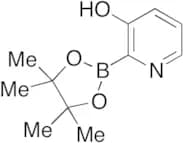
Formule :C20H20N2S2·2HClCouleur et forme :NeatMasse moléculaire :352.5162-(4,4,5,5-Tetramethyl-1,3,2-dioxaborolan-2-yl)-3-pyridinol
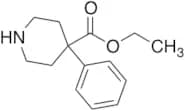
CAS :Produit contrôléFormule :C11H16BNO3Couleur et forme :Off-WhiteMasse moléculaire :221.061Ethyl 4-Phenylpiperidine-4-carboxylate
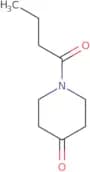
CAS :Produit contrôléFormule :C14H19NO2Couleur et forme :NeatMasse moléculaire :233.311-Butyrylpiperidin-4-one
CAS :Produit contrôléPlease enquire for more information about 1-Butyrylpiperidin-4-one including the price, delivery time and more detailed product information at the technical inquiry form on this page
Formule :C9H15NO2Degré de pureté :Min. 95%Masse moléculaire :169.22 g/molPyrazine
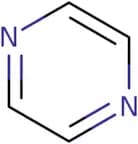
CAS :Pyrazine is a model system that has been used to investigate the reaction mechanism of pyrazinoic acid, an antimicrobial agent. Pyrazine reacts with water to give pyrazinoic acid and hydrogen gas. Pyrazine is also used as an analytical method for determining the concentration of odorant binding compounds in air and as a model system to study the electrochemical properties of odorant binding. The compound is characterized by intermolecular hydrogen bonding and synchronous fluorescence. Pyrazine has been shown to have an adsorption peak at 1780 cm-1 and a Langmuir adsorption isotherm at 10-4 M.
Formule :C4H4N2Degré de pureté :Min. 95%Masse moléculaire :80.09 g/molRef: 3D-FP62861
Produit arrêté2-Cyano-5-fluoropyridine
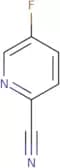
CAS :2-Cyano-5-fluoropyridine is a potential antitubercular agent that has shown penetrability in the central nervous system and activity against Mycobacterium tuberculosis. It is orally active at low doses, and has been shown to be an effective inhibitor of mycobacterial growth and lipid synthesis. In addition, this compound also has antimycobacterial activity against M. avium complex and M. ulcerans, and is a potent inhibitor of β-amyloid aggregation.
Formule :C6H3FN2Degré de pureté :Min. 95%Masse moléculaire :122.1 g/mol(aS,2S)-alpha-Phenyl-2-piperidineacetic acid Ethyl ester hydrochloride
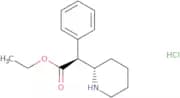
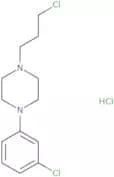
CAS :Produit contrôléPlease enquire for more information about (aS,2S)-alpha-Phenyl-2-piperidineacetic acid Ethyl ester hydrochloride including the price, delivery time and more detailed product information at the technical inquiry form on this pageFormule :C15H21NO2·HClDegré de pureté :Min. 95%Masse moléculaire :283.79 g/mol1-(3-Chlorophenyl)-4-(3-chloropropyl)piperazine Hydrochloride
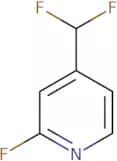
CAS :Produit contrôlé1-(3-Chlorophenyl)-4-(3-chloropropyl)piperazine Hydrochloride is an antidepressant that belongs to the class of nefazodone. It is a prodrug, which is hydrolyzed to nefazodone in the liver. It has been shown to have a high affinity for serotonin receptors and as such may be useful for the treatment of depression. 1-(3-Chlorophenyl)-4-(3-chloropropyl)piperazine Hydrochloride also has anticonvulsant properties, which may be due to its inhibition of neuronal excitability by blocking sodium channels in the brain.Formule :C13H18Cl2N2·HClDegré de pureté :Min. 95%Masse moléculaire :309.66 g/mol4-(Difluoromethyl)-2-fluoropyridine
CAS :Please enquire for more information about 4-(Difluoromethyl)-2-fluoropyridine including the price, delivery time and more detailed product information at the technical inquiry form on this page
Formule :C6H4F3NDegré de pureté :Min. 95%Masse moléculaire :147.1 g/mol4,5,6,7-Tetrahydro-5-(triphenylmethyl)thieno[3,2-c]pyridine
CAS :Prasugrel is a pharmaceutical compound that belongs to the class of thienopyridines. It has been shown to inhibit platelet aggregation and is used for the prevention of blood clots in patients with coronary artery disease. Prasugrel binds to the P2Y12 receptor on the surface of platelets, which prevents ADP from binding, thereby inhibiting platelet aggregation. Prasugrel is a crystalline solid that is soluble in water.
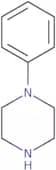
Formule :C26H23NSDegré de pureté :Min. 95%Masse moléculaire :381.53 g/mol1-Phenylpiperazine
CAS :Produit contrôlé1-Phenylpiperazine is a piperazine derivative that can bind to the DNA of cervical cancer cells and inhibit their growth. It also has antihypertensive effects. 1-Phenylpiperazine is a white crystalline solid that is soluble in water, ethanol, ether, and chloroform. It binds to the hydrogen chloride ion (HCl) with high affinity and forms an equilibrium mixture with HCl gas. The binding constants of 1-phenylpiperazine to HCl are greater than those for piperazine. This compound has been shown to inhibit tumor cell growth in vitro through its ability to bind to DNA and prevent RNA synthesis. 1-Phenylpiperazine has been shown to have antihypertensive activity in rats by blocking alpha1-adrenergic receptors on vascular smooth muscle cells.br>br>
In addition, this molecule has been shown to have binding properties for amines which may be due to the presenceFormule :C10H14N2Degré de pureté :Min. 95%Masse moléculaire :162.23 g/mol4-Bromomethyl-4'-methyl-2,2'-bipyridine
CAS :Please enquire for more information about 4-Bromomethyl-4'-methyl-2,2'-bipyridine including the price, delivery time and more detailed product information at the technical inquiry form on this page
Formule :C12H11BrN2Degré de pureté :Min. 91.0 Area-%Masse moléculaire :263.14 g/molRef: 3D-J-400569
Produit arrêté7-Chlorothieno[3,2-B]Pyridine
CAS :7-Chlorothieno[3,2-B]pyridine is a nucleophilic compound that is used as an inhibitor of the tyrosine kinase enzyme. It binds to the ATP binding site and blocks the enzymatic activity of the enzyme, preventing cell proliferation. 7-Chlorothieno[3,2-B]pyridine has been shown to inhibit growth in tumour cell lines and has been shown to be effective against tyrosine kinase receptor positive cancer cells. This drug also shows a cytotoxic activity against tumour cells in vivo, which may be due to its ability to inhibit factor receptor and receptor tyrosine.
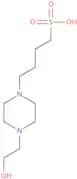
Formule :C7H4ClNSDegré de pureté :Min. 95%Masse moléculaire :169.63 g/molHEPBS
CAS :HEPBS, also known as N-(2-Hydroxyethyl)piperazine-N'-(4-butanesulfonic acid), is a zwitterionic chemical buffering agent with an optimal pH range of 7.6-9.0 and a pKa of 8.3.Formule :C10H22N2O4SDegré de pureté :Min. 95%Couleur et forme :PowderMasse moléculaire :266.36 g/molRef: 3D-FH37148
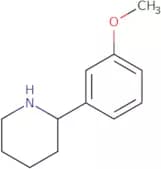
Produit arrêté2-(3-Methoxyphenyl)piperidine
CAS :Please enquire for more information about 2-(3-Methoxyphenyl)piperidine including the price, delivery time and more detailed product information at the technical inquiry form on this page
Formule :C12H17NODegré de pureté :Min. 95%Couleur et forme :PowderMasse moléculaire :191.27 g/mol2-Ethyl-6-methylpyridine
CAS :2-Ethyl-6-methylpyridine is an organic compound that has been analyzed in a range of experiments, including the determination of its melting point. The compound has been found to be crystalline in nature, and this property can be used to determine its purity. 2-Ethyl-6-methylpyridine is a colorless liquid with a sweet odor that can be detected at concentrations as low as 0.5 parts per million. It is soluble in organic solvents such as benzene, chloroform, and acetone. This reagent is also known for its ability to catalyze reactions involving ketones and esters. 2-Ethyl-6-methylpyridine may be used as a marker for tobacco smoke, but it is not currently approved by the United States Food and Drug Administration (FDA) for this purpose.
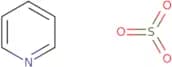
Formule :C8H11NDegré de pureté :Min. 95%Masse moléculaire :121.18 g/molPyridine-sulfur trioxide complex
CAS :Produit contrôléPyridine-sulfur trioxide complex is a sodium salt of sulfuric acid and pyridine. It is an intramolecular hydrogen acceptor, which means that it can act as a hydrogen donor to other molecules. Pyridine-sulfur trioxide complex has been shown to be effective against HIV infection in vitro. The biological properties of this drug are due to its ability to inhibit the proliferation of cells. Pyridine-sulfur trioxide complex also has antiproliferation activity against a variety of cancers, including prostate, breast, lung, ovarian, and pancreatic cancers. Pyridine-sulfur trioxide complex inhibits fatty acid synthase enzymes and is used as an analytical method for measuring cholesterol levels in the blood.
Formule :C5H5N·SO3Degré de pureté :Min. 95%Couleur et forme :Beige PowderMasse moléculaire :159.16 g/molRef: 3D-FP27305
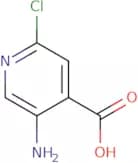
Produit arrêté5-Amino-2-chloropyridine-4-carboxylic acid
CAS :5-Amino-2-chloropyridine-4-carboxylic acid is a potent tyrosine kinase inhibitor. It inhibits the activation of EGFR, which may be due to its binding to the ATP-binding pocket in EGFR. 5-Amino-2-chloropyridine-4-carboxylic acid has been shown to inhibit cancer cell growth and induce apoptosis in vitro. This drug has also been shown to have potent anticancer activity in vivo, as well as inhibitory effect on tumor growth in xenograft models of human cancer cells. In addition, it inhibits the production of formamidine acetate, a precursor for histamine synthesis. 5-Amino-2-chloropyridine-4-carboxylic acid binds to formamide and formamidine acetate with high affinity and therefore inhibits histamine synthesis.Formule :C6H5ClN2O2Degré de pureté :Min. 95%Couleur et forme :White PowderMasse moléculaire :172.57 g/mol


![3-Piperazin-1-yl-benzo[d]isothiazole hydrochloride](/_next/image/?url=https%3A%2Fstatic.cymitquimica.com%2Fproducts%2F3D%2Fthumb-webp%2FFP50755.webp&w=3840&q=75)
![2-[2-[4-[Bis(4-fluorophenyl)methyl]piperazin-1-yl]ethoxy]acetic acid HCl](/_next/image/?url=https%3A%2Fstatic.cymitquimica.com%2Fproducts%2F3D%2Fthumb-webp%2FFB98570.webp&w=3840&q=75)


![4,6-Dihydroxy-1H-pyrazolo[3,4-d]pyrimidine](/_next/image/?url=https%3A%2Fstatic.cymitquimica.com%2Fproducts%2F3D%2Fthumb-webp%2FFD00465.webp&w=3840&q=75)








![2-{[3-chloro-5-(trifluoromethyl)-2-pyridinyl]sulfanyl}acetohydrazide](/_next/image/?url=https%3A%2Fstatic.cymitquimica.com%2Fproducts%2F3D%2Fthumb-webp%2FFC170011.webp&w=3840&q=75)
![1-(2,3-Dihydro[2,4'-bibenzo[b]thiophen]-4-yl)-piperazine Dihydrochloride](/_next/image/?url=https%3A%2Fstatic.cymitquimica.com%2Fproducts%2FTR%2Fthumb-webp%2FD450445.webp&w=3840&q=75)

![4,5,6,7-Tetrahydro-5-(triphenylmethyl)thieno[3,2-c]pyridine](/_next/image/?url=https%3A%2Fstatic.cymitquimica.com%2Fproducts%2F3D%2Fthumb-webp%2FFT28108.webp&w=3840&q=75)

![7-Chlorothieno[3,2-B]Pyridine](/_next/image/?url=https%3A%2Fstatic.cymitquimica.com%2Fproducts%2F3D%2Fthumb-webp%2FFC53344.webp&w=3840&q=75)