


Building Blocks Hydrocarbonés
Sous-catégories appartenant à la catégorie "Building Blocks Hydrocarbonés"
5581 produits trouvés pour "Building Blocks Hydrocarbonés"
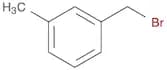
3-Methylbenzyl Bromide
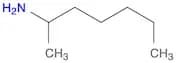
CAS :Formule :C8H9BrDegré de pureté :95%Couleur et forme :LiquidMasse moléculaire :185.06112-Heptanamine
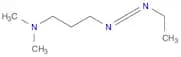
CAS :Formule :C7H17NDegré de pureté :%Couleur et forme :LiquidMasse moléculaire :115.21661-(3-Dimethylaminopropyl)-3-ethylcarbodiimide
CAS :Formule :C8H17N3Degré de pureté :98%Couleur et forme :LiquidMasse moléculaire :155.2407α-Chloro-p-xylene
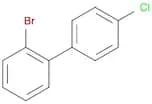
CAS :Formule :C8H9ClDegré de pureté :98%Couleur et forme :LiquidMasse moléculaire :140.61011,1'-Biphenyl, 2-bromo-4'-chloro-
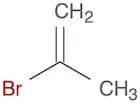
CAS :Formule :C12H8BrClDegré de pureté :97%Couleur et forme :SolidMasse moléculaire :267.54892-Bromopropene
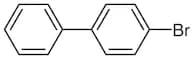
CAS :Formule :C3H5BrDegré de pureté :99%Couleur et forme :LiquidMasse moléculaire :120.97584-Bromobiphenyl
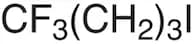
CAS :Formule :C12H9BrDegré de pureté :>98.0%(GC)Couleur et forme :White to Light yellow to Light orange powder to crystalMasse moléculaire :233.111,1,1-Trifluoro-4-iodobutane
CAS :Formule :C4H6F3IDegré de pureté :>98.0%(GC)Couleur et forme :Colorless to Light yellow to Light orange clear liquidMasse moléculaire :237.991-Iodo-3-methylbutane (stabilized with Na2S2O3)
CAS :Formule :C5H11IDegré de pureté :>99.0%(GC)Couleur et forme :Colorless to Light yellow to Light orange clear liquidMasse moléculaire :198.052,6-Dichlorobenzyl Bromide
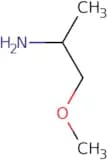
CAS :Formule :C7H5BrCl2Degré de pureté :>98.0%(GC)Couleur et forme :White to Almost white powder to crystalMasse moléculaire :239.922-Amino-1-methoxypropane
CAS :2-Amino-1-methoxypropane (AMP) is a bifunctional amine that has been used as a diluent for lipase. It has been shown to have deprotective properties against metal surfaces and to be able to react with the nucleophilic group of an amine, which is useful in organic synthesis. The constant temperature of AMP, which is useful in organic synthesis, was obtained by recycling it through a constant temperature bath. This process also prevents the formation of unwanted products during the reaction.
Formule :C4H11NODegré de pureté :Min. 95 Area-%Couleur et forme :Clear LiquidMasse moléculaire :89.14 g/mol1-Phenoxy-2-propanol
CAS :1-Phenoxy-2-propanol is an antimicrobial agent that belongs to the group of glycol ethers. It has a hydroxyl group and atp levels, which are both vital for its activity index. 1-Phenoxy-2-propanol is used as a preservative in cosmetics and pharmaceuticals, with the exception of eye products. It also has been shown to have a low level of toxicity for humans and other mammals, such as rats and guinea pigs. The EPA has classified 1-phenoxy-2 propanol as Group D - not classifiable as to human carcinogenicity. 1-Phenoxy-2 propanol is toxic to bacteria, yeast, fungi, algae, plants, and invertebrates when present in high concentrations.
Formule :C9H12O2Degré de pureté :Min. 95%Couleur et forme :Colorless Clear LiquidMasse moléculaire :152.19 g/mol6-Azido-hexan-1-ol
CAS :6-Azido-hexan-1-ol is an organic compound with the chemical formula CH3CH2OCH2CH2N3. It is a colorless liquid that boils at 29°C and has a melting point of -60°C. 6-Azido-hexan-1-ol has been shown to be a reactive site in polymerization kinetics, with a kinetic rate constant of 2.0x10^5 M^(-1)s^(-1). This compound also exhibits high reactivity when used as a substrate for ring opening polymerization, which may be due to its hydroxy group and functional groups. 6-Azido-hexan-1-ol can be synthesized by reacting 4 vinylbenzyl alcohol with hydrazine hydrate in the presence of an acid catalyst, such as sulfuric acid or pyridine. The reaction can be monitored using matrix assisted laser desorption ionization time of flight (MALDI
Formule :C6H13N3ODegré de pureté :Min. 95%Couleur et forme :Clear LiquidMasse moléculaire :143.19 g/mol2-Aminoethanethiol
CAS :2-Aminoethanethiol is a bitartrate salt of cysteamine. It inhibits the growth of bacteria by inhibiting the synthesis of the bacterial cell wall, which is required for bacterial replication and division. 2-Aminoethanethiol has been shown to be effective in experimental models of cystinosis and cystamine. 2-Aminoethanethiol has also been used as an antidote to cyanide poisoning.
Formule :C2H7NSCouleur et forme :White Off-White PowderMasse moléculaire :77.15 g/molRef: 3D-FA52311
Produit arrêté12-Bromo-1-aminododecane, hydrobromide
CAS :12-Bromo-1-aminododecane, hydrobromide is a reagent that can be used as a building block in organic synthesis. It is also useful for the preparation of 12-bromo-1-aminododecane, hydrochloride, which has been shown to be an effective reaction component and reagent in both organic and organometallic synthesis. This compound has a CAS number of 14502-45-5 and can be purchased as a fine chemical or speciality chemical.
Formule :C12H27Br2NDegré de pureté :Min. 95%Couleur et forme :PowderMasse moléculaire :345.16 g/mol1,4-Diazabicyclo[3.2.2]nonane dihydrochloride
CAS :1,4-Diazabicyclo[3.2.2]nonane dihydrochloride is a fine chemical that is used as an intermediate in the synthesis of other chemicals. It has been shown to be a versatile building block for research chemicals and as a reaction component in the synthesis of complex compounds. 1,4-Diazabicyclo[3.2.2]nonane dihydrochloride is also useful in the synthesis of pharmaceuticals and other speciality chemicals due to its high quality and ability to function as a reagent.
1,4-Diazabicyclo[3.2.2]nonane dihydrochloride has been shown to have anti-inflammatory properties by inhibiting prostaglandin synthesis and can be used for the treatment of asthma, arthritis, and other inflammatory conditions.Formule :C7H14N2·2HClDegré de pureté :Min. 95%Couleur et forme :SolidMasse moléculaire :199.12 g/mol8-Chloro-1-octanol
CAS :8-Chloro-1-octanol is an organic compound with a hydroxyl group at the 8th position of the octane ring. It has been shown to inhibit bacterial growth in vitro by binding to fatty acid biosynthesis enzymes and preventing the formation of fatty acids, which are vital for bacterial cell wall synthesis. The 8-chloro-1-octanol also inhibits the population growth of bacteria in corneal epithelium, leading to reduced biofilm formation. This compound has been shown to have regulatory effects on microbial populations. 8-Chloro-1-octanol is currently under study for its potential use as a topical antibacterial agent for treating corneal infections.
Formule :C8H17ClODegré de pureté :Min. 95%Couleur et forme :Colorless Clear LiquidMasse moléculaire :164.67 g/molPutrescine dihydrochloride
CAS :Putrescine is a polyamine plant growth regulator affecting the synthesis of macromolecules. Promotes adventitious root formation. Precursor of spermidine.
Formule :C4H14Cl2N2Degré de pureté :Min. 98.0 Area-%Masse moléculaire :161.08 g/molRef: 3D-P-8000
Produit arrêté











![1,4-Diazabicyclo[3.2.2]nonane dihydrochloride](/_next/image/?url=https%3A%2Fstatic.cymitquimica.com%2Fproducts%2F3D%2Fthumb-webp%2FFD07110.webp&w=3840&q=75)

