Composés aliphatiques et dérivés
Les composés aliphatiques et leurs dérivés sont des composés organiques caractérisés par des structures en chaîne droite ou ramifiée, par opposition aux structures en anneau trouvées dans les composés aromatiques. Ces composés incluent les alcanes, alcènes, alkynes et leurs dérivés fonctionnalisés, jouant un rôle essentiel dans divers processus chimiques et applications industrielles. Chez CymitQuimica, nous offrons une sélection diversifiée de composés aliphatiques de haute pureté et de leurs dérivés, méticuleusement sélectionnés et testés pour répondre aux exigences strictes des besoins de recherche et industriels. Notre catalogue couvre une large gamme de composés, y compris des hydrocarbures, alcools, aldéhydes, cétones et acides, chacun connu pour sa réactivité et sa polyvalence en synthèse organique, en pharmacie et en science des matériaux. En fournissant des composés aliphatiques et dérivés de haute qualité, nous soutenons les chercheurs et les professionnels dans la réalisation de transformations chimiques précises et efficaces, favorisant l'innovation et les avancées dans de nombreux domaines scientifiques et technologiques.
8718 produits trouvés pour "Composés aliphatiques et dérivés"
Trier par
Degré de pureté (%)
0
100
|
0
|
50
|
90
|
95
|
100
1H,1H,7H-Dodecafluoroheptanol
CAS :<p>1H,1H,7H-Dodecafluoroheptanol is a perfluorinated compound. It has been shown to be an efficient scavenger of reactive oxygen species (ROS) and to have a protective effect on collagen. The reaction mechanism of 1H,1H,7H-dodecafluoroheptanol is not fully understood. However, it has been shown that the chloride ion plays a key role in the formation of this product from 1H,1H,7F-dodecafluoroheptane. The reaction vessel used in this synthesis is critical because it must be anhydrous to prevent the formation of 1HF3OCl. Magnetic resonance spectroscopy has been used to study the chemical structures of this compound.</p>Formule :C7H4F12ODegré de pureté :Min. 95%Couleur et forme :Colorless PowderMasse moléculaire :332.09 g/mol1,3-Propanediol
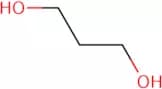
CAS :<p>aliphatic diol. It has been shown to have an inhibitory effect on bacterial growth</p>Formule :C3H8O2Degré de pureté :Min. 95%Couleur et forme :Colorless Clear LiquidMasse moléculaire :76.09 g/molChloroiodomethane, stabilised with copper
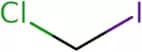
CAS :<p>Chloroiodomethane is a chemical that is used as an intermediate in the production of other chemicals. It is a colourless liquid with a strong odour. 3-Bromopropylamine hydrobromide reacts with chloroiodomethane to form 3-bromopropyl bromide, which can be reacted with hydrogen chloride to form the corresponding acid chloride. This reaction product can then be reacted with β-amino acids to form amides or esters. The reaction mechanism of this process involves nucleophilic substitution of chloroiodomethane by the amino group of the β-amino acid to produce an intermediate α,β-unsaturated carbonyl chloride, which undergoes elimination to give the final product. Chloroiodomethane also reacts rapidly with fatty acids and hydroxyl groups in biological systems, leading to inflammatory diseases such as HIV infection.</p>Formule :CH2ClIDegré de pureté :Min. 95%Couleur et forme :Colorless Clear LiquidMasse moléculaire :176.38 g/molSodium ethanethiolate
CAS :<p>Sodium ethanethiolate is a detergent composition that is used in the manufacturing of other detergents. It has a receptor binding mechanism and binds to the fatty acid component of the lipid bilayer. The hydroxyl group on the ethanethiolate molecule reacts with the hydrophobic region of the lipid bilayer, leading to disruption of membrane function. Sodium-dependent glucose transport is inhibited by sodium ethanethiolate, which also has metabolic disorders as a side effect. It is a bicyclic heterocycle and can be synthesized from p-hydroxybenzoic acid and trifluoroacetic acid. The chemical stability of this compound is high, making it useful for industrial applications.</p>Formule :C2H5NaSDegré de pureté :(¹H-Nmr) Min. 90 Area-%Couleur et forme :White PowderMasse moléculaire :84.12 g/molCyclobutanethiol
CAS :<p>Cyclobutanethiol is a 1-cyclopentene-1-carboxylic acid, which is a cyclic form of the alkylthio group. It is an organic solvent with a hydroxyl group at one end and an alkyl group at the other end. Cyclobutanethiol can be used as a sealant or as a solvent in organic chemistry. The compound has been shown to inhibit insulin resistance by binding to cb1 receptors on cells, thereby inhibiting the production of glucose. Cyclobutanethiol also absorbs ultraviolet light, so it can be used in photochemistry.</p>Formule :C4H8SDegré de pureté :90%Couleur et forme :Clear LiquidMasse moléculaire :88.17 g/molR-(-)-3-Chloro-1,2-propanediol
CAS :<p>R-(-)-3-Chloro-1,2-propanediol is a chiral epoxide that is used in the synthesis of other chemicals. It has been shown to be active against bacterial strains such as corynebacterium and coryneform bacteria. This chemical can be synthesized from hydrochloric acid and chlorinated propane with an asymmetric synthesis. The R-(-)-3-Chloro-1,2-propanediol can also be synthesized through electrochemical methods using chloride ion as the reducing agent. This compound is soluble in water and shows kinetic activity with carbon sources when used as an antibiotic.</p>Formule :C3H7ClO2Degré de pureté :Min. 95%Couleur et forme :Colorless Clear LiquidMasse moléculaire :110.54 g/molα-Ketoglutaric acid disodium dihydrate
CAS :<p>α-Ketoglutaric acid (α-KGA) is a natural metabolite of glucose and is an intermediate in the citric acid cycle. α-KGA has been shown to have powerful anti-cancer properties, which may be due to its ability to inhibit glucose uptake and metabolism in tumor cells. α-KGA has also been shown to reduce locomotor activity, which may be due to its ability to induce transcriptional regulation of genes that are involved in glucose regulation. In addition, α-KGA has been shown to regulate fatty acid synthesis by inhibiting acetyl CoA carboxylase, which is an enzyme that catalyzes the production of malonyl CoA.</p>Formule :C5H4Na2O5•(H2O)2Degré de pureté :Min. 95%Couleur et forme :PowderMasse moléculaire :226.09 g/mol1-Adamantane carboxylic acid
CAS :<p>1-Adamantane carboxylic acid is a hydrophobic molecule that can form a complex with metal hydroxides. It is used in the process optimization of the synthesis of sodium salts. 1-Adamantane carboxylic acid binds to metals, such as magnesium and calcium, in a coordination geometry that is similar to that observed for water molecules. The complexation of 1-Adamantane carboxylic acid with metal ions results in an acidic environment, which is important for bowel disease. This acid complex also has anti-inflammatory properties. The hydroxyl group on the 1-adamantane carboxylic acid reacts with oxygen to form an alcohol group and this reaction mechanism may be involved in physiological functions.</p>Formule :C11H16O2Degré de pureté :Min. 95%Couleur et forme :White PowderMasse moléculaire :180.25 g/mol2-Benzyloxyethanol
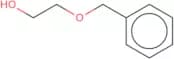
CAS :<p>Please enquire for more information about 2-Benzyloxyethanol including the price, delivery time and more detailed product information at the technical inquiry form on this page</p>Formule :C9H12O2Degré de pureté :Min. 95%Couleur et forme :Colorless Clear LiquidMasse moléculaire :152.19 g/moltrans-1-Bromo-1-propene - stablised with Copper
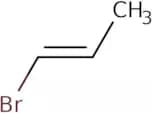
CAS :<p>Trans-1-bromo-1-propene is a compound that has been stabilized by copper. It is used in the synthesis of quinoline derivatives and alkanoic acids. Trans-1-bromo-1-propene is an antimicrobial agent, which kills bacteria by interfering with the fatty acid synthesis. This substance also has antioxidant properties.</p>Formule :C3H5BrDegré de pureté :95%NmrCouleur et forme :Clear LiquidMasse moléculaire :120.98 g/mol1,2-Bis(chlorodimethylsilyl)ethane
CAS :<p>1,2-Bis(chlorodimethylsilyl)ethane is a reactive chemical that is synthesized from hydroxychloroformates and hydrogen chloride. It reacts with silicon to form chlorosilanes, which are then used in the polymerization of siloxanes. 1,2-Bis(chlorodimethylsilyl)ethane has been shown to be an effective initiator for the polymerization of methyl methacrylate and ethylene glycol dimethacrylate. 1,2-Bis(chlorodimethylsilyl)ethane is also used as a hydroxyl group donor in organic reactions.</p>Formule :C6H16Cl2Si2Degré de pureté :Min. 95 Area-%Couleur et forme :PowderMasse moléculaire :215.27 g/molIsostearic acid
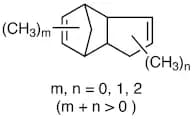
CAS :<p>Please enquire for more information about Isostearic acid including the price, delivery time and more detailed product information at the technical inquiry form on this page</p>Formule :C18H36O2Masse moléculaire :284.48 g/molMethylcyclopentadiene Dimer (so called) (stabilized with TBC)
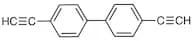
CAS :Couleur et forme :Colorless to Light yellow clear liquid4,4'-Diethynylbiphenyl
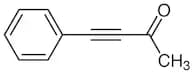
CAS :Formule :C16H10Degré de pureté :>98.0%(GC)Couleur et forme :White to Light yellow to Light orange powder to crystalMasse moléculaire :202.264-Phenyl-3-butyn-2-one
CAS :Formule :C10H8ODegré de pureté :>97.0%(GC)Couleur et forme :Colorless to Yellow to Green clear liquidMasse moléculaire :144.171-Eicosene
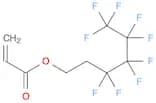
CAS :Formule :C20H40Degré de pureté :>97.0%(GC)Couleur et forme :White or Colorless to Almost white or Almost colorless powder to lump to clear liquidMasse moléculaire :280.542-Propenoic acid, 3,3,4,4,5,5,6,6,6-nonafluorohexyl ester
CAS :Formule :C9H7F9O2Degré de pureté :98%Couleur et forme :LiquidMasse moléculaire :318.13631H,1H,2H,2H-Nonafluorohexyl Methacrylate (stabilized with MEHQ)
CAS :Formule :C10H9F9O2Degré de pureté :98%Couleur et forme :LiquidMasse moléculaire :332.1629Ref: IN-DA0027DM
Produit arrêté1,3-Propanediol
CAS :Formule :C3H8O2Degré de pureté :98%Couleur et forme :LiquidMasse moléculaire :76.0944Nonafluorobutanesulfonic anhydride
CAS :Formule :C8F18O5S2Degré de pureté :98%Couleur et forme :LiquidMasse moléculaire :582.1839