Composés aliphatiques et dérivés
Les composés aliphatiques et leurs dérivés sont des composés organiques caractérisés par des structures en chaîne droite ou ramifiée, par opposition aux structures en anneau trouvées dans les composés aromatiques. Ces composés incluent les alcanes, alcènes, alkynes et leurs dérivés fonctionnalisés, jouant un rôle essentiel dans divers processus chimiques et applications industrielles. Chez CymitQuimica, nous offrons une sélection diversifiée de composés aliphatiques de haute pureté et de leurs dérivés, méticuleusement sélectionnés et testés pour répondre aux exigences strictes des besoins de recherche et industriels. Notre catalogue couvre une large gamme de composés, y compris des hydrocarbures, alcools, aldéhydes, cétones et acides, chacun connu pour sa réactivité et sa polyvalence en synthèse organique, en pharmacie et en science des matériaux. En fournissant des composés aliphatiques et dérivés de haute qualité, nous soutenons les chercheurs et les professionnels dans la réalisation de transformations chimiques précises et efficaces, favorisant l'innovation et les avancées dans de nombreux domaines scientifiques et technologiques.
8720 produits trouvés pour "Composés aliphatiques et dérivés"
Trier par
Degré de pureté (%)
0
100
|
0
|
50
|
90
|
95
|
100
7-allyl-[1,3]dioxolo[4,5:4,5]benzo[1,2-d]thiazol-6(7H)-imine hydrobromide
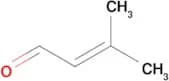
CAS :Degré de pureté :95.0%Masse moléculaire :315.190002441406253-Methyl-2-butenal
CAS :Degré de pureté :98.0%Couleur et forme :LiquidMasse moléculaire :84.117996215820314,4'-Bis(2,2-diphenylvinyl)-1,1'-biphenyl
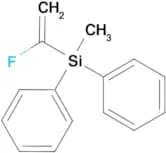
CAS :Degré de pureté :99%Masse moléculaire :510.67999267578125(1-Fluorovinyl)methyldiphenylsilane
CAS :Formule :C15H15FSiDegré de pureté :96.0%Couleur et forme :LiquidMasse moléculaire :242.368(2E)-3-[4-(benzyloxy)phenyl]-1-(4-methylphenyl)prop-2-en-1-one
CAS :Degré de pureté :95.0%Masse moléculaire :328.4110107421875(E)-1-Dimethylamino-4,4-dimethoxy-pent-1-en-3-one
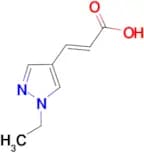
CAS :Degré de pureté :95.0%Masse moléculaire :187.23899841308594(E)-3-(1-Ethyl-1H-pyrazol-4-yl)-acrylic acid
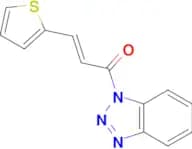
CAS :Formule :C8H10N2O2Degré de pureté :95.0%Couleur et forme :SolidMasse moléculaire :166.18(2E)-1-(1H-1,2,3-Benzotriazol-1-yl)-3-(thiophen-2-yl)prop-2-en-1-one
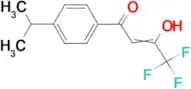
CAS :Masse moléculaire :255.30000305175784,4,4-Trifluoro-1-(4-isopropyl-phenyl)-butane-1,3-dione
CAS :Formule :C13H13F3O2Couleur et forme :LiquidMasse moléculaire :258.243-(2-Chlorophenyl)acrylaldehyde
CAS :Formule :C9H7ClODegré de pureté :95.0%Couleur et forme :SolidMasse moléculaire :166.6(Z)-N-(1-Chloro-1-(2-nitrophenyl)-3-oxo-3-(piperidin-1-yl)prop-1-en-2-yl)benzamide
CAS :Degré de pureté :95%Masse moléculaire :413.85998535156251-(4-Difluoromethoxy-phenyl)-4,4,4-trifluoro-butane-1,3-dione
CAS :Formule :C11H7F5O3Degré de pureté :95%Couleur et forme :SolidMasse moléculaire :282.1661,1,4,4,6-Pentamethyl-7-(1-(p-tolyl)vinyl)-1,2,3,4-tetrahydronaphthalene
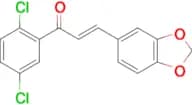
CAS :Degré de pureté :95.0%Masse moléculaire :318.5039978027344(2E)-3-(2H-1,3-benzodioxol-5-yl)-1-(2,5-dichlorophenyl)prop-2-en-1-one
CAS :Degré de pureté :95.0%Masse moléculaire :321.1499938964844O-(But-3-en-2-yl)hydroxylamine hydrochloride
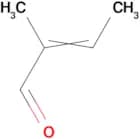
CAS :Degré de pureté :97.0%Masse moléculaire :123.580001831054692-methylbut-2-enal
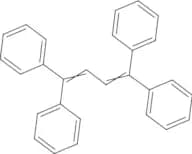
CAS :Degré de pureté :95.0%Couleur et forme :Liquid, ClearMasse moléculaire :84.117996215820311,1,4,4-Tetraphenyl-1,3-butadiene
CAS :Degré de pureté :99.0%Couleur et forme :Solid, White to almost white powderMasse moléculaire :358.48400878906253-(2H-Benzo[d][1,2,3]triazol-2-yl)-4-hydroxyphenethyl methacrylate
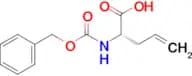
CAS :Degré de pureté :95.0%Couleur et forme :SolidMasse moléculaire :323.35198974609375(S)-2-(((Benzyloxy)carbonyl)amino)pent-4-enoic acid
CAS :Formule :C13H15NO4Degré de pureté :98%Couleur et forme :SolidMasse moléculaire :249.266(2E)-1-{[1,1'-biphenyl]-4-yl}-3-(4-tert-butylphenyl)prop-2-en-1-one
CAS :Degré de pureté :95.0%Masse moléculaire :340.46600341796875(2E)-3-[4-(benzyloxy)phenyl]-1-(2,4-dimethoxyphenyl)prop-2-en-1-one
CAS :Degré de pureté :95.0%Masse moléculaire :374.4360046386719diethyl 2-{[(1,3-dimethyl-1H-pyrazol-5-yl)amino]methylidene}malonate
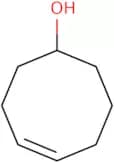
CAS :Masse moléculaire :281.312011718755-Hydroxy-1-cyclooctene
CAS :<p>5-Hydroxy-1-cyclooctene is a monomer of polymers that can be used to introduce new properties to polymers. It is also an effective surface modifier, which can be used to modify the surface properties of polymeric materials. 5-Hydroxy-1-cyclooctene has been shown to bind to calcium ions and may have potential for use in active targeting and as a neutral pH probe. The polymer concentration influences the x-ray structure, which has been studied using x-ray diffraction methods. The absorption spectrum of 5-hydroxy-1-cyclooctene has been examined in vitro and it has been found that this molecule absorbs light in the visible region at wavelengths between 400 nm and 700 nm. It also emits luminescence with a maximum peak at 690 nm. The second order rate constant for the reaction with ruthenium complex is 2.2×10^8 M^(-1)s^(-1). This</p>Formule :C8H14ODegré de pureté :Min. 95%Couleur et forme :Clear LiquidMasse moléculaire :126.2 g/mol2-Chloroethyl isocyanate
CAS :<p>Please enquire for more information about 2-Chloroethyl isocyanate including the price, delivery time and more detailed product information at the technical inquiry form on this page</p>Formule :C3H4ClNODegré de pureté :Min. 99.0 Area-%Masse moléculaire :105.52 g/mol1-Adamantanol
CAS :<p>1-Adamantanol is a cyclic molecule with a hydroxyl group. It is produced by the oxidation of 2-methyl-2-adamantanol. 1-Adamantanol has been shown to be an effective substrate for bioremediation in wastewater treatment plants and can be used as a precursor to produce trifluoroacetic acid. The reaction mechanism is thought to involve the oxidation of 1-adamantanol by an oxidizing agent, such as hydrogen peroxide or ozone, to form a radical intermediate that spontaneously reacts with oxygen in solution. The reaction solution can be cooled down or heated up to increase the rate of the reaction. 1-Adamantanol also undergoes thermal expansion when heated up, which may be due to its high boiling point.</p>Formule :C10H16ODegré de pureté :Min. 98.5%Couleur et forme :White PowderMasse moléculaire :152.24 g/mol11-Bromoundecanoic acid
CAS :<p>11-Bromoundecanoic acid is a heterobifunctional reagent that is used in the synthesis of phospholipids. This chemical reacts with an amide group on a phosphatidylcholine to introduce a bromine atom, which can be used as a fluorophore. The reaction is done in an organic solvent, such as dichloromethane, which facilitates the reaction by dissolving the reactants. The reaction can be monitored using fluorescence assay techniques and 11-bromoundecanoic acid is characterized by its constant ring-opening constant and fatty acid chain length.</p>Formule :C11H21BrO2Degré de pureté :Min. 95%Couleur et forme :PowderMasse moléculaire :265.19 g/molLithium bis(trifluoromethanesulfonimide)
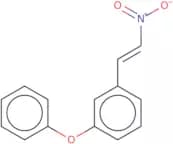
CAS :<p>Lithium bis(trifluoromethanesulfonimide) is a salt that is used in analytical chemistry as a reagent for the preparation of lithium salts. The sample should be dissolved in an organic solution and then reacted with lithium bis(trifluoromethanesulfonimide). Lithium bis(trifluoromethanesulfonimide) has been shown to have good transport properties, but the reaction mechanism is not well-understood. It has an activation energy of approximately 18 kcal/mol and can decompose at high temperatures. Lithium bis(trifluoromethanesulfonimide) can also react with strong acids or bases, so it is necessary to use an electrolyte when preparing the solution.</p>Formule :C2F6LiNO4S2Degré de pureté :Min 98%Couleur et forme :White Off-White PowderMasse moléculaire :287.09 g/mol(3-Phenoxyphenyl)-2-nitroethene
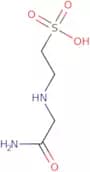
CAS :<p>(3-Phenoxyphenyl)-2-nitroethene is a high quality building block that can be used to produce a variety of complex compounds. This chemical is a versatile building block with many uses, including as a reagent for synthesizing other chemicals and as a useful intermediate. It can also be used as a reaction component to produce fine chemicals such as pharmaceuticals, agrochemicals, and specialty chemicals.</p>Formule :C14H11NO3Degré de pureté :Min. 95%Couleur et forme :PowderMasse moléculaire :241.24 g/molACES
CAS :<p>ACES, also known as N-(2-Acetamido)-2-aminoethanesulfonic acid, is an acetamido buffer that is used in culture media and protein extractions. It also forms metal complexes and has an optimal pH range of 6.1-7.5 and a pKa of 6.78.</p>Formule :C4H10N2O4SDegré de pureté :Min. 95%Couleur et forme :White PowderMasse moléculaire :182.2 g/mol1-Iododecane - Stabilized with copper chip
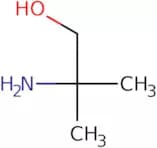
CAS :<p>Precursor to prepare 9-nonadecanone</p>Formule :C10H21IDegré de pureté :Min. 98 Area-%Couleur et forme :Colorless Clear LiquidMasse moléculaire :268.18 g/molAMP
CAS :<p>AMP, also known as 2-Amino-2-methyl-1-propanol, is a buffering agent with an optimal pH range of 9.0-10.5 and a pKa of 9.7. It is used in biochemical assays, enzyme activity tests, and cosmetic formulations.</p>Formule :C4H11NODegré de pureté :Min. 95%Couleur et forme :Colorless Clear LiquidMasse moléculaire :89.14 g/molAgaricinic acid
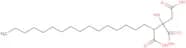
CAS :<p>Organic tricarboxylic acid; inducer of MPT</p>Formule :C22H40O7Degré de pureté :Min. 95%Couleur et forme :PowderMasse moléculaire :416.55 g/mol1,4-Diazabicyclo[3.2.2]nonane dihydrochloride
CAS :<p>1,4-Diazabicyclo[3.2.2]nonane dihydrochloride is a fine chemical that is used as an intermediate in the synthesis of other chemicals. It has been shown to be a versatile building block for research chemicals and as a reaction component in the synthesis of complex compounds. 1,4-Diazabicyclo[3.2.2]nonane dihydrochloride is also useful in the synthesis of pharmaceuticals and other speciality chemicals due to its high quality and ability to function as a reagent.<br>1,4-Diazabicyclo[3.2.2]nonane dihydrochloride has been shown to have anti-inflammatory properties by inhibiting prostaglandin synthesis and can be used for the treatment of asthma, arthritis, and other inflammatory conditions.</p>Formule :C7H14N2·2HClDegré de pureté :Min. 95%Couleur et forme :SolidMasse moléculaire :199.12 g/mol4-Acetoxystyrene Stabilized with TB
CAS :<p>Stabilised with TB</p>Formule :C10H10O2Masse moléculaire :162.19 g/mol1,3-Adamantanediamine dihydrochloride
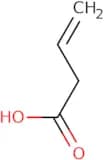
CAS :<p>1,3-Adamantanediamine dihydrochloride is a mimetic that has been shown to inhibit the fibrinolytic activity of nipecotic acid. This compound also inhibits the platelet aggregation induced by the activation of collagen receptors. It has been shown to have an antagonistic effect on NMDA receptors and to induce apoptosis in cancer cells. The structure of 1,3-Adamantanediamine dihydrochloride is similar to that of adamantane, which is a naturally occurring molecule found in plants and animals.</p>Formule :C10H18N2·2HClDegré de pureté :Min. 95%Couleur et forme :White PowderMasse moléculaire :239.18 g/mol3-Butenoic acid
CAS :<p>3-Butenoic acid is a fatty acid that belongs to the group of short chain carboxylic acids. It is used in detergent compositions where it functions as a cationic surfactant and has a hydroxyl group that can be used for polymerization reactions. 3-Butenoic acid is also used as an analytical reagent, e.g., in electrochemical impedance spectroscopy, in which it has been shown to have phase transition temperature of around 38°C. 3-Butenoic acid can be synthesized by reacting butanol with hydrochloric acid and copper chloride in the presence of a cationic surfactant such as alkyltrimethylammonium chloride or benzalkonium chloride. 3-Butenoic acid also acts as a Jak1 inhibitor and has receptor activity against all types of receptors, including those for histamine, acetylcholine, dopamine, serotonin, and GABA (gamma aminob</p>Formule :C4H6O2Degré de pureté :Min. 95 Area-%Couleur et forme :Colorless Clear LiquidMasse moléculaire :86.09 g/mol2,3-Butanedione monoxime
CAS :<p>2,3-Butanedione monoxime (BDM) is a metabolite of the glycol ether, 2,3-butanedione. It has been shown to have a beneficial effect on metabolic disorders in rats by modulating several enzyme activities. The optimum concentration of BDM is 2 mmol/L. This compound has also been shown to inhibit the oxidation of xanthine oxidase and the formation of hydroxyl radicals in vitro. BDM has also been found to have synchronous fluorescence with papillary muscles from guinea pigs and cytosolic ca2+ levels in rat liver cells. The structure analysis revealed that BDM binds to the active site of the x-ray crystal structures for mitochondrial cytochrome C oxidase and cardiac ATP synthase with an affinity similar to that of CoQ10. The Langmuir adsorption isotherm for BDM was calculated as 0.913 +/- 0.034 cm/g at 20 degrees Celsius,</p>Formule :C4H7O2NDegré de pureté :(%) Min. 99%Couleur et forme :White PowderMasse moléculaire :101.1 g/molZ-1,4-diaminobutane·HCl
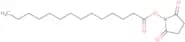
CAS :<p>Z-1,4-diaminobutane·HCl is a fine chemical that is a useful building block in research and manufacture of pharmaceuticals. It is also used as a reagent and speciality chemical in the production of other chemicals, such as dyes, rubber products, and pesticides. This compound has been shown to be an effective intermediate for the synthesis of complex organic compounds with versatile structures. Z-1,4-diaminobutane·HCl can be used as a scaffold for the construction of various types of molecules.</p>Formule :C12H18N2O2·HClDegré de pureté :Min. 95%Couleur et forme :White PowderMasse moléculaire :258.74 g/molN-Succinimidyl myristate
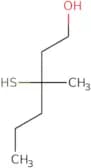
CAS :<p>N-Succinimidyl myristate is a long-chain fatty acid that contains a sulfur atom at its head. It is used in the production of diagnostic products and insulin analogs, as well as in the industrial production of organic solvents. N-Succinimidyl myristate reacts with serum albumin, forming an activated product that can be used in diagnostic tests. This reaction product is also used to bind proteins to fluorine atoms for use in industrial processes.</p>Formule :C18H31NO4Degré de pureté :Min. 95%Couleur et forme :PowderMasse moléculaire :325.44 g/mol3-Mercapto-3-methyl-1-hexanol
CAS :<p>3-Mercapto-3-methyl-1-hexanol is a molecule that belongs to the group of 3-hydroxyalkanoic acids. It is found in human skin cells and has a high transport rate in these cells. 3-Mercapto-3-methyl-1-hexanol can be converted to 3-hydroxy-3 methylhexanoic acid by bacterial enzymes, including corynebacterium, coli k12, and staphylococci. The molecule has been shown to be an enantiomer of 3,4 dithiadiphosphene. Studies have shown that this compound has antibacterial properties against both Gram positive and Gram negative bacteria, although it does not exhibit any activity against C. difficile or Proteus mirabilis. 3-Mercaptohexanol may also have clinical relevance for humans because it is structurally similar to molecules that are involved in the biosynthesis of important biochemicals such as</p>Formule :C7H16OSDegré de pureté :Min. 95 Area-%Couleur et forme :Colorless Clear LiquidMasse moléculaire :148.27 g/mol
![7-allyl-[1,3]dioxolo[4,5:4,5]benzo[1,2-d]thiazol-6(7H)-imine hydrobromide](/_next/image/?url=https%3A%2Fstatic.cymitquimica.com%2Fproducts%2F10%2Fthumb-webp%2FF515277.webp&w=3840&q=75)


![(2E)-3-[4-(benzyloxy)phenyl]-1-(4-methylphenyl)prop-2-en-1-one](/_next/image/?url=https%3A%2Fstatic.cymitquimica.com%2Fproducts%2F10%2Fthumb-webp%2FF523979.webp&w=3840&q=75)






![3-(2H-Benzo[d][1,2,3]triazol-2-yl)-4-hydroxyphenethyl methacrylate](/_next/image/?url=https%3A%2Fstatic.cymitquimica.com%2Fproducts%2F10%2Fthumb-webp%2FF340086.webp&w=3840&q=75)

![(2E)-1-{[1,1'-biphenyl]-4-yl}-3-(4-tert-butylphenyl)prop-2-en-1-one](/_next/image/?url=https%3A%2Fstatic.cymitquimica.com%2Fproducts%2F10%2Fthumb-webp%2FF524230.webp&w=3840&q=75)
![(2E)-3-[4-(benzyloxy)phenyl]-1-(2,4-dimethoxyphenyl)prop-2-en-1-one](/_next/image/?url=https%3A%2Fstatic.cymitquimica.com%2Fproducts%2F10%2Fthumb-webp%2FF523711.webp&w=3840&q=75)
![diethyl 2-{[(1,3-dimethyl-1H-pyrazol-5-yl)amino]methylidene}malonate](/_next/image/?url=https%3A%2Fstatic.cymitquimica.com%2Fproducts%2F10%2Fthumb-webp%2FF518914.webp&w=3840&q=75)



![1,4-Diazabicyclo[3.2.2]nonane dihydrochloride](/_next/image/?url=https%3A%2Fstatic.cymitquimica.com%2Fproducts%2F3D%2Fthumb-webp%2FFD07110.webp&w=3840&q=75)