Composés aliphatiques et dérivés
Les composés aliphatiques et leurs dérivés sont des composés organiques caractérisés par des structures en chaîne droite ou ramifiée, par opposition aux structures en anneau trouvées dans les composés aromatiques. Ces composés incluent les alcanes, alcènes, alkynes et leurs dérivés fonctionnalisés, jouant un rôle essentiel dans divers processus chimiques et applications industrielles. Chez CymitQuimica, nous offrons une sélection diversifiée de composés aliphatiques de haute pureté et de leurs dérivés, méticuleusement sélectionnés et testés pour répondre aux exigences strictes des besoins de recherche et industriels. Notre catalogue couvre une large gamme de composés, y compris des hydrocarbures, alcools, aldéhydes, cétones et acides, chacun connu pour sa réactivité et sa polyvalence en synthèse organique, en pharmacie et en science des matériaux. En fournissant des composés aliphatiques et dérivés de haute qualité, nous soutenons les chercheurs et les professionnels dans la réalisation de transformations chimiques précises et efficaces, favorisant l'innovation et les avancées dans de nombreux domaines scientifiques et technologiques.
8718 produits trouvés pour "Composés aliphatiques et dérivés"
Trier par
Degré de pureté (%)
0
100
|
0
|
50
|
90
|
95
|
100
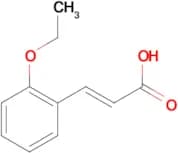
2-Ethoxycinnamic acid, 98+%
CAS :Formule :C11H12O3Degré de pureté :99.0%Couleur et forme :SolidMasse moléculaire :192.214(E)-2-Cyano-3-(4-hydroxy-3-methoxy-phenyl)-acrylic acid ethyl ester
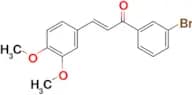
CAS :Formule :C13H13NO4Degré de pureté :95.0%Masse moléculaire :247.25(2E)-1-(3-bromophenyl)-3-(3,4-dimethoxyphenyl)prop-2-en-1-one
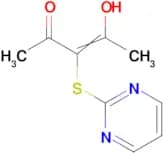
CAS :Formule :C17H15BrO3Degré de pureté :95.0%Masse moléculaire :347.2084-hydroxy-3-(pyrimidin-2-ylsulfanyl)pent-3-en-2-one
CAS :Degré de pureté :97%Masse moléculaire :210.25(2E)-1-(3,4-dichlorophenyl)-3-[4-(propan-2-yl)phenyl]prop-2-en-1-one
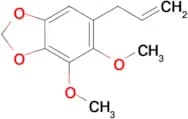
CAS :Formule :C18H16Cl2ODegré de pureté :95.0%Masse moléculaire :319.236-allyl-4,5-dimethoxy-1,3-benzodioxole
Formule :C12H14O4Couleur et forme :LiquidMasse moléculaire :222.242-Bromo-3,4,4,4-tetrafluoro-3-trifluoromethyl-1-butene
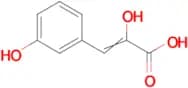
CAS :Formule :C5H2BrF7Degré de pureté :97.0%Couleur et forme :LiquidMasse moléculaire :274.9642-hydroxy-3-(3-hydroxyphenyl)prop-2-enoic acid
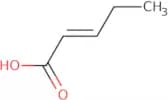
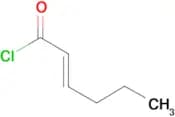
CAS :Degré de pureté :95%Masse moléculaire :180.15899662-Pentenoic acid
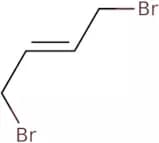
CAS :<p>2-Pentenoic acid is a fatty acid that belongs to the group of sodium salts. It is often used as a catalyst in organic synthesis. 2-Pentenoic acid has been shown to reduce the incidence of bowel disease and improve mitochondrial function. This compound is not toxic at doses up to 1 g/kg in mice, although it may cause acute toxicity at higher doses. 2-Pentenoic acid has also been shown to have anti-inflammatory properties that may be due to its ability to inhibit prostaglandin synthesis.</p>Formule :C5H8O2Degré de pureté :Min. 95%Couleur et forme :Colorless Clear LiquidMasse moléculaire :100.12 g/moltrans-1,4-Dibromo-2-butene
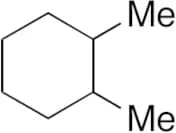
CAS :<p>Trans-1,4-Dibromo-2-butene is a chemical compound with the molecular formula of C4H8Br2. It is an organic halide and a member of the class of compounds known as dibromides. The molecule has two bromine atoms, one on each carbon atom in the chain. Trans-1,4-Dibromo-2-butene is used as a monomer to create polymers such as cationic polymerization or benzalkonium chloride. In addition, trans-1,4-Dibromo-2-butene can be used in the synthesis of amides by reacting with ammonia. This chemical compound also has antimicrobial properties and has been shown to inhibit the activity of bacteria by disrupting protein synthesis and cell division.</p>Formule :C4H6Br2Degré de pureté :Min. 95%Couleur et forme :White PowderMasse moléculaire :213.9 g/mol1,2-Dimethylcyclohexane
CAS :Produit contrôlé<p>Applications 1,2-Dimethylcyclohexane is used in the preparation of rhodium nanoparticles as recyclable catalysts.<br> Not a dangerous good if item is equal to or less than 1g/ml and there is less than 100g/ml in the package<br>References Stratton, S.A., et. al.: Catalysis Today, 183, 96 (2012)<br></p>Formule :C8H16Couleur et forme :NeatMasse moléculaire :112.21α-Bromostyrene (~90%, ~1% Hydroquinone as stabilizer)
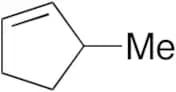
CAS :Produit contrôlé<p>Applications (1-Bromoethenyl)-benzene is a useful synthetic intermediate. It is a reactant used to synthesize Potassium (1-Phenylcyclopropyl)trifluoroborate (P698400). It can also be used in the synthesis of substituted cyclopentenones.<br>References Zhang, L., et al.: J. Am. Chem. Soc., 128, 1442 (2006)<br></p>Formule :C8H7BrCouleur et forme :NeatMasse moléculaire :183.053-Methyl-1-cyclopentene
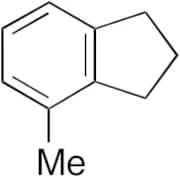
CAS :Produit contrôléFormule :C6H10Couleur et forme :NeatMasse moléculaire :82.144-Methylindan
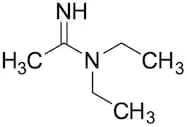
CAS :Produit contrôlé<p>Applications 4-Methylindan is a shoyu flavouring that is used in soy sauce.<br>References Nunomura, N., et al.: Agri. Biol. Chem., 48, 1753 (1984);<br></p>Formule :C10H12Couleur et forme :NeatMasse moléculaire :132.2N,N-Diethylacetamidine
CAS :Produit contrôléFormule :C6H14N2Couleur et forme :NeatMasse moléculaire :114.1891-tert-Butyl-3-ethylbenzene
CAS :Produit contrôlé<p>Applications 1-TERT-BUTYL-3-ETHYLBENZENE (cas# 14411-56-4) is a useful research chemical.<br> Not a dangerous good if item is equal to or less than 1g/ml and there is less than 100g/ml in the package<br></p>Formule :C12H18Couleur et forme :NeatMasse moléculaire :162.27Linoleic acid
CAS :<p>Linoleic acid is an organic compound that is a polyunsaturated omega-6 fatty acid. It is a common lipid and reaction component in the chemical industry. Linoleic acid has been shown to be useful as a building block in organic synthesis, as well as in the production of speciality chemicals, such as surfactants. Linoleic acid can be used to prepare many types of products, including pharmaceuticals, pesticides, and plastics. The CAS number for linoleic acid is 60-33-3.</p>Formule :C18H32O2Masse moléculaire :280.45 g/molTriisopropylsilyl trifluoromethanesulphonate
CAS :<p>Triisopropylsilyl trifluoromethanesulphonate (TIPS) is a naturally occurring compound that inhibits the enzyme dipeptidyl peptidase IV (DPP-IV). It has been shown to be active against alopecia areata in a mouse model and may have therapeutic potential for other autoimmune diseases. TIPS also has an inhibitory effect on sodium-dependent glucose transport, which may be useful in the treatment of hypertension. The reactive group of TIPS is hydroxyl, which can form a covalent bond with serine proteases and inhibit their activity. This reaction mechanism provides a new way to treat disorders such as metabolic diseases and infectious diseases. TIPS also has an inhibitory effect on ns3 protease, which is involved in the replication of human immunodeficiency virus type 1 (HIV-1) and other retroviruses.</p>Formule :C10H21F3O3SSiDegré de pureté :Min. 95%Couleur et forme :Colourless Clear LiquidMasse moléculaire :306.42 g/mol2-Nitropropane
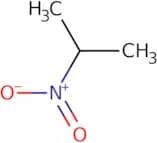
CAS :<p>2-Nitropropane is a pharmacological agent that is used for the treatment of bacterial infections. It is a nitroalkane, which are compounds with nitro groups in their molecular structure. 2-Nitropropane has been shown to inhibit DNA synthesis by binding to nuclear dna and inhibiting enzyme activities in vitro. Toxicological studies on 2-nitropropane have been conducted and show that it does not cause any adverse effects at low doses. The mechanism of action for 2-nitropropane has been investigated and found to inhibit the enzyme activity of nitrate reductase, which leads to an accumulation of the toxic nitrite ion (NO2-) in cells.</p>Formule :C3H7NO2Degré de pureté :Min. 95%Couleur et forme :Colorless PowderMasse moléculaire :89.09 g/mol


![(2E)-1-(3,4-dichlorophenyl)-3-[4-(propan-2-yl)phenyl]prop-2-en-1-one](/_next/image/?url=https%3A%2Fstatic.cymitquimica.com%2Fproducts%2F10%2Fthumb-webp%2FF524060.webp&w=3840&q=75)