Silanes
Sous-catégories appartenant à la catégorie "Silanes"
1234 produits trouvés pour "Silanes"
3-AMINOPROPYLDIISOPROPYLETHOXYSILANE
CAS :3-Aminopropyldiisopropylethoxysilane, 3-(diisopropylethoxysilyl)propylamine
Monoamino functional monoalkoxy silaneForms hydrolytically stable amino-functional bonded phases and monolayersPrimary amine coupling agent for UV cure and epoxy systemsUsed in microparticle surface modificationFormule :C11H27NOSiDegré de pureté :97%Couleur et forme :Straw LiquidMasse moléculaire :217.43AMINOPROPYLSILSESQUIOXANE IN AQUEOUS SOLUTION
CAS :Aminopropylsilsesquioxane, trihydroxysilylpropylamine condensate; aminopropylsilsesquioxane oligomer
Water-borne amino alkyl silsesquioxane oligomersViscosity: 5-15 cStMole % functional group: 100pH: 10-10.5Internal hydrogen bonding stabilizes solutionPrimers for metalsAmphotericOrganic and silanol functionalityLow VOC coupling agent for siliceous surfacesAdditives for acrylic latex sealantsCouleur et forme :Colorless To Amber LiquidMasse moléculaire :270-550n-OCTADECYLTRIMETHOXYSILANE
CAS :Alkyl Silane - Conventional Surface Bonding
Aliphatic, fluorinated aliphatic or substituted aromatic hydrocarbon substituents are the hydrophobic entities which enable silanes to induce surface hydrophobicity. The organic substitution of the silane must be non-polar. The hydrophobic effect of the organic substitution can be related to the free energy of transfer of hydrocarbon molecules from an aqueous phase to a homogeneous hydrocarbon phase. A successful hydrophobic coating must eliminate or mitigate hydrogen bonding and shield polar surfaces from interaction with water by creating a non-polar interphase. Although silane and silicone derived coatings are in general the most hydrophobic, they maintain a high degree of permeability to water vapor. This allows coatings to breathe and reduce deterioration at the coating interface associated with entrapped water. Since ions are not transported through non-polar silane and silicone coatings, they offer protection to composite structures ranging from pigmented coatings to rebar reinforced concrete. A selection guide for hydrophobic silanes can be found on pages 22-31 of the Hydrophobicity, Hydrophilicity and Silane Surface Modification brochure.
n-Octadecyltrimethoxysilane; Trimethoxyoctadecylsilane; Trimethoxysilyloctadecane
Contains 5-10% C18 isomersMelting point: 13-17 °C (55-63 °F)Forms hydrophobic, oleophilic coatingsForms clear, ordered films with tetramethoxysilaneUndergoes oscillatory adsorption to form SAMsTrialkxoy silaneFormule :C21H46O3SiDegré de pureté :92% including isomersCouleur et forme :Straw LiquidMasse moléculaire :374.68TRIISOPROPYLSILANE, 97%
CAS :Trialkylsilyl Blocking Agent
Used as a protecting group for reactive hydrogens in alcohols, amines, thiols, and carboxylic acids. Organosilanes are hydrogen-like, can be introduced in high yield, and can be removed under selective conditions. They are stable over a wide range of reaction conditions and can be removed in the presence of other functional groups, including other protecting groups. The tolerance of silylated alcohols to chemical transformations summary is presented in Table 1 of the Silicon-Based Blocking Agents brochure.
Tri-substituted Silane Reducing Agent
Organosilanes are hydrocarbon-like and possess the ability to serve as both ionic and free-radical reducing agents. These reagents and their reaction by-products are safer and more easily handled and disposed than many other reducing agents. The metallic nature of silicon and its low electronegativity relative to hydrogen lead to polarization of the Si-H bond yielding a hydridic hydrogen and a milder reducing agent compared to aluminum-, boron-, and other metal-based hydrides. A summary of some key silane reductions are presented in Table 1 of the Silicon-Based Reducing Agents brochure.
Triisopropylsilane; Triisopropylsilylhydride; TIPS-H
Silylates strong acids with loss of hydrogenSilylates 1° alcohols selectivelySteric bulk allows for selective silylation of compounds with more than one hydroxyl groupSummary of selective deprotection conditions is provided in Table 7 through Table 20 of the Silicon-Based Blocking Agents brochureVery sterically-hindered silaneBlocking agent forming derivatives stable in presence of Grignard reagentsSelectively silylates primary alcohols in presence of secondary alcoholsUsed as a cation scavenger in the deprotection of peptidesExtensive review of silicon based reducing agents: Larson, G.; Fry, J. L. "Ionic and Organometallic-Catalyzed Organosilane Reductions", Wipf, P., Ed.; Wiley, 2007Formule :C9H22SiDegré de pureté :97%Couleur et forme :LiquidMasse moléculaire :158.3613-(TRICHLOROSILYLMETHYL)HEPTACOSANE
CAS :Formule :C28H57Cl3SiDegré de pureté :techCouleur et forme :Straw LiquidMasse moléculaire :528.211,3-BIS(4-HYDROXYBUTYL)TETRAMETHYLDISILOXANE, 92%
CAS :Formule :C12H30O3Si2Degré de pureté :92%Couleur et forme :Straw LiquidMasse moléculaire :278.54DI-t-BUTYLCHLOROSILANE
CAS :Trialkylsilyl Blocking Agent
Used as a protecting group for reactive hydrogens in alcohols, amines, thiols, and carboxylic acids. Organosilanes are hydrogen-like, can be introduced in high yield, and can be removed under selective conditions. They are stable over a wide range of reaction conditions and can be removed in the presence of other functional groups, including other protecting groups. The tolerance of silylated alcohols to chemical transformations summary is presented in Table 1 of the Silicon-Based Blocking Agents brochure.
Di-tert-butylchlorosilane; Chloro-bis(1,1-dimethylethyl)silyl hydride
Used in selective silylation of internal alcohols or diolsSummary of selective deprotection conditions is provided in Table 7 through Table 20 of the Silicon-Based Blocking Agents brochureFormule :C8H19ClSiCouleur et forme :LiquidMasse moléculaire :178.78TRIACONTYLTRICHLOROSILANE, blend
CAS :Formule :C30H61Cl3SiCouleur et forme :SolidMasse moléculaire :556.262-(3,4-EPOXYCYCLOHEXYL)ETHYLTRIETHOXYSILANE
CAS :2-(3,4-Epoxycyclohexyl)ethyltriethoxysilane;(2-triethoxysilylethyl)cyclohexyloxirane
Epoxy functional trialkoxy silaneAdhesion promoter for water-borne coatings on alkaline substratesUsed in microparticle surface modificationCoupling agent for UV cure and epoxy systemsEpoxy silane treated surfaces convert to hydrophilic-diols when exposed to moistureFormule :C14H28O4SiDegré de pureté :97%Couleur et forme :Straw LiquidMasse moléculaire :288.46N,N'-BIS(3-TRIMETHOXYSILYLPROPYL)UREA, 95%
CAS :Diamine Functional Alkoxy Silane
Silane coupling agents have the ability to form a durable bond between organic and inorganic materials to generate desired heterogeneous environments or to incorporate the bulk properties of different phases into a uniform composite structure. The general formula has two classes of functionality. The hydrolyzable group forms stable condensation products with siliceous surfaces and other oxides such as those of aluminum, zirconium, tin, titanium, and nickel. The organofunctional group alters the wetting or adhesion characteristics of the substrate, utilizes the substrate to catalyze chemical transformations at the heterogeneous interface, orders the interfacial region, or modifies its partition characteristics, and significantly effects the covalent bond between organic and inorganic materials.
Dipodal Silane
Dipodal silanes are a series of adhesion promoters that have intrinsic hydrolytic stabilities up to ~10,000 times greater than conventional silanes and are used in applications such as plastic optics, multilayer printed circuit boards and as adhesive primers for ferrous and nonferrous metals. They have the ability to form up to six bonds to a substrate compared to conventional silanes with the ability to form only three bonds to a substrate. Many conventional coupling agents are frequently used in combination with 10-40% of a non-functional dipodal silane, where the conventional coupling agent provides the appropriate functionality for the application, and the non-functional dipodal silane provides increased durability. Also known as bis-silanes additives enhance hydrolytic stability, which impacts on increased product shelf life, ensures better substrate bonding and also leads to improved mechanical properties in coatings as well as composite applications.
Hydrophilic Silane - Polar - Hydrogen Bonding
Aliphatic, fluorinated aliphatic or substituted aromatic hydrocarbon substituents are the hydrophobic entities which enable silanes to induce surface hydrophobicity. The organic substitution of the silane must be non-polar. The hydrophobic effect of the organic substitution can be related to the free energy of transfer of hydrocarbon molecules from an aqueous phase to a homogeneous hydrocarbon phase. A successful hydrophobic coating must eliminate or mitigate hydrogen bonding and shield polar surfaces from interaction with water by creating a non-polar interphase. Although silane and silicone derived coatings are in general the most hydrophobic, they maintain a high degree of permeability to water vapor. This allows coatings to breathe and reduce deterioration at the coating interface associated with entrapped water. Since ions are not transported through non-polar silane and silicone coatings, they offer protection to composite structures ranging from pigmented coatings to rebar reinforced concrete. A selection guide for hydrophobic silanes can be found on pages 22-31 of the Hydrophobicity, Hydrophilicity and Silane Surface Modification brochure.
N,N'-Bis(3-trimethoxysilylpropyl)urea
Amber liquidViscosity: 100 - 250 cStAdhesion promoter for 2-part condensation cure silicone RTVsFormule :C13H32N2O7Si2Degré de pureté :95%Couleur et forme :Straw To Amber LiquidMasse moléculaire :384.583-PHENOXYPHENYLDIMETHYLCHLOROSILANE, 92%
CAS :Aromatic Silane - Conventional Surface Bonding
Aliphatic, fluorinated aliphatic or substituted aromatic hydrocarbon substituents are the hydrophobic entities which enable silanes to induce surface hydrophobicity. The organic substitution of the silane must be non-polar. The hydrophobic effect of the organic substitution can be related to the free energy of transfer of hydrocarbon molecules from an aqueous phase to a homogeneous hydrocarbon phase. A successful hydrophobic coating must eliminate or mitigate hydrogen bonding and shield polar surfaces from interaction with water by creating a non-polar interphase. Although silane and silicone derived coatings are in general the most hydrophobic, they maintain a high degree of permeability to water vapor. This allows coatings to breathe and reduce deterioration at the coating interface associated with entrapped water. Since ions are not transported through non-polar silane and silicone coatings, they offer protection to composite structures ranging from pigmented coatings to rebar reinforced concrete. A selection guide for hydrophobic silanes can be found on pages 22-31 of the Hydrophobicity, Hydrophilicity and Silane Surface Modification brochure.
3-Phenoxyphenyldimethylchlorosilane; Dimethyl m-phenoxyphenylchlorosilane
Contains other isomersEnd-capper for low-temperature lubricating fluidsFormule :C14H15ClOSiDegré de pureté :92%Couleur et forme :Straw LiquidMasse moléculaire :262.81TETRAETHOXYSILANE, 99.9+%
CAS :Formule :C8H20O4SiDegré de pureté :99.9%Couleur et forme :LiquidMasse moléculaire :208.33BIS(TRIMETHYLSILOXY)DICHLOROSILANE
CAS :Specialty Silicon-Based Blocking Agent
Used as a protecting group for reactive hydrogens in alcohols, amines, thiols, and carboxylic acids. Organosilanes are hydrogen-like, can be introduced in high yield, and can be removed under selective conditions. They are stable over a wide range of reaction conditions and can be removed in the presence of other functional groups, including other protecting groups. The tolerance of silylated alcohols to chemical transformations summary is presented in Table 1 of the Silicon-Based Blocking Agents brochure.
Alkyl Silane - Conventional Surface Bonding
Aliphatic, fluorinated aliphatic or substituted aromatic hydrocarbon substituents are the hydrophobic entities which enable silanes to induce surface hydrophobicity. The organic substitution of the silane must be non-polar. The hydrophobic effect of the organic substitution can be related to the free energy of transfer of hydrocarbon molecules from an aqueous phase to a homogeneous hydrocarbon phase. A successful hydrophobic coating must eliminate or mitigate hydrogen bonding and shield polar surfaces from interaction with water by creating a non-polar interphase. Although silane and silicone derived coatings are in general the most hydrophobic, they maintain a high degree of permeability to water vapor. This allows coatings to breathe and reduce deterioration at the coating interface associated with entrapped water. Since ions are not transported through non-polar silane and silicone coatings, they offer protection to composite structures ranging from pigmented coatings to rebar reinforced concrete. A selection guide for hydrophobic silanes can be found on pages 22-31 of the Hydrophobicity, Hydrophilicity and Silane Surface Modification brochure.
Bis(trimethylsiloxy)dichlorosilane; 3,3-Dichlorohexamethyltrisiloxane
Sterically-hindered for the protection of diolsSummary of selective deprotection conditions is provided in Table 7 through Table 20 of the Silicon-Based Blocking Agents brochureFormule :C6H18Cl2O2Si3Degré de pureté :92%Couleur et forme :Straw LiquidMasse moléculaire :277.37HEXADECYLTRIMETHOXYSILANE, 92%
CAS :Alkyl Silane - Conventional Surface Bonding
Aliphatic, fluorinated aliphatic or substituted aromatic hydrocarbon substituents are the hydrophobic entities which enable silanes to induce surface hydrophobicity. The organic substitution of the silane must be non-polar. The hydrophobic effect of the organic substitution can be related to the free energy of transfer of hydrocarbon molecules from an aqueous phase to a homogeneous hydrocarbon phase. A successful hydrophobic coating must eliminate or mitigate hydrogen bonding and shield polar surfaces from interaction with water by creating a non-polar interphase. Although silane and silicone derived coatings are in general the most hydrophobic, they maintain a high degree of permeability to water vapor. This allows coatings to breathe and reduce deterioration at the coating interface associated with entrapped water. Since ions are not transported through non-polar silane and silicone coatings, they offer protection to composite structures ranging from pigmented coatings to rebar reinforced concrete. A selection guide for hydrophobic silanes can be found on pages 22-31 of the Hydrophobicity, Hydrophilicity and Silane Surface Modification brochure.
Hexadecyltrimethoxysilane; Trimethoxysilylhexadecane
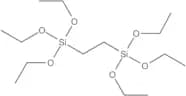
Viscosity: 7 cStWater scavengerEmployed as rheology modifier for moisture crosslinkable high-density polyethylene (HDPE)Modifier for moisture crosslinkable polyethylene (XLPE)Formule :C19H42O3SiDegré de pureté :92%Couleur et forme :Straw LiquidMasse moléculaire :346.631-(TRIETHOXYSILYL)-2-(DIETHOXYMETHYLSILYL)ETHANE
CAS :Alkyl Silane - Dipodal Surface Bonding
Aliphatic, fluorinated aliphatic or substituted aromatic hydrocarbon substituents are the hydrophobic entities which enable silanes to induce surface hydrophobicity. The organic substitution of the silane must be non-polar. The hydrophobic effect of the organic substitution can be related to the free energy of transfer of hydrocarbon molecules from an aqueous phase to a homogeneous hydrocarbon phase. A successful hydrophobic coating must eliminate or mitigate hydrogen bonding and shield polar surfaces from interaction with water by creating a non-polar interphase. Although silane and silicone derived coatings are in general the most hydrophobic, they maintain a high degree of permeability to water vapor. This allows coatings to breathe and reduce deterioration at the coating interface associated with entrapped water. Since ions are not transported through non-polar silane and silicone coatings, they offer protection to composite structures ranging from pigmented coatings to rebar reinforced concrete. A selection guide for hydrophobic silanes can be found on pages 22-31 of the Hydrophobicity, Hydrophilicity and Silane Surface Modification brochure.
Non Functional Alkoxy Silane
Silane coupling agents have the ability to form a durable bond between organic and inorganic materials to generate desired heterogeneous environments or to incorporate the bulk properties of different phases into a uniform composite structure. The general formula has two classes of functionality. The hydrolyzable group forms stable condensation products with siliceous surfaces and other oxides such as those of aluminum, zirconium, tin, titanium, and nickel. The organofunctional group alters the wetting or adhesion characteristics of the substrate, utilizes the substrate to catalyze chemical transformations at the heterogeneous interface, orders the interfacial region, or modifies its partition characteristics, and significantly effects the covalent bond between organic and inorganic materials.
Dipodal Silane
Dipodal silanes are a series of adhesion promoters that have intrinsic hydrolytic stabilities up to ~10,000 times greater than conventional silanes and are used in applications such as plastic optics, multilayer printed circuit boards and as adhesive primers for ferrous and nonferrous metals. They have the ability to form up to six bonds to a substrate compared to conventional silanes with the ability to form only three bonds to a substrate. Many conventional coupling agents are frequently used in combination with 10-40% of a non-functional dipodal silane, where the conventional coupling agent provides the appropriate functionality for the application, and the non-functional dipodal silane provides increased durability. Also known as bis-silanes additives enhance hydrolytic stability, which impacts on increased product shelf life, ensures better substrate bonding and also leads to improved mechanical properties in coatings as well as composite applications.
1-(Triethoxysilyl)-2-(diethoxymethylsilyl)ethane
Forms abrasion resistant sol-gel coatingsLower toxicity, easier to handle than bis(triethoxysilyl)ethane, SIB1817.0Improves hydrolytic stability of silane adhesion promotion systemsUsed in surface modificationFormule :C13H32O5SiDegré de pureté :97%Couleur et forme :Colourless LiquidMasse moléculaire :324.56DIETHYLDICHLOROSILANE
CAS :Bridging Silicon-Based Blocking Agent
Used as a protecting group for reactive hydrogens in alcohols, amines, thiols, and carboxylic acids. Organosilanes are hydrogen-like, can be introduced in high yield, and can be removed under selective conditions. They are stable over a wide range of reaction conditions and can be removed in the presence of other functional groups, including other protecting groups. The tolerance of silylated alcohols to chemical transformations summary is presented in Table 1 of the Silicon-Based Blocking Agents brochure.
Alkyl Silane - Conventional Surface Bonding
Aliphatic, fluorinated aliphatic or substituted aromatic hydrocarbon substituents are the hydrophobic entities which enable silanes to induce surface hydrophobicity. The organic substitution of the silane must be non-polar. The hydrophobic effect of the organic substitution can be related to the free energy of transfer of hydrocarbon molecules from an aqueous phase to a homogeneous hydrocarbon phase. A successful hydrophobic coating must eliminate or mitigate hydrogen bonding and shield polar surfaces from interaction with water by creating a non-polar interphase. Although silane and silicone derived coatings are in general the most hydrophobic, they maintain a high degree of permeability to water vapor. This allows coatings to breathe and reduce deterioration at the coating interface associated with entrapped water. Since ions are not transported through non-polar silane and silicone coatings, they offer protection to composite structures ranging from pigmented coatings to rebar reinforced concrete. A selection guide for hydrophobic silanes can be found on pages 22-31 of the Hydrophobicity, Hydrophilicity and Silane Surface Modification brochure.
Diethyldichlorosilane; Dichlorodiethylsilane; DES
ΔHvap: 41.9 kJ/molDipole moment: 2.4 debyeSurface tension: 30.3 mN/mVapor pressure, 21 °C: 10 mmThermal conductivity: 0.134 W/m°CSimilar to, but more stable derivatives than dimethylsilylenesSummary of selective deprotection conditions is provided in Table 7 through Table 20 of the Silicon-Based Blocking Agents brochureFormule :C4H10Cl2SiDegré de pureté :97%Couleur et forme :Straw To Amber LiquidMasse moléculaire :157.113-(N,N-DIMETHYLAMINOPROPYL)TRIMETHOXYSILANE
CAS :(N,N-Dimethyl-3-aminopropyl)trimethoxysilane; N-(3-trimethoxysilyl)propyl-N,N-dimethylamine
Tertiary amino functional trialkoxy silaneDerivatized silica catalyzes Michael reactionsFormule :C8H21NO3SiDegré de pureté :97%Couleur et forme :Straw LiquidMasse moléculaire :207.34n-BUTYLAMINOPROPYLTRIMETHOXYSILANE
CAS :n-Butylaminopropyltrimethoxysilane; N-[3-(trimethoxysilyl)propyl]butylamine; N-[3-(trimethoxysilyl)propyl]-n-butylamine
Secondary amino functional trialkoxy silaneReacts with isocyanate resins to form urethane moisture cureable systemsUsed in microparticle surface modificationInternal secondary amine coupling agent for UV cure and epoxy systemsAdvanced cyclic analog available: SIB1932.4Formule :C10H25NO3SiDegré de pureté :97%Couleur et forme :Straw LiquidMasse moléculaire :235.4n-OCTYLDIMETHYL(DIMETHYLAMINO)SILANE
CAS :Alkyl Silane - Conventional Surface Bonding
Aliphatic, fluorinated aliphatic or substituted aromatic hydrocarbon substituents are the hydrophobic entities which enable silanes to induce surface hydrophobicity. The organic substitution of the silane must be non-polar. The hydrophobic effect of the organic substitution can be related to the free energy of transfer of hydrocarbon molecules from an aqueous phase to a homogeneous hydrocarbon phase. A successful hydrophobic coating must eliminate or mitigate hydrogen bonding and shield polar surfaces from interaction with water by creating a non-polar interphase. Although silane and silicone derived coatings are in general the most hydrophobic, they maintain a high degree of permeability to water vapor. This allows coatings to breathe and reduce deterioration at the coating interface associated with entrapped water. Since ions are not transported through non-polar silane and silicone coatings, they offer protection to composite structures ranging from pigmented coatings to rebar reinforced concrete. A selection guide for hydrophobic silanes can be found on pages 22-31 of the Hydrophobicity, Hydrophilicity and Silane Surface Modification brochure.
n-Octyldimethyl(dimethylamino)silane; DimethylaminooctyldimethylsilaneFormule :C12H29NSiDegré de pureté :95%Couleur et forme :Straw LiquidMasse moléculaire :215.45METHACRYLOXYPROPYLTRIS(VINYLDIMETHYLSILOXY)SILANE, tech
CAS :Formule :C19H38O5Si4Degré de pureté :92%Couleur et forme :Straw LiquidMasse moléculaire :458.85TETRAMETHOXYSILANE, 97%
CAS :Formule :C4H12O4SiDegré de pureté :97%Couleur et forme :LiquidMasse moléculaire :152.223-CHLOROPROPYLTRIMETHOXYSILANE, 98%
CAS :Halogen Functional Trialkoxy Silane
Silane coupling agents have the ability to form a durable bond between organic and inorganic materials to generate desired heterogeneous environments or to incorporate the bulk properties of different phases into a uniform composite structure. The general formula has two classes of functionality. The hydrolyzable group forms stable condensation products with siliceous surfaces and other oxides such as those of aluminum, zirconium, tin, titanium, and nickel. The organofunctional group alters the wetting or adhesion characteristics of the substrate, utilizes the substrate to catalyze chemical transformations at the heterogeneous interface, orders the interfacial region, or modifies its partition characteristics, and significantly effects the covalent bond between organic and inorganic materials.
3-Chloropropyltrimethoxysilane; 1-Chloro-3-(trimethoxysilyl)propane
Viscosity, 20 °: 0.56 cStγc of treated surfaces: 40.5 mN/mSpecific wetting surface: 394 m2/gVapor pressure, 100 °C: 40 mmAdhesion promoter for styrene-butadiene rubber, SBR, hot-melt adhesivesPowder flow control additive for dry powder fire extinguishing mediaFormule :C6H15ClO3SiDegré de pureté :98%Couleur et forme :Straw LiquidMasse moléculaire :198.72TETRAKIS[(EPOXYCYCLOHEXYL)ETHYL]TETRAMETHYLCYCLOTETRASILOXANE, tech
CAS :Formule :C36H64O8Si4Degré de pureté :90%Couleur et forme :Straw LiquidMasse moléculaire :737.23n-OCTADECYLDIMETHYLCHLOROSILANE
CAS :Alkyl Silane - Conventional Surface Bonding
Aliphatic, fluorinated aliphatic or substituted aromatic hydrocarbon substituents are the hydrophobic entities which enable silanes to induce surface hydrophobicity. The organic substitution of the silane must be non-polar. The hydrophobic effect of the organic substitution can be related to the free energy of transfer of hydrocarbon molecules from an aqueous phase to a homogeneous hydrocarbon phase. A successful hydrophobic coating must eliminate or mitigate hydrogen bonding and shield polar surfaces from interaction with water by creating a non-polar interphase. Although silane and silicone derived coatings are in general the most hydrophobic, they maintain a high degree of permeability to water vapor. This allows coatings to breathe and reduce deterioration at the coating interface associated with entrapped water. Since ions are not transported through non-polar silane and silicone coatings, they offer protection to composite structures ranging from pigmented coatings to rebar reinforced concrete. A selection guide for hydrophobic silanes can be found on pages 22-31 of the Hydrophobicity, Hydrophilicity and Silane Surface Modification brochure.
n-Octadecyldimethylchlorosilane; Dimethyl-n-octadecylchlorosilane; Chlorodimethyloctadecylsilane; Chlorodimethylsilyl-n-octadecane
Contains 5-10% C18 isomersEmployed in bonded HPLC reverse phasesFormule :C20H43ClSiDegré de pureté :97% including isomersCouleur et forme :Off-White SolidMasse moléculaire :347.1VINYLTRIMETHYLSILANE
CAS :Alkenylsilane Cross-Coupling Agent
The cross-coupling reaction is a highly useful methodology for the formation of carbon-carbon bonds. It involves two reagents, with one typically being a suitable organometallic reagent - the nucleophile - and the other a suitable organic substrate, normally an unsaturated halide, tosylate or similar - the electrophile.
Vinyltrimethylsilane; Ethenyltrimethylsilane; Trimethylsilylethene; Trimethylvinylsilane
Viscosity, 20 °C: 0.5 cStΔHcomb: 4,133 kJ/molΔHfus: 7.7 kJ/molCopolymerization parameters- e,Q: 0.04, 0.029Forms polymers which can be fabricated into oxygen enrichment membranesPolymerization catalyzed by alkyllithium compoundsReacts w/ azides to form trimethylsilyl-substituted aziridinesUndergoes Heck coupling to (E)-β-substituted vinyltrimethylsilanes, which can then be cross-coupled furtherExtensive review of silicon based cross-coupling agents: Denmark, S. E. et al. "Organic Reactions, Volume 75" Denmark, S. E. ed., John Wiley and Sons, 233, 2011Formule :C5H12SiDegré de pureté :97%Couleur et forme :Straw LiquidMasse moléculaire :100.24((CHLOROMETHYL)PHENYLETHYL)DIMETHYLCHLOROSILANE
CAS :Mixed m-, p-isomers
Formule :C11H16Cl2SiDegré de pureté :97%Couleur et forme :Straw LiquidMasse moléculaire :247.24DIIODOSILANE, 95%
CAS :Formule :H2I2SiDegré de pureté :95%Couleur et forme :Pale Yellow To Pink LiquidMasse moléculaire :283.911,4-BIS(TRIETHOXYSILYL)BENZENE
CAS :Formule :C18H34O6Si2Degré de pureté :97%Couleur et forme :LiquidMasse moléculaire :402.641,1,3,3,5,5-HEXAMETHYLCYCLOTRISILAZANE
CAS :Bridging Silicon-Based Blocking Agent
Used as a protecting group for reactive hydrogens in alcohols, amines, thiols, and carboxylic acids. Organosilanes are hydrogen-like, can be introduced in high yield, and can be removed under selective conditions. They are stable over a wide range of reaction conditions and can be removed in the presence of other functional groups, including other protecting groups. The tolerance of silylated alcohols to chemical transformations summary is presented in Table 1 of the Silicon-Based Blocking Agents brochure.
Alkyl Silane - Conventional Surface Bonding
Aliphatic, fluorinated aliphatic or substituted aromatic hydrocarbon substituents are the hydrophobic entities which enable silanes to induce surface hydrophobicity. The organic substitution of the silane must be non-polar. The hydrophobic effect of the organic substitution can be related to the free energy of transfer of hydrocarbon molecules from an aqueous phase to a homogeneous hydrocarbon phase. A successful hydrophobic coating must eliminate or mitigate hydrogen bonding and shield polar surfaces from interaction with water by creating a non-polar interphase. Although silane and silicone derived coatings are in general the most hydrophobic, they maintain a high degree of permeability to water vapor. This allows coatings to breathe and reduce deterioration at the coating interface associated with entrapped water. Since ions are not transported through non-polar silane and silicone coatings, they offer protection to composite structures ranging from pigmented coatings to rebar reinforced concrete. A selection guide for hydrophobic silanes can be found on pages 22-31 of the Hydrophobicity, Hydrophilicity and Silane Surface Modification brochure.
Hexamethylcyclotrisilazane; Hexamethylcyclotrisilazane; 2,2,4,4,6,6-Hexamethylcyclotrisilazane
Viscosity, 20 °C: 1.7 cStΔHform: 553 kJ/molDielectric constant: 1000Hz: 2.57Dipole moment: 0.92 debyePolymerizes to polydimethylsilazane oligomer in presence of Ru/H2Modifies positive resists for O2 plasma resistanceSilylates diols with loss of ammoniaSimilar in reactivity to HMDS, SIH6110.0Summary of selective deprotection conditions is provided in Table 7 through Table 20 of the Silicon-Based Blocking Agents brochureFormule :C6H21N3Si3Degré de pureté :97%Couleur et forme :LiquidMasse moléculaire :219.512,4-DICHLOROBENZOYL PEROXIDE, 50% in polydimethylsiloxane
CAS :Formule :C14H6Cl4O4Couleur et forme :Off-White SolidMasse moléculaire :380.03-THIOCYANATOPROPYLTRIETHOXYSILANE, 92%
CAS :3-Thiocyanatopropyltriethoxysilane; 3-(triethoxysilyl)propylthiocyanate
Thiocyanate functional trialkoxy silaneSulfur functional coupling agentMasked isothiocyanate functionalityComplexing agent for Ag, Au, Pd, PtPotential adhesion promoter for goldFormule :C10H21NO3SSiDegré de pureté :92%Couleur et forme :Straw Yellowish LiquidMasse moléculaire :263.43TRIETHYLCHLOROSILANE
CAS :Trialkylsilyl Blocking Agent
Used as a protecting group for reactive hydrogens in alcohols, amines, thiols, and carboxylic acids. Organosilanes are hydrogen-like, can be introduced in high yield, and can be removed under selective conditions. They are stable over a wide range of reaction conditions and can be removed in the presence of other functional groups, including other protecting groups. The tolerance of silylated alcohols to chemical transformations summary is presented in Table 1 of the Silicon-Based Blocking Agents brochure.
Triethylchlorosilane; Chlorotriethylsilane; TES-Cl
Stability of ethers intermediate between TMS and TBS ethersGood for 1°, 2°, 3° alcoholsCan be cleaved in presence of TBS, TIPS and TBDPS ethersUsed primarily for the protection of alcoholsCan be used to protect amines and carboxylic acidsSummary of selective deprotection conditions is provided in Table 7 through Table 20 of the Silicon-Based Blocking Agents brochureFormule :C6H15ClSiDegré de pureté :97%Couleur et forme :LiquidMasse moléculaire :150.72DIPHENYLMETHYLCHLOROSILANE
CAS :Phenyl-Containing Blocking Agent
Used as a protecting group for reactive hydrogens in alcohols, amines, thiols, and carboxylic acids. Organosilanes are hydrogen-like, can be introduced in high yield, and can be removed under selective conditions. They are stable over a wide range of reaction conditions and can be removed in the presence of other functional groups, including other protecting groups. The tolerance of silylated alcohols to chemical transformations summary is presented in Table 1 of the Silicon-Based Blocking Agents brochure.
Aromatic Silane - Conventional Surface Bonding
Aliphatic, fluorinated aliphatic or substituted aromatic hydrocarbon substituents are the hydrophobic entities which enable silanes to induce surface hydrophobicity. The organic substitution of the silane must be non-polar. The hydrophobic effect of the organic substitution can be related to the free energy of transfer of hydrocarbon molecules from an aqueous phase to a homogeneous hydrocarbon phase. A successful hydrophobic coating must eliminate or mitigate hydrogen bonding and shield polar surfaces from interaction with water by creating a non-polar interphase. Although silane and silicone derived coatings are in general the most hydrophobic, they maintain a high degree of permeability to water vapor. This allows coatings to breathe and reduce deterioration at the coating interface associated with entrapped water. Since ions are not transported through non-polar silane and silicone coatings, they offer protection to composite structures ranging from pigmented coatings to rebar reinforced concrete. A selection guide for hydrophobic silanes can be found on pages 22-31 of the Hydrophobicity, Hydrophilicity and Silane Surface Modification brochure.
Diphenylmethylchlorosilane; Methyldiphenylchlorosilane; Chloro(methyl)diphenylsilane
Viscosity: 5.3 cStΔHvap: 623.7 kJ/molSurface tension: 40.0 mN/mVapor pressure, 125 °C: 3 mmThermal conductivity: 0.112 W/m°Cα-Silylates esters, lactones; precursors to silyl enolatesC-Silylates carbamates as shown in the enantioselective example w/ a neryl carbamateStability versus other silyl ethers studiedSummary of selective deprotection conditions is provided in Table 7 through Table 20 of the Silicon-Based Blocking Agents brochureFormule :C13H13ClSiDegré de pureté :97%Couleur et forme :LiquidMasse moléculaire :232.78(3,3,3-TRIFLUOROPROPYL)DIMETHYLCHLOROSILANE
CAS :Formule :C5H10ClF3SiDegré de pureté :97%Couleur et forme :Straw LiquidMasse moléculaire :190.672-(CARBOMETHOXY)ETHYLTRICHLOROSILANE, tech
CAS :Formule :C4H7Cl3O2SiDegré de pureté :95%Couleur et forme :Straw LiquidMasse moléculaire :221.543-AMINOPROPYLSILANETRIOL, 22-25% in water
CAS :3-Aminopropylsilanetriol, 3-trihydroxysilylpropylamine; 22-25% in water
Monoamino functional water-borne silaneMainly oligomers; monomeric at concentrations <5%pH: 10.0-10.5No VOC primary amine coupling agentInternal hydrogen bonding stabilizes solutionSee WSA-7011 for greater hydrolytic stabilityFormule :C3H11NO3SiCouleur et forme :Yellow To Dark Amber LiquidMasse moléculaire :137.21VINYL-1,1,3,3-TETRAMETHYLDISILOXANE
CAS :Formule :C6H16OSi2Degré de pureté :97%Couleur et forme :Straw LiquidMasse moléculaire :160.36NONAFLUOROHEXYLTRICHLOROSILANE
CAS :Fluoroalkyl Silane - Conventional Surface Bonding
Aliphatic, fluorinated aliphatic or substituted aromatic hydrocarbon substituents are the hydrophobic entities which enable silanes to induce surface hydrophobicity. The organic substitution of the silane must be non-polar. The hydrophobic effect of the organic substitution can be related to the free energy of transfer of hydrocarbon molecules from an aqueous phase to a homogeneous hydrocarbon phase. A successful hydrophobic coating must eliminate or mitigate hydrogen bonding and shield polar surfaces from interaction with water by creating a non-polar interphase. Although silane and silicone derived coatings are in general the most hydrophobic, they maintain a high degree of permeability to water vapor. This allows coatings to breathe and reduce deterioration at the coating interface associated with entrapped water. Since ions are not transported through non-polar silane and silicone coatings, they offer protection to composite structures ranging from pigmented coatings to rebar reinforced concrete. A selection guide for hydrophobic silanes can be found on pages 22-31 of the Hydrophobicity, Hydrophilicity and Silane Surface Modification brochure.
Nonafluorohexyltrichlorosilane; 1-(Trichlorosilyl)nonafluorofluorohexaneFormule :C6H4Cl3F9SiDegré de pureté :97%Couleur et forme :Straw LiquidMasse moléculaire :381.533-[METHOXY(POLYETHYLENEOXY)6-9]PROPYLHEPTAMETHYLTRISILOXANE, tech
CAS :PEGylated Silicone, Trisiloxane (559-691 g/mol)
PEO, Trisiloxane termination utilized for hydrophilic surface modificationPEGylation reagent"Super-wetter", surface tension of 0.1% aqueous solution: 21-22 mN/mViscosity: 22 cStFormule :CH3O(CH2CH2O)6-9(CH2)3(CH3)[OSi(CH3)3]2SiCouleur et forme :Pale Yellow LiquidMasse moléculaire :559-691N,O-BIS(TRIMETHYLSILYL)ACETAMIDE
CAS :Trimethylsilyl Blocking Agent
Used as a protecting group for reactive hydrogens in alcohols, amines, thiols, and carboxylic acids. Organosilanes are hydrogen-like, can be introduced in high yield, and can be removed under selective conditions. They are stable over a wide range of reaction conditions and can be removed in the presence of other functional groups, including other protecting groups. The tolerance of silylated alcohols to chemical transformations summary is presented in Table 1 of the Silicon-Based Blocking Agents brochure.
Alkyl Silane - Conventional Surface Bonding
Aliphatic, fluorinated aliphatic or substituted aromatic hydrocarbon substituents are the hydrophobic entities which enable silanes to induce surface hydrophobicity. The organic substitution of the silane must be non-polar. The hydrophobic effect of the organic substitution can be related to the free energy of transfer of hydrocarbon molecules from an aqueous phase to a homogeneous hydrocarbon phase. A successful hydrophobic coating must eliminate or mitigate hydrogen bonding and shield polar surfaces from interaction with water by creating a non-polar interphase. Although silane and silicone derived coatings are in general the most hydrophobic, they maintain a high degree of permeability to water vapor. This allows coatings to breathe and reduce deterioration at the coating interface associated with entrapped water. Since ions are not transported through non-polar silane and silicone coatings, they offer protection to composite structures ranging from pigmented coatings to rebar reinforced concrete. A selection guide for hydrophobic silanes can be found on pages 22-31 of the Hydrophobicity, Hydrophilicity and Silane Surface Modification brochure.
Bis(Trimethylsilyl)acetamide; N,O-Bis(trimethylsilyl)acetamide; Trimethylsilyl-N-Trimethylsilylacetamidate; BSA
More reactive than SIH6110.0Releases neutral acetamide upon reactionBoth silyl groups usedUsed for silylation in analytical applicationsReactions catalyzed by acidForms enol silyl ethers in ionic liquidsNafion SAC-13 has been shown to be a recyclable catalyst for the trimethylsilylation of primary, secondary, and tertiary alcohols in excellent yields and short reaction timesSummary of selective deprotection conditions is provided in Table 7 through Table 20 of the Silicon-Based Blocking Agents brochureFormule :C8H21NOSi2Degré de pureté :95%Couleur et forme :Straw LiquidMasse moléculaire :203.43DIMETHYLCHLOROSILANE, 98%
CAS :Tri-substituted Silane Reducing Agent
Organosilanes are hydrocarbon-like and possess the ability to serve as both ionic and free-radical reducing agents. These reagents and their reaction by-products are safer and more easily handled and disposed than many other reducing agents. The metallic nature of silicon and its low electronegativity relative to hydrogen lead to polarization of the Si-H bond yielding a hydridic hydrogen and a milder reducing agent compared to aluminum-, boron-, and other metal-based hydrides. A summary of some key silane reductions are presented in Table 1 of the Silicon-Based Reducing Agents brochure.
Dimethylchlorosilane; Chlorodimethylsilane; Dimethylsilyl chloride
ΔHvap: 26.2 kJ/molSurface tension: 17.1 mN/mSpecific heat: 1.13 J/g/°CThermal conductivity: 0.116 W/mKCritical temperature: 202 °CUndergoes hydrosilylation reactionsEnantioselectively converts ?-hydroxyketones to 1,2-diolsWill form high-boiling polymeric by-products with aqueous work-upExtensive review of silicon based reducing agents: Larson, G.; Fry, J. L. "Ionic and Organometallic-Catalyzed Organosilane Reductions", Wipf, P., Ed.; Wiley, 2007Formule :C2H7ClSiDegré de pureté :98%Couleur et forme :Straw LiquidMasse moléculaire :94.62BIS[(p-DIMETHYLSILYL)PHENYL]ETHER, 96%
CAS :Formule :C16H22OSi2Degré de pureté :96%Couleur et forme :LiquidMasse moléculaire :286.52VINYLPHENYLMETHYLSILANE
CAS :Formule :C9H12SiDegré de pureté :97%Couleur et forme :LiquidMasse moléculaire :148.28SIVATE E610: ENHANCED AMINE FUNCTIONAL SILANE
CAS :SIVATE E610 (Enhanced AMEO)
Enhanced silane blend of aminopropyltriethoxysilane (SIA0610.0), 1,2-bis(triethoxysilyl)ethane (SIB1817.0) and bis(3-triethoxysilylpropyl)amine (SIB1824.5)Performance extended to non-siliceous surfacesImproved mechanical properties and corrosion resistance of metal substratesSuperior film forming properties in primer applicationsHigher bond strength in aggressive aqueous conditionsImparts composites and primers with long-term durability in a wide range of environmentsApplications include: adhesives for metallic and silicon-based substrates, coupling agent for thermoset and thermoplastic composites, functional micro-particles for adhesives and sealants
Enhanced Amine Functional Trialkoxy Silane
Silane coupling agents have the ability to form a durable bond between organic and inorganic materials to generate desired heterogeneous environments or to incorporate the bulk properties of different phases into a uniform composite structure. The general formula has two classes of functionality. The hydrolyzable group forms stable condensation products with siliceous surfaces and other oxides such as those of aluminum, zirconium, tin, titanium, and nickel. The organofunctional group alters the wetting or adhesion characteristics of the substrate, utilizes the substrate to catalyze chemical transformations at the heterogeneous interface, orders the interfacial region, or modifies its partition characteristics, and significantly effects the covalent bond between organic and inorganic materials.Formule :C9H23NO3SiCouleur et forme :Colourless To Straw LiquidMasse moléculaire :221.37(3,3,3-TRIFLUOROPROPYL)TRIMETHOXYSILANE, 98%
CAS :Formule :C6H13F3O3SiDegré de pureté :98%Couleur et forme :Straw LiquidMasse moléculaire :218.253-ISOCYANATOPROPYLTRIETHOXYSILANE, 95%
CAS :3-Isocyanatopropyltriethoxysilane; triethoxysilylpropylisocyanate
Isocyanate functional trialkoxy silaneComponent in hybrid organic/inorganic urethanesCoupling agent for urethanes, polyols, and aminesFormule :C10H21NO4SiDegré de pureté :94.50%Couleur et forme :Straw LiquidMasse moléculaire :247.37PHENETHYLTRICHLOROSILANE
CAS :Aromatic Silane - Conventional Surface Bonding
Aliphatic, fluorinated aliphatic or substituted aromatic hydrocarbon substituents are the hydrophobic entities which enable silanes to induce surface hydrophobicity. The organic substitution of the silane must be non-polar. The hydrophobic effect of the organic substitution can be related to the free energy of transfer of hydrocarbon molecules from an aqueous phase to a homogeneous hydrocarbon phase. A successful hydrophobic coating must eliminate or mitigate hydrogen bonding and shield polar surfaces from interaction with water by creating a non-polar interphase. Although silane and silicone derived coatings are in general the most hydrophobic, they maintain a high degree of permeability to water vapor. This allows coatings to breathe and reduce deterioration at the coating interface associated with entrapped water. Since ions are not transported through non-polar silane and silicone coatings, they offer protection to composite structures ranging from pigmented coatings to rebar reinforced concrete. A selection guide for hydrophobic silanes can be found on pages 22-31 of the Hydrophobicity, Hydrophilicity and Silane Surface Modification brochure.
Phenethyltrichlorosilane; 2-(Trichlorosilylethyl) benzene; Trichloro(2-phenylethyl)silane
Contains α-, β-isomersTreated surface contact angle, water: 88°Formule :C8H9Cl3SiDegré de pureté :97%Couleur et forme :Pale Yellow LiquidMasse moléculaire :239.6DIMETHYLETHOXYSILANE
CAS :Tri-substituted Silane Reducing Agent
Organosilanes are hydrocarbon-like and possess the ability to serve as both ionic and free-radical reducing agents. These reagents and their reaction by-products are safer and more easily handled and disposed than many other reducing agents. The metallic nature of silicon and its low electronegativity relative to hydrogen lead to polarization of the Si-H bond yielding a hydridic hydrogen and a milder reducing agent compared to aluminum-, boron-, and other metal-based hydrides. A summary of some key silane reductions are presented in Table 1 of the Silicon-Based Reducing Agents brochure.
Alkyl Silane - Conventional Surface Bonding
Aliphatic, fluorinated aliphatic or substituted aromatic hydrocarbon substituents are the hydrophobic entities which enable silanes to induce surface hydrophobicity. The organic substitution of the silane must be non-polar. The hydrophobic effect of the organic substitution can be related to the free energy of transfer of hydrocarbon molecules from an aqueous phase to a homogeneous hydrocarbon phase. A successful hydrophobic coating must eliminate or mitigate hydrogen bonding and shield polar surfaces from interaction with water by creating a non-polar interphase. Although silane and silicone derived coatings are in general the most hydrophobic, they maintain a high degree of permeability to water vapor. This allows coatings to breathe and reduce deterioration at the coating interface associated with entrapped water. Since ions are not transported through non-polar silane and silicone coatings, they offer protection to composite structures ranging from pigmented coatings to rebar reinforced concrete. A selection guide for hydrophobic silanes can be found on pages 22-31 of the Hydrophobicity, Hydrophilicity and Silane Surface Modification brochure.
Dimethylethoxysilane; Ethoxydimethylsilane
Vapor pressure, 20 °C: 281 mmUndergoes hydrosilylation reactionsWaterproofing agent for space shuttle thermal tilesWill form high-boiling polymeric by-products with aqueous work-upExtensive review of silicon based reducing agents: Larson, G.; Fry, J. L. "Ionic and Organometallic-Catalyzed Organosilane Reductions", Wipf, P., Ed.; Wiley, 2007Formule :C4H12OSiDegré de pureté :97%Couleur et forme :LiquidMasse moléculaire :104.22TRIMETHYLCHLOROSILANE, 99+%
CAS :Formule :C3H9ClSiDegré de pureté :99%Couleur et forme :Straw LiquidMasse moléculaire :108.641,3-BIS(3-AMINOPROPYL)TETRAMETHYLDISILOXANE
CAS :Formule :C10H28N2OSi2Degré de pureté :97%Couleur et forme :Straw LiquidMasse moléculaire :248.52DODECYLMETHYLDICHLOROSILANE
CAS :Alkyl Silane - Conventional Surface Bonding
Aliphatic, fluorinated aliphatic or substituted aromatic hydrocarbon substituents are the hydrophobic entities which enable silanes to induce surface hydrophobicity. The organic substitution of the silane must be non-polar. The hydrophobic effect of the organic substitution can be related to the free energy of transfer of hydrocarbon molecules from an aqueous phase to a homogeneous hydrocarbon phase. A successful hydrophobic coating must eliminate or mitigate hydrogen bonding and shield polar surfaces from interaction with water by creating a non-polar interphase. Although silane and silicone derived coatings are in general the most hydrophobic, they maintain a high degree of permeability to water vapor. This allows coatings to breathe and reduce deterioration at the coating interface associated with entrapped water. Since ions are not transported through non-polar silane and silicone coatings, they offer protection to composite structures ranging from pigmented coatings to rebar reinforced concrete. A selection guide for hydrophobic silanes can be found on pages 22-31 of the Hydrophobicity, Hydrophilicity and Silane Surface Modification brochure.
Dodecylmethyldichlorosilane; Dichlorododecylmethylsilane; MethyldodecyldichlorosilaneFormule :C13H28Cl2SiDegré de pureté :97%Couleur et forme :Straw LiquidMasse moléculaire :283.36UREIDOPROPYLTRIMETHOXYSILANE
CAS :Ureidopropyltrimethoxysilane, (3-trimethoxysilyl)propylurea
Specialty amine functional trialkoxy silaneComponent in primers for tin alloysAdhesion promoter for foundry resinsFormule :C7H18N2O4SiCouleur et forme :Straw Amber LiquidMasse moléculaire :222.32AMINOPROPYL/VINYLSILSESQUIOXANE IN AQUEOUS SOLUTION
CAS :aminopropyl/vinyl/silsesquioxane, (60-65% aminopropylsilsesquioxane)-(35-40% vinyl-silsesquioxane) copolymer 25-28% in water; trihydroxysilylpropylamine-vinylsilanetriol condensate; aminopropylsilsesquioxane vinylsilsequioxane copolymer oligomer
Water-borne amino/vinyl alkyl silsesquioxane oligomersAdditives for acrylic latex sealantsLow VOC coupling agent for siliceous surfacesOrganic and silanol functionalityAmphotericPrimers for metalsViscosity: 3-10 cStMole % functional group: 60-65pH: 10-11Internal hydrogen bonding stabilizes solutionCouleur et forme :Straw LiquidMasse moléculaire :250-5001,1,3,3-TETRAMETHYLDISILOXANE, 98%
CAS :Alkenylsilane Cross-Coupling Agent
The cross-coupling reaction is a highly useful methodology for the formation of carbon-carbon bonds. It involves two reagents, with one typically being a suitable organometallic reagent - the nucleophile - and the other a suitable organic substrate, normally an unsaturated halide, tosylate or similar - the electrophile.
ALD Material
Atomic layer deposition (ALD) is a chemically self-limiting deposition technique that is based on the sequential use of a gaseous chemical process. A thin film (as fine as -0.1 Å per cycle) results from repeating the deposition sequence as many times as needed to reach a certain thickness. The major characteristic of the films is the resulting conformality and the controlled deposition manner. Precursor selection is key in ALD processes, namely finding molecules which will have enough reactivity to produce the desired films yet are stable enough to be handled and safely delivered to the reaction chamber.
Siloxane-Based Silane Reducing Agent
Organosilanes are hydrocarbon-like and possess the ability to serve as both ionic and free-radical reducing agents. These reagents and their reaction by-products are safer and more easily handled and disposed than many other reducing agents. The metallic nature of silicon and its low electronegativity relative to hydrogen lead to polarization of the Si-H bond yielding a hydridic hydrogen and a milder reducing agent compared to aluminum-, boron-, and other metal-based hydrides. A summary of some key silane reductions are presented in Table 1 of the Silicon-Based Reducing Agents brochure.
1,1,3,3-Tetramethyldisiloxane; 1,1-Dihydro-1,1,3,3-tetramethyldisiloxane; TMDO; TMDS
Viscosity, 20 °C: 0.56 cStΔHcomb: 4,383 kJ/molΔHvap: 30.3 kJ/molVapor pressure, 27 °C: 194.8 mmReduces aromatic aldehydes to benzyl halidesEmployed in reductive halogenation of aldehydes and epoxidesUsed to link ferrocenylsilane, polyolefin block copolymers into stable cylindrical formsEndcapper for polymerization of hydride terminated siliconesOrganic reducing agentEmployed in high-yield reduction of amides to amines in the presence of other reducible groupsReduces anisoles to arenesHydrosilylates terminal alkynes to form alkenylsilanes capable of cross-coupling with aryl and vinyl halidesExtensive review of silicon based reducing agents: Larson, G.; Fry, J. L. "Ionic and Organometallic-Catalyzed Organosilane Reductions", Wipf, P., Ed.; Wiley, 2007Extensive review of silicon based cross-coupling agents: Denmark, S. E. et al. "Organic Reactions, Volume 75" Denmark, S. E. ed., John Wiley and Sons, 233, 2011Formule :C4H14OSi2Degré de pureté :98%Couleur et forme :LiquidMasse moléculaire :134.22VINYLTRIS(METHYLETHYLKETOXIMINO)SILANE, tech
CAS :Olefin Functional Trialkoxy Silane
Silane coupling agents have the ability to form a durable bond between organic and inorganic materials to generate desired heterogeneous environments or to incorporate the bulk properties of different phases into a uniform composite structure. The general formula has two classes of functionality. The hydrolyzable group forms stable condensation products with siliceous surfaces and other oxides such as those of aluminum, zirconium, tin, titanium, and nickel. The organofunctional group alters the wetting or adhesion characteristics of the substrate, utilizes the substrate to catalyze chemical transformations at the heterogeneous interface, orders the interfacial region, or modifies its partition characteristics, and significantly effects the covalent bond between organic and inorganic materials.
Vinyltris(methylethylketoximino)silane; Tris(methylethylketoximino)vinylsilane; Tri(methylethylketoximino)silylethylene
Neutral cross-linker/coupling agent for condensation cure siliconesByproduct: methylethylketoximeCopolymerizes with ethylene to form moisture crosslinkable polyethyleneFormule :C14H27N3O3SiDegré de pureté :92%Couleur et forme :Straw LiquidMasse moléculaire :313.47TRIS(DIMETHYLAMINO)METHYLSILANE
CAS :Formule :C7H21N3SiDegré de pureté :97%Couleur et forme :Straw LiquidMasse moléculaire :175.35(3-GLYCIDOXYPROPYL)METHYLDIETHOXYSILANE
CAS :(3-glycidoxypropyl)methyldiethoxysilane; 3-(2,3-epoxypropoxypropyl)methyldiethoxysilane; [3-(2,3- epoxypropoxy)propyl]diethoxymethylsilane; 3- (methyldiethoxysilyl)propyl glycidyl ether
Epoxy functional dialkoxy silaneViscosity: 3.0 cStEmployed in scratch resistant coatings for eye glassesCoupling agent for latex systems with reduced tendancy to gel compared to SIG5840.0Coupling agent for UV cure and epoxy systemsEpoxy silane treated surfaces convert to hydrophilic-diols when exposed to moistureFormule :C11H24O4SiDegré de pureté :97%Couleur et forme :Straw LiquidMasse moléculaire :248.393-CYANOPROPYLTRICHLOROSILANE
CAS :Formule :C4H6Cl3NSiDegré de pureté :97%Couleur et forme :Straw LiquidMasse moléculaire :202.543-[METHOXY(POLYETHYLENEOXY)6-9]PROPYLTRIS(DIMETHYLAMINO)SILANE, tech
Tipped PEG Silane (500-855 g/mol)
PEO, Tris(dimethylamino)silane termination utilized for hydrophilic surface modificationPEGylation reagentFor MOCVD of hydrophilic filmsFormule :CH3O(CH2CH2O)6-9(CH2)3Si[N(CH3)2]3Couleur et forme :Straw LiquidMasse moléculaire :500-855n-OCTYLTRIETHOXYSILANE, 98%
CAS :Alkyl Silane - Conventional Surface Bonding
Aliphatic, fluorinated aliphatic or substituted aromatic hydrocarbon substituents are the hydrophobic entities which enable silanes to induce surface hydrophobicity. The organic substitution of the silane must be non-polar. The hydrophobic effect of the organic substitution can be related to the free energy of transfer of hydrocarbon molecules from an aqueous phase to a homogeneous hydrocarbon phase. A successful hydrophobic coating must eliminate or mitigate hydrogen bonding and shield polar surfaces from interaction with water by creating a non-polar interphase. Although silane and silicone derived coatings are in general the most hydrophobic, they maintain a high degree of permeability to water vapor. This allows coatings to breathe and reduce deterioration at the coating interface associated with entrapped water. Since ions are not transported through non-polar silane and silicone coatings, they offer protection to composite structures ranging from pigmented coatings to rebar reinforced concrete. A selection guide for hydrophobic silanes can be found on pages 22-31 of the Hydrophobicity, Hydrophilicity and Silane Surface Modification brochure.
n-Octyltriethoxysilane; Triethoxysilyloctane
Viscosity: 1.9 cStVapor pressure, 75 °C: 1 mmWidely used in architectural hydrophobationSurface treatment for pigments in cosmetic vehicles and compositesMay be formulated to stable water emulsionsSuppresses nucleation behavior in ZnO-polylactic acid compositesTrialkoxy silaneFormule :C14H32O3SiDegré de pureté :97.5%Couleur et forme :Straw LiquidMasse moléculaire :276.48METHYLTRIETHOXYSILANE
CAS :Alkyl Silane - Conventional Surface Bonding
Aliphatic, fluorinated aliphatic or substituted aromatic hydrocarbon substituents are the hydrophobic entities which enable silanes to induce surface hydrophobicity. The organic substitution of the silane must be non-polar. The hydrophobic effect of the organic substitution can be related to the free energy of transfer of hydrocarbon molecules from an aqueous phase to a homogeneous hydrocarbon phase. A successful hydrophobic coating must eliminate or mitigate hydrogen bonding and shield polar surfaces from interaction with water by creating a non-polar interphase. Although silane and silicone derived coatings are in general the most hydrophobic, they maintain a high degree of permeability to water vapor. This allows coatings to breathe and reduce deterioration at the coating interface associated with entrapped water. Since ions are not transported through non-polar silane and silicone coatings, they offer protection to composite structures ranging from pigmented coatings to rebar reinforced concrete. A selection guide for hydrophobic silanes can be found on pages 22-31 of the Hydrophobicity, Hydrophilicity and Silane Surface Modification brochure.
Methyltriethoxysilane; Triethoxymethylsilane; Methyltriethyloxysilane
Viscosity: 0.6 cStDipole moment: 1.72 debyeVapor pressure, 25 °: 6 mmLow cost hydrophobic surface treatmentAlkoxy crosslinker for condensation cure siliconesTrialkoxy silaneFormule :C7H18O3SiDegré de pureté :97%Couleur et forme :LiquidMasse moléculaire :178.3(3-GLYCIDOXYPROPYL)PENTAMETHYLDISILOXANE
CAS :Formule :C11H26O3Si2Degré de pureté :97%Couleur et forme :Straw LiquidMasse moléculaire :262.5DIMETHYLDICHLOROSILANE, 99+% 5-GAL DRUM
CAS :Bridging Silicon-Based Blocking Agent
Used as a protecting group for reactive hydrogens in alcohols, amines, thiols, and carboxylic acids. Organosilanes are hydrogen-like, can be introduced in high yield, and can be removed under selective conditions. They are stable over a wide range of reaction conditions and can be removed in the presence of other functional groups, including other protecting groups. The tolerance of silylated alcohols to chemical transformations summary is presented in Table 1 of the Silicon-Based Blocking Agents brochure.
Alkyl Silane - Conventional Surface Bonding
Aliphatic, fluorinated aliphatic or substituted aromatic hydrocarbon substituents are the hydrophobic entities which enable silanes to induce surface hydrophobicity. The organic substitution of the silane must be non-polar. The hydrophobic effect of the organic substitution can be related to the free energy of transfer of hydrocarbon molecules from an aqueous phase to a homogeneous hydrocarbon phase. A successful hydrophobic coating must eliminate or mitigate hydrogen bonding and shield polar surfaces from interaction with water by creating a non-polar interphase. Although silane and silicone derived coatings are in general the most hydrophobic, they maintain a high degree of permeability to water vapor. This allows coatings to breathe and reduce deterioration at the coating interface associated with entrapped water. Since ions are not transported through non-polar silane and silicone coatings, they offer protection to composite structures ranging from pigmented coatings to rebar reinforced concrete. A selection guide for hydrophobic silanes can be found on pages 22-31 of the Hydrophobicity, Hydrophilicity and Silane Surface Modification brochure.
Dimethyldichlorosilane; Dichlorodimethylsilane; DMS
AIR TRANSPORT FORBIDDENRedistilledViscosity: 0.47 cStVapor pressure, 17 °C: 100 mmSpecific heat: 0.92 J/g/°ΔHcomb: -2,055 kJ/molΔHvap: 33.5 kJ/molSurface tension: 20.1 mN/mCoefficient of thermal expansion: 1.3 x 10⁻³Critical temperature: 247.2 °CCritical pressure: 34.4 atmFundamental monomer for siliconesEmployed in the tethering of two olefins for the cross metathesis-coupling step in the synthesis of Attenol AAids in the intramolecular Pinacol reactionReacts with alcohols, diols, and hydroxy carboxylic acidsEmployed as a protecting group/template in C-glycoside synthesisAvailable in a lower purity as SID4120.0Summary of selective deprotection conditions is provided in Table 7 through Table 20 of the Silicon-Based Blocking Agents brochureFormule :C2H6Cl2SiDegré de pureté :99+%Couleur et forme :Straw LiquidMasse moléculaire :129.06(3-PHENYLPROPYL)DIMETHYLCHLOROSILANE
CAS :Aromatic Silane - Conventional Surface Bonding
Aliphatic, fluorinated aliphatic or substituted aromatic hydrocarbon substituents are the hydrophobic entities which enable silanes to induce surface hydrophobicity. The organic substitution of the silane must be non-polar. The hydrophobic effect of the organic substitution can be related to the free energy of transfer of hydrocarbon molecules from an aqueous phase to a homogeneous hydrocarbon phase. A successful hydrophobic coating must eliminate or mitigate hydrogen bonding and shield polar surfaces from interaction with water by creating a non-polar interphase. Although silane and silicone derived coatings are in general the most hydrophobic, they maintain a high degree of permeability to water vapor. This allows coatings to breathe and reduce deterioration at the coating interface associated with entrapped water. Since ions are not transported through non-polar silane and silicone coatings, they offer protection to composite structures ranging from pigmented coatings to rebar reinforced concrete. A selection guide for hydrophobic silanes can be found on pages 22-31 of the Hydrophobicity, Hydrophilicity and Silane Surface Modification brochure.
(3-Phenylpropyl)dimethylchlorosilane; 3-(Chlorodimethylsilylpropyl)benzene; Chlorodimethyl(3-phenylpropyl)silaneFormule :C11H17ClSiDegré de pureté :97%Couleur et forme :Pale Yellow LiquidMasse moléculaire :212.78ISOOCTYLTRIETHOXYSILANE
CAS :Alkyl Silane - Conventional Surface Bonding
Aliphatic, fluorinated aliphatic or substituted aromatic hydrocarbon substituents are the hydrophobic entities which enable silanes to induce surface hydrophobicity. The organic substitution of the silane must be non-polar. The hydrophobic effect of the organic substitution can be related to the free energy of transfer of hydrocarbon molecules from an aqueous phase to a homogeneous hydrocarbon phase. A successful hydrophobic coating must eliminate or mitigate hydrogen bonding and shield polar surfaces from interaction with water by creating a non-polar interphase. Although silane and silicone derived coatings are in general the most hydrophobic, they maintain a high degree of permeability to water vapor. This allows coatings to breathe and reduce deterioration at the coating interface associated with entrapped water. Since ions are not transported through non-polar silane and silicone coatings, they offer protection to composite structures ranging from pigmented coatings to rebar reinforced concrete. A selection guide for hydrophobic silanes can be found on pages 22-31 of the Hydrophobicity, Hydrophilicity and Silane Surface Modification brochure.
Isooctyltriethoxysilane; Triethoxysilyl-2,4,4-trimethypentane
Viscosity: 2.1 cStVapor pressure, 112 °C: 10mmArchitectural water-repellentWater scavenger for sealed lubricant systemsTrialkoxy silaneFormule :C14H32O3SiDegré de pureté :97%Couleur et forme :Straw LiquidMasse moléculaire :276.48(3,3,3-TRIFLUOROPROPYL)METHYLCYCLOTRISILOXANE
CAS :Formule :C12H21F9O3Si3Degré de pureté :97%Couleur et forme :White SolidMasse moléculaire :468.55BIS[3-(TRIETHOXYSILYL)PROPYL]TETRASULFIDE, tech
CAS :bis[3-(triethoxysilyl)propyl]tetrasulfide; bis(triethoxysilylpropyl)tetrasulfane; TESPT
Sulfur functional dipodal silaneContains distribution of S2 - S10 species; average 3.8Viscosity: 11 cStAdhesion promoter for precious metalsCoupling agent/vulcanizing agent for "green" tiresAdhesion promoter for physical vapor deposition (PVD) copper on paryleneFormule :C18H42O6S4Si2Degré de pureté :95%Couleur et forme :Pale Yellow Amber LiquidMasse moléculaire :538.941,3-BIS(HYDROXYPROPYL)TETRAMETHYLDISILOXANE, tech 95
CAS :Formule :C10H26O3Si2Degré de pureté :95%Couleur et forme :Straw LiquidMasse moléculaire :250.485-HEXENYLTRIMETHOXYSILANE, tech
CAS :Olefin Functional Trialkoxy Silane
Silane coupling agents have the ability to form a durable bond between organic and inorganic materials to generate desired heterogeneous environments or to incorporate the bulk properties of different phases into a uniform composite structure. The general formula has two classes of functionality. The hydrolyzable group forms stable condensation products with siliceous surfaces and other oxides such as those of aluminum, zirconium, tin, titanium, and nickel. The organofunctional group alters the wetting or adhesion characteristics of the substrate, utilizes the substrate to catalyze chemical transformations at the heterogeneous interface, orders the interfacial region, or modifies its partition characteristics, and significantly effects the covalent bond between organic and inorganic materials.
5-Hexenyltrimethoxysilane; Trimethoxysilylhexene
Adhesion promoter for Pt-cure siliconesUsed in microparticle surface modificationFormule :C9H20O3SiDegré de pureté :techCouleur et forme :Straw LiquidMasse moléculaire :204.34(N,N-DIETHYL-3-AMINOPROPYL)TRIMETHOXYSILANE
CAS :(N,N-Diethyl-3-aminopropyl)trimethoxysilane; N-(3-trimethoxysilyl)propyl-N,N-diethylamine, N,N-diethyl-3-(trimethoxysilyl)propylamine
Tertiary amino functional silanesProvides silica-supported catalyst for 1,4-addition reactionsUsed together w/ SIA0591.0 to anchor PdCl2 catalyst to silica for acceleration of the Tsuji-Trost reaction in the allylation of nucleophilesFormule :C10H25NO3SiDegré de pureté :97%Couleur et forme :Straw LiquidMasse moléculaire :235.4(3-(N-ETHYLAMINO)ISOBUTYL)TRIMETHOXYSILANE
CAS :(3-(N-Ethylamino)isobutyl)trimethoxysilane; 3-(trimethoxysilyl)-N-ethyl-2-methyl-1-propanamine
Secondary amino functional trialkoxy silaneReacts with isocyanate resins (urethanes) to form moisture cureable systemsPrimary amine coupling agent for UV cure and epoxy systemsUsed in microparticle surface modificationAdvanced cyclic analog available: SIE4891.0Formule :C9H23NO3SiDegré de pureté :97%Couleur et forme :Straw LiquidMasse moléculaire :221.37BIS(3-TRIMETHOXYSILYLPROPYL)AMINE, 96%
CAS :Amine Functional Alkoxy Silane
Silane coupling agents have the ability to form a durable bond between organic and inorganic materials to generate desired heterogeneous environments or to incorporate the bulk properties of different phases into a uniform composite structure. The general formula has two classes of functionality. The hydrolyzable group forms stable condensation products with siliceous surfaces and other oxides such as those of aluminum, zirconium, tin, titanium, and nickel. The organofunctional group alters the wetting or adhesion characteristics of the substrate, utilizes the substrate to catalyze chemical transformations at the heterogeneous interface, orders the interfacial region, or modifies its partition characteristics, and significantly effects the covalent bond between organic and inorganic materials.
Dipodal Silane
Dipodal silanes are a series of adhesion promoters that have intrinsic hydrolytic stabilities up to ~10,000 times greater than conventional silanes and are used in applications such as plastic optics, multilayer printed circuit boards and as adhesive primers for ferrous and nonferrous metals. They have the ability to form up to six bonds to a substrate compared to conventional silanes with the ability to form only three bonds to a substrate. Many conventional coupling agents are frequently used in combination with 10-40% of a non-functional dipodal silane, where the conventional coupling agent provides the appropriate functionality for the application, and the non-functional dipodal silane provides increased durability. Also known as bis-silanes additives enhance hydrolytic stability, which impacts on increased product shelf life, ensures better substrate bonding and also leads to improved mechanical properties in coatings as well as composite applications.
Bis-(3-trimethoxysilylpropyl)amine
Secondary amine allows more control of reactivity with isocyanatesEmployed in optical fiber coatingsUsed in combination with silane, (3-Acryloxypropyl)trimethoxysilane, (SIA0200.0), to increase strength and hydrolytic stability of dental compositesDipodal analog of AMEO (SIA0611.0 )Formule :C12H31NO6Si2Degré de pureté :96%Couleur et forme :Straw LiquidMasse moléculaire :341.56PHENYLTRICHLOROSILANE
CAS :Aromatic Silane - Conventional Surface Bonding
Aliphatic, fluorinated aliphatic or substituted aromatic hydrocarbon substituents are the hydrophobic entities which enable silanes to induce surface hydrophobicity. The organic substitution of the silane must be non-polar. The hydrophobic effect of the organic substitution can be related to the free energy of transfer of hydrocarbon molecules from an aqueous phase to a homogeneous hydrocarbon phase. A successful hydrophobic coating must eliminate or mitigate hydrogen bonding and shield polar surfaces from interaction with water by creating a non-polar interphase. Although silane and silicone derived coatings are in general the most hydrophobic, they maintain a high degree of permeability to water vapor. This allows coatings to breathe and reduce deterioration at the coating interface associated with entrapped water. Since ions are not transported through non-polar silane and silicone coatings, they offer protection to composite structures ranging from pigmented coatings to rebar reinforced concrete. A selection guide for hydrophobic silanes can be found on pages 22-31 of the Hydrophobicity, Hydrophilicity and Silane Surface Modification brochure.
Phenyltrichlorosilane; Trichlorophenylsilane; Trichlorosilylbenzene
Viscosity: 1.08 cStΔHvap: 47.7 kJ/molDipole moment: 2.41 debyeSurface tension: 27.9 mN/mVapor pressure, 75 °C: 10 mmCritical temperature: 438 °CSpecific heat: 1.00 J/g/°CCoefficient of thermal expansion: 1.2 x 10⁻³Intermediate for high refractive index resinsImmobilizes pentacene filmsFormule :C6H5Cl3SiDegré de pureté :97%Couleur et forme :LiquidMasse moléculaire :211.55HEXAMETHYLDISILOXANE, 98%
CAS :Formule :C6H18OSi2Degré de pureté :98%Couleur et forme :LiquidMasse moléculaire :162.38TETRAKIS(2-ETHYLBUTOXY)SILANE
CAS :Formule :C24H52O4SiDegré de pureté :95%Couleur et forme :Light Amber LiquidMasse moléculaire :432.73BIS(TRIMETHYLSILYL)SELENIDE
CAS :Formule :C6H18SeSi2Couleur et forme :Colourless LiquidMasse moléculaire :225.344-BIPHENYLYLTRIETHOXYSILANE
CAS :Formule :C18H24O3SiDegré de pureté :95%Couleur et forme :Straw LiquidMasse moléculaire :316.471,1,3,3,5,5-HEXAETHOXY-1,3,5-TRISILACYCLOHEXANE
CAS :Formule :C15H36O6Si3Degré de pureté :97%Couleur et forme :Straw LiquidMasse moléculaire :396.71,4-BIS(HYDROXYDIMETHYLSILYL)BENZENE, tech
CAS :Formule :C10H18O2Si2Couleur et forme :White SolidMasse moléculaire :226.421,8-BIS(TRIETHOXYSILYL)OCTANE
CAS :Alkyl Silane - Dipodal Surface Bonding
Aliphatic, fluorinated aliphatic or substituted aromatic hydrocarbon substituents are the hydrophobic entities which enable silanes to induce surface hydrophobicity. The organic substitution of the silane must be non-polar. The hydrophobic effect of the organic substitution can be related to the free energy of transfer of hydrocarbon molecules from an aqueous phase to a homogeneous hydrocarbon phase. A successful hydrophobic coating must eliminate or mitigate hydrogen bonding and shield polar surfaces from interaction with water by creating a non-polar interphase. Although silane and silicone derived coatings are in general the most hydrophobic, they maintain a high degree of permeability to water vapor. This allows coatings to breathe and reduce deterioration at the coating interface associated with entrapped water. Since ions are not transported through non-polar silane and silicone coatings, they offer protection to composite structures ranging from pigmented coatings to rebar reinforced concrete. A selection guide for hydrophobic silanes can be found on pages 22-31 of the Hydrophobicity, Hydrophilicity and Silane Surface Modification brochure.
Non Functional Alkoxy Silane
Silane coupling agents have the ability to form a durable bond between organic and inorganic materials to generate desired heterogeneous environments or to incorporate the bulk properties of different phases into a uniform composite structure. The general formula has two classes of functionality. The hydrolyzable group forms stable condensation products with siliceous surfaces and other oxides such as those of aluminum, zirconium, tin, titanium, and nickel. The organofunctional group alters the wetting or adhesion characteristics of the substrate, utilizes the substrate to catalyze chemical transformations at the heterogeneous interface, orders the interfacial region, or modifies its partition characteristics, and significantly effects the covalent bond between organic and inorganic materials.
Dipodal Silane
Dipodal silanes are a series of adhesion promoters that have intrinsic hydrolytic stabilities up to ~10,000 times greater than conventional silanes and are used in applications such as plastic optics, multilayer printed circuit boards and as adhesive primers for ferrous and nonferrous metals. They have the ability to form up to six bonds to a substrate compared to conventional silanes with the ability to form only three bonds to a substrate. Many conventional coupling agents are frequently used in combination with 10-40% of a non-functional dipodal silane, where the conventional coupling agent provides the appropriate functionality for the application, and the non-functional dipodal silane provides increased durability. Also known as bis-silanes additives enhance hydrolytic stability, which impacts on increased product shelf life, ensures better substrate bonding and also leads to improved mechanical properties in coatings as well as composite applications.
1,8-Bis(triethoxysilyl)octane; 4,4,13,13-Tetraethoxy-3,14-dioxa-4,13-disilahexadecane
Employed in sol-gel synthesis of mesoporous structuresCrosslinker for moisture-cure silicone RTVs with improved environmental resistanceSol-gels of α,ω-bis(trialkoxysilyl)alkanes reportedFormule :C20H46O6Si2Degré de pureté :97%Couleur et forme :LiquidMasse moléculaire :438.76METHYLDICHLOROSILANE
CAS :Tri-substituted Silane Reducing Agent
Organosilanes are hydrocarbon-like and possess the ability to serve as both ionic and free-radical reducing agents. These reagents and their reaction by-products are safer and more easily handled and disposed than many other reducing agents. The metallic nature of silicon and its low electronegativity relative to hydrogen lead to polarization of the Si-H bond yielding a hydridic hydrogen and a milder reducing agent compared to aluminum-, boron-, and other metal-based hydrides. A summary of some key silane reductions are presented in Table 1 of the Silicon-Based Reducing Agents brochure.
Methyldichlorosilane; Dichloromethylsilane
Viscosity: 0.60 cStΔHcomb: 163 kJ/molΔHvap: 29.3 kJ/molDipole moment: 1.91 debyeCoefficient of thermal expansion: 1.0 x 10⁻³Specific heat: 0.8 J/g/°CVapor pressure, 24 °C: 400 mmCritical temperature: 215-8 °CCritical pressure: 37.7 atmProvides better diastereoselective reductive aldol reaction between an aldehyde and an acrylate ester than other silanesForms high-boiling polymeric by-products upon aqueous work-upExtensive review of silicon based reducing agents: Larson, G.; Fry, J. L. "Ionic and Organometallic-Catalyzed Organosilane Reductions", Wipf, P., Ed.; Wiley, 2007Formule :CH4Cl2SiDegré de pureté :97%Couleur et forme :Straw LiquidMasse moléculaire :115.03POTASSIUM METHYLSILICONATE, 44-56% in water
CAS :Formule :CH5KO3SiCouleur et forme :LiquidMasse moléculaire :132.23METHYLDIMETHOXYSILANE
CAS :Formule :C3H10O2SiDegré de pureté :97%Couleur et forme :LiquidMasse moléculaire :106.2ACETOXYMETHYLTRIETHOXYSILANE
CAS :Ester Functional Trialkoxy Silane
Silane coupling agents have the ability to form a durable bond between organic and inorganic materials to generate desired heterogeneous environments or to incorporate the bulk properties of different phases into a uniform composite structure. The general formula has two classes of functionality. The hydrolyzable group forms stable condensation products with siliceous surfaces and other oxides such as those of aluminum, zirconium, tin, titanium, and nickel. The organofunctional group alters the wetting or adhesion characteristics of the substrate, utilizes the substrate to catalyze chemical transformations at the heterogeneous interface, orders the interfacial region, or modifies its partition characteristics, and significantly effects the covalent bond between organic and inorganic materials.
Hydrophilic Silane - Polar - Hydrogen Bonding
Aliphatic, fluorinated aliphatic or substituted aromatic hydrocarbon substituents are the hydrophobic entities which enable silanes to induce surface hydrophobicity. The organic substitution of the silane must be non-polar. The hydrophobic effect of the organic substitution can be related to the free energy of transfer of hydrocarbon molecules from an aqueous phase to a homogeneous hydrocarbon phase. A successful hydrophobic coating must eliminate or mitigate hydrogen bonding and shield polar surfaces from interaction with water by creating a non-polar interphase. Although silane and silicone derived coatings are in general the most hydrophobic, they maintain a high degree of permeability to water vapor. This allows coatings to breathe and reduce deterioration at the coating interface associated with entrapped water. Since ions are not transported through non-polar silane and silicone coatings, they offer protection to composite structures ranging from pigmented coatings to rebar reinforced concrete. A selection guide for hydrophobic silanes can be found on pages 22-31 of the Hydrophobicity, Hydrophilicity and Silane Surface Modification brochure.
Acetoxymethyltriethoxysilane; (Triethoxysilylmethyl)acetate
Hydrolyzes to form stable silanol solutions in neutral waterFormule :C9H20O5SiDegré de pureté :97%Couleur et forme :LiquidMasse moléculaire :236.34(3-TRIMETHOXYSILYL)PROPYL 2-BROMO-2-METHYLPROPIONATE
CAS :(3-Trimethoxysilyl)propyl 2-bromo-2-methylpropionate
Halogen functional trialkoxy silaneUsed for surface initiated atom-transfer radical-polymerization, ATRPUsed in microparticle surface modificationFormule :C10H21BrO5SiDegré de pureté :92%Couleur et forme :Amber LiquidMasse moléculaire :329.271,3,5-TRIMETHYL-1,3,5-TRIETHOXY-1,3,5-TRISILACYCLOHEXANE
CAS :Formule :C12H30O3Si3Degré de pureté :97%Couleur et forme :LiquidMasse moléculaire :306.63OCTAPHENYLCYCLOTETRASILOXANE, 98%
CAS :Formule :C48H40O4Si4Degré de pureté :98%Couleur et forme :White SolidMasse moléculaire :793.183-AMINOPROPYLDIMETHYLETHOXYSILANE
CAS :3-Aminopropyldimethylethoxysilane, 3-(dimethylethoxysilyl)propylamine
Monoamino functional trialkoxy silanePrimary amine coupling agent for UV cure and epoxy systemsUsed in DNA array technology and microparticle surface modificationΔHform: 147.6 kcal/molFormule :C7H19NOSiDegré de pureté :97% including isomersCouleur et forme :Straw LiquidMasse moléculaire :161.322-(4-PYRIDYLETHYL)TRIETHOXYSILANE
CAS :2-(4-Pyridylethyl)triethoxysilane, 4-(triethoxysilyl)pyridine
Monoamino functional trialkoxy silaneAmber liquidForms self-assembled layers which can be “nano-shaved” by scanning AFMUsed in microparticle surface modificationFormule :C13H23NO3SiDegré de pureté :97%Couleur et forme :Straw Amber LiquidMasse moléculaire :269.433-AZIDOPROPYLTRIETHOXYSILANE
CAS :Azide Functional Trialkoxy Silane
Silane coupling agents have the ability to form a durable bond between organic and inorganic materials to generate desired heterogeneous environments or to incorporate the bulk properties of different phases into a uniform composite structure. The general formula has two classes of functionality. The hydrolyzable group forms stable condensation products with siliceous surfaces and other oxides such as those of aluminum, zirconium, tin, titanium, and nickel. The organofunctional group alters the wetting or adhesion characteristics of the substrate, utilizes the substrate to catalyze chemical transformations at the heterogeneous interface, orders the interfacial region, or modifies its partition characteristics, and significantly effects the covalent bond between organic and inorganic materials.
3-Azidopropyltriethoxysilane; Trimethoxysilylpropylazide
Used with click chemistry to introduce and immobilize discrete complexes onto the SBA-15 surfaceUsed in the preparation of poly-L-lysine bound to silica nanoparticlesCoupling agent for surface modificationAVOID CONTACT WITH METALSFormule :C9H21N3O3SiDegré de pureté :97%Couleur et forme :Straw Amber LiquidMasse moléculaire :247.37p-(t-BUTYLDIMETHYLSILOXY)STYRENE
CAS :Alkenylsilane Cross-Coupling Agent
The cross-coupling reaction is a highly useful methodology for the formation of carbon-carbon bonds. It involves two reagents, with one typically being a suitable organometallic reagent - the nucleophile - and the other a suitable organic substrate, normally an unsaturated halide, tosylate or similar - the electrophile.
p-(t-Butyldimethylsiloxy)styrene; p-Vinyl-t-Butyldimethylbenzene
Useful for Heck cross-coupling to substituted protectedhydroxy functional styrenesUndergoes radical and anionic polymerizationExtensive review of silicon based cross-coupling agents: Denmark, S. E. et al. "Organic Reactions, Volume 75" Denmark, S. E. ed., John Wiley and Sons, 233, 2011Formule :C14H22OSiDegré de pureté :97%Couleur et forme :Straw LiquidMasse moléculaire :234.41TETRACHLOROSILANE, 98%
CAS :ALD Material
Atomic layer deposition (ALD) is a chemically self-limiting deposition technique that is based on the sequential use of a gaseous chemical process. A thin film (as fine as -0.1 Å per cycle) results from repeating the deposition sequence as many times as needed to reach a certain thickness. The major characteristic of the films is the resulting conformality and the controlled deposition manner. Precursor selection is key in ALD processes, namely finding molecules which will have enough reactivity to produce the desired films yet are stable enough to be handled and safely delivered to the reaction chamber.
Tetrachlorosilane; Silicon chloride; Silicon tetrachloride
Viscosity: 0.35 cStΔHform: -640 kJ/molΔHvap: 31.8 kJ/molΔHfus: 45.2 J/gSurface tension: 19.7 mN/mDielectric constant: 2.40Vapor pressure, 20 °C: 194 mmCritical pressure: 37.0 atmCritical temperature: 234 °CCoefficient of thermal expansion: 1.1 x 10⁻³Specific heat: 0.84 J/g/°Reaction with living alkali metal terminated polymers results in star polymersPrimary industrial use - combustion with hydrogen and air to give fumed silicaEnantioselectively opens stilbine epoxides to trichlorosilylated chlorohydrinsPromotes the reaction of aldehydes with isocyanidesFormule :Cl4SnDegré de pureté :98%Couleur et forme :Straw LiquidMasse moléculaire :169.9VINYLMETHYLBIS(METHYLISOBUTYLKETOXIMINO)SILANE, tech
CAS :Formule :C15H30N2O2SiDegré de pureté :90%Couleur et forme :LiquidMasse moléculaire :298.5THEXYLDIMETHYLCHLOROSILANE
CAS :Alkyl Silane - Conventional Surface Bonding
Aliphatic, fluorinated aliphatic or substituted aromatic hydrocarbon substituents are the hydrophobic entities which enable silanes to induce surface hydrophobicity. The organic substitution of the silane must be non-polar. The hydrophobic effect of the organic substitution can be related to the free energy of transfer of hydrocarbon molecules from an aqueous phase to a homogeneous hydrocarbon phase. A successful hydrophobic coating must eliminate or mitigate hydrogen bonding and shield polar surfaces from interaction with water by creating a non-polar interphase. Although silane and silicone derived coatings are in general the most hydrophobic, they maintain a high degree of permeability to water vapor. This allows coatings to breathe and reduce deterioration at the coating interface associated with entrapped water. Since ions are not transported through non-polar silane and silicone coatings, they offer protection to composite structures ranging from pigmented coatings to rebar reinforced concrete. A selection guide for hydrophobic silanes can be found on pages 22-31 of the Hydrophobicity, Hydrophilicity and Silane Surface Modification brochure.
Trialkylsilyl Blocking Agent
Used as a protecting group for reactive hydrogens in alcohols, amines, thiols, and carboxylic acids. Organosilanes are hydrogen-like, can be introduced in high yield, and can be removed under selective conditions. They are stable over a wide range of reaction conditions and can be removed in the presence of other functional groups, including other protecting groups. The tolerance of silylated alcohols to chemical transformations summary is presented in Table 1 of the Silicon-Based Blocking Agents brochure.
Thexyldimethylchlorosilane; t-Hexyldimethylchlorosilane; Dimethylthexylchlorosilane; TDS-Cl
Ethers show stability similar to or greater than the TBS ethers.Used for 1° and 2° aminesSelective for 1° alcoholsHighly stable protection of alcohols, amines, amides, mercaptans and acidsThe N-silylated β-lactam shows increased hydrolytic stability over that of the analogous N-TBS derivativeSummary of selective deprotection conditions is provided in Table 7 through Table 20 of the Silicon-Based Blocking Agents brochureFormule :C8H19ClSiDegré de pureté :97%Couleur et forme :LiquidMasse moléculaire :178.78ALLYLTRIMETHOXYSILANE
CAS :Olefin Functional Trialkoxy Silane
Silane coupling agents have the ability to form a durable bond between organic and inorganic materials to generate desired heterogeneous environments or to incorporate the bulk properties of different phases into a uniform composite structure. The general formula has two classes of functionality. The hydrolyzable group forms stable condensation products with siliceous surfaces and other oxides such as those of aluminum, zirconium, tin, titanium, and nickel. The organofunctional group alters the wetting or adhesion characteristics of the substrate, utilizes the substrate to catalyze chemical transformations at the heterogeneous interface, orders the interfacial region, or modifies its partition characteristics, and significantly effects the covalent bond between organic and inorganic materials.
Alkenylsilane Cross-Coupling Agent
The cross-coupling reaction is a highly useful methodology for the formation of carbon-carbon bonds. It involves two reagents, with one typically being a suitable organometallic reagent - the nucleophile - and the other a suitable organic substrate, normally an unsaturated halide, tosylate or similar - the electrophile.
Allyltrimethoxysilane; 1-Trimethoxysilylprop-2-ene
Adhesion promoter for vinyl-addition siliconesAllylation of ketones, aldehydes and imines with dual activation of a Lewis Acid and fluoride ionUsed in the regioselective generation of the thermodynamically more stable enol trimethoxysilyl ethers, which in turn are used in the asymmetric generation of quaternary carbon centersConverts arylselenyl bromides to arylallylselenidesAllylates aryl iodidesUsed in microparticle surface modificationComonomer for polyolefin polymerizationExtensive review of silicon based cross-coupling agents: Denmark, S. E. et al. "Organic Reactions, Volume 75" Denmark, S. E. ed., John Wiley and Sons, 233, 2011Formule :C6H14O3SiDegré de pureté :97%Couleur et forme :Straw LiquidMasse moléculaire :162.261,1,3,3,5,5-HEXAMETHYLTRISILOXANE
CAS :Siloxane-Based Silane Reducing Agent
Organosilanes are hydrocarbon-like and possess the ability to serve as both ionic and free-radical reducing agents. These reagents and their reaction by-products are safer and more easily handled and disposed than many other reducing agents. The metallic nature of silicon and its low electronegativity relative to hydrogen lead to polarization of the Si-H bond yielding a hydridic hydrogen and a milder reducing agent compared to aluminum-, boron-, and other metal-based hydrides. A summary of some key silane reductions are presented in Table 1 of the Silicon-Based Reducing Agents brochure.
1,1,3,3,5,5-hexamethyltrisiloxane; Methyl 1,5-dihydro-1,1,3,3-hexamethyltrsiloxane; M’DM’
High molecular weight silane reducing agentUndergoes hydrosilylation reactionsExtensive review of silicon based reducing agents: Larson, G.; Fry, J. L. "Ionic and Organometallic-Catalyzed Organosilane Reductions", Wipf, P., Ed.; Wiley, 2007Formule :C6H20O2Si3Degré de pureté :97%Couleur et forme :LiquidMasse moléculaire :208.48BIS[3-(TRIETHOXYSILYL)PROPYL]DISULFIDE, 90%
CAS :Bis[3-(triethoxysilyl)propyl]disulfide; bis(triethoxysilyl)-4,5-dithiooctane
Sulfur functional dipodal silaneContains sulfide and tetrasulfideDipodal coupling agent/vulcanizing agent for rubbersIntermediate for mesoporous silicas with acidic poresFormule :C18H42O6S2Si2Degré de pureté :90%Couleur et forme :Pale Yellow Amber LiquidMasse moléculaire :474.821,2-BIS(TRIETHOXYSILYL)ETHANE
CAS :Alkyl Silane - Dipodal Surface Bonding
Aliphatic, fluorinated aliphatic or substituted aromatic hydrocarbon substituents are the hydrophobic entities which enable silanes to induce surface hydrophobicity. The organic substitution of the silane must be non-polar. The hydrophobic effect of the organic substitution can be related to the free energy of transfer of hydrocarbon molecules from an aqueous phase to a homogeneous hydrocarbon phase. A successful hydrophobic coating must eliminate or mitigate hydrogen bonding and shield polar surfaces from interaction with water by creating a non-polar interphase. Although silane and silicone derived coatings are in general the most hydrophobic, they maintain a high degree of permeability to water vapor. This allows coatings to breathe and reduce deterioration at the coating interface associated with entrapped water. Since ions are not transported through non-polar silane and silicone coatings, they offer protection to composite structures ranging from pigmented coatings to rebar reinforced concrete. A selection guide for hydrophobic silanes can be found on pages 22-31 of the Hydrophobicity, Hydrophilicity and Silane Surface Modification brochure.
Non Functional Alkoxy Silane
Silane coupling agents have the ability to form a durable bond between organic and inorganic materials to generate desired heterogeneous environments or to incorporate the bulk properties of different phases into a uniform composite structure. The general formula has two classes of functionality. The hydrolyzable group forms stable condensation products with siliceous surfaces and other oxides such as those of aluminum, zirconium, tin, titanium, and nickel. The organofunctional group alters the wetting or adhesion characteristics of the substrate, utilizes the substrate to catalyze chemical transformations at the heterogeneous interface, orders the interfacial region, or modifies its partition characteristics, and significantly effects the covalent bond between organic and inorganic materials.
Dipodal Silane
Dipodal silanes are a series of adhesion promoters that have intrinsic hydrolytic stabilities up to ~10,000 times greater than conventional silanes and are used in applications such as plastic optics, multilayer printed circuit boards and as adhesive primers for ferrous and nonferrous metals. They have the ability to form up to six bonds to a substrate compared to conventional silanes with the ability to form only three bonds to a substrate. Many conventional coupling agents are frequently used in combination with 10-40% of a non-functional dipodal silane, where the conventional coupling agent provides the appropriate functionality for the application, and the non-functional dipodal silane provides increased durability. Also known as bis-silanes additives enhance hydrolytic stability, which impacts on increased product shelf life, ensures better substrate bonding and also leads to improved mechanical properties in coatings as well as composite applications.
1,2-Bis(triethoxysilyl)ethane (Hexaethoxydisilethylene, BSE)
ΔHvap: 101.5 kJ/molVapor pressure, 150°: 10mmAdditive to silane coupling agent formulations that enhance hydrolytic stabilityEmployed in corrosion resistant coating and primers for steel and aluminumComponent in evaporation-induced self-assembly of mesoporous structuresForms mesoporous molecular sieves that can be further functionalizedSolg-gels of α,ω-bis(trimethoxysilyl)alkanes reportedHydrolysis kinetics studied7Advanced silane in SIVATE™ E610Used as an adhesion promoter in Bird-deterrent Glass CoatingsFormule :C14H34O6Si2Degré de pureté :97%Couleur et forme :LiquidMasse moléculaire :354.59TRIMETHYLCHLOROSILANE CYLINDER
CAS :Trimethylsilyl Blocking Agent
Used as a protecting group for reactive hydrogens in alcohols, amines, thiols, and carboxylic acids. Organosilanes are hydrogen-like, can be introduced in high yield, and can be removed under selective conditions. They are stable over a wide range of reaction conditions and can be removed in the presence of other functional groups, including other protecting groups. The tolerance of silylated alcohols to chemical transformations summary is presented in Table 1 of the Silicon-Based Blocking Agents brochure.
Alkyl Silane - Conventional Surface Bonding
Aliphatic, fluorinated aliphatic or substituted aromatic hydrocarbon substituents are the hydrophobic entities which enable silanes to induce surface hydrophobicity. The organic substitution of the silane must be non-polar. The hydrophobic effect of the organic substitution can be related to the free energy of transfer of hydrocarbon molecules from an aqueous phase to a homogeneous hydrocarbon phase. A successful hydrophobic coating must eliminate or mitigate hydrogen bonding and shield polar surfaces from interaction with water by creating a non-polar interphase. Although silane and silicone derived coatings are in general the most hydrophobic, they maintain a high degree of permeability to water vapor. This allows coatings to breathe and reduce deterioration at the coating interface associated with entrapped water. Since ions are not transported through non-polar silane and silicone coatings, they offer protection to composite structures ranging from pigmented coatings to rebar reinforced concrete. A selection guide for hydrophobic silanes can be found on pages 22-31 of the Hydrophobicity, Hydrophilicity and Silane Surface Modification brochure.
Trimethylchorosilane; Chlorotrimethylsilane; Trimethylsilyl chloride; TMCS
Viscosity: 0.47 cStΔHcomb: -2,989 kJ/molΔHform: -354 kJ/molΔHvap: 27.6 kJ/molDipole moment: 2.09 debyeSurface tension: 17.8 mN/mSpecific heat: 1.76 J/g/°CCoefficient of thermal expansion: 1.2 x 10⁻³Vapor pressure, 20 °: 190 mmVapor pressure, 50 °C: 591 mmCritical temperature: 224.6 °CCritical pressure: 31.6 atmMost economical and broadly used silylation reagentEnhances Claisen rearrangementEnhances the deprotection of tBOC-protected amino acidsEnhances ethylene glycol ketalization reactionCatalyzes the formation of chlorohydrin esters from diolsReviewed as water scavenger in reactions of carbonyl compoundsFacilitates Michael additionsReacts in presence of HCl acceptorWill silylate strong acids with expulsion of HClHigh purity grade available, SIT8510.1Protects hindered alcohols with Mg/DMFNafion SAC-13 has been shown to be a recyclable catalyst for the trimethylsilylation of primary, secondary, and tertiary alcohols in excellent yields and short reaction timesSummary of selective deprotection conditions is provided in Table 7 through Table 20 of the Silicon-Based Blocking Agents brochureFormule :C3H9ClSiDegré de pureté :97%Couleur et forme :Straw LiquidMasse moléculaire :108.64Ref: 3H-SIT8510.0
drÀ demander25gÀ demander3kgÀ demandercylÀ demander15kgÀ demander750gÀ demander170kgÀ demander
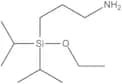


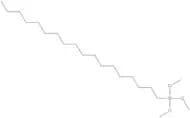


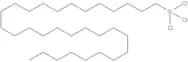

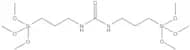
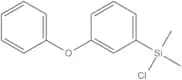
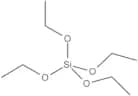

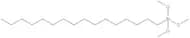


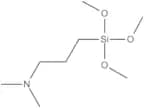
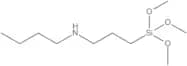
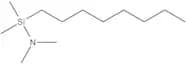


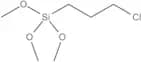
![TETRAKIS[(EPOXYCYCLOHEXYL)ETHYL]TETRAMETHYLCYCLOTETRASILOXANE, tech](/_next/image/?url=https%3A%2Fstatic.cymitquimica.com%2Fproducts%2F3H%2Fthumb-webp%2FSIT7281.5.webp&w=3840&q=75)
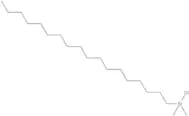

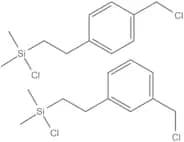
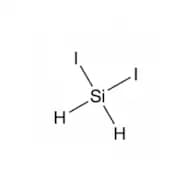

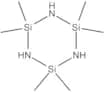
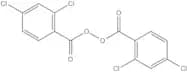
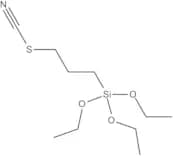

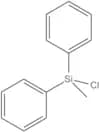
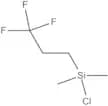
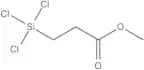
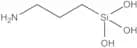
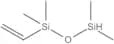
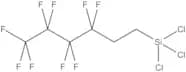
![3-[METHOXY(POLYETHYLENEOXY)6-9]PROPYLHEPTAMETHYLTRISILOXANE, tech](/_next/image/?url=https%3A%2Fstatic.cymitquimica.com%2Fproducts%2F3H%2Fthumb-webp%2FSIM6492.6.webp&w=3840&q=75)
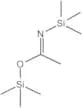
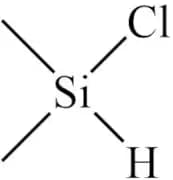
![BIS[(p-DIMETHYLSILYL)PHENYL]ETHER, 96%](/_next/image/?url=https%3A%2Fstatic.cymitquimica.com%2Fproducts%2F3H%2Fthumb-webp%2FSIB1090.0.webp&w=3840&q=75)
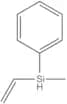
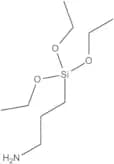
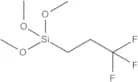
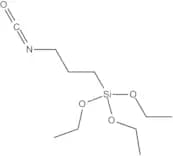



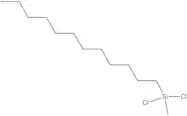


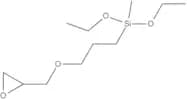
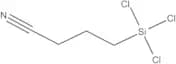
![3-[METHOXY(POLYETHYLENEOXY)6-9]PROPYLTRIS(DIMETHYLAMINO)SILANE, tech](/_next/image/?url=https%3A%2Fstatic.cymitquimica.com%2Fproducts%2F3H%2Fthumb-webp%2FSIM6492.77.webp&w=3840&q=75)
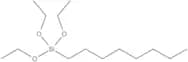
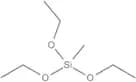
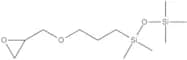


![BIS[3-(TRIETHOXYSILYL)PROPYL]TETRASULFIDE, tech](/_next/image/?url=https%3A%2Fstatic.cymitquimica.com%2Fproducts%2F3H%2Fthumb-webp%2FSIB1825.0.webp&w=3840&q=75)
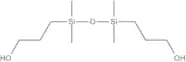
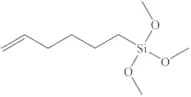
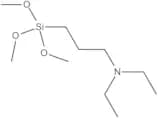
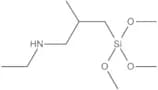
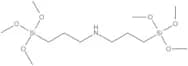
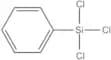
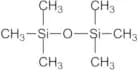
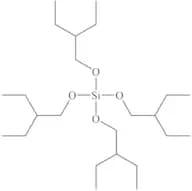

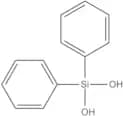
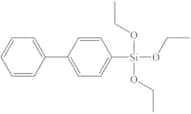
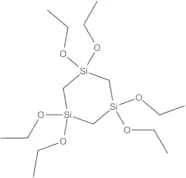
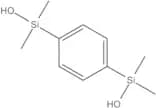


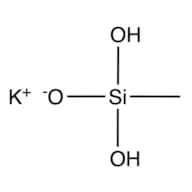

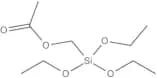
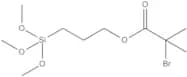
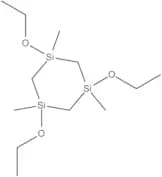
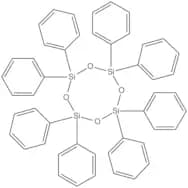
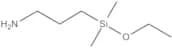
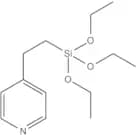
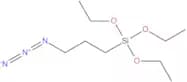
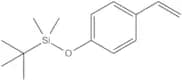

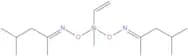


![BIS[3-(TRIETHOXYSILYL)PROPYL]DISULFIDE, 90%](/_next/image/?url=https%3A%2Fstatic.cymitquimica.com%2Fproducts%2F3H%2Fthumb-webp%2FSIB1824.6.webp&w=3840&q=75)